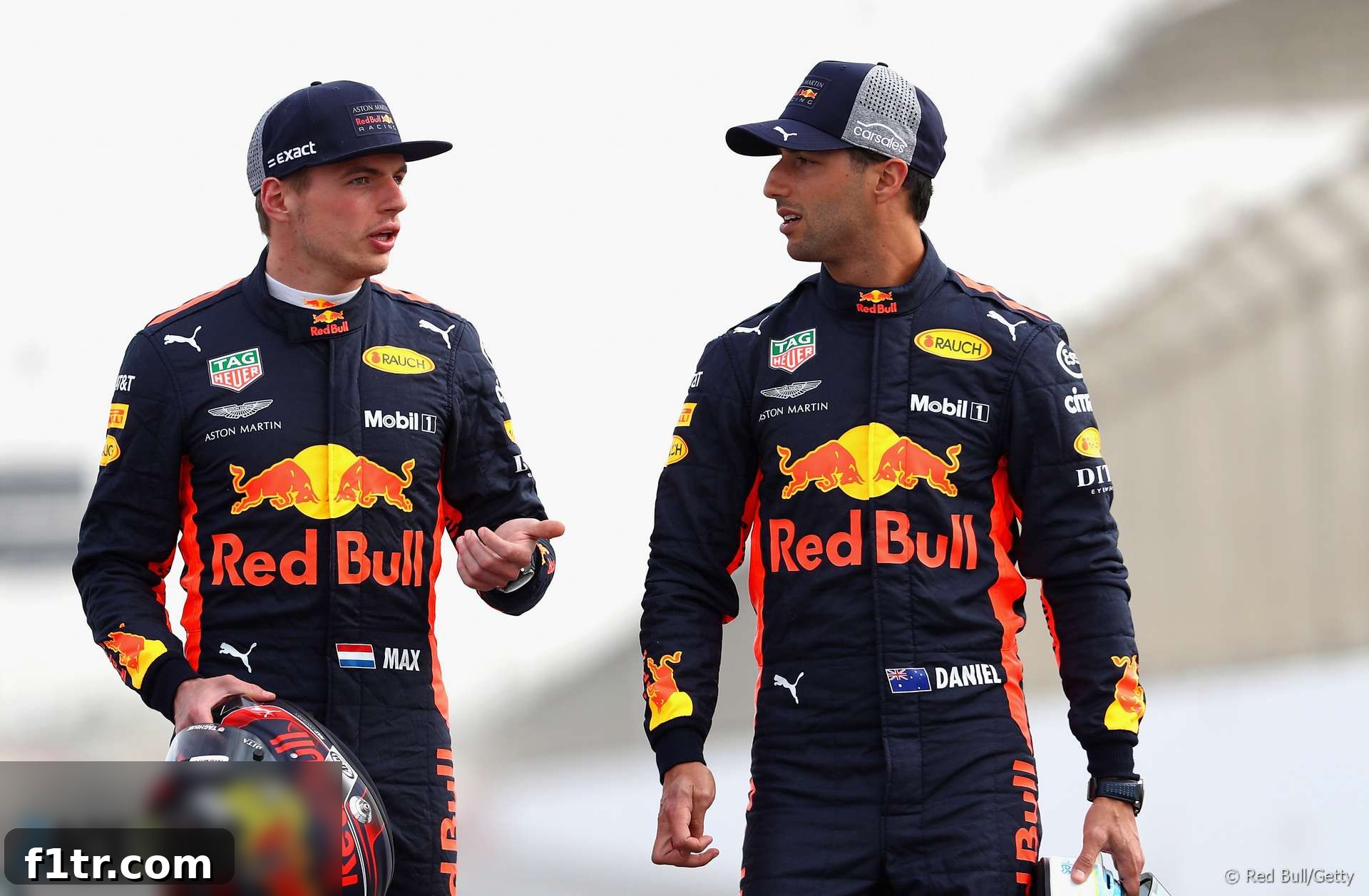
Horner: Max Verstappen Can Learn from Ricciardo’s Mature Approach
In the high-stakes world of Formula 1, talent is often abundant, but consistency and the ability to learn from setbacks are what truly define a champion. Following a particularly challenging start to the 2018 season, Red Bull Racing team principal Christian Horner emphasized this crucial point, suggesting that young star Max Verstappen could gain valuable insights into driver maturity and error management by observing his more experienced teammate, Daniel Ricciardo.
A Season Riddled with Incidents: Verstappen’s Early 2018 Struggles
The 2018 Formula 1 season began with a series of frustrating incidents for Max Verstappen, drawing considerable scrutiny from both fans and pundits. By the time the circus arrived in Monaco, the young Dutchman had already been involved in an alarming eight incidents across just six race weekends. These moments of contact and error frequently hampered his progress, preventing him from converting his undeniable raw pace into tangible results.
Among the most recent and public of these setbacks was a crash during the crucial final practice session for the Monaco Grand Prix. This incident not only compromised his car but also meant Verstappen was unable to participate in qualifying, consigning him to start the iconic street race from the very back of the grid. Such a position in Monaco, notoriously difficult for overtaking, presented a monumental challenge, highlighting the immediate and severe consequences of his aggressive driving style and occasional lapses in judgment.
The Mentor Next Door: Daniel Ricciardo’s Exemplary Approach
When questioned about Verstappen’s capacity for learning from his repeated errors, Christian Horner pointed directly to the ideal example within the very same garage: Daniel Ricciardo. Horner stated, “I think he has a very good teacher in the car next door to him.” This direct comparison underscored Ricciardo’s reputation as a smooth, consistent, and exceptionally intelligent racer, attributes that contrasted sharply with Verstappen’s early 2018 struggles.
Horner elaborated on his young driver’s immense potential while simultaneously acknowledging the need for refinement. “Max has an abundance of talent and had some harsh lessons this year and I think a modified approach will benefit him,” he affirmed. Ricciardo, known for his masterful race craft, astute judgment in wheel-to-wheel battles, and remarkable ability to capitalize on opportunities while minimizing risks, provided a compelling blueprint for Verstappen’s development. His consistency, often delivering strong points finishes even on challenging weekends, was a testament to a mature approach that Horner hoped Verstappen would emulate.
The Psychological Toll: Frustration and the Need for a ‘Reset Button’
Behind the scenes, the string of incidents was clearly taking a toll on Verstappen, despite his outward confidence. Horner acknowledged the psychological pressure on his star driver, explaining, “We talk weekly, he’ll be in the factory this week. Of course what frustrates him is that he’s working harder than ever, feels fitter than ever and it feels like he’s just trying a bit too hard at the moment.” This sentiment paints a picture of a driver pushing beyond his limits, perhaps overcompensating for past mistakes, leading to a vicious cycle of trying too hard and making more errors.
In such situations, Horner recognized the critical need for a mental regrouping. “Of course, when you get into a spiral and try harder I think you just need to hit the reset button,” he advised. This ‘reset’ implies a need for introspection, a step back from the intense pressure, and a recalibration of his approach to racing. It’s a recognition that sheer force of will isn’t always the solution; sometimes, a more measured and strategic mindset is required to overcome performance plateaus and regain consistency.
Monaco’s Redemption: A Drive of Character from the Back
Despite the disastrous Saturday in Monaco, Verstappen demonstrated his fighting spirit and raw talent during the race itself. Starting from the very back of the grid, a position almost guaranteeing a fruitless afternoon on the tight, unforgiving streets, he managed a commendable recovery. “Max had a better Sunday than he had Saturday,” Horner noted, highlighting the contrast in his performance across the weekend.
Expectations were understandably low for anyone starting from the rear in Monaco. Horner himself conceded, “I think starting from last on the grid, expectations in Monaco have to be low. All weekend in all formulas there has been very little overtaking.” Yet, Verstappen defied these odds. He executed “some good passes in the race,” a testament to his car control and opportunistic driving, and benefited from a well-orchestrated strategy by the Red Bull pit wall. His relentless push saw him cross the finish line in ninth place, securing two valuable championship points.
While the result was a strong recovery, it didn’t overshadow the lessons learned. Horner concluded, “Ninth was a good drive from him and he needs to go away from this race and reflect on what should have been and apply that for the future.” This statement encapsulated the mixed feelings: pride in the recovery, but a firm reminder that the preceding errors were preventable and carried significant consequences for what could have been a much stronger result.
The Path Forward: Maturity and Consistent Performance
The 2018 Monaco Grand Prix weekend served as a crucial turning point and a stark reminder for Max Verstappen. His innate talent and electrifying speed were never in doubt, but the early season demonstrated that raw pace alone isn’t enough to consistently challenge at the very front of Formula 1.
Christian Horner’s comments underscore the vital role of continuous learning and adaptation in a driver’s journey towards championship contention. By holding up Daniel Ricciardo as an example, Horner wasn’t just making a direct comparison; he was articulating Red Bull’s vision for Verstappen’s evolution – one where aggression is tempered with judgment, speed is paired with consistency, and learning from mistakes becomes a cornerstone of his development. The ability to reflect on ‘what should have been’ and to proactively apply those lessons in future races would be instrumental in transforming Verstappen from a prodigious talent into a truly complete and formidable world champion.
2018 F1 Season Related Articles
- F1 feared “death knell” for Drive to Survive after Ferrari and Mercedes snub
- McLaren staff told us we were “totally crazy” to take Honda engines in 2018 – Tost
- ‘It doesn’t matter if we start last’: How Red Bull’s junior team aided Honda’s leap forward
- Honda’s jet division helped F1 engineers solve power unit problem
- McLaren Racing losses rise after Honda split
Browse all 2018 F1 season articles