The Dynamics of Progress: Unpacking Formula 1 Team Performance in the 2018 Season
The 2018 Formula 1 season was a fascinating spectacle of high-octane racing, strategic battles, and an often-underestimated contest of engineering prowess and rapid development. Beyond the thrilling driver rivalries and championship deciders, a profound transformation was taking place within the garages of the paddock: the relentless pursuit of speed and efficiency. The Abu Dhabi Grand Prix, serving as the season’s climatic finale, not only crowned the champions but also provided a definitive snapshot of which teams had excelled in this silent battle for improvement and which had faltered.
While the pecking order at the very front remained largely stable, the midfield and indeed the back of the grid saw significant shifts. Teams dedicated vast resources and countless hours to refine their challengers, seeking to extract every millisecond of performance. Analysing the average lap time improvements across the season offers a compelling narrative of success, struggle, and strategic gambles. This detailed review aims to dissect the performance shifts of every Formula 1 team during the 2018 campaign, spotlighting the extraordinary advancements of some and the concerning stagnation of others.
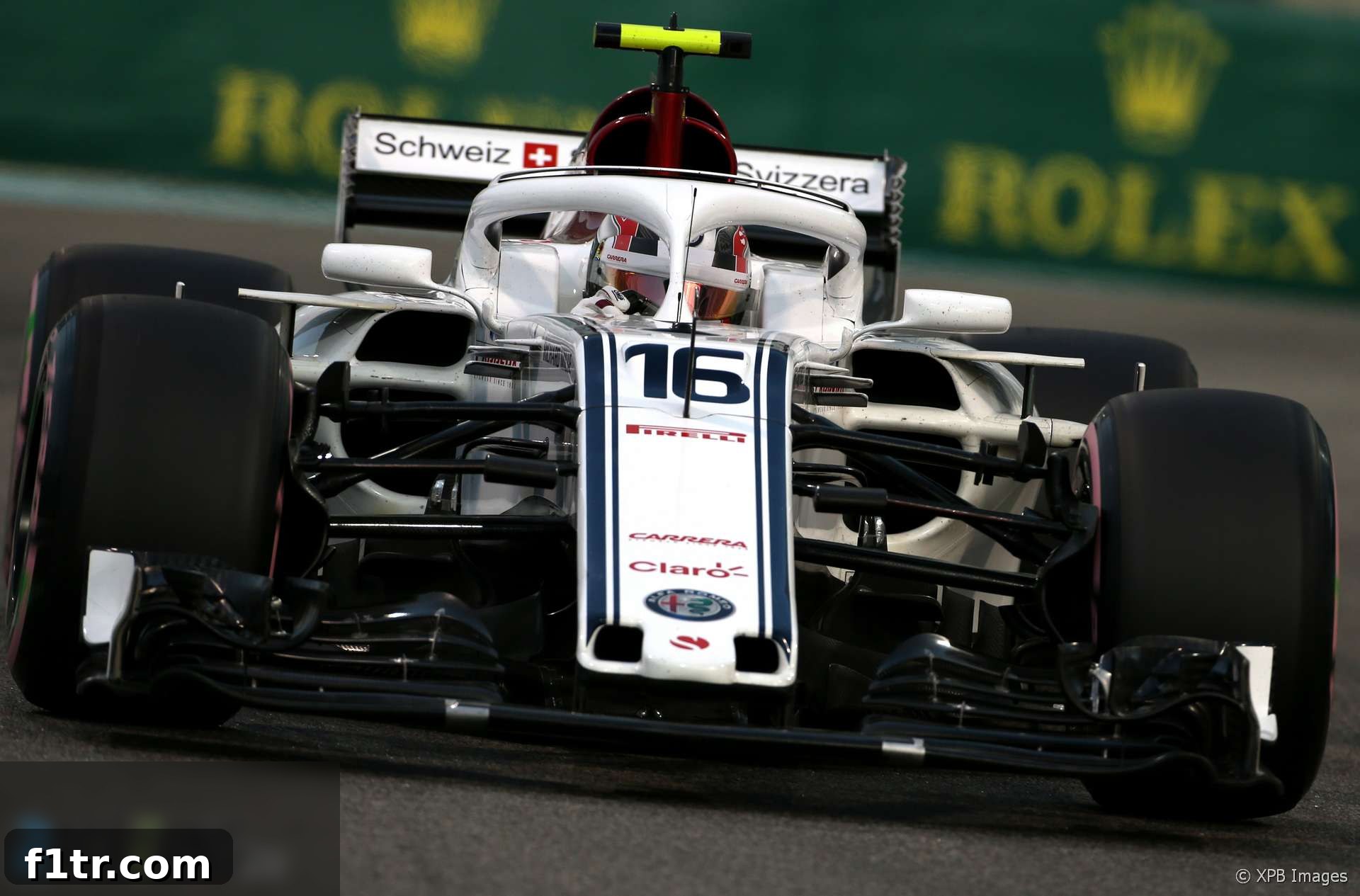
Sauber’s Remarkable Transformation: The Most Improved Team of 2018
For a considerable period, it was evident, but the qualifying sessions at the Abu Dhabi Grand Prix unequivocally solidified Sauber’s standing as the most improved Formula 1 team of 2018. Their journey from perennial backmarkers to a consistent midfield threat was nothing short of extraordinary, captivating fans and pundits alike. The C37 chassis, their challenger for the season, demonstrated an average improvement of nearly two-and-a-half seconds per lap compared to its predecessor, the C36. Such a significant leap is rarely seen in modern Formula 1, underscoring a complete overhaul of their operation.
A primary catalyst for this dramatic upturn in performance was undoubtedly their strategic decision to switch from a 2016-specification Ferrari power unit in 2017 to the latest, current-spec Ferrari engine in 2018. This upgrade alone provided a substantial boost in raw power and drivability, closing a significant performance deficit they had faced previously. The integration of a cutting-edge power unit allowed the team to unlock greater potential, not just in straight-line speed but also in optimising their aerodynamic package. With a reliable and powerful engine, Sauber’s engineers were freed to push the boundaries of chassis design.
However, attributing Sauber’s success solely to the engine upgrade would be a disservice to the meticulous work carried out in Hinwil. The team implemented significant developments in other critical areas, including aerodynamics, suspension, and overall car balance. Their aerodynamic efficiency improved demonstrably, reducing drag while enhancing downforce, making the C37 a far more predictable and competitive machine. This comprehensive development strategy culminated in a car that could consistently challenge for points, far removed from its prior struggles. The ultimate testament to their newfound credibility arrived with the announcement that former World Champion Kimi Raikkonen would join the team for the following season – an inconceivable prospect just a year prior. This high-profile signing was a clear indicator of the team’s upward trajectory and its re-establishment as a serious contender in the midfield.
Midfield Dynamics: Gains, Missed Opportunities, and Steady Progress
Haas: Speed Meets Unrealized Potential
Following closely behind Sauber, fellow Ferrari customer team Haas F1 made the second-biggest stride among all teams during the 2018 season. Their VF-18 car was, on average, almost 1.9 seconds faster per lap than their 2017 entry. This impressive gain consistently positioned them at the very front of the midfield battle, often challenging the established factory teams. The American outfit demonstrated a clear understanding of the regulations and the ability to design a fundamentally quick car, leveraging their technical partnership with Ferrari effectively. Their qualifying pace, in particular, was often exceptional, placing both cars regularly into the top ten grid slots.
Despite their undeniable speed and significant improvement, Haas’s season was ultimately tinged with a sense of unfulfilled potential. A series of operational errors, strategic missteps, and occasional driver incidents meant they often failed to convert their strong qualifying positions and race pace into the championship points they deserved. This inability to capitalise on their raw speed was a major factor in their likely miss of fourth place in the Constructors’ Championship, a position that Renault seemed set to claim despite, as we shall see, a less dramatic year-on-year performance improvement.
Renault: Solidifying a Foundation
The French manufacturer squad, Renault, had been celebrated as last year’s most-improved team, making significant strides in 2017. Their 2018 season, while still showing progress, was more measured in terms of year-on-year lap time gains. While they remained competitive and consistently fought within the upper midfield, their overall improvement was eclipsed by the more substantial leaps made by Sauber and Haas. In addition to these two, even powerhouses like Red Bull and the resilient Force India squad demonstrated greater proportional gains compared to their own 2017 performances.
Renault’s year could be characterized as one of consolidation rather than a meteoric rise. They focused on refining their package, improving reliability, and steadily developing their chassis and power unit. While not as flashy as Sauber’s turnaround, their consistent points scoring and strategic development were crucial in their quest to establish themselves as a top-tier team, successfully securing fourth in the constructors’ standings, a crucial step in their long-term vision for returning to championship contention.
Red Bull and Force India: Battling Adversity and Maximizing Potential
Red Bull Racing, though not a customer team, consistently challenged the dominant Mercedes and Ferrari throughout 2018. Their chassis, widely regarded as one of the best on the grid, continued to evolve, allowing them to extract impressive lap time gains despite the limitations of their Renault power units. Their progress was notable, pushing the limits of aerodynamic design and race strategy.
Force India, on the other hand, displayed remarkable resilience. Despite facing severe financial difficulties that culminated in administration and a change of ownership mid-season, the team’s technical staff managed to continue extracting strong performance from their car. Their ability to deliver competitive lap times and score points under such challenging circumstances speaks volumes about the talent and dedication within the team, making their gains all the more impressive.
The Pinnacle of Performance: Mercedes and Ferrari’s Championship Duel
At the very apex of Formula 1, where the margins are razor-thin, pulling further away from the opposition when you’re already setting the pace is an immensely challenging feat. Yet, the dominant forces of the sport, Mercedes and Ferrari, continued their relentless pursuit of perfection in 2018. Their development war was not just about winning races but about finding fractional advantages that could decide a championship.
Mercedes, despite their formidable track record, managed to shave an impressive 1.12 seconds off their average lap times this year. This improvement highlights their exceptional capacity for continuous engineering advancement, constantly refining their W09 chassis and power unit package to maintain their competitive edge. Ferrari, their fiercest rival, performed slightly better in this regard, achieving an average improvement of 1.19 seconds per lap with their SF71H. This marginal advantage in year-on-year gain underscored the intense competition at the front, where every tenth of a second could swing the momentum of the title fight. Both teams pushed each other to unprecedented levels of development, demonstrating that even at the peak of the sport, significant performance gains are still achievable through innovation and sheer dedication.
The Struggles and Setbacks: McLaren and Williams’ Challenging Season
At the opposite end of the performance spectrum, two historically great teams, both multiple world champions, found themselves enduring their least progressive seasons. The contrast in their struggles, however, was significant in scale, highlighting different facets of decline within Formula 1.
McLaren: The Renault Switch and Aerodynamic Woes
McLaren’s highly anticipated switch from Honda to Renault power units, widely touted as a solution to their performance woes, unfortunately, did not yield the desired results. While the Renault engine provided a more reliable and competitive power plant, the McLaren MCL33 chassis proved to be deeply flawed. It suffered from excessive drag and fundamental aerodynamic inefficiencies, hindering its ability to compete consistently in the midfield. Despite these issues, the car was still nearly a second per lap faster than the last iteration of the McLaren-Honda. This marginal improvement, however, was far below the team’s own lofty expectations and fell short of truly challenging for higher championship positions, ultimately leading to significant internal re-evaluations and personnel changes.
Williams: A Steep and Alarming Decline
The plight of Williams Racing, however, was far more concerning. Once a powerhouse of Formula 1, the team exhibited the least progress of any outfit on the grid. Their average lap time improvement stood at a paltry 0.3 seconds quicker than the previous year, a figure that masks an even grimmer reality. Across the 19 tracks where Formula 1 raced in both 2017 and 2018, Williams astonishingly turned up with a demonstrably slower car on eight separate occasions this year. This alarming regression pointed to fundamental design flaws within their FW41 chassis, coupled with significant operational and development challenges. The team struggled with basic car characteristics, making it exceptionally difficult for their drivers to extract any meaningful performance, positioning them firmly at the back of the grid and marking one of the most challenging seasons in their illustrious history.
The Abu Dhabi Grand Prix: A Final Performance Assessment
The lap time changes observed at Yas Marina for the Abu Dhabi Grand Prix were strikingly typical of the trends witnessed throughout the entire 2018 season. Sauber, once again, underscored their status as the most improved team by registering one of the biggest gains, showcasing their consistent development curve. Conversely, Williams faced another disappointing weekend, failing to beat their best lap time from the previous year, a stark reminder of their profound struggles.
On a broader scale, the fastest 2018 car at each circuit was, on average, 1.1 seconds quicker than its 2017 counterpart. The lap time gain at Yas Marina was slightly higher than this season average, indicating that either the track characteristics or specific team developments found particular synergy at the season finale. The relentless pursuit of speed ensures that Formula 1 cars are constantly evolving, pushing the boundaries of what is mechanically and aerodynamically possible.
Lewis Hamilton further cemented the rapid evolution of F1 technology by setting a new track record in qualifying for the tenth Grand Prix held at Yas Marina. It’s noteworthy that Hamilton also took pole position at the circuit’s inaugural race in 2009. Since that first event, lap times at the track have plummeted by an astonishing 4.901 seconds, a testament to the advancements in engine technology, aerodynamics, and tyre compounds over the past decade. This continuous innovation is the bedrock of Formula 1, driving teams to constantly improve and redefine performance benchmarks.
Conclusion: A Season of Dynamic Shifts and Engineering Prowess
The 2018 Formula 1 season proved to be a compelling illustration of the sport’s dynamic nature, where fortunes can shift dramatically from one year to the next. Sauber’s transformation stands out as a beacon of hope and a testament to what focused investment, strategic technical partnerships, and dedicated development can achieve. Their ascent from the back of the grid to a credible midfield contender was arguably the most inspiring narrative of the year.
While Haas showcased incredible raw speed, their season highlighted the importance of operational execution alongside technical brilliance. Renault continued their steady march towards the front, while Mercedes and Ferrari engaged in a titanic struggle, finding marginal but crucial gains at the very pinnacle of performance. Conversely, the struggles of McLaren and particularly Williams served as a stark reminder of the unforgiving nature of Formula 1, where even established giants can fall victim to technical missteps and organizational challenges. The 2018 season, encapsulated by the final performance data from Abu Dhabi, was truly a masterclass in engineering, strategy, and the relentless pursuit of speed.
2018 Abu Dhabi Grand Prix Related Articles
- 1,000 wins: A world championship milestone
- 2018 Abu Dhabi Grand Prix Star Performers
- Top ten pictures from the 2018 Abu Dhabi Grand Prix
- Untouchable Hamilton ends season with 11th victory
- Vote for your 2018 Abu Dhabi Grand Prix Driver of the Weekend
Browse all 2018 Abu Dhabi Grand Prix articles