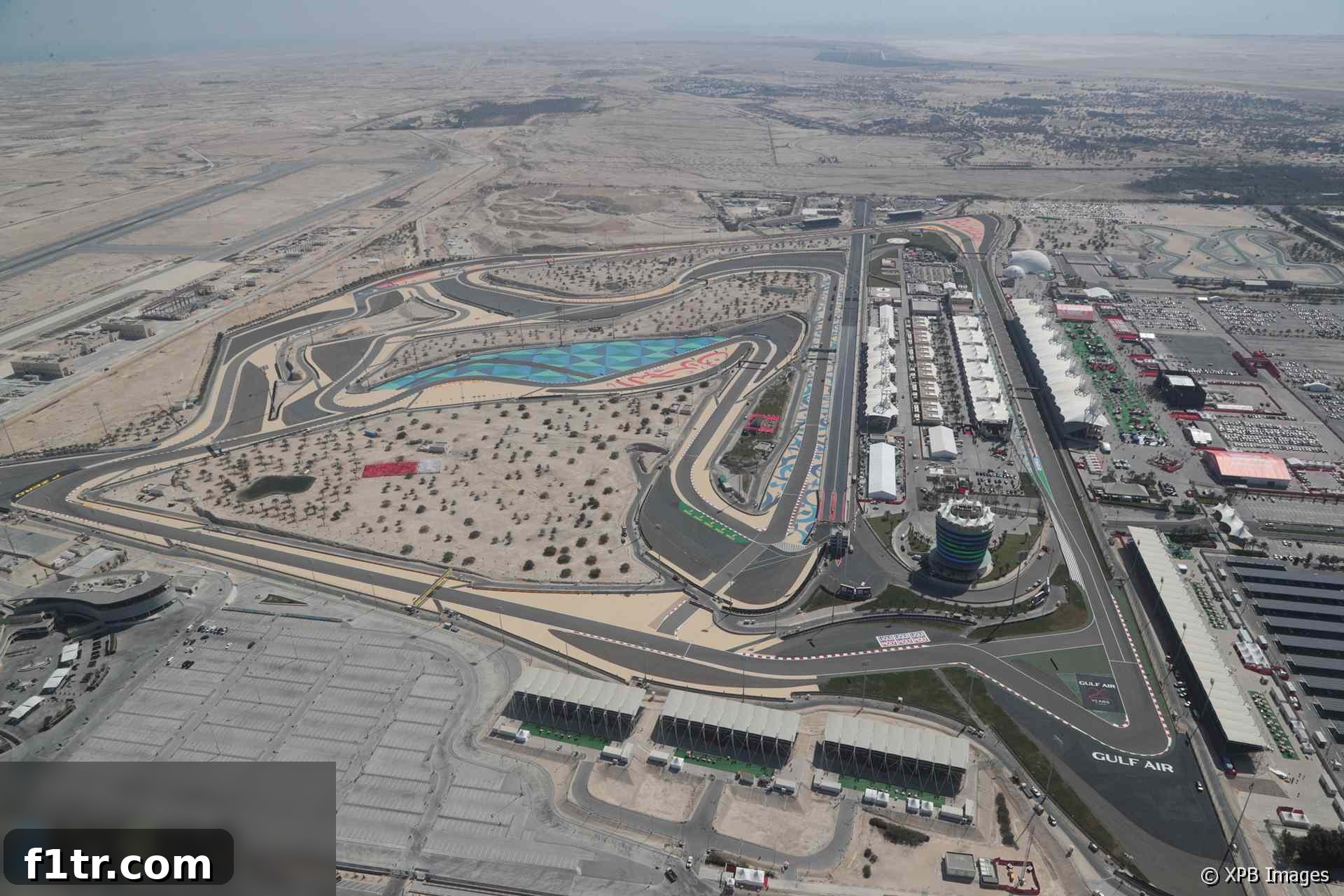
2025 Bahrain Grand Prix: Final Practice Report – McLaren Dominates Ahead of Qualifying
As the sun beat down on the Bahrain International Circuit, the final practice session for the 2025 Bahrain Grand Prix provided a crucial preview of what teams and drivers could expect ahead of the all-important qualifying session. This intense hour-long sprint saw teams make their last adjustments, fine-tune setups, and push their machinery to the limits in conditions that, while hot, offered a glimpse into the competitive landscape. With qualifying just hours away, every lap, every adjustment, and every complaint held significant weight, shaping strategies for Saturday’s battle for pole position. The session concluded with McLaren asserting a dominant position, raising expectations for their qualifying performance.
Here’s our comprehensive report on final practice and a full run-down of all the times, detailing the key moments and performances that defined the session.
Pre-Session Dynamics and Early Track Action
The air temperature hovered around a warm 32 degrees Celsius, with the track temperature at 43 degrees Celsius. These conditions were slightly cooler than Friday’s first practice but still presented a significant challenge for tire management and overall car performance. Elevated temperatures often render practice sessions less entirely representative of the ultimate qualifying and race pace, yet they are invaluable for understanding how cars behave under sustained stress and for gathering crucial data on degradation.
Adding an intriguing layer to the weekend’s dynamics, Pirelli made the rare decision to reduce mandatory minimum rear tire pressures by 1 psi, bringing them down to 20 psi. This adjustment, following initial running on Friday, suggested a more cautious approach to tire integrity or a direct response to feedback regarding grip levels. Such a change can subtly shift the balance of power, demanding quick adaptation from all competitors as they seek to optimize their car’s interaction with the tires.
Fresh off an encouraging performance in yesterday’s practice, where he placed his Haas an impressive ninth, Oliver Bearman was the first driver to venture out onto the track as FP3 commenced. His early exit signaled an eagerness from the Haas camp to gather early data and build on their promising start, indicative of the high stakes involved in extracting every ounce of performance from their package. McLaren had demonstrated themselves as comfortably quickest yesterday, with Oscar Piastri leading the charge, half a second clear of their closest rivals in second practice. While the expectation was for this gap to narrow significantly in the final practice as other teams honed their setups, the Woking-based squad continued to demonstrate formidable pace, setting a high benchmark from the outset.
Establishing Pace and Driver Feedback: The Evolution of Lap Times
As the session progressed, drivers began to post more representative lap times, switching to softer compounds for performance runs. Both Ferrari drivers were quick to set competitive times on the soft compound, with Charles Leclerc narrowly edging out his teammate by a mere five-hundredths of a second, posting a 1’34.846. This early indication from Ferrari highlighted their potential, even if it wasn’t yet challenging the very top of the leaderboard. Lewis Hamilton, despite being out on softs, took his time to build up to a flying lap, meticulously preparing for his first timed run, eventually starting his first truly representative lap.
Lando Norris then unleashed a powerful lap, clocking a 1’33.796, which put him a significant 1.05 seconds ahead of Lewis Hamilton at that stage. This early display of speed from Norris solidified McLaren’s position at the front, proving that their Friday performance was no fluke. Not long after, Oscar Piastri further underscored McLaren’s dominance, improving on his teammate’s time with a 1’33.324, putting him almost half a second clear. The consistent pace and commanding lead shown by both McLaren drivers sent a clear message to the paddock about their championship aspirations and their intent for the weekend.
The pace continued to escalate as drivers pushed harder. Max Verstappen, despite his earlier frustrations with the car’s setup, demonstrated his exceptional ability to adapt, eventually lowering the best time to a 1’33.027, which put him 0.297 seconds ahead of Piastri for a brief period. However, this lead was short-lived as Pierre Gasly immediately responded, beating Verstappen’s time by a mere five-hundredths of a second. This incredibly tight competition at the sharp end of the grid illustrated the intense fight for supremacy, with every fraction of a second proving critical.
Alexander Albon also delivered a strong performance for Williams, putting in a good lap that placed him fourth, half a second off Piastri’s subsequent leading time. This was a very encouraging result for the British team, highlighting their ongoing progress and potential to challenge higher up the midfield.
Mid-Session Drama and Challenges: Grip Issues, Mechanical Woes, and Driver Frustrations
Not all drivers had a smooth sailing experience in the final practice. Max Verstappen, a formidable force in any session, found himself profoundly unhappy with his car’s set-up, declaring his discontent over team radio. This wasn’t the first time this year Verstappen had expressed such frustrations during a practice session, underscoring the ongoing challenge for Red Bull to perfectly dial in their machine amidst evolving regulations and the specific demands of the Bahrain International Circuit. His struggle hinted at a potential chink in Red Bull’s armor, at least for this particular session.
The conditions on track were also a talking point among drivers. Liam Lawson voiced his concerns about the atmospheric factors, specifically noting, “The wind is making a difference into Turn 11 especially.” This observation highlighted the subtle yet significant impact of environmental factors on car handling, especially in a circuit like Bahrain known for its gusty conditions. Lawson was running in 10th at the time, less than six-tenths of a second off his teammate Isack Hadjar, showing a solid if challenging performance.
The session then saw its first major incident when Nico Hulkenberg’s Sauber came to a halt at Turn 8, leading to the deployment of a Virtual Safety Car (VSC). Fortunately, Hulkenberg stopped close to a marshal post, suggesting a quick recovery. However, such interruptions invariably disrupt the rhythm of practice, forcing drivers to abort flying laps and cooling down tires, which can be detrimental to setup work and precious track time. Meanwhile, Esteban Ocon reported persistent bouncing in his car at Turn 12, preventing him from taking the corner flat-out. This issue, a common complaint in the current era of ground-effect cars, highlighted Alpine’s ongoing struggle with ride quality and aerodynamic stability, impacting their overall performance potential.
The drama continued with George Russell experiencing an unusual spin at the exit of Turn 10. The Mercedes driver found himself momentarily pointing the wrong way before deftly gathering his car up and continuing. Reflecting on the incident, Russell remarked, “I’d probably go as far as saying that’s the least amount of grip I’ve ever had in an F1 car.” This candid comment painted a stark picture of the challenging grip conditions many drivers were contending with, underscoring the fine line between pushing the limits and overstepping them. Later, Charles Leclerc’s left-hand wing mirror unexpectedly flew off his Ferrari, a bizarre mechanical issue that, while not immediately impacting performance, raised questions about the car’s integrity and quality control.
Adding to the list of frustrations, Liam Lawson was visibly annoyed by George Russell overtaking him just before the final corner. “Dude, like, just, so annoying, no point to do that,” Lawson fumed over team radio, highlighting the sometimes-tense etiquette of practice sessions where drivers vie for clear track space. Such minor but irritating encounters can often impact a driver’s mental focus and preparation, especially when every millisecond counts.
The Final Push: McLaren’s Unassailable Dominance and Key Takeaways
As the Virtual Safety Car period concluded and cars returned to full speed, the battle for the top spot intensified once more. It was Oscar Piastri who ultimately set a blistering new benchmark with a 1’31.646, an astonishing 1.328 seconds ahead of Pierre Gasly at that moment. This phenomenal lap firmly re-established McLaren’s position at the apex of the timing sheets and showcased the true potential of their car on the Bahrain circuit, leaving their rivals to ponder where such pace originated. Gasly himself remarked, “I can’t believe how fast these McLarens are at the moment,” a sentiment likely echoed throughout the paddock.
In the closing moments, the top of the leaderboard solidified, confirming McLaren’s exceptional form. Oscar Piastri concluded the session as the fastest driver, setting an impressive 1’31.646. His teammate, Lando Norris, secured second place, further cementing McLaren’s dominant one-two finish in final practice. Charles Leclerc was the only non-McLaren driver to get within a second of Piastri’s scorching pace, underscoring Ferrari’s relative strength but also highlighting the formidable challenge posed by the Woking outfit. Lewis Hamilton, meanwhile, ended the session in 10th, indicating that Mercedes still had significant work to do to unlock more performance from their car and address the grip issues reported by Russell.
Conversely, it was looking tough for Yuki Tsunoda, who found himself languishing down in 19th position, ahead of only Lance Stroll. This struggled performance painted a tough picture for the Japanese driver and Red Bull’s sister team, suggesting potential setup issues or difficulties in adapting to the track conditions. Despite McLaren’s apparent speed, it was crucial to note that these times were still well over a second off the best performances seen yesterday in more representative conditions. This suggested that while McLaren had found an exceptional setup for FP3, there was still more pace to be unlocked across the grid, and qualifying would undoubtedly bring out even faster laps as track conditions potentially improved and drivers pushed to the absolute limit.
Concluding Thoughts: Setting the Stage for an Electrifying Qualifying
The final practice session for the 2025 Bahrain Grand Prix ended with McLaren firmly in control, Oscar Piastri leading a sensational one-two finish. The team’s commanding performance has undoubtedly elevated expectations for qualifying, positioning them as strong contenders for pole position. However, the session was not without its moments of drama and concern for other teams, from Verstappen’s persistent car setup frustrations to Russell’s alarming grip struggles and Hulkenberg’s unexpected stoppage, each providing a unique challenge for their respective engineering teams.
The fluctuating conditions, particularly the shifting wind and the lower grip levels described by some drivers, ensured that FP3 was a complex affair. While McLaren’s pace was undeniably impressive, the slightly off-peak conditions mean that all eyes will now turn to the upcoming qualifying session. Teams will meticulously analyze the vast amounts of data gathered in FP3, making those crucial final adjustments to extract every last millisecond of performance. The true pecking order, and indeed the potential for surprises, will only fully emerge when the lights go green for qualifying later today. The stage is set for an electrifying battle under the floodlights, promising a captivating start to the 2025 Formula 1 season in Bahrain.
2025 Bahrain Grand Prix News and Updates
- Hamilton making “drastic shift” in driving style to master Ferrari’s car
- Leclerc revealed Ferrari strategy details to Gasly before Bahrain Grand Prix
- Lawson made “very significant step forward” in Bahrain – Mekies
- Russell’s transponder was ‘frazzled and charred’ after Bahrain Grand Prix DRS drama
- “Don’t give me too much now”: Hamilton’s search for speed at Ferrari continues
Browse all 2025 Bahrain Grand Prix articles