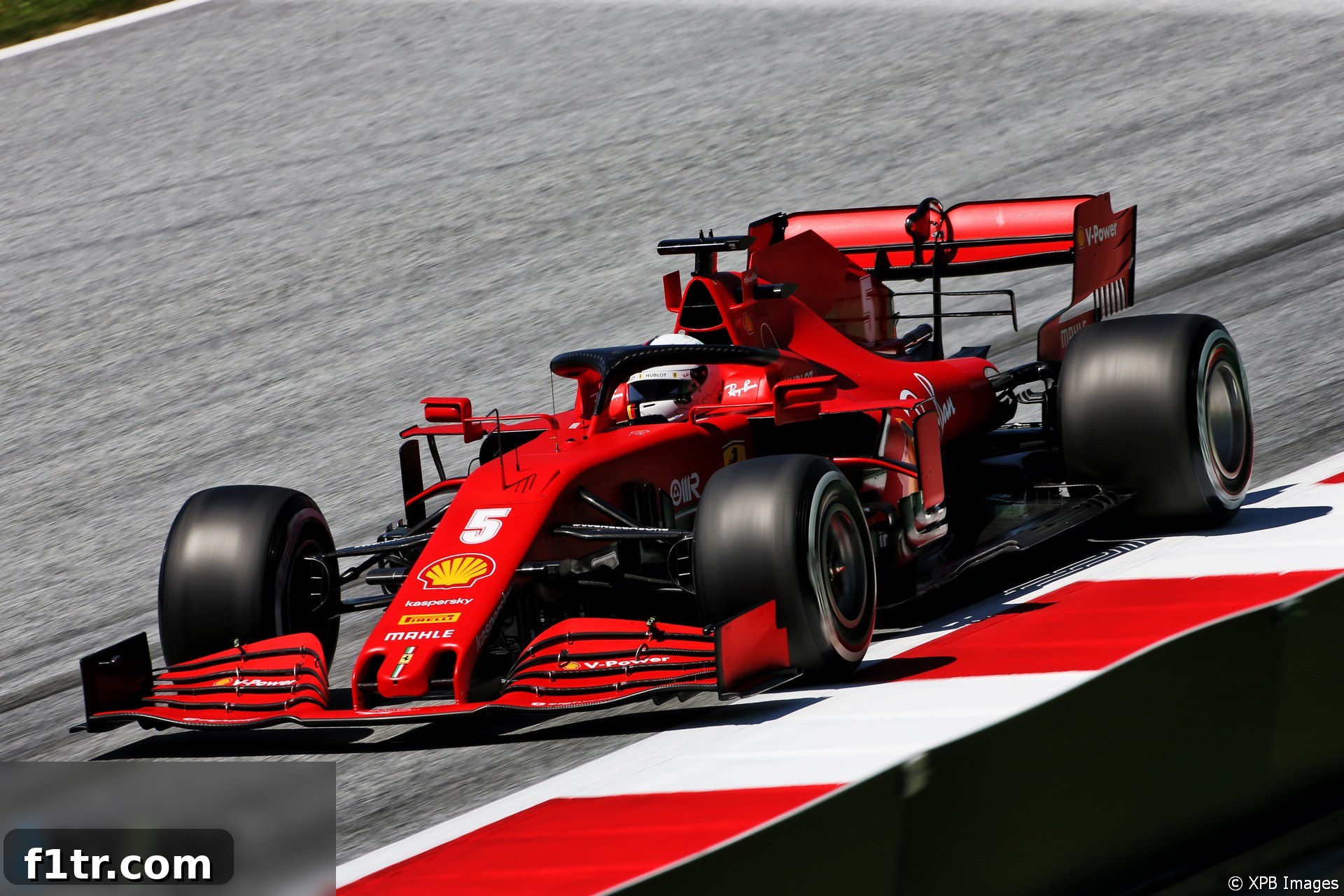
Sebastian Vettel, the revered four-time Formula 1 World Champion, expressed a cautious yet palpable enthusiasm for the handling improvements on his Ferrari SF1000, despite concluding the second practice session in a modest 16th position. His comments shed light on a pivotal moment for the Scuderia as they grappled with early-season performance woes, offering a glimmer of hope amidst a challenging 2020 campaign.
The iconic Italian team had fast-tracked a crucial upgrade package for the weekend’s race, a critical response to their lacklustre performance in the season-opening Austrian Grand Prix. Vettel, who had struggled to an uncharacteristic 10th place finish just a week prior at the same Red Bull Ring circuit, conveyed a significantly improved sensation regarding his car’s balance. This feedback, coming from a driver renowned for his meticulous attention to car feel and setup, was a vital indicator for the Maranello-based squad.
Ferrari’s Pursuit of Performance: An Early Season Struggle and Crucial Upgrades
The 2020 Formula 1 season presented an unprecedented challenge for Ferrari. After a promising pre-season testing phase, the team quickly realized their SF1000 chassis was far from the competitive package they had hoped for. The opening race in Austria exposed critical deficiencies, particularly in straight-line speed and overall aerodynamic efficiency. Both Vettel and his teammate Charles Leclerc found themselves battling not for podiums, but for precious points, a stark departure from Ferrari’s usual championship aspirations.
In the high-stakes world of Formula 1, stagnation is not an option. Recognizing the urgent need for rectification, Ferrari’s technical team worked tirelessly to accelerate the development and introduction of a comprehensive upgrade package. This package, encompassing revisions to the car’s aerodynamics, floor, and potentially other areas, was originally slated for a later race but was brought forward to the second event at the Red Bull Ring – later known as the Styrian Grand Prix. The decision underscored the team’s determination to swiftly address the car’s fundamental limitations and provide their drivers with a more competitive tool.
The pressure on Ferrari was immense. A team with their rich heritage and passionate global fanbase cannot afford to languish in the midfield. These upgrades were not merely incremental improvements; they were perceived as a make-or-break attempt to redefine their season trajectory and inject much-needed confidence into the entire operation. For Sebastian Vettel, in particular, who was navigating a challenging final season with the team, these developments were critical for his ability to perform and contribute meaningfully.
Sebastian Vettel’s Perspective: A Renewed Connection with the SF1000
“It’s a lot better than last week,” Vettel stated with a discernible sense of relief following Friday’s practice sessions. His words, though simple, carried significant weight, painting a picture of a driver who felt more at one with his machinery. While acknowledging his position on the timing sheet – a result influenced by a deleted lap time and potentially varied team strategies – Vettel emphasized that the raw lap times did not fully reflect the profound change in the car’s behaviour.
He elaborated on the circumstances, suggesting, “If you look at the timing sheet, obviously I got the lap deleted and it was not a great day for lap times. But I think some people anticipated maybe rain tomorrow and just prepared in case this is the quali[fying] for Sunday.” This insight highlighted the strategic complexities of Friday practice, where teams often pursue different programs based on weather forecasts and data gathering priorities, sometimes at the expense of outright pace. For Ferrari, the primary objective was evidently to assess the new upgrades.
“But I think on our side the main thing was to look after the upgrade that we brought. So step by step we were putting stuff on and it seems to be positive,” Vettel continued. This ‘step-by-step’ approach is typical in Formula 1 testing, where new components are introduced incrementally to isolate their effects and ensure they function as intended. The positive feedback from Vettel, particularly regarding the car’s ‘feel,’ suggested that the upgrades were indeed having the desired impact on the SF1000’s fundamental characteristics.
A driver’s ‘feel’ for the car is paramount in Formula 1. It encompasses everything from how the car responds to steering inputs, its stability under braking, traction out of corners, and its overall balance through various speeds. When a driver like Vettel, known for his precision and deep understanding of car dynamics, reports such a significant improvement in feel, it signals a fundamental shift in the car’s behaviour that can unlock greater performance. Even if the immediate lap times don’t reflect it, this newfound confidence can translate into consistent speed and improved race pace over a full Grand Prix distance.
Optimizing the Setup: The Quest for the Car’s ‘Happiest Window’
Vettel’s comments also touched upon the ongoing process of optimization. “I think we still need to have a look and now find the best window where the car is happiest,” he explained. This phrase, “happiest window,” refers to the optimal operating parameters for a Formula 1 car – a delicate balance of aerodynamic downforce, mechanical grip, tyre temperatures, and suspension settings that allows the car to perform at its peak. Finding this sweet spot requires meticulous data analysis, driver feedback, and iterative setup changes.
He further delved into his personal adjustments: “We tried some stuff, the usual homework, I tried a lot of stuff on the brakes and I still need to get into a better rhythm after especially after last weekend. But I felt a lot better already today.” The struggles from the previous weekend, where Vettel reported his car handling progressively worse throughout the race, had clearly left their mark. Re-establishing a rhythm, especially with crucial elements like braking, is a testament to a driver’s dedication and the continuous pursuit of perfection. The fact that he felt “a lot better already today” signals a significant step forward in rebuilding his confidence and finding the limits of the newly upgraded Ferrari.
High Fuel Runs: A Critical Indicator for Race Performance
Beyond the headline-grabbing single-lap pace, practice sessions are equally vital for simulating race conditions through high fuel runs. These longer stints provide crucial data on tyre degradation, fuel consumption, and, critically, a car’s performance over extended periods. Vettel found his car handled progressively worse throughout the previous weekend’s race, a worrying sign for long-run consistency. However, his encouraging assessment of the upgraded car’s performance during practice’s high fuel runs offered a more optimistic outlook.
“It felt much better. All day it was straight away a different car. And then I was just able to get at it. It’s not really possible to compare the two because there was such a big difference. Obviously now I hope it stays like this,” he articulated. This stark contrast between the two weekends at the Red Bull Ring was a powerful affirmation of the upgrades’ impact. For a driver, having a consistent and predictable car under high fuel loads is fundamental to managing tyre wear, executing race strategy, and maintaining competitive pace throughout a Grand Prix. The ability to “get at it” suggests that Vettel could push the car harder and more confidently, a capability severely lacking just a week prior.
The Broader Implications for Ferrari and the 2020 Season
Vettel’s positive feedback, while encouraging, was just the first step in a long and arduous journey for Ferrari. The 2020 season was already shaping up to be a challenging one, with Mercedes demonstrating dominant pace and Red Bull emerging as a strong contender. For Ferrari, the goal shifted from championship contention to understanding their car, closing the performance gap, and ensuring they could fight consistently for strong points finishes.
The introduction of the upgrade package at the Styrian Grand Prix was a pivotal moment. It represented a collective effort from the entire team to rectify the issues with the SF1000. While the practice times did not immediately reflect a dramatic leap up the leaderboard, the qualitative feedback from Sebastian Vettel, a driver known for his exceptional technical acumen and sensitivity to car behaviour, provided a solid foundation for optimism.
His cautious optimism reflected the reality of Formula 1: progress is often incremental, and true performance can only be assessed under race conditions. However, the qualitative improvements were undeniable. This increased confidence in the car’s handling could empower both Vettel and Leclerc to extract more performance and push harder, especially in crucial qualifying sessions and during the intense wheel-to-wheel battles of the race.
Navigating Back-to-Back Races at the Same Venue
The unique circumstance of having back-to-back races at the same circuit, the Red Bull Ring, offered an unusual advantage for teams in 2020. It allowed for direct comparisons of car performance with and without upgrades, making it easier to isolate the effects of new components. For Ferrari, this was an invaluable opportunity to immediately test their revised package against the baseline established just days earlier.
This scenario also meant that teams could fine-tune their setups with pre-existing data, making the Friday practice sessions even more focused on evaluating new parts and exploring different handling characteristics. Ferrari’s decision to bring the upgrades early was a strategic gamble, hoping that the immediate feedback from drivers like Vettel would quickly validate their development path and provide momentum for the remainder of the compressed season. The “different car” feeling reported by Vettel highlighted the immediate and tangible impact of this accelerated development cycle.
A Cautious Look Ahead
Ultimately, while Sebastian Vettel’s enthusiasm for the Ferrari SF1000’s improved handling was a significant positive development, the true test would come in qualifying and the race. Formula 1 is a sport where fractions of a second can separate triumph from disappointment. However, the underlying message was clear: Ferrari was fighting back, and their star driver was beginning to reconnect with his car. This renewed sense of balance and predictability was a crucial first step towards recovering their competitive edge and fighting for the results that a team of Ferrari’s stature demands. The journey to the front of the grid was still long, but for Sebastian Vettel and Ferrari, the direction finally felt right.
2020 F1 season – Related Reads
- Grosjean to make F1 test return tomorrow for first time since Bahrain horror crash
- Pictures: Wrecked chassis from Grosjean’s Bahrain fireball crash to go on display
- Bottas vs Rosberg: Hamilton’s Mercedes team mates compared after 78 races each
- F1 revenues fell by $877 million in Covid-struck 2020 season
- Hamilton and Mercedes finally announce new deal for 2021 season
Browse all 2020 F1 season articles