Welcome to today’s comprehensive Formula 1 Roundup, your daily dose of the latest news, strategic discussions, and historical insights from the captivating world of motorsport. As the F1 season progresses, the grid continues to deliver thrilling narratives, and we’re here to unpack all the critical developments.
The Radical Red Bull Conundrum: A Call for Change?
In the high-stakes arena of Formula 1, Red Bull Racing finds itself in a peculiar position. With Max Verstappen consistently performing at an elite level, yet seemingly out of immediate championship contention in the drivers’ standings, a thought-provoking debate has emerged among fans: Is it time for Red Bull to explore a truly radical strategy?
Since Max seems keen to race anything, and is probably out of the championship picture, why not ‘demote’ him? They might learn something interesting in the second half of the season.
Kvyat, Gasly, Albon, Checo, Lawson, Yuki aren’t bad drivers. They’ve had success both prior and post being that second seat. Is it the car? Is it Max?
Red Bull are in a very unusual position where they could put Max in another car, especially when he really isn’t likely to be fighting for much. Why not? It seems a better alternative than to just repeatedly keep throwing other drivers into the second car and seeing if that changes anything?
If I was Hadjar I’d be gluing myself to the Racing Bulls seat, nothing good comes of the ‘promotion’.
@Bernasaurus
This provocative suggestion, voiced by a fan, centers on the idea of temporarily moving Max Verstappen into a sister car or allowing another driver to test his seat. The underlying question is whether Red Bull’s struggles with its second driver are due to the inherent characteristics of the car, which might be uniquely suited to Verstappen’s driving style, or if the sheer pressure of competing alongside a generational talent like Max is the overwhelming factor. History shows a clear pattern: drivers like Daniil Kvyat, Pierre Gasly, Alexander Albon, and Sergio Perez have all faced significant challenges in the second Red Bull seat, despite demonstrating considerable talent and success in other categories or teams.
The argument suggests that by ‘demoting’ Verstappen, even for a few races, Red Bull could gain invaluable data. Such an experiment would provide a direct comparison of the car’s performance with a different, highly capable driver behind the wheel, potentially revealing if the car itself presents unique handling difficulties that only Verstappen has mastered. Moreover, it could offer a low-pressure environment for another driver from their extensive academy, such as Liam Lawson or Yuki Tsunoda, to showcase their true potential without the immediate expectation of matching Max’s pace. This would offer a fresh perspective on car development and driver evaluation, breaking the cycle of continually rotating drivers through the challenging second seat without a clear resolution.
While such a move would undoubtedly be radical and carry significant commercial and sporting risks, it highlights the frustration and curiosity surrounding Red Bull’s long-standing second driver conundrum. Is innovation on track limited to technical upgrades, or should teams consider unconventional personnel strategies to unlock deeper insights into their performance dynamics? The debate continues to fuel discussions amongst fans and pundits alike, wondering if Red Bull might ever truly consider such an audacious step to gain a competitive edge or validate their existing setup.
Formula 1 Global Insights: News, Analysis, and Key Developments
Stay updated with the latest happenings across the Formula 1 landscape. From technical breakdowns to viewership milestones and crucial discussions about the sport’s future, here’s a curated selection of insights and links from around the F1 world.
The Vowles Verdict: Austria 2025 – Unpacking Williams’ Challenges
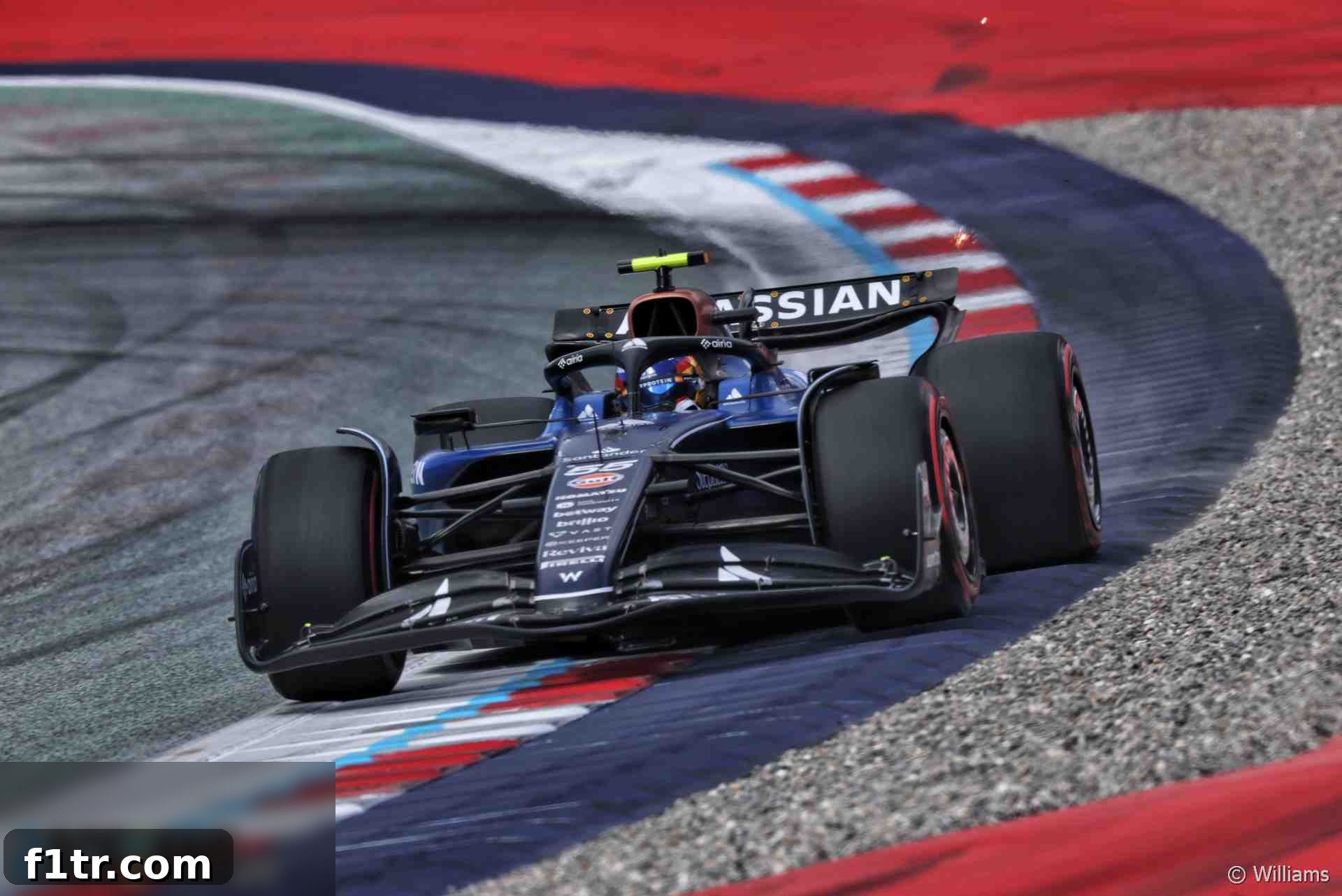
Williams Team Principal James Vowles recently offered a candid assessment of the technical and procedural issues that plagued Carlos Sainz’s race in Austria. Sainz’s car suffered a critical rear brake circuit engagement on the grid, preventing movement. Vowles explained, “In terms of Carlos, when he was on the grid and went to leave the grid, he found that the car wouldn’t move. And what we saw was that the rear brake circuit was effectively engaged, he was holding rear brake pressure, large rear brake pressure. A reset eventually fixed that.” This fundamental hardware fault, a “very unique circumstance” occurring during specific grid procedures, has been identified and permanently addressed, ensuring it “won’t ever happen again.” Beyond the technical glitch, Vowles critically highlighted a need for improved team-driver communication. He admitted, “Even beyond that though, I feel that how we worked with Carlos in our communication, we need to step up, because we could have helped him come back to the pit lane, reset the problem and still be in the race.” This self-reflection underscores Williams’ commitment to not only technical reliability but also operational excellence, crucial for maximizing every race opportunity and supporting their drivers effectively. The incident serves as a stark reminder of the complex interplay between advanced technology and human communication in elite motorsport.
ESPN Formula 1 Viewership Soars After Austrian Grand Prix
Formula 1’s surging popularity in the United States continues to reach new heights, as evidenced by ESPN’s impressive viewership figures for the Austrian Grand Prix. The live telecast on Sunday, June 29, captivated an average of 1.1 million viewers, marking a two percent increase over the previous year’s race. This milestone establishes a new record for the largest audience ever for the Austrian Grand Prix on U.S. television, surpassing the 1.09 million viewers recorded last year, which itself was a record at the time. This consistent year-over-year growth underscores the accelerating appeal of Formula 1 across the Atlantic, a trend significantly bolstered by factors such as the “Drive to Survive” documentary series, an increasing number of US-based races, and the engaging personalities within the sport. The strong viewership numbers highlight F1’s successful penetration into the competitive American sports market, demonstrating its evolution from a niche interest to a mainstream spectacle capable of drawing substantial audiences. This growth is vital for the sport’s global expansion strategy and its commercial partners, signaling a robust and expanding fan base in a key market.
Domenicali to Emphasize F1’s Vital Role in the UK Economy to Prime Minister Starmer
Stefano Domenicali, President and CEO of Formula 1, is set to engage with UK Prime Minister Sir Keir Starmer to highlight the critical economic and cultural importance of Formula 1 to the United Kingdom. This high-level discussion will address ongoing challenges, particularly those stemming from Brexit. Domenicali noted, “There are things that we need to solve in terms of facilitating the tie-down with Brexit. There are complications for the movement, there are complications for the visas for people.” The UK serves as the undeniable heartland of Formula 1, hosting seven of the ten F1 teams, a vast network of motorsport suppliers, and the iconic Silverstone circuit. The complexities introduced by Brexit, particularly concerning the movement of personnel, equipment, and logistics across borders, pose significant operational hurdles for teams and the wider F1 ecosystem. Domenicali’s intervention underscores the sport’s commitment to finding practical solutions that safeguard its operations and reinforce its substantial contribution to the UK economy, including job creation, technological innovation, and global brand promotion. Ensuring smooth international operations remains paramount for F1’s continued success in its spiritual home.
Daniel Ricciardo Embraces “Life in the Slow Lane” Post-F1 Career
After a storied career in Formula 1, fan-favorite Daniel Ricciardo is candidly sharing insights into his life post-retirement, revealing a profound sense of contentment and perspective. Ricciardo articulated a simple yet powerful philosophy that guided his journey, stating, “I think I was quite lucky with the advice. It was always just, ‘Go and have fun’. It wasn’t about trying to impress someone or be someone you’re not. ‘If you do this you’ll be on TV and make money’. It wasn’t about that, it was just, ‘Go and have fun’.” This sentiment reflects a refreshing departure from the intense pressures and commercial demands that often define an F1 driver’s existence. For many, the transition out of elite sport can be challenging, but Ricciardo appears to have found peace by prioritizing personal enjoyment and authenticity. His words offer a valuable lesson on the importance of intrinsic motivation and the pursuit of joy, not just in motorsport but in life beyond the competitive spotlight. Ricciardo’s ability to maintain this perspective, even amidst the high-stakes environment of F1, speaks volumes about his character and mental resilience, now allowing him to truly savor life at a more relaxed pace.
Circuit de Catalunya Leads Global Motorsport in Sustainability with New SCI Ranking
The commitment to environmental responsibility in motorsport is growing, and a groundbreaking initiative, the Sustainable Circuits Index (SCI) 2025, is now providing a crucial benchmark. This innovative index, the first-of-its-kind, objectively ranks the sustainability efforts of 117 permanent and temporary motorsport circuits worldwide. Circuits are rigorously assessed against 21 industry-specific criteria, spread across seven comprehensive sustainability categories, utilizing a robust, proprietary methodology. In its inaugural ranking, Spain’s Circuit de Catalunya has secured the top spot, demonstrating exemplary environmental practices. Italy’s historic Mugello circuit followed closely, while the UK’s Silverstone and France’s Circuit de la Sarthe shared an impressive third place. The SCI is poised to become an indispensable tool for promoting best practices, encouraging innovation, and driving the entire motorsport industry towards a more sustainable future. By highlighting leaders in eco-conscious operations, the index not only celebrates current achievements but also inspires other circuits to enhance their environmental stewardship, ensuring the long-term viability and societal relevance of global motorsport venues.
Dropping in at Number 10 🇬🇧
Ahead of the British GP and to mark the 75th anniversary of F1, we were invited to 10 Downing Street to meet with Prime Minister Sir Keir Starmer to emphasise the importance of the sport to the United Kingdom’s economy. #HaasF1 #F1 #BritishGP pic.twitter.com/0uuYIZAh4Q
— MoneyGram Haas F1 Team (@HaasF1Team) July 2, 2025
The MoneyGram Haas F1 Team made a notable visit to 10 Downing Street, the official residence of the UK Prime Minister, ahead of the prestigious British Grand Prix. This significant engagement marked the 75th anniversary of Formula 1, providing a platform to underscore the immense economic contributions of the sport to the United Kingdom. Meeting with Prime Minister Sir Keir Starmer, the Haas team emphasized how F1 supports a vast industry, from cutting-edge engineering and manufacturing to tourism and employment. Such high-profile interactions not only highlight the sport’s national significance but also reinforce its global standing as a beacon of innovation and economic dynamism. The presence of F1 teams at the heart of government demonstrates the symbiotic relationship between motorsport and national interests, particularly in a country like the UK, which has played a foundational role in F1’s history and development.
Before the Austrian Grand Prix Red Bull team principal Christian Horner gave an interview in which he said he wanted to make McLaren fans “cry”.Red Bull had one car last and one car out on the first lap of their home race, while McLaren finished one-two.Perhaps he meant “…with laughter.”#F1
— Keith Collantine (@keithcollantine.bsky.social) 2025-07-02T15:49:41.194Z
A memorable moment of pre-race bravado from Red Bull Team Principal Christian Horner drew significant attention, as he expressed a desire to make McLaren fans “cry” ahead of the Austrian Grand Prix. However, the subsequent race unfolded with a dramatic twist of irony. Red Bull, competing at their home circuit, experienced a disastrous outing, with one car finishing last and the other retiring on the very first lap. In stark contrast, their rivals, McLaren, delivered an exceptional performance, securing a dominant one-two finish. Motorsport journalist Keith Collantine’s witty observation perfectly captured the unexpected outcome, suggesting that Horner might have meant “…with laughter.” This incident serves as a powerful reminder of the unpredictable nature of Formula 1, where pre-race confidence can quickly be undone by on-track realities. It also highlights the intense rivalries that fuel the sport and the immediate consequences of bold statements when results fail to align with expectations, providing a moment of schadenfreude for rival fans and a valuable lesson in humility for the paddock.
RaceFans always endeavors to credit original sources. Want to share a relevant motorsport link with us? Send it in via the contact form.
Advert | Become a RaceFans supporter andgo ad-free
- Find more official F1 accounts to follow in the RaceFans F1 social media directory
Celebrations: Happy Birthday to These Motorsport Enthusiasts!
Join us in sending warm wishes to our fellow motorsport community members celebrating their birthdays today: Happy birthday to troma, Chris Preston, and Marcia Simon! May your day be filled with joy and perhaps a little bit of high-octane excitement.
On This Day in Motorsport History: Celebrating Legacies and Milestones
Today marks several significant moments in the rich tapestry of motorsport history, from legendary births to memorable race victories that shaped the sport.
- A Legend’s Birthday: Sebastian Vettel Turns 38. Born on this day in 1987, Sebastian Vettel stands as one of Formula 1’s most decorated drivers. A four-time World Champion, Vettel dominated the sport with Red Bull Racing from 2010 to 2013, setting numerous records for youngest pole-sitter, race winner, and champion. His precision, speed, and analytical approach made him a formidable competitor, and he continued to challenge at the front with Ferrari before concluding his illustrious career. Beyond the track, Vettel became a vocal advocate for environmental sustainability and human rights, solidifying his legacy as both a racing icon and a thoughtful individual.
- 20 Years Ago: Fernando Alonso’s Home Triumph at the French Grand Prix. On this day in 2005, Fernando Alonso delivered a spectacular performance, securing a dominant home victory for Renault at the French Grand Prix held at Magny-Cours. This win was a pivotal moment in his charge towards his first World Championship title, showcasing his exceptional talent and the growing strength of the Renault team. Alonso’s strategic drive and the passionate support from the French crowd made for an unforgettable race, further cementing his status as a future F1 legend.
- 65 Years Ago: Jack Brabham and Cooper’s Dominance at the French Grand Prix. This day in 1960 witnessed a groundbreaking display of engineering and driving prowess as Jack Brabham triumphed at the French Grand Prix. More significantly, it was a landmark day for Cooper Car Company, as their revolutionary rear-engined cars filled the top four positions. This unprecedented achievement underscored the paradigm shift in Formula 1 car design that Cooper had spearheaded, with Brabham leading the charge. Their success at Reims solidified the end of the front-engined era and paved the way for modern F1 car architecture, forever changing the sport’s technical landscape.
Advert | Become a RaceFans supporter andgo ad-free