The Grid Takes Shape: Red Bull Completes the 2020 F1 Car Launch Schedule
The highly anticipated 2020 Formula 1 season officially began its exciting countdown with the final confirmation of Red Bull Racing’s launch plans. Motorsport enthusiasts and fans worldwide can mark their calendars for Wednesday, February 12th, as the Milton Keynes-based squad is set to unveil its challenger, the RB16. This reveal puts Red Bull firmly in the spotlight as one of the key contenders, aiming to build on their three victories from the previous season with their Honda power unit, and signals the culmination of a busy launch period for the sport’s top teams.
The Anticipation Builds: Kicking Off the 2020 F1 Season
Formula 1 car launches are far more than mere ceremonies; they are pivotal moments that ignite the imagination of fans and set the tone for the season ahead. These events offer the first glimpse into the technical innovations, design philosophies, and aesthetic choices that each team has meticulously developed over the winter break. For teams, it’s an opportunity to generate excitement, showcase their sponsors, and project an image of confidence and readiness. For fans, it’s the annual ritual that signals the imminent return of high-octane racing. The 2020 season, in particular, promised intense competition, and the launches provided the initial chess moves in what would become a fascinating championship battle.
Red Bull RB16: The Final Piece of the Puzzle
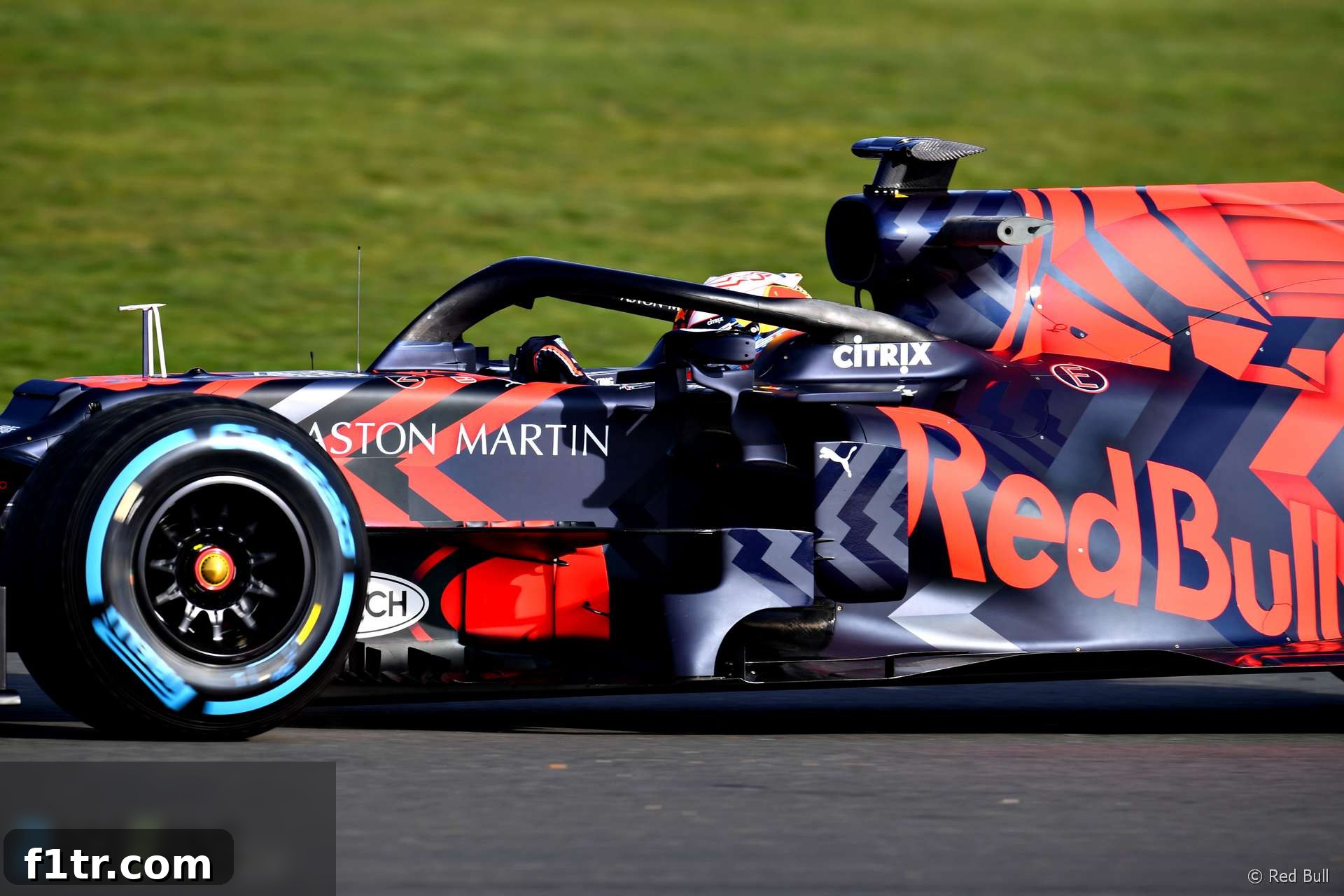
As the last team to confirm their unveiling, Red Bull Racing ensured maximum anticipation for their RB16. The team’s decision to launch on February 12th made them the second team to physically present their 2020 machine. Powered by Honda, the Red Bull-Honda partnership showed immense promise in 2019, securing three race wins and demonstrating significant progress in engine performance and reliability. The RB16 was therefore expected to be a crucial evolution, tasked with carrying the team’s championship aspirations. With Max Verstappen spearheading their charge, the focus was firmly on how Adrian Newey and his design team would push the aerodynamic boundaries to challenge Mercedes’ dominance and Ferrari’s raw pace. The launch event itself, while typically a digital reveal or a small gathering, serves as a powerful statement of intent, and Red Bull’s was no exception, promising a refined and aggressive package.
The timing of Red Bull’s reveal, just days before pre-season testing, allowed them to keep their cards close to their chest for as long as possible. This strategic choice often allows teams to incorporate last-minute design tweaks or to simply maintain an air of secrecy, preventing rivals from gaining any early insights. The RB16, with its vibrant matte livery, was not just a car; it was a symbol of Red Bull’s ambition to return to the pinnacle of Formula 1, challenging for both driver and constructor titles. Their partnership with Honda had matured, and 2020 was viewed as a critical year for the Japanese engine manufacturer to deliver the consistent power and reliability needed to dethrone the reigning champions.
Ferrari’s Bold Start to the Launch Season
Kicking off the entire launch season with characteristic flair, Scuderia Ferrari unveiled their new car, the SF1000, in Reggio Emilia on February 11th, a day prior to Red Bull’s event. Ferrari, with its unparalleled history and fervent Tifosi, always commands immense attention, and their early reveal set a high benchmark for the other teams. The SF1000, named to commemorate Ferrari’s upcoming 1000th Grand Prix start, carried the hopes of an entire nation. After a promising but ultimately frustrating 2019 season that saw them struggle to convert pole positions into wins consistently, the pressure was on for the Italian giants to deliver a championship-winning car. Their launch was a grand affair, reflecting the team’s status and ambition, promising a challenger that was both beautiful and beastly, ready to take the fight to Mercedes and Red Bull from the outset.
Consecutive Unveilings: McLaren and Mercedes Join the Fray
The beginning of the week saw a flurry of activity, with McLaren and Mercedes also presenting their new cars on consecutive days. McLaren, enjoying a resurgence in form, revealed their 2020 contender, the MCL35, on February 13th. The Woking-based team had a stellar 2019 season, finishing ‘best of the rest’ in fourth place in the Constructors’ Championship, a significant improvement that heralded their return to competitiveness. With an exciting driver line-up of Carlos Sainz Jr. and Lando Norris, the MCL35 was anticipated to consolidate their progress, building on a strong foundation of improved aerodynamics and strategic consistency. Their launch event was imbued with a renewed sense of optimism and determination to continue climbing the grid.
Mercedes-AMG Petronas F1 Team, the reigning champions, showcased their new car, the W11, on February 14th. Mercedes had dominated the hybrid era, securing six consecutive double world championships, an unprecedented feat. The W11 was therefore tasked with continuing this incredible legacy. While their launch was often more understated, focusing on technical details and performance targets, the reveal of the silver arrow always sends a clear message of intent: they are here to win. With Lewis Hamilton chasing historic records, the W11 was expected to be a meticulously engineered machine, combining raw speed with bulletproof reliability, designed to withstand the challenges from a resurgent Red Bull and a hungry Ferrari. Their consistent engineering prowess and strategic excellence made their car launch a much-anticipated event, even if the general expectation was further dominance.
Beyond Full Car Reveals: Livery and Identity Unveilings
Not all launch events entail the full reveal of a new car. Some teams strategically opt for livery presentations on last year’s chassis or use the event to announce a new team identity or major sponsorship. This approach can be driven by various factors, including cost efficiency, a desire to keep aerodynamic developments under wraps until testing, or simply to focus on brand storytelling. These events, while not always showcasing a completely new machine, are still crucial for sponsor activation and generating pre-season buzz, allowing teams to set their narrative for the upcoming year.
AlphaTauri’s New Chapter: From Toro Rosso to a Fresh Identity
Among those with alternative launch plans for next week was AlphaTauri, marking a significant transformation for the Red Bull junior team. Following its rebranding from Toro Rosso during the off-season, AlphaTauri presented its new identity, complete with a striking new livery, on February 14th. This change represented more than just a new name; it signaled a strategic shift, aligning the team more closely with Red Bull’s fashion brand and aiming for a more distinct identity within the F1 paddock. While the physical car might have been an evolution of its predecessor for the reveal, the focus was heavily on the fresh brand image and what it meant for the team’s future. The new look and feel were designed to represent a blend of performance and style, emphasizing the team’s dual role as a proving ground for young talent and a capable midfield competitor. The launch event was crucial for establishing the AlphaTauri brand in the minds of F1 fans globally.
The transformation from Toro Rosso to AlphaTauri was a significant marketing move by Red Bull, aiming to leverage their successful fashion brand on the global stage of Formula 1. The team, based in Faenza, Italy, had a long history of nurturing future champions like Sebastian Vettel and Max Verstappen. With the new identity, the expectation was not just continued talent development but also an enhanced presence and, potentially, even stronger results. The reveal of their new livery and team ethos was thus a highly anticipated moment, symbolic of a new era for the junior squad within the Red Bull motorsport empire, promising a renewed vigor and a fresh approach to competition.
Renault and Racing Point: Setting the Stage
Renault also had launch events planned for next week, with an event scheduled for February 12th. While it was not explicitly confirmed whether their new car would be presented in full, these events are vital for outlining the team’s objectives and showcasing their factory efforts. Renault entered 2020 with the clear aim of improving their constructor’s championship standing after a mixed 2019 season. Their launch offered an insight into their strategic direction, technical partnerships, and their ambitions to challenge the top three teams more consistently. The focus would have been on demonstrating progress in their power unit development and chassis design, reinforcing their commitment to Formula 1.
Racing Point’s launch on February 17th was similarly expected to involve primarily a livery presentation on last year’s car, the RP19. For Racing Point, 2020 was a transitional year, building towards its exciting future as the Aston Martin F1 Team from 2021. The reveal of their pink livery, perhaps with subtle updates, served as a bridge between their current identity and their prestigious future. These events are crucial for engaging sponsors and maintaining team visibility, even when the full extent of a new car’s design remains under wraps. It offered a glimpse into their continuity and the strategic path being laid for their significant evolution in the sport.
The Patient Reveal: Waiting for Pre-Season Testing
Some teams adopt a different strategy, choosing to reveal their new cars for the very first time when pre-season testing officially commences. This approach can be driven by several factors, including a desire for secrecy, optimizing development time right up to the last minute, or simply budgetary constraints that preclude a separate, elaborate launch event. For these teams, the pit lane on the first morning of testing becomes their impromptu launch pad, where the real work begins immediately after the covers are pulled off.
Haas, Alfa Romeo, and Williams: First Glimpses at Catalunya
Three teams—Haas, Alfa Romeo, and Williams—followed this strategy, planning to reveal their new cars for the first time when pre-season testing began at the Circuit de Catalunya on February 19th. Haas and Williams, however, made a slight concession by releasing images of their new cars online a few days ahead of the physical track debut. This offered fans a sneak peek while still maintaining the practical advantage of a testing-centric reveal. Haas, having faced performance struggles and sponsorship issues in 2019, aimed for a more consistent and competitive 2020 season. Alfa Romeo, with Kimi Räikkönen providing invaluable experience, sought to solidify its midfield position. Williams, arguably facing the steepest climb, desperately needed their 2020 car to be a significant step forward after two challenging years at the back of the grid. Their focus during testing would be intensely on reliability and understanding the fundamental performance of their new package.
The Crucible of Testing: Circuit de Catalunya
Pre-season testing is the ultimate proving ground before the racing truly begins. Held at the Circuit de Catalunya near Barcelona, Spain, it offers teams their first real opportunity to run their new cars in anger. In 2020, teams had a total of six days of testing, split into two three-day sessions, excluding their limited mileage filming days. This concentrated period is critical for shakedowns, systems checks, data gathering, and understanding the car’s fundamental balance and characteristics. It’s where reliability is pushed to the limit, aerodynamic theories are validated (or debunked), and engine performance is assessed under sustained loads. Drivers complete hundreds of laps, providing crucial feedback to engineers, who then work tirelessly to optimize the car’s setup and identify any potential issues before the competitive season kicks off. The Circuit de Catalunya, with its mix of high-speed corners and a technical final sector, provides an excellent barometer for overall car performance.
The reduced testing schedule, compared to previous eras, placed immense pressure on teams to maximize every minute on track. Every lap counted, every data point was crucial. Beyond raw lap times, teams were focused on understanding tyre degradation, fuel efficiency, and how different aerodynamic configurations performed in varying conditions. Reliability was paramount; a car that spent too much time in the garage was a car losing valuable development time. For teams like Williams, Haas, and Alfa Romeo, who often revealed their cars directly at the circuit, these six days were even more intense, serving as both their public debut and their primary development window. The insights gained from Barcelona testing would directly influence their preparations for the first race, potentially shaping their entire season.
Outlook for the 2020 F1 Season: High Stakes and Renewed Rivalries
The 2020 F1 season promised to be an enthralling spectacle, building on the foundation of stable regulations before the significant overhaul planned for 2021. This regulatory stability meant that teams were likely to bring highly refined versions of their 2019 concepts, leading to even tighter competition across the grid. The battles were expected to be fierce, not just at the front between Mercedes, Ferrari, and Red Bull, but also in the tightly packed midfield. Driver line-ups were largely settled, allowing for consistency and the deepening of intra-team rivalries. The anticipation for the first race in Australia on March 15th was palpable, with fans eager to see whether Mercedes could be challenged, if Ferrari could convert their promise into titles, or if Red Bull and Max Verstappen could truly emerge as championship contenders. The launches and testing provided tantalizing glimpses, but the true picture would only unfold under the fierce lights of competition.
- See the complete 2020 F1 launch and test schedule
With all teams having either launched their cars or confirmed their reveal strategy for pre-season testing, the stage was officially set for what promised to be a thrilling 2020 Formula 1 season. The intricate dance of car development, strategic reveals, and rigorous testing culminates in the breathtaking spectacle of Grand Prix racing. As the roar of the engines approaches, the excitement builds for fans globally, eager to witness the battles, the triumphs, and the drama that only Formula 1 can deliver.