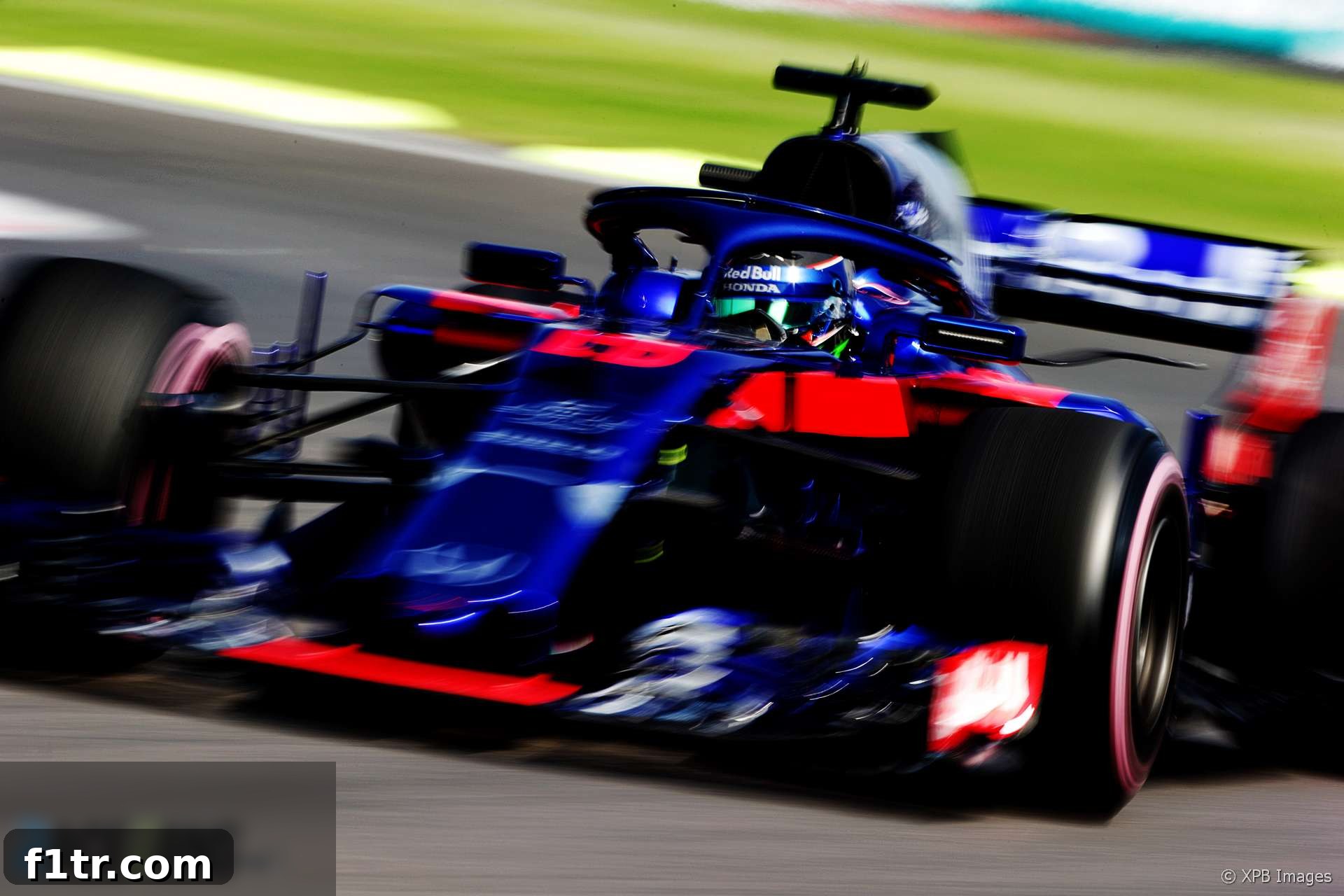
In the relentlessly competitive arena of Formula 1, the performance and reliability of a power unit are the foundational pillars of success. Every team strives for an engine that can deliver maximum horsepower consistently, without faltering under immense stress. For Honda, their latest chapter as a Formula 1 engine supplier has been a testament to perseverance and engineering evolution. Initially fraught with challenges upon their return to the sport, the Japanese manufacturer has now garnered significant praise, with Toro Rosso team principal Franz Tost affirming that Honda’s power units have “exceeded expectations” in terms of reliability and are making considerable strides in performance.
This positive assessment from Tost arrives at a critical juncture for Honda, as they prepare to expand their partnership to include the senior Red Bull Racing team alongside Toro Rosso. The burgeoning confidence in Honda’s capabilities, articulated by a seasoned team principal like Tost, signals a promising shift in the perception and competitive standing of their power unit, setting the stage for an exciting future in Grand Prix racing.
Honda’s Reliability: A Remarkable Turnaround in Formula 1
Advert | Become a Supporter & go ad-free
Franz Tost’s candid remarks during a recent FIA press conference highlighted a dramatic transformation in Honda’s reliability. “Honda have exceeded expectations with regards to reliability, because we thought we would have much more problems, but to be honest we haven’t had any major issues,” Tost revealed. This statement carries significant weight, especially considering Honda’s well-documented struggles with reliability during its previous partnership with McLaren, which often saw cars retiring prematurely and drivers facing numerous grid penalties.
The journey from a challenging debut to a point where reliability is lauded has been a testament to Honda’s unwavering commitment and the sheer dedication of its engineering teams. Developing a modern F1 power unit is an incredibly complex undertaking. It involves intricate integration of a turbocharged V6 internal combustion engine, two powerful motor generator units (MGU-H and MGU-K), an energy store (battery), and sophisticated control electronics. Ensuring these high-tech components operate flawlessly for thousands of kilometers under extreme temperatures, G-forces, and vibrations is a monumental engineering feat. Honda’s ability to overcome initial hurdles and deliver a robust package demonstrates a profound learning curve and effective problem-solving strategies.
While Toro Rosso has notably utilized more power units than any other team on the grid, Tost clarified that this was not indicative of systemic reliability failures. Instead, many of these changes were part of Honda’s aggressive development strategy, involving proactive swaps to test various performance upgrades and new specifications of the power unit throughout the season. This approach, though sometimes incurring grid penalties, has been a calculated risk designed to accelerate development, gather crucial data, and refine their designs in a real-world racing environment. This iterative process is vital in F1, where continuous improvement is the only path to competitiveness.
Significant Performance Gains and Narrowing the Competitive Gap
Beyond the impressive strides in reliability, Tost also expressed considerable satisfaction with Honda’s performance gains. “We are not far away from the top teams with the new specification,” he affirmed, providing a crucial insight into the tangible improvements in horsepower and overall engine efficiency. This declaration is particularly significant because it suggests that Honda is not merely building durable engines but increasingly competitive ones capable of challenging the established front-runners.
The introduction of new engine specifications, often referred to by a numbering system (e.g., ‘Spec Three’), signifies major developmental leaps incorporating revised designs, materials, and combustion strategies. In Formula 1, the race for power is relentless, with manufacturers constantly striving to extract more horsepower, improve fuel economy, and reduce overall weight. Honda’s success in implementing upgrades that genuinely close the performance deficit to giants like Mercedes, Ferrari, and Renault speaks volumes about their engineering prowess. The sentiment within the Toro Rosso camp is that the gap to the leading power units has diminished from several tenths of a second to merely fractions, fundamentally altering their competitive outlook and allowing them to contend for higher positions on merit.
Strategic Engine Management: Navigating High-Altitude Challenges in Mexico
Despite the encouraging overall progress, the intricate nuances of F1 engine management were prominently showcased during the recent Mexican Grand Prix weekend. Neither of the Toro Rosso drivers, Pierre Gasly nor Brendon Hartley, deployed Honda’s latest ‘Spec Three’ engine for the race, opting instead for an older unit. This decision, seemingly counterintuitive given the performance advantages of the newest specification, was a meticulously calculated strategic move necessitated by the unique and demanding conditions of the Autódromo Hermanos Rodríguez circuit.
Pierre Gasly’s Friday practice session was particularly affected. Following the previous race in Austin, an “assembly issue” was detected on his power unit, prompting Honda to install a new engine for the Mexican GP. However, after completing only two laps in practice, the team made a swift decision to revert Gasly’s engine to an older ‘Spec Two’ unit, mirroring the choice already made for Brendon Hartley. Tost explained the rationale behind this tactical call: “We did two laps, decided to change the power unit to the old specification, only because of this very special altitude here and these conditions and therefore Honda thinks they have better knowledge and experience with their older specification to set all the parameters correctly and therefore Pierre will do the race weekend with spec two.”
Mexico City’s high altitude, situated over 2,200 meters (7,200 feet) above sea level, presents an extraordinary challenge for F1 power units. The significantly lower air density at this elevation impacts engine performance in multiple critical ways: turbochargers must work considerably harder to compress the thinner air, leading to increased stress and heat; cooling systems become less efficient; and the internal combustion engine’s combustion process is less optimal. In such extreme conditions, engine reliability can become even more precarious. Honda’s decision to utilize a more thoroughly validated and understood ‘Spec Two’ unit, despite its marginal performance disadvantage, was a pragmatic choice that prioritized bulletproof reliability and precise parameter optimization over outright peak speed. This approach reflects a prudent and adaptive strategy essential for maximizing points on a demanding F1 calendar.
Furthermore, this strategic engine deployment underscores the delicate balance teams must maintain between maximizing performance and adhering to strict F1 engine regulations. Drivers are limited to a fixed number of power unit components per season, and exceeding these limits inevitably leads to grid penalties, which can severely compromise a driver’s race prospects. Honda’s careful management of engine mileage and the judicious deployment of different specifications throughout the season are crucial for optimizing both competitive advantage and reliability while skillfully navigating the punitive regulatory landscape.
A Promising Future: The Synergistic Red Bull Partnership
Advert | Become a RaceFans supporter andgo ad-free
Looking towards the horizon, Franz Tost remains resolutely optimistic about Honda’s developmental trajectory. “Regarding the work of Honda during the year, they have so far done a fantastic job because they have improved the performance a lot, and also the reliability,” he reiterated. This consistent and robust progress instills immense confidence for the concluding races of the season in Sao Paulo and Abu Dhabi, where the team aims to capitalize on their improved package and avoid any further grid penalties that could hinder their scoring opportunities.
The most compelling indicator of Honda’s remarkable progress and immense future potential lies in its impending partnership with Red Bull Racing. For the upcoming Formula 1 season, both Scuderia Toro Rosso and its senior counterpart, Red Bull Racing, will be powered exclusively by Honda engines. Tost’s palpable enthusiasm for this expanded collaboration is evident: “For next year, because they are in the right way and they will improve during the winter months and I’m looking forward to seeing Red Bull Racing and Toro Rosso next year with Honda.”
This extension of the Honda partnership to a top-tier team like Red Bull Racing – a multiple Constructors’ and Drivers’ Champion – represents a monumental vote of confidence. It unequivocally signifies that Honda has successfully demonstrated its power unit’s capability to compete at the very highest echelons of Formula 1. The potential synergy between Red Bull’s acclaimed chassis design prowess and Honda’s rapidly improving power unit creates a formidable combination that many in the paddock believe could shake up the established order. The crucial winter development period will see Honda consolidating its recent gains and introducing further advancements. With the combined feedback, data, and resources from two competitive F1 teams, the pace of engine development is poised to accelerate even further, setting the stage for what could be a highly competitive and thrilling season for both Red Bull and Toro Rosso.
Conclusion: Honda’s Resurgence Redefines Formula 1 Expectations
Honda’s recent journey in Formula 1 has been a compelling and inspiring narrative of unwavering dedication, formidable engineering prowess, and a relentless pursuit of excellence. From navigating the significant challenges of its initial return to the sport, to achieving a state where its power units are now exceeding expectations in both reliability and performance, Honda’s commitment has been unwavering. Franz Tost’s enthusiastic endorsements serve as a powerful testament to the substantial strides made, particularly highlighting the enhanced dependability of their engines and their impressive ability to narrow the performance gap to the sport’s established front-runners.
The strategic decisions regarding engine deployment, such as those witnessed under the demanding conditions of the Mexican Grand Prix, underscore the meticulous and adaptive approach taken to maximize both reliability and competitive advantage across a diverse F1 calendar. As Honda prepares for an even deeper and more integrated partnership with the Red Bull racing family in the upcoming season, the stage is undeniably set for a potential resurgence that could significantly redefine the competitive landscape of Formula 1. The palpable confidence emanating from the Toro Rosso camp is a strong and clear signal that Honda is not merely back in the game, but has re-emerged as a formidable force to be reckoned with, poised to challenge for supremacy once again.
Related Articles: Exploring Honda’s F1 Journey and Beyond
- F1 feared “death knell” for Drive to Survive after Ferrari and Mercedes snub
- McLaren staff told us we were “totally crazy” to take Honda engines in 2018 – Tost
- ‘It doesn’t matter if we start last’: How Red Bull’s junior team aided Honda’s leap forward
- Honda’s jet division helped F1 engineers solve power unit problem
- McLaren Racing losses rise after Honda split
Browse all 2018 F1 season articles