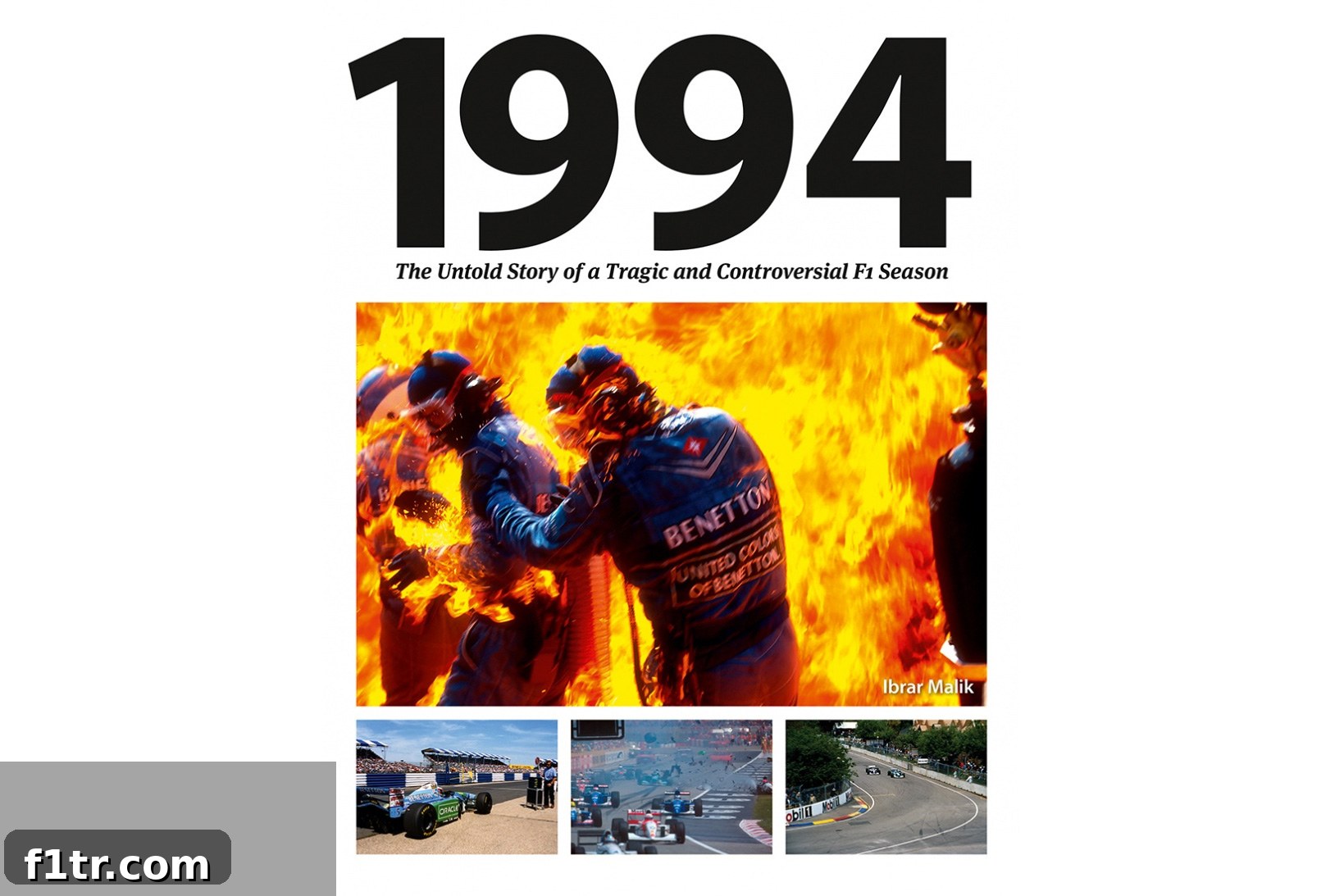
The 1994 Formula 1 season stands as an indelible chapter in the sport’s illustrious history, a year that profoundly reshaped the modern world championship and forever altered its trajectory. It was a season marked by unprecedented highs, devastating lows, and a series of events that forced a radical re-evaluation of safety standards across motorsport. The tragic deaths of legendary driver Ayrton Senna and rising talent Roland Ratzenberger at the San Marino Grand Prix, alongside a succession of other serious incidents, served as a stark and painful catalyst for the sport to drastically reconsider its approach to driver and spectator safety.
This period ushered in a significant changing of the guard within Formula 1. The profound loss of a driver of Senna’s unparalleled calibre, following the recent departures of other iconic champions like his long-term rival Alain Prost, created a void at the pinnacle of the sport. Into this crucible of change, a new generation of talent began to emerge, with Michael Schumacher unequivocally rising to prominence. His quest for a first world championship victory, however, was mired in a series of controversies and ultimately decided by a highly contentious collision with rival Damon Hill at the season’s final race in Adelaide, further cementing 1994 as a year of intense drama and enduring debate.
Innumerable accounts have been penned detailing the tumultuous events of this singular year, particularly within the many biographical volumes dedicated to Ayrton Senna. Key figures involved in the championship battle have also offered their unique perspectives. Damon Hill himself, in his insightful work “Grand Prix Year,” and Benetton mechanic-turned-broadcaster Steve Matchett, through his candid “Life in the Fast Lane,” provided fascinating, firsthand insights from the two teams that fiercely duelled for both the Drivers’ and Constructors’ championships. These existing narratives form an essential backdrop, but the complex tapestry of 1994 continues to invite fresh analysis and untold stories.
Now, Ibrar Malik contributes to this rich historical discourse with his comprehensive volume, “1994: The Untold Story of a Tragic and Controversial F1 Season.” The book offers a broad and meticulously researched history of the season, echoing the depth and scope of Christopher Hilton’s seminal work on the 1982 F1 season – another year indelibly marked by tragedy, intense political intrigue, and a championship fight that went down to the absolute wire. Malik has skillfully crafted a thorough and well-researched guide to this pivotal period, aiming to illuminate aspects often overlooked in previous accounts and provide a fresh lens through which to view its complexities.
With the benefit of more than two decades of hindsight, it is all too easy to perceive the 1994 Formula 1 season through a singular, often mawkish, lens, focusing predominantly on the tragic events that unfolded at Imola. However, Malik’s book deftly reminds us that in an era where contemporary F1 weekends can sometimes feel routine, 1994 was a year where something truly extraordinary, shocking, or utterly memorable seemed to transpire at nearly every single round. Mentally, I am often transported back to those thrilling early hours, watching Damon Hill’s masterful command of the treacherously wet conditions at Suzuka, or revisiting ‘that’ defining collision in Adelaide that sealed the championship fate. The season was a relentless parade of drama, technical innovation, penalties, comebacks, and pure racing spectacle.
Malik’s dedication to uncovering fresh perspectives is a significant strength of “1994: The Untold Story.” He has delved exceptionally deep into his sources for the book, and crucially, by not being one of the usual suspects within established F1 publishing circles, he brings a refreshingly different and candid perspective. The book features a compelling array of interviews, particularly with mechanics who were on the front line of the paddock, providing an invaluable grassroots insight that is often missing from more high-level accounts. Furthermore, the text is not merely a rehash or a reprint of contemporary media reports; instead, it offers genuinely refreshing perspectives and strives to unearth new insights, challenging established narratives and encouraging readers to reconsider the intricate events of that unforgettable year.
Beyond its compelling narrative and meticulous research, the physical presentation of “1994: The Untold Story” upholds the high standards set by other releases from Performance Publishing. The book is very well-presented, featuring a collection of great illustrative photos scattered throughout its pages that enhance the reader’s experience and provide visual context to the unfolding drama. Priced at a reasonable £29, this well-produced volume represents a worthy investment for any Formula 1 enthusiast, offering substantial value for its content and presentation. It is, without doubt, a valuable and essential addition to any dedicated motorsport bookshelf, providing both a poignant retrospective and new understanding of a season that changed F1 forever.
RaceFans Review
Ibrar Malik’s “1994: The Untold Story” offers an exceptionally detailed and nuanced look at one of Formula 1’s most critical and controversial seasons. Its depth of research, fresh perspectives, and engaging narrative make it a standout contribution to F1 literature. Highly recommended for fans seeking a comprehensive and illuminating account beyond the familiar headlines.
Discover more insightful reads with all the RaceFans book reviews.
“1994: The Untold Story of a Tragic and Controversial F1 Season”
Author: Ibrar Malik
Publisher: Performance Publishing
Published: 2019
Pages: 164
Price: £29.00
ISBN: 9780957645035
Recapping the Tumultuous 1994 Formula 1 Season
The 1994 Formula 1 season began with an air of heightened anticipation, immediately living up to its billing as a year where “everything changed.” The opening races hinted at the intense rivalry to come, with Michael Schumacher asserting early dominance. The 1994 Brazilian Grand Prix saw Schumacher claim victory amidst Senna’s uncharacteristic spin and Martin Brundle’s incredible escape from a major incident. Schumacher continued his winning streak at the Pacific Grand Prix, a race that also saw the first whispers of a burgeoning traction control controversy, a technical debate that would plague the season.
The San Marino Grand Prix weekend was tragically unfolding from its very start. Friday witnessed Rubens Barrichello’s horrific crash, a stark premonition of the darker events to come. Saturday then brought the devastating news of Roland Ratzenberger’s death, stunning the F1 paddock and the wider world. The culmination of this darkest weekend arrived on Sunday with the crash seen around the world, claiming the life of Ayrton Senna. The aftermath prompted immediate and radical changes to F1 safety protocols, a legacy that continues to impact the sport to this day.
Following Imola, the season continued, albeit under a heavy pall. At the Monaco Grand Prix, Schumacher secured his fourth win in a subdued atmosphere, highlighting his emerging dominance. The Spanish Grand Prix saw Damon Hill claim a vital victory, while Schumacher delivered a stellar performance despite gearbox issues, an acrimonious weekend overall. Schumacher soon returned to winning ways in Montreal at the Canadian Grand Prix, continuing his relentless pursuit of the title.
The mid-season brought more drama and shifts in momentum. Nigel Mansell’s highly anticipated return at the French Grand Prix couldn’t halt another Schumacher victory. The British Grand Prix provided a home win for Damon Hill, but Schumacher earned a controversial ban, impacting his championship lead. The German Grand Prix saw Gerhard Berger end Ferrari’s long win drought, a race overshadowed by a frightening Benetton pit lane blaze. Benetton quickly bounced back at the Hungarian Grand Prix with a double podium finish.
As the championship intensified, further penalties and close battles ensued. Hill was handed a win at the Belgian Grand Prix after Schumacher was thrown out for a technical infringement, tightening the championship. The Italian Grand Prix saw Hill claim another victory, while a late crash cruelly crushed Lotus’s recovery hopes. Hill continued to chip away at Schumacher’s lead, cutting it to just one point in Portugal. Schumacher, however, edged clear again at the European Grand Prix, though a fuel rig issue thwarted Hill’s challenge.
The penultimate race in Japan saw Hill deny Schumacher victory in a thrilling, rain-disrupted race following Brundle’s crash, setting up a winner-takes-all finale. The 1994 Australian Grand Prix became the season’s infamous climax, where Schumacher’s first world title was tainted by a contentious collision with Damon Hill, leaving an enduring mark on F1 history. This series of events, from devastating tragedy to relentless competition and technical controversies, firmly established 1994 as a season like no other.
More F1 Book Reviews & Content
- Next new F1 game to arrive in 2027, EA to offer 2026 season as paid DLC
- “F1 Insider: Notes from the Pit Lane” – Ted Kravitz’s new F1 book reviewed
- “Rennsport”: The RaceFans review
- “Grid to Glory: 75 Milestone F1 Moments” – Alex Jacques’ new book reviewed
- “Formula 3000: Where Legends Earned Their Stripes” reviewed
Browse all Reviews