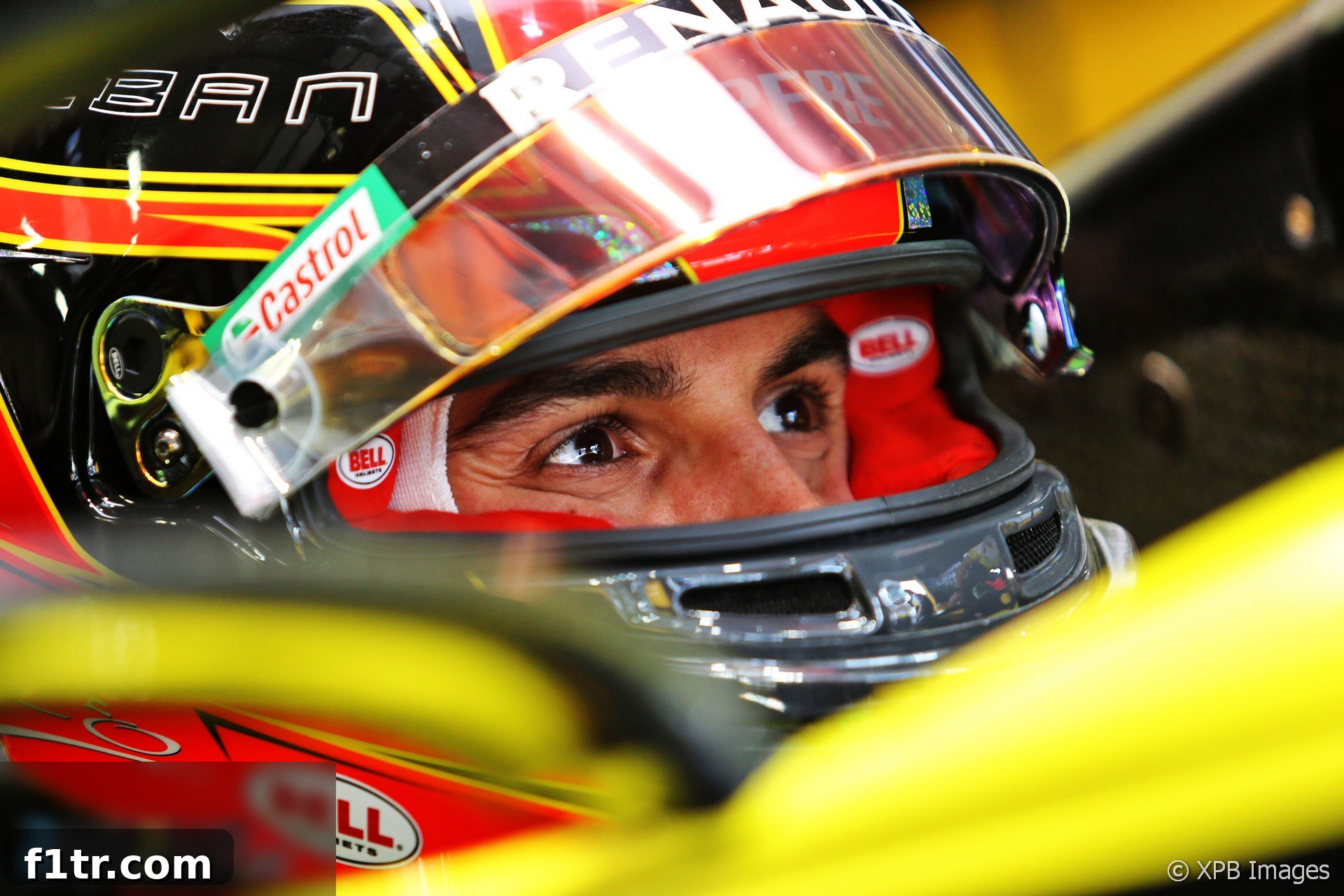
In the high-stakes world of Formula 1 qualifying, where fractions of a second can dictate grid positions and strategic advantages, every aerodynamic gain is meticulously sought after. For Esteban Ocon, a recent qualifying session left him convinced that a crucial oversight in team strategy potentially cost him significant grid advancement. The Renault driver firmly believes he could have been substantially closer to his teammate, Daniel Ricciardo, had he benefited from a slipstream during his critical flying lap.
The session in question saw Daniel Ricciardo successfully navigating his way into Q3, the final and most competitive segment of qualifying. In stark contrast, Ocon was eliminated in Q2, posting a lap time that was over six-tenths of a second slower than Ricciardo’s best. This significant disparity sparked immediate questions and a detailed debrief within the Renault camp, highlighting the profound impact of even minor aerodynamic advantages in modern F1.
Post-session discussions with his engineering team revealed a clear consensus: Ocon had lost “easily four tenths” of a second purely due to the absence of a slipstream. This direct, data-driven feedback underscored the team’s assessment that the missing aerodynamic tow was the primary factor behind the performance gap, rather than any perceived deficiency in Ocon’s driving or car setup. It painted a vivid picture of how marginal gains, or losses, can dramatically alter a driver’s fate on a Saturday afternoon.
Speaking to the media after qualifying, Ocon openly expressed his surprise at the amplified effect of slipstreaming in the current generation of Formula 1 cars. “Having a tow seems a lot more powerful than it was back when I was driving a couple years ago with those new cars,” he noted. This observation suggests that the aerodynamic characteristics of contemporary F1 machinery, with their intricate wings and floor designs, make the drafting effect even more pronounced. Ocon further implied that a more optimized approach to securing a slipstream could have significantly altered their qualifying fortunes: “I think if we had managed that better, probably we’d have moved up the road as well.” This statement hints at a potential strategic misstep or a lack of coordination that prevented him from capitalizing on this crucial aerodynamic aid.
The concept of a slipstream, or “tow,” is a fundamental principle of aerodynamics in motorsport. It occurs when a car follows closely behind another, entering the low-pressure zone created by the leading car. This reduces the air resistance, or drag, on the following car, allowing it to achieve higher top speeds on straights. In Formula 1, where engines are at their maximum power output and drag is a primary limiting factor on straights, a well-executed slipstream can provide a substantial speed advantage, shaving valuable tenths off lap times. The efficacy of a slipstream can vary depending on track layout, straight lengths, and even ambient conditions like wind direction and speed. Its strategic deployment during qualifying often becomes a delicate balancing act for teams, deciding which driver gets the advantage and when.
The significance of slipstreaming was further highlighted by Mercedes team principal Toto Wolff, who offered his insights into its quantifiable benefits. Wolff estimated that the advantage gained from a slipstream could be “somewhere, depending on the wind direction or so, between one and a half tenths to three tenths.” While this figure might seem modest in isolation, in the ultra-competitive environment of Formula 1, where the top teams are often separated by mere hundredths, such a gain can be the difference between pole position and a second-row start. Mercedes, renowned for its meticulous strategizing, demonstrated a structured approach to this, with Wolff adding: “We have the drivers alternating in who gets to choose when to go out. Today it was Lewis [Hamilton’s] call and obviously he let Valtteri [Bottas] out first.” This transparent system ensures fairness and maximizes the team’s collective potential, preventing internal friction over competitive advantages.
Ocon’s frustrations were not just internal but also surfaced during the qualifying session itself. His radio communication with the Renault pit wall revealed his direct questioning about the team’s strategy concerning alternating slipstreams, particularly his expectation to follow Daniel. This line of questioning hinted at a pre-race agreement or understanding that might not have been honored during the heat of the moment. The situation echoed a similar controversy two years prior, when Daniel Ricciardo himself lodged complaints about Red Bull’s slipstream arrangements at the same circuit, with his then-teammate Max Verstappen. Such historical parallels underscore the recurring challenge teams face in managing driver expectations and maximizing collective performance in qualifying, especially when a direct aerodynamic advantage is at play. The tension palpable in Ocon’s query and the team’s evasive response during the session (“Esteban, now isn’t the time to talk about these things, OK, let’s talk about it in the office”) highlight the sensitive nature of these strategic decisions and their potential to impact driver morale and team harmony.
For Renault, a team striving to climb the Constructors’ Championship ladder, optimizing every aspect of performance, including qualifying strategy, is paramount. The difference between Q2 elimination and a Q3 appearance can translate into better starting positions, which are critical for points finishes. Ocon’s experience brings to the forefront the intricate balance between individual driver performance and collective team strategy. While a driver’s raw pace and ability are undeniable, the subtle nuances of team coordination, such as providing a slipstream, can unlock extra performance that is otherwise unattainable. This incident serves as a crucial reminder of how deeply aerodynamic principles are interwoven with strategic decision-making in modern Formula 1, and how meticulously teams must plan to exploit every available advantage.
The stakes are incredibly high for drivers like Ocon, who are constantly fighting for their place on the grid and within their teams. Losing four tenths due to a strategic oversight can have a cascading effect, impacting not just a single qualifying result but potentially the entire race weekend and a driver’s confidence. For Renault, this episode provides valuable lessons in fine-tuning their qualifying approach, ensuring that both drivers are equally supported in their quest for optimal performance, and that any pre-agreed strategies are executed flawlessly. As Formula 1 continues to push the boundaries of engineering and human performance, these marginal gains and strategic considerations will only become more critical in determining success.
Ocon’s post-Q2 debrief
| Ocon: | I don’t really understand where the gap comes from, to be honest. That was a clean lap. There’s probably a tenth to get better but I don’t know how it can be as big as that. The out-lap was not too bad. I had a decent front end, never as good as the first run, but better than the others. Apart from that it was clean, it was not over-pushed. So we need to reveal what it is because it’s a massive gap. I don’t really understand how it can be that big looking at the lap I just did. |
| To Ocon: | Understood Esteban. Obviously we’ll look into that. I don’t know if you can still see on the screen in front of you, Esteban, but you can see the speed delta on the straight line, Danny’s best lap to the one you just did, there’s easily four tenths there based on the tow, I’d say. Your exits out of all those corners are good but the straight-line speed just doesn’t match Daniel’s with the tail wind he’s got, effectively. |
| Ocon: | Yeah. And there’s zero loss in the corners? |
| To Ocon: | Yeah. There’s a small amount at turn one, absolutely, but you gain in turn four and then you lose it towards the end up to turn six again because of the tow there. We’ll go through it in more detail in the office. |
| Ocon: | Did we say that I was going behind Daniel in this session and I was always in front? |
| To Ocon: | Esteban, now isn’t the time to talk about these things, OK, let’s talk about it in the office. |
2020 F1 season
- Grosjean to make F1 test return tomorrow for first time since Bahrain horror crash
- Pictures: Wrecked chassis from Grosjean’s Bahrain fireball crash to go on display
- Bottas vs Rosberg: Hamilton’s Mercedes team mates compared after 78 races each
- F1 revenues fell by $877 million in Covid-struck 2020 season
- Hamilton and Mercedes finally announce new deal for 2021 season
Browse all 2020 F1 season articles