McLaren’s Evolving Driver Management: A New Era Under Zak Brown’s Leadership
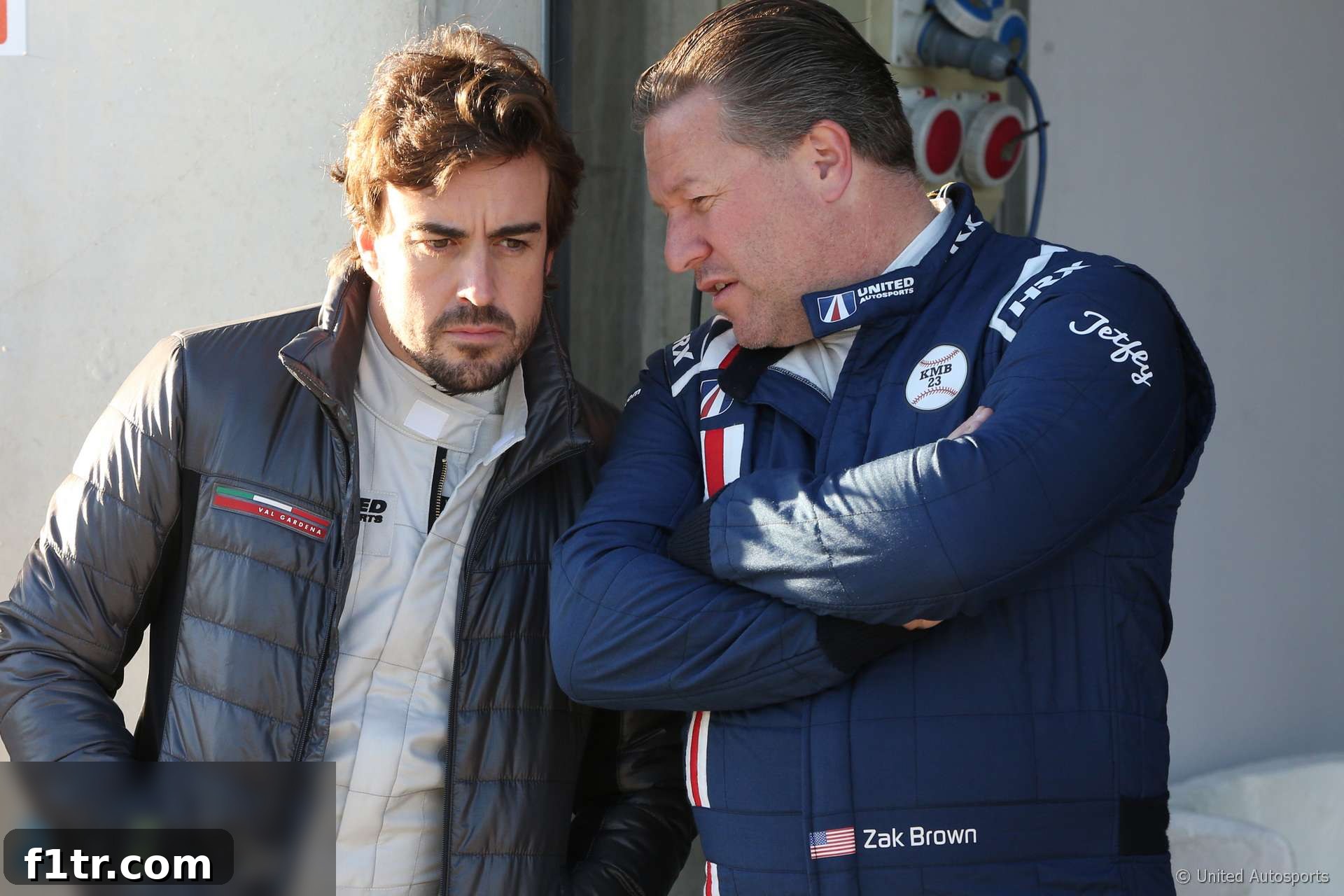
McLaren Racing CEO Zak Brown has offered an insightful and candid perspective on the significant transformation of the team’s driver management philosophy. He highlights Fernando Alonso’s second tenure at McLaren as a compelling illustration of their refined and more effective approach. Brown openly acknowledged that the team had, in earlier periods, struggled to fully extract the best from its drivers, citing examples like Sergio Perez and Kevin Magnussen, both of whom experienced brief, single-season stints with the team.
This strategic pivot marks a crucial turning point for the iconic British racing team, signaling a deliberate move towards a more nurturing, individualized, and psychologically supportive environment. McLaren’s goal is now to optimize the performance of every driver, from seasoned veterans to promising rookies. Brown’s reflections on these past experiences underscore a profound cultural shift within the organization, aimed at building a sustainable ecosystem for long-term success in the demanding world of Formula 1.
Fernando Alonso: A Study in Contrasts Across Two McLaren Tenures
“I think Alonso’s a better example of how McLaren operates today,” Brown conveyed to media outlets, including RaceFans, during a recent briefing. His commentary drew a sharp distinction between Alonso’s notoriously contentious 2007 season with McLaren, which ended in significant acrimony and internal strife, and his subsequent, more harmonious return. The 2007 season, often dubbed a ‘lost year’ for the team, was famously overshadowed by the intense rivalry between Alonso and then-rookie Lewis Hamilton, compounded by the infamous ‘Spygate’ scandal that deeply destabilized the team’s internal dynamics.
In stark contrast, Alonso’s return to McLaren in 2015, which coincided with the deeply challenging and underperforming Honda engine partnership, witnessed a remarkably different atmosphere. Despite a period Brown himself described as “a pretty poor three years” marked by chronic unreliability and a substantial performance deficit, Alonso’s demeanor within the team was notably more positive and engaged. Brown remarked, “I think you’d all say Fernando, you’ve never seen him with a smile on his face as often as he has had.” This tangible shift in Alonso’s disposition, Brown explained, was a direct outcome of McLaren’s conscious effort to adapt its working environment. They meticulously tailored it to suit Alonso’s unique personality and operational style, granting him the freedom and support he required. This approach allowed him to thrive and perform at his peak, even when the machinery beneath him was far from competitive. The key lesson here was McLaren’s recognition that driver satisfaction and optimal performance are intricately linked to a supportive and understanding team culture.
The profound lessons gleaned from Alonso’s two vastly different experiences proved pivotal for McLaren’s strategic rethink. It became clear that a driver’s success is not solely dictated by raw talent or the sheer competitiveness of the car, but is also profoundly influenced by the psychological comfort, trust, and the operational freedom afforded within the team. This realization became a cornerstone of McLaren’s revamped philosophy: to cultivate an atmosphere where drivers feel genuinely valued, understood, and empowered to express themselves and push boundaries, regardless of immediate race results or external pressures.
Learning from Past Missteps: The Brief Stints of Perez and Magnussen
Brown’s candid acknowledgment of McLaren’s past shortcomings extended to the cases of talented drivers like Sergio Perez and Kevin Magnussen, both of whom experienced brief, ultimately unfulfilling tenures with the team. Sergio Perez joined McLaren in 2013, stepping into the formidable shoes left by Lewis Hamilton, but struggled significantly to adapt to the car’s characteristics and the immense pressure that came with driving for a top-tier team. His departure after just a single season highlighted the challenges of integrating new talent without sufficient bespoke support.
Similarly, Kevin Magnussen made his Formula 1 debut with McLaren in 2014, making an immediate impact with an impressive podium finish in his maiden race in Australia. Despite this promising start, Magnussen too was replaced after only one full season. These rapid turnovers hinted at a systemic issue within McLaren’s previous approach to nurturing and integrating new talent, especially those making the crucial leap into the high-stakes, intensely scrutinized world of Formula 1. The implication was that McLaren’s previous culture, perhaps inadvertently, stifled the natural progression and confidence of these promising young drivers, prioritizing immediate results over sustained development.
Historically, McLaren had often operated with a more rigid, performance-driven ethos, expecting drivers to deliver instantaneous results. There was arguably less emphasis on personalized psychological support or long-term developmental pathways. This intense pressure, coupled with a highly competitive internal environment, could potentially hinder a driver’s ability to find their rhythm and build confidence. The experiences of Perez and Magnussen, though difficult at the time, served as invaluable lessons for the team. They underscored the critical need for a more adaptable and supportive structure, particularly for young drivers navigating the complexities of F1. Brown’s honest reflection signifies a deep institutional introspection, leading to proactive and strategic changes designed to prevent similar situations from undermining future talent.
Nurturing the Next Generation: The Lando Norris Blueprint for Success
Following the momentous announcement that Lando Norris would be joining the team for the 2019 F1 season, Zak Brown meticulously outlined McLaren’s deliberate strategy to cultivate an optimal and highly supportive environment for the then-18-year-old rookie. This individualized approach is a defining characteristic of McLaren’s refined driver management philosophy. Brown articulated this philosophy by stating, “I think each driver’s different. Some respond to you being very difficult to them, others respond because you need an arm around them.” He further elaborated on this bespoke strategy: “I try and create an environment which is unique to each driver and how they operate best. Give them that environment: that’s what we’ve done with Fernando, that’s what we’ll do with Lando.”
Even at his remarkably young age, Norris demonstrated an exceptional level of maturity and composure within the high-pressure racing environment. Brown specifically noted, “He’s very mature for his age in the racing environment. He’s quite relaxed, you don’t see him get nervous, I don’t see any anxiety out of him.” His early performances in free practice sessions, such as during the Monza weekend, revealed a consistent and unruffled temperament, mirroring his composed approach observed in Formula Three. This keen observation suggested that Norris possessed a robust mental fortitude—an ideal attribute for withstanding the intense pressures and scrutiny of Formula 1. Brown concluded, “What that tells me is I don’t think he’ll be rattled easily by adversity which no doubt he will have at some point,” underscoring the vital importance of a driver’s psychological resilience and the team’s commitment to fostering it.
The comprehensive plan for Norris extended beyond mere technical and engineering support; it encompassed significant psychological backing and a long-term developmental outlook. McLaren committed to providing him with the necessary space to learn, experiment, make mistakes, and ultimately grow, all without the debilitating burden of immediate, often unrealistic, expectations. This forward-thinking vision for driver development stands in stark contrast to McLaren’s earlier, more demanding models, reflecting a deeper, more nuanced understanding of what it genuinely takes to cultivate a world-class Formula 1 talent capable of sustained success.
The Perils of High Expectations: Lessons from Charles Leclerc’s Early Career
Zak Brown further underscored the critical importance of effectively managing expectations by referencing the early struggles experienced by Charles Leclerc during his rookie season with Sauber. Leclerc, a highly touted and exceptionally talented rookie, faced intense scrutiny and immense pressure from the very beginning of his Formula 1 career. Brown elaborated on this cautionary tale: “If you look at someone like Leclerc he was in trouble the first couple of races, maybe because expectations were too high, he made a couple of mistakes and there were stories two races into the championship that maybe he isn’t who we all thought he was.” This swift and often harsh judgment, frequently fueled by media hype and fan expectations, almost derailed what would soon become a stellar career. Fortunately, Leclerc quickly found his stride, emphatically proving his undeniable talent and ultimately securing a highly coveted seat at Ferrari.
This compelling cautionary tale served as a vital lesson for McLaren as they meticulously prepared for Lando Norris’s own debut. Brown stressed the imperative for a measured and patient approach: “So I think we have to be very careful not to set the bar of expectations so high that free practice one in Australia we’ve all come to conclusions about whether [Norris] is the next superstar or not. We need to give him some time to settle in.” He further highlighted the inherent challenges for rookies: “He’s going to tracks he hasn’t seen before like Australia. He’s going to have some shunts. And so we need to just give him space.” The demanding Formula 1 calendar frequently takes rookie drivers to unfamiliar circuits, adding another significant layer of complexity to their initial learning curve. McLaren’s unwavering commitment to providing Norris with “space” meant actively shielding him from undue external and internal pressure, thereby allowing him to adapt, learn, and develop at his own natural pace—a strategy unequivocally crucial for long-term growth and sustained success, rather than merely chasing short-term, unsustainable bursts of performance.
Gil de Ferran: The Architect of Human Performance and Culture
Central to McLaren’s revamped and progressive strategy for driver and overall team development was the pivotal appointment of Gil de Ferran. Brown highlighted De Ferran’s absolutely crucial role in this transformation: “It’s one of the things Gil de Ferran has been brought in for is kind of human performance of the team and drivers.” De Ferran, a highly respected figure in motorsport, a former Indy 500 winner, and a seasoned strategist, brought with him an invaluable wealth of experience in optimizing both individual and collective potential within high-pressure environments.
His comprehensive remit at McLaren extended significantly beyond conventional technical coaching; it encompassed the crucial task of fostering a supportive, high-performing, and psychologically healthy culture across the entire organization. Brown openly and honestly acknowledged past deficiencies, stating, “I think maybe historically we’ve not been great with young drivers because of the environment that we’re in so we’re looking for Gil to make sure we learn from some of the mistakes that we’ve maybe made in the past.” De Ferran’s role was multifaceted: to act as a mentor to the drivers, a performance coach for the team, and a strategic guide, ensuring that both the drivers and all team members operated within an environment optimally conducive to maximizing their output, fostering continuous improvement, and promoting overall well-being. His strategic involvement profoundly symbolized McLaren’s proactive and earnest step towards not just recruiting raw talent but meticulously nurturing it, recognizing unequivocally that human capital and its optimal management are just as critical, if not more so, than technical innovation in the relentless and competitive pursuit of Formula 1 supremacy.
McLaren’s Holistic Path Towards Sustainable Success in F1
McLaren’s renewed and profound focus on driver management, so eloquently articulated by Zak Brown, fundamentally represents a significant paradigm shift in the team’s operational philosophy. It signifies a decisive move from a potentially rigid, purely results-first mindset to a far more holistic, human-centric approach. The stark contrast between Fernando Alonso’s tumultuous and unhappy first spell with the team and his significantly more content and productive second tenure, despite piloting a less competitive car, serves as a powerful and irrefutable testament to the effectiveness and wisdom of this transformative change.
By diligently learning from the brief and challenging tenures of Sergio Perez and Kevin Magnussen, and by carefully observing the intricate career trajectory of highly talented drivers like Charles Leclerc, McLaren has distilled vital and actionable lessons regarding the complex intricacies of integrating, developing, and sustaining Formula 1 talent. The carefully crafted blueprint for Lando Norris, characterized by personalized support, carefully managed expectations, and the deliberate provision of ample space for organic growth, is a direct and logical outcome of this profound institutional introspection and learning.
The strategic and impactful inclusion of Gil de Ferran further cements McLaren’s unwavering commitment to optimizing human performance across every facet of the organization. This enlightened approach is not merely about possessing the fastest cars; it is equally, if not more, about cultivating a resilient, adaptable, and emotionally intelligent team and driver lineup that is supremely capable of navigating the intense, unforgiving pressures and the inherently unpredictable nature of Formula 1. McLaren’s ambitious journey to reclaim its illustrious former glory is therefore being meticulously built not just on engineering prowess and astute strategic decisions, but equally, and perhaps more enduringly, on a deep understanding of and dedicated investment in the exceptional individuals who drive the team forward. This progressive and human-focused approach to driver and team welfare strategically positions McLaren for more sustainable success, fostering a stronger, more cohesive, and ultimately more harmonious future in the relentlessly demanding and exhilarating world of Formula 1 racing.
Browse all 2018 F1 season articles