Toto Wolff on the Divisive 2019 Canadian Grand Prix Victory
The 2019 Canadian Grand Prix remains etched in the annals of Formula 1 history as one of the most contentious races of its era. What should have been a straightforward victory for Sebastian Vettel and Ferrari turned into a win for Lewis Hamilton and Mercedes, courtesy of a five-second time penalty imposed on the German driver. In the aftermath, Mercedes team principal Toto Wolff offered a nuanced perspective on the outcome, acknowledging the bittersweet nature of triumphing under such circumstances.
The Controversial Incident: Vettel vs. Hamilton
The race at Circuit Gilles Villeneuve was a nail-biter from the start. Sebastian Vettel, leading for Ferrari, was under immense pressure from the relentless Lewis Hamilton in his Mercedes. On lap 48, the pivotal moment arrived. Vettel, pushing hard to maintain his lead, ran wide at Turn 3, losing control slightly and rejoining the track at Turn 4. As he rejoined, his Ferrari moved towards the racing line, forcing Hamilton, who was attempting an overtake, to brake and take evasive action to avoid a collision. The stewards quickly announced an investigation, and after the race, delivered their verdict: a five-second time penalty for Vettel for rejoining the track unsafely and impeding another driver.
This decision effectively stripped Vettel of his hard-fought victory, promoting Hamilton to first place and handing Mercedes another win in a dominant season. The immediate reaction from fans, pundits, and especially from Vettel himself, was one of intense debate and frustration, igniting a fierce discussion about the application of racing rules and the spirit of competition.
Toto Wolff’s Measured Reaction: A Win is a Win, But…
Speaking after the race, Toto Wolff, known for his pragmatic approach, expressed mixed emotions about the victory. While undeniably pleased with the points and the win for his team, he conceded that it wasn’t the ideal way to cross the finish line. “I think a win is a win and you need to take the points,” Wolff told the BBC, highlighting the primary objective in Formula 1’s fiercely competitive landscape. “You’d rather do it clean on track but you have to take these days also.”
Wolff’s statement encapsulated the duality of the situation. On one hand, Mercedes had secured maximum points, further strengthening their position in both the Constructors’ and Drivers’ Championships. On the other hand, the victory felt somewhat hollow, overshadowed by the controversy and the manner in which it was achieved. This sentiment resonated with many purists who believe that races should ideally be decided purely by on-track prowess, without the intervention of post-race penalties.
Upholding the Rules: Wolff Defends the Stewards’ Decision
Despite his preference for an undisputed on-track win, Wolff firmly believed that the stewards’ decision, however unpopular with some, was correct according to the regulations. He articulated the rationale behind his support for the penalty, stating, “The stewards will always make the calls that are polarised.” This acknowledged the inherent difficulty and subjective nature of stewarding decisions in high-stakes motorsport.
He continued to elaborate on the specific rule that he felt had been breached: “I think the rule – and I’m just saying what the rule says – is that you need to leave a car width. And that wasn’t the case. They penalised it.” Wolff’s analysis pointed to the FIA’s sporting regulations concerning rejoining the track safely, which stipulate that a driver must not impede another competitor when returning to the circuit. Vettel’s rejoining maneuver, in the opinion of the stewards and Wolff, failed to provide Hamilton with sufficient space, thus constituting an unsafe action.
Wolff also touched upon the inconsistent perception of penalties in F1, a recurring theme in the sport. “Sometimes it looks lenient, sometimes it looks a bit harsh but at the end whatever the stewards say you need to take what goes against you,” he noted. This pragmatic acceptance underscored the reality that teams and drivers must adhere to the decisions made by the governing body, even when they are unfavorable or controversial. His words were a call for respect for the judicial process within the sport, regardless of personal sentiment.
Vettel’s Outburst and the Broader Impact
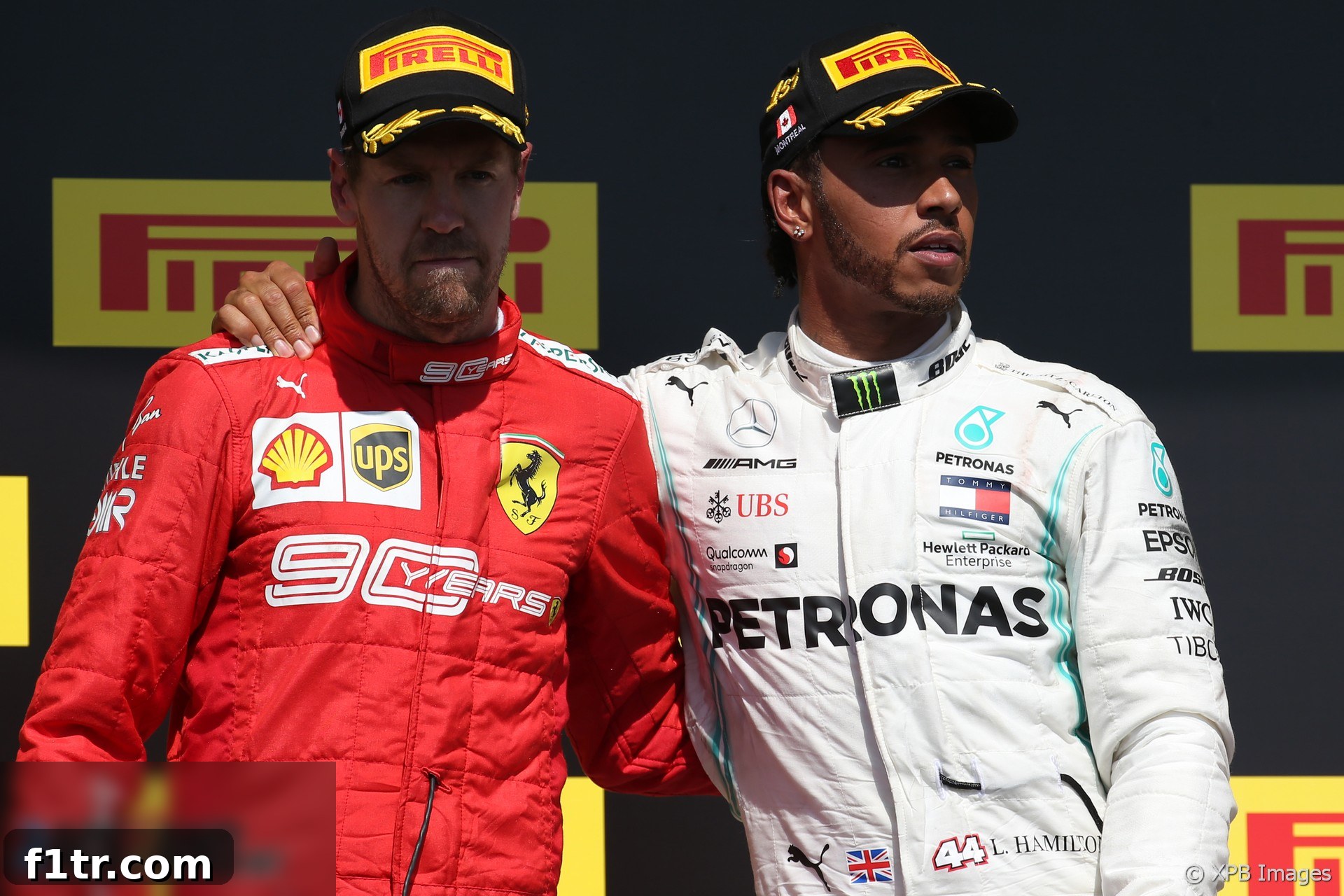
The immediate aftermath of the penalty saw an extraordinary display of frustration from Sebastian Vettel. Initially, a furious Vettel failed to report to the podium area for the customary post-race ceremony, opting instead to walk directly to the Ferrari hospitality area. This unprecedented protest highlighted the depth of his anger and disbelief at the ruling. He eventually rejoined the activities, albeit with a symbolic gesture that further conveyed his displeasure: he stopped by Hamilton’s car and moved the ‘number two’ marker board from the empty spot where his own car should have been, placing it next to Hamilton’s Mercedes, implying that Hamilton was the true second-place finisher on merit.
This incident wasn’t just about a single race; it had significant implications for the 2019 championship battle. Hamilton’s unexpected victory extended his lead over Vettel, further cementing Mercedes’ formidable position. For Ferrari and Vettel, it was a crushing blow, adding to a season already fraught with challenges and missed opportunities. The penalty became a rallying cry for many fans who felt the sport was becoming overly regulated, diminishing the raw, competitive spirit of racing. The “let them race” mantra gained significant traction, fueled by the perception that a genuine racing incident had been over-officiated.
The Enduring Debate: “Let Them Race” vs. Regulatory Precision
The 2019 Canadian Grand Prix penalty reignited a perennial debate within Formula 1: where is the line between aggressive, hard racing and dangerous or unfair conduct? Proponents of “let them race” argue that drivers should be allowed to push the limits, and minor infringements that don’t result in contact or significant danger should be overlooked to preserve the spectacle of wheel-to-wheel combat. They often point to historical F1 races where similar maneuvers might have gone unpunished, seen as part of the cut and thrust of top-tier motorsport.
Conversely, those who support stricter enforcement emphasize driver safety and the need for consistent application of rules to ensure fairness. The FIA’s role is to govern the sport, and clear regulations are in place to prevent dangerous situations and ensure a level playing field. The “car width” rule, in this context, serves as a crucial guideline for safe rejoining and overtakes. The controversy at Montreal highlighted the delicate balance the stewards must strike, often under immense pressure and scrutiny, between preserving racing excitement and upholding safety and fair play.
For Toto Wolff and Mercedes, the Canadian Grand Prix 2019 became another data point in a championship-winning season, albeit one tinged with controversy. For Sebastian Vettel and Ferrari, it was a bitter pill, symbolizing the frustrations of a season that ultimately saw their championship hopes fade. The incident remains a significant talking point, a reminder of how quickly fortunes can turn in Formula 1, and how deeply intertwined the sport’s human drama is with its complex regulatory framework.
Stay Connected with Formula 1 Insights
Follow us on social media for the latest news, analyses, and exclusive content from the world of Formula 1:
- Join us on Facebook
- Follow us on Twitter
- Get daily email updates directly to your inbox
Explore More from the 2019 F1 Season
The 2019 Formula 1 season was packed with thrilling races, dramatic moments, and fierce championship battles. Dive deeper into the events that shaped this memorable year, from groundbreaking strategies to driver rivalries and technological innovations that pushed the boundaries of motorsport.
Browse all 2019 F1 season articles