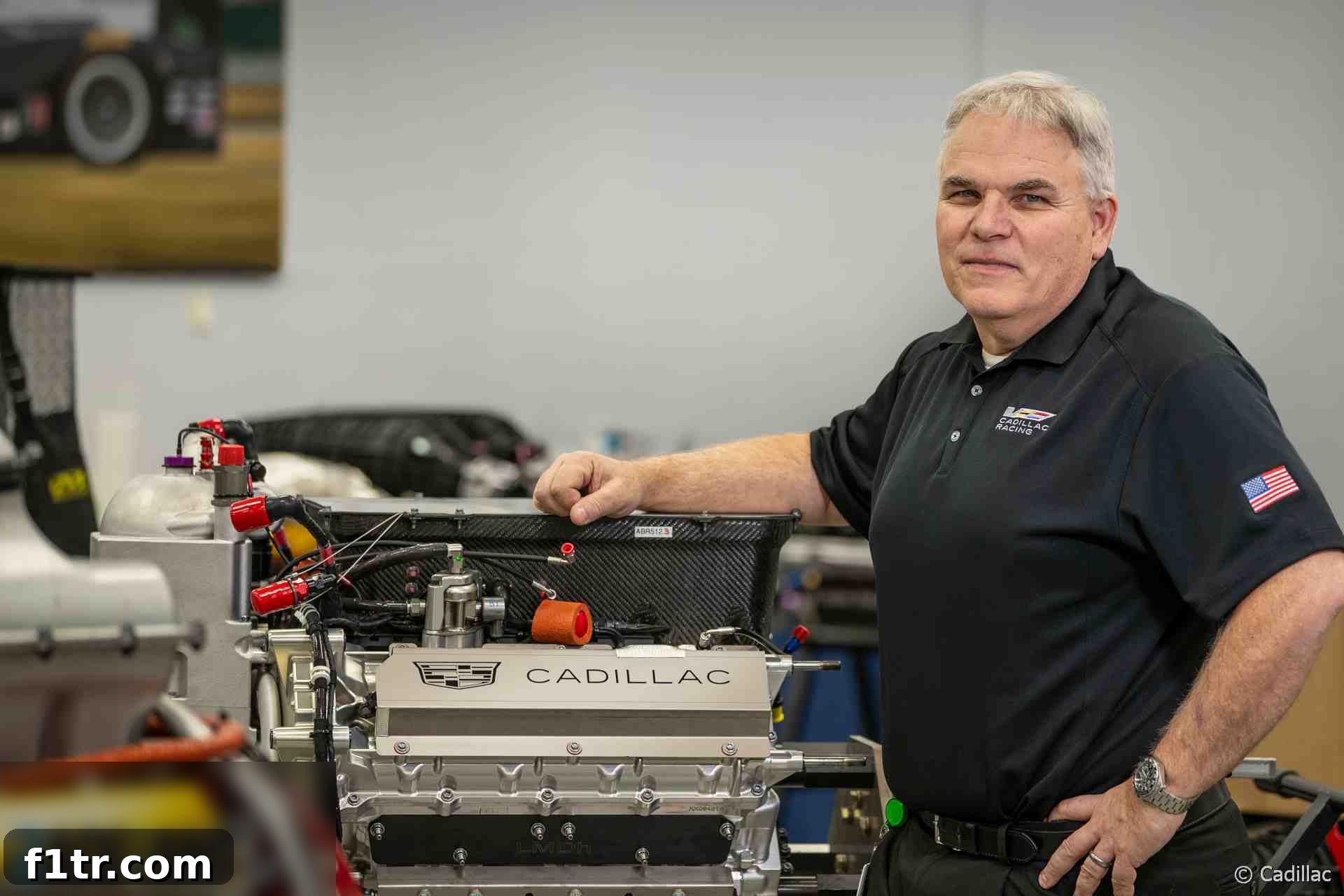
In a groundbreaking announcement that reverberated across the global motorsport landscape, the Fédération Internationale de l’Automobile (FIA) confirmed that General Motors will formally join Formula 1 as an approved power unit manufacturer starting in the 2029 season. This highly anticipated move solidifies GM’s commitment to the pinnacle of motorsport, following its prior declaration of intent to develop an F1 power unit for the upcoming regulatory cycle. This strategic entry as an engine supplier adds another layer to GM’s ambitious foray into Formula 1, which will first see its Cadillac brand debut on the grid as a team in 2026.
General Motors to Power Formula 1 Grid as Engine Manufacturer by 2029: A New Era for Motorsport
The confirmation of General Motors as a future Formula 1 power unit manufacturer represents a monumental shift for the sport, signaling robust interest from one of the world’s automotive titans. This development, set for the 2029 season, follows the earlier and equally significant news that GM, through its iconic Cadillac brand, will establish a full-fledged F1 racing team commencing in 2026. While the Cadillac team is initially set to utilize power units supplied by Ferrari, the long-term vision clearly places GM at the forefront of engine innovation and competition, manufacturing its own bespoke power units.
Cadillac’s Arrival: Paving the Way for a US Giant in F1
The journey for General Motors into Formula 1 has been a multifaceted one, beginning with the announcement of the Andretti Cadillac team project. After considerable deliberation and a rigorous application process, the FIA ultimately approved the entry of the Andretti Cadillac team for the 2026 season. This approval marks a pivotal moment, ushering in a truly American-backed constructor to the F1 grid, a development eagerly awaited by fans and stakeholders alike, particularly given the sport’s booming popularity in the United States.
Cadillac’s entry as a new team is poised to inject fresh competition and a distinct American identity into a sport traditionally dominated by European marques. The initial agreement to use power units supplied by Ferrari for the 2026, 2027, and 2028 seasons provides a crucial runway for the team to establish itself operationally and competitively, while General Motors simultaneously works on its proprietary engine development. This phased approach allows Cadillac to hit the ground running, leveraging Ferrari’s established expertise, before fully transitioning to a comprehensive GM-powered package. The collaboration itself speaks volumes about the evolving nature of partnerships within F1, showcasing a blend of competitive rivalry and strategic resource-sharing.
The prospect of a strong American presence, both on track with the Cadillac team and in the engine bays with GM’s power units, is expected to further catalyze Formula 1’s growth in North America. This dual engagement promises not only increased fan engagement but also substantial investment and technological transfer between the sport and one of the world’s largest automotive manufacturers. The prestige associated with competing and winning in Formula 1 offers an unparalleled global platform for the Cadillac brand to demonstrate its engineering prowess, innovation, and performance capabilities on the highest stage.
The Road to 2029: GM’s Power Unit Ambitions and the New Regulations
The decision by General Motors to become an F1 power unit manufacturer by 2029 is deeply intertwined with the sport’s new engine regulations, which are set to come into force in 2026. These regulations represent a significant overhaul, designed to make Formula 1 more sustainable, relevant to road car technology, and attractive to new manufacturers. Key changes include the elimination of the complex MGU-H (Motor Generator Unit – Heat), an increase in electrical power output to 350kW, and the mandatory use of 100% sustainable fuels.
GM had previously confirmed its initiation of work on an F1 power unit tailored to these new regulations, although a definitive introduction date had remained unstated. The FIA’s recent announcement provides that clarity, confirming a 2029 debut for GM’s engine. This timeline gives GM ample opportunity to develop, test, and refine its power unit, ensuring it is competitive and reliable from its inaugural season. The challenge of designing a cutting-edge hybrid power unit, capable of delivering both immense power and exceptional energy efficiency, is a monumental undertaking, requiring significant financial investment and the brightest engineering minds.
Overseeing this ambitious project is Russ O’Blenes, the CEO of GM Performance Power Units, whose leadership will be crucial in steering the development efforts. The scale of this commitment is further highlighted by plans for a new, state-of-the-art facility, specifically dedicated to the construction of GM’s F1 power unit, slated for commencement in 2027. This dedicated infrastructure underscores GM’s long-term strategic vision and serious intent to become a dominant force in F1’s technical landscape. Becoming an engine supplier means joining an elite group of manufacturers, each pushing the boundaries of powertrain technology, and demonstrating engineering excellence on a global scale.
FIA President’s Vision: Global Growth and Sustainable Competition
FIA President Mohammed Ben Sulayem lauded GM’s entry, articulating its significance within the broader context of Formula 1’s strategic objectives. “Welcoming GM Performance Power Units LLC as an approved power unit supplier for the championship starting in 2029 marks another step in the global expansion of Formula 1 and highlights the growing interest from world-class automotive manufacturers like General Motors,” stated Ben Sulayem. His remarks underscore the FIA’s mission to broaden F1’s appeal and reach, bringing in global brands that resonate with diverse audiences.
Ben Sulayem further emphasized the alignment between GM’s core values and the FIA’s vision for the future of motorsport. “Their dedication to innovation, sustainability, and competition is fully aligned with the FIA’s vision for the future of our sport,” he added. This alignment is critical, as Formula 1 continues its drive towards carbon neutrality by 2030, with sustainable fuels playing a key role in the upcoming regulations. GM’s significant investments in electric vehicle technology and sustainable manufacturing processes make it an ideal partner in this endeavor, contributing to the sport’s environmental goals and demonstrating how advanced automotive technology can be both exhilarating and responsible.
Furthermore, Ben Sulayem highlighted how new manufacturers like GM strengthen the FIA’s commitment to making motorsport more accessible and inclusive worldwide. By attracting global brands, advancing technology, and connecting with a broader, more diverse fan base, Formula 1 continues to evolve beyond its traditional European roots. The inclusion of a major American manufacturer like General Motors will undoubtedly resonate deeply within the North American market, fostering new generations of fans and potentially inspiring future engineers and drivers from diverse backgrounds.
Stability Amidst Speculation: F1’s Engine Future Reaffirmed
The announcement of GM’s 2029 power unit entry comes after a period of mild speculation regarding the future direction of Formula 1’s engine regulations. FIA President Mohammed Ben Sulayem had recently sparked discussion by suggesting the sport should consider a return to normally aspirated V10 engines, a concept that harks back to an earlier, revered era of F1. This comment, while perhaps reflecting a romantic view of motorsport’s past, created a brief moment of uncertainty about the steadfastness of the new 2026 hybrid regulations.
However, any doubts were swiftly dispelled. A crucial meeting held in Bahrain two weeks prior to the GM announcement, involving the FIA, Formula One management, and existing engine manufacturers, resulted in a firm commitment to the planned rules cycle. This outcome means the incoming hybrid power units, with their increased electrical emphasis and sustainable fuel mandate, are unequivocally expected to remain in use until at least 2030. This reaffirmed stability is paramount for manufacturers like General Motors, who are making colossal investments in research, development, and infrastructure. Such long-term regulatory certainty is essential for justifying the significant capital expenditure and engineering resources required to design and build a competitive F1 power unit from scratch.
The unwavering commitment to the 2026 regulations ensures that new entrants like GM can proceed with their development programs with confidence, knowing the goalposts will not shift. It underscores a united front from the sport’s governing bodies and commercial rights holders to provide a clear, sustainable, and technologically advanced path forward. This clarity is not only beneficial for new manufacturers but also for existing ones, allowing them to optimize their strategies and continue pushing the boundaries of hybrid technology.
The Impact on Formula 1: Heightened Competition and Innovation
General Motors’ entry as a power unit manufacturer is set to profoundly impact Formula 1 on multiple fronts. Firstly, it will significantly intensify competition within the sport. With the addition of GM alongside established giants like Ferrari, Mercedes, Renault (Alpine), Honda (Red Bull Powertrains), and potentially Audi, the battle for engine supremacy will become fiercer than ever. This elevated competition drives innovation, as each manufacturer strives to gain a technological edge, leading to more advanced, efficient, and powerful engines.
Secondly, the influx of a major automotive player like GM brings with it a wealth of engineering expertise, financial resources, and a different perspective on powertrain development. GM’s extensive experience in mass production, electrification, and cutting-edge materials science could yield novel approaches and breakthroughs in F1 engine design. These advancements not only benefit the sport directly through improved performance but also have the potential for trickle-down effects into road car technology, fulfilling F1’s role as a proving ground for automotive innovation.
Finally, GM’s full integration into Formula 1 – first as a team with Cadillac, then as an engine supplier – further cements F1’s status as a global leader in motorsport and automotive technology. It validates the sport’s strategic direction towards sustainability and relevance, attracting the kind of industry giants whose participation elevates the entire spectacle. The promise of a fully integrated American presence, from chassis to engine, adds a compelling narrative to the sport’s unfolding future, promising exciting races, technological marvels, and a truly global championship.
Conclusion: A New Horizon for Formula 1 and General Motors
General Motors’ confirmed entry as a Formula 1 power unit manufacturer by 2029 marks a historic moment, completing a comprehensive strategic move into the world’s premier motorsport series. This bold step, complementing the Cadillac team’s debut in 2026, positions GM at the very heart of F1’s future, aligning perfectly with the sport’s drive for innovation, sustainability, and global expansion. As the grid prepares for the transformative 2026 engine regulations, the commitment from a company of GM’s stature provides immense credibility and excitement. The road to 2029 will be one of intense development and anticipation, culminating in a new chapter for both General Motors and Formula 1, promising heightened competition, unparalleled technological advancement, and an even more thrilling spectacle for fans worldwide.