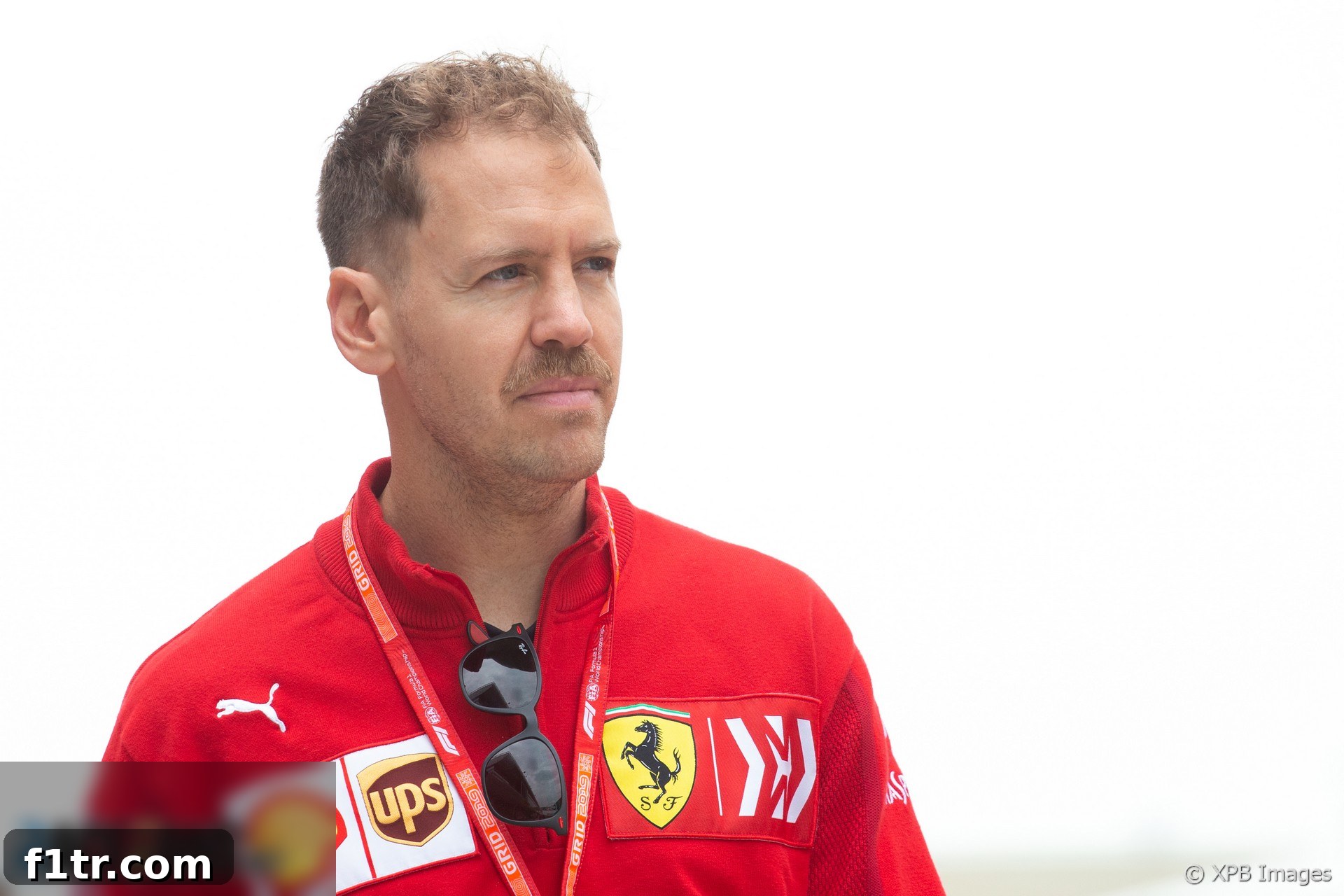
Sebastian Vettel Responds to Critics After Bahrain Grand Prix Spin: A Champion’s Perspective on Pressure and Performance
Formula 1 is a sport where fractions of a second and a single misjudgment can dramatically alter a driver’s trajectory, both in a race and in public perception. Few understand this more profoundly than four-time world champion Sebastian Vettel. Following the 2019 Bahrain Grand Prix, where the German driver experienced his fourth spin in just ten races, he found himself under intense scrutiny. His incident during a crucial overtake attempt by eventual race winner Lewis Hamilton reignited debates about his form and future. However, Vettel, ever the stoic competitor, offered a candid and insightful response to the mounting criticism, shedding light on the immense pressures and fleeting judgments that define life at the pinnacle of motorsport.
The Bahrain Grand Prix Incident: Under the Microscope
The 2019 Bahrain Grand Prix was a race charged with tension and drama. Sebastian Vettel, behind the wheel of his Ferrari, was battling fiercely against his long-standing rival, Mercedes’ Lewis Hamilton. As Hamilton made his decisive move to overtake, Vettel’s car, the SF90, became unstable, resulting in a spin. This moment was not just a simple racing error; it was a highly visible incident that occurred while competing against one of the sport’s all-time greats, under the brightest of lights. The spin cost Vettel valuable track position and any chance of a podium finish, amplifying the narrative that the German was prone to unforced errors, particularly when under pressure or engaged in direct combat with his key competitors. Such incidents, especially when captured in slow motion and replayed countless times, tend to overshadow a driver’s extensive history of success and consistency.
For a driver of Vettel’s caliber, a spin is never just a spin. It’s a moment that fuels endless commentary, dissects every aspect of his technique, and invites comparisons to his championship-winning years. The weight of expectation on a Ferrari driver, especially one with multiple world titles, is immense. Every mistake is magnified, and every setback scrutinized with a fine-tooth comb. The Bahrain incident served as a stark reminder of the unforgiving nature of Formula 1, where even the most accomplished drivers are not immune to moments of vulnerability. It highlighted the razor-thin margins at the elite level and the constant dance with disaster that every driver performs in pursuit of victory.
Lewis Hamilton’s Unexpected Defense: A Glimpse into Rivalry and Respect
In the aftermath of the Bahrain Grand Prix, one voice stood out in its measured defense of Sebastian Vettel: that of his arch-rival, Lewis Hamilton. Hamilton, who ultimately triumphed in the race, spoke publicly, stating that Vettel has “had stunning performances that far more outweigh the weaker races and when he’s spun, for example.” This commendation from a direct competitor, especially one with whom Vettel has shared so many intense on-track battles, was significant. It offered a rare glimpse into the mutual respect that exists between these elite athletes, despite their fierce rivalry. Their relationship, forged over years of battling for world championships, transcends the immediate results of a single race.
When informed of Hamilton’s supportive words in China, Vettel’s response was telling: “I think maybe he’s the only one that doesn’t lack a short-term memory.” This statement, delivered with a mix of wry humor and genuine appreciation, underscored Vettel’s understanding of the fluctuating nature of public opinion. Hamilton, having spent a similar number of years at the pinnacle of Formula 1, leading teams, and facing similar pressures, possesses a unique perspective. He knows that a driver’s career is a tapestry woven with triumphs and challenges, and a few isolated incidents should not define a legacy built on years of excellence. This exchange highlighted not just the personal camaraderie between two legends, but also the deeper professional understanding of what it takes to perform at such an elite level, consistently facing immense pressure and public judgment.
Vettel’s Perspective: Short-Term Memory and the Pressure Cooker of F1
Sebastian Vettel’s “short-term memory” comment was more than just a quip; it was a profound observation on the transient nature of modern sports commentary. He elaborated on the complexity of their rivalry and the outside perspective: “We’ve been around a long time and obviously as much as I want to beat Lewis I think he wants to beat me. But sometimes you never know exactly what’s going on with other people in their teams and so on unless you are racing them in the same team, then you know a bit more. Sometimes things might not go your way but I think when you don’t understand exactly or you don’t know then I think it’s very difficult to say much about certain things.”
This insight speaks volumes about the disconnect between external perception and internal reality in Formula 1. Fans and pundits, despite their passion and expertise, are often privy to only a fraction of the information concerning team dynamics, car development, and internal pressures. A driver’s performance is influenced by a myriad of factors, from car balance and engine mapping to strategic calls and mental fortitude. To pass definitive judgment based on isolated incidents, without this holistic understanding, is to simplify a highly complex sport. Vettel’s remarks gently reminded his audience that genuine understanding requires a deeper insight than what is typically available to the public. He graciously acknowledged the reality of modern media scrutiny, noting, “But I also know and understand that these days people’s judgment doesn’t go further than a week, forward or backward. So I think it’s part of life. I didn’t know that he’d said anything nice but it’s nice to hear.” This acceptance of the often-unforgiving cycle of public opinion showcases a mature and grounded perspective from a driver who has seen it all.
Ferrari’s Unwavering Support: Mattia Binotto on Pushing the Limits
Beyond the drivers themselves, a Formula 1 team operates as a cohesive unit, and the leadership plays a critical role in supporting its personnel. Ferrari team principal Mattia Binotto was quick to defend his driver, Sebastian Vettel, in the wake of the Bahrain incident. Binotto’s message was clear and supportive: “I don’t think we should discuss about mistakes. We are always in the battle, in the fight. That’s what they are doing, it’s never easy. I think at the end it’s something that may always happen.”
This stance by the team principal is crucial for driver morale and confidence. In a sport where performance is measured in milliseconds and the margins for error are razor-thin, drivers are constantly pushing their cars and themselves to the absolute limit. This relentless pursuit of the fastest lap time and the most aggressive overtake inherently carries risks. Binotto articulated this understanding perfectly: “We need to encourage our drivers because it’s only by driving to the limit that they can achieve the best results. And [that] is what Seb was trying to do.” Such public backing reinforces the team’s trust in their driver and signals that they understand the demands of pushing for victory. It creates an environment where drivers feel empowered to take calculated risks rather than being paralyzed by the fear of making a mistake. For a team like Ferrari, with its storied history and immense pressure to win, presenting a united front and protecting its drivers is paramount to achieving long-term success, fostering resilience and peak performance within the team.
The Broader Context of 2019: A Season of Highs and Lows for Vettel and Ferrari
The 2019 Formula 1 season was, for Sebastian Vettel and Ferrari, a period characterized by a mixture of promise, frustration, and fleeting moments of brilliance. While the Bahrain spin became a focal point for critics, it was just one event within a larger narrative. The season saw Ferrari introduce a car that, at times, demonstrated incredible straight-line speed but often struggled with overall balance and tire management, particularly in race conditions. This meant that Vettel, along with his teammate Charles Leclerc, frequently had to extract the absolute maximum, and sometimes even more, from their machinery to challenge the dominant Mercedes.
For a four-time world champion accustomed to fighting for titles, a season fraught with such challenges can be particularly demanding. The pressure to deliver for a team as iconic as Ferrari is constant, and any perceived dip in form or a string of incidents inevitably draws intense media scrutiny. While Vettel certainly had moments of exceptional driving in 2019, demonstrating his undeniable skill and race craft, the season also highlighted the fine line between pushing the limits and overstepping them. The constant battle against a highly optimized Mercedes package, coupled with the internal dynamics of a competitive team, meant that every race was a high-stakes endeavor. Understanding this broader context helps to frame the Bahrain incident not as an isolated failure, but as a symptom of a challenging period where both driver and team were striving to overcome significant hurdles in their pursuit of victory, against formidable opposition and under the glare of global attention.
Navigating Criticism: The Mental Game in Elite Motorsport
Beyond the raw speed and technical prowess, Formula 1 is profoundly a mental sport. Drivers operate under extraordinary levels of stress, with millions of dollars and global reputations resting on their shoulders. Navigating criticism, especially from a public that often only sees the outcome rather than the intricate process, is a critical skill for longevity in the sport. Champions like Sebastian Vettel have honed this ability over years, developing a resilience that allows them to process setbacks, learn from them, and move forward without succumbing to external noise.
The mental fortitude required to maintain focus after a highly publicized error, such as the Bahrain spin, cannot be overstated. Drivers must possess an unwavering belief in their abilities, a capacity for self-reflection without self-doubt, and the discipline to continue pushing boundaries. The comments from both Vettel and Binotto underscore this aspect: Binotto’s emphasis on “driving to the limit” highlights the necessity of risk-taking, while Vettel’s reference to “short-term memory” speaks to the need for drivers to filter out transient judgments. Ultimately, the ability to internalize feedback while externalizing unproductive criticism is what separates the good drivers from the truly great, allowing them to perform consistently at the highest echelons of professional motorsport, year after year, under the most demanding conditions.
Legacy and Future: What the Spins Mean for a Four-Time World Champion
Sebastian Vettel’s career is etched in the annals of Formula 1 history with four consecutive world championships and numerous Grand Prix victories. A few incidents, even highly visible ones like the Bahrain spin in 2019, cannot erase such an illustrious legacy. What they do, however, is add layers to the narrative of a champion who faced immense pressure, navigated challenging car dynamics, and continued to fight at the front. These moments remind us that even the greatest drivers are human, susceptible to errors, and constantly battling not just their rivals, but also the expectations placed upon them.
For Vettel, the 2019 season and similar periods of intense scrutiny were crucial chapters in his journey. They demonstrated his character, his ability to confront criticism head-on, and his unwavering commitment to his team and his sport. While his time at Ferrari ultimately didn’t yield another world title, his dedication and resilience during challenging periods left an indelible mark. The discussion surrounding his “spins” ultimately contributes to a richer understanding of a complex athlete who, despite all his achievements, remained grounded and philosophical about the ebb and flow of a high-octane career. His responses in 2019 were a testament to a true champion’s spirit, capable of learning, adapting, and continuously striving for excellence, even when the spotlight shines brightest on perceived imperfections and the public memory proves fleeting.
Related F1 Insights and Analysis from the 2019 Season
- Driver Ratings: Sebastian Vettel’s Performance in 2019 Reviewed
- Ferrari’s 2019 Season: Navigating Technical Challenges and Title Hopes
- The Hamilton vs. Vettel Rivalry: Unpacking Their 2019 Dynamics
- Bahrain Grand Prix 2019: Key Moments and Strategic Debates
- Pressure and Performance: The Mental Game of F1 Drivers in 2019
Explore More Articles from the 2019 F1 Season