F1 Power Unit Crisis: Alonso and Tsunoda Facing Early Penalties as Reliability Woes Hit Australian Grand Prix
The unforgiving world of Formula 1 often boils down to a delicate balance between raw speed and unwavering reliability. As the 2022 season rolled into its third consecutive race weekend in Australia, the fragility of modern F1 power units became starkly evident for several drivers. Most notably, two prominent names – veteran Fernando Alonso and young talent Yuki Tsunoda – found themselves already on their third internal combustion engines (ICE), turbochargers, MGU-H, and MGU-K components. This early consumption of vital power unit elements signals a high probability of impending grid penalties later in the championship, a scenario that could significantly impact their and their teams’ seasonal aspirations.
The Strict Regulations Governing F1 Power Units
Formula 1’s regulations are meticulously designed to control costs, promote efficiency, and ensure competitive parity. For the 2022 season, teams are permitted a limited number of power unit components for the entire year across the record-breaking 22-race calendar. Exceeding these allocations results in automatic grid penalties, a harsh consequence that can derail a driver’s weekend even before the race begins. Understanding these limits is crucial to grasp the severity of the situations faced by Alonso and Tsunoda.
The primary power unit consists of several complex components, each with its own allocation, emphasizing the challenge of durability over a grueling season:
- Internal Combustion Engine (ICE): Limited to 3 units per driver for the season.
- Turbocharger (TC): Limited to 3 units per driver for the season.
- Motor Generator Unit – Heat (MGU-H): Limited to 3 units per driver for the season.
- Motor Generator Unit – Kinetic (MGU-K): Limited to 3 units per driver for the season.
- Energy Store (ES): Limited to 2 units per driver for the season.
- Control Electronics (CE): Limited to 2 units per driver for the season.
- Exhaust System (EX): Limited to 8 units per driver for the season.
Once a driver goes beyond these specified limits for any component, they incur penalties. Typically, the first additional component beyond the allocation incurs a 10-place grid drop, while subsequent additional components (of the same type) result in 5-place grid drops. A complete new power unit often means a back-of-the-grid start. This strict regime forces teams to carefully manage the lifespan of each component, pushing the boundaries of engineering while trying to avoid costly reliability failures that could jeopardise their championship ambitions.
Fernando Alonso’s Unfortunate Start to 2022
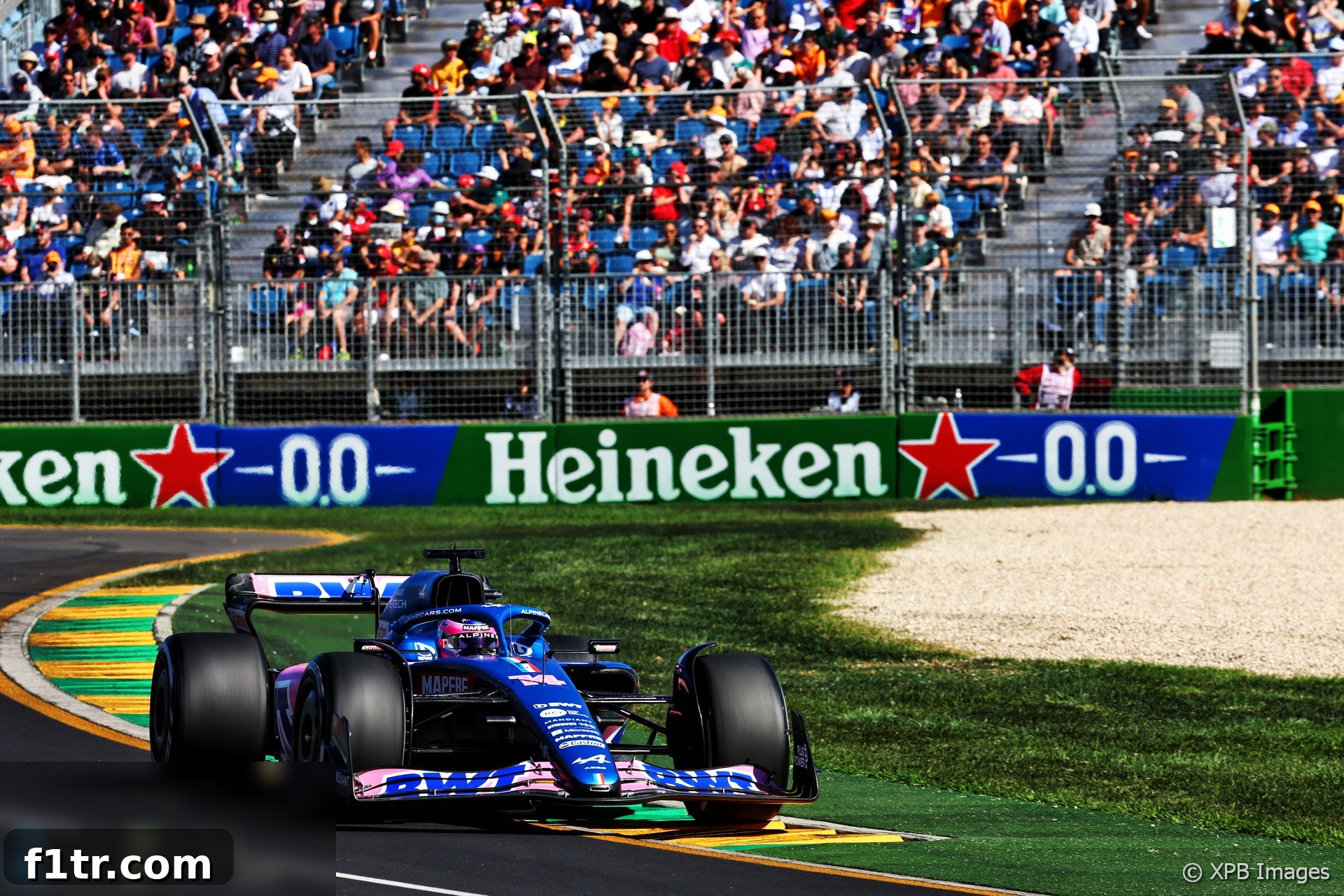
Two-time world champion Fernando Alonso has experienced a particularly frustrating and reliability-plagued start to the 2022 campaign with Alpine. Having already used one full power unit in Bahrain and a second in Saudi Arabia, the Spanish driver arrived in Melbourne for the Australian Grand Prix needing his third set of key power unit components. This early introduction included a new ICE, turbocharger, MGU-H, and MGU-K. The need for such an early change stemmed directly from his retirement in Jeddah, where his second Renault engine suffered an irreparable failure, forcing him to lose its use prematurely after just two race weekends.
With only three internal combustion engines, turbochargers, MGU-H, and MGU-K units permitted for the entire 22-race season, using the third unit by the third race weekend puts Alonso in an extremely precarious position. Barring an unforeseen relaxation of the rules or an exceptionally long lifespan for his current components, it is highly likely that he will need to introduce further power unit elements later in the season. Each such instance will trigger significant grid penalties, undoubtedly hindering his and Alpine’s ability to score points and compete for higher positions. For a driver of Alonso’s caliber, who returned to F1 with a fierce competitive spirit and high hopes, these reliability setbacks are undoubtedly a bitter pill to swallow, undermining efforts to extract performance from the promising A522 chassis and climb the Constructors’ Championship.
Yuki Tsunoda’s Early Reliability Headaches
Yuki Tsunoda of AlphaTauri finds himself in a strikingly similar, and equally concerning, predicament to Fernando Alonso. The young Japanese driver also entered the Australian Grand Prix weekend with his third internal combustion engine installed, alongside new turbocharger, MGU-H, and MGU-K units. Tsunoda’s early power unit woes can be traced back to the preceding Saudi Arabian Grand Prix, where a series of unfortunate events unfolded that significantly impacted his race weekend.
Problems first surfaced during qualifying in Saudi Arabia, preventing Tsunoda from setting a representative lap time and necessitating a new power unit installation on his car. However, his misery didn’t end there. On his reconnaissance lap to the grid for the main race in Jeddah, he was instructed to stop his car on track due to further, unspecified issues, preventing him from even starting the race. These compounding mechanical failures, which included component damage, necessitated the introduction of his third ICE for the Australian Grand Prix weekend. This places him in the same grim outlook as Alonso regarding the high probability of incurring grid penalties for power unit component changes later in the season. For a sophomore driver looking to establish himself and build momentum, such early reliability struggles are particularly detrimental to gaining rhythm, confidence, and crucial points.
Component Changes Across the Grid: A Broader Trend
While Alonso and Tsunoda’s situations highlight the most critical reliability challenges, other teams and drivers also made significant component changes ahead of the Australian Grand Prix, albeit mostly within the permitted allocations. These strategic replacements often aim to either prevent future failures or introduce newer, potentially upgraded, components.
McLaren and Mercedes Power Units
Lando Norris, the British star for McLaren, received his second Mercedes power unit of the season for the weekend in Melbourne. While this is well within the three-unit allowance for the ICE, turbocharger, MGU-H, and MGU-K, taking a second unit this early in the season suggests a strategic decision by McLaren and Mercedes. This could be to manage the lifespan of their components, rotating them through the pool, or potentially to introduce an upgraded, more reliable, or higher-performing unit. It’s a calculated move designed to ensure optimal performance over the long season without immediately triggering penalties, a common practice among top teams to keep their power units fresh.
Energy Stores and Control Electronics
Beyond the primary engine components, the sophisticated electrical systems of an F1 power unit are equally vital for hybrid performance. Both Fernando Alonso and Haas driver Mick Schumacher took their second energy store (ES) and control electronics (CE) units for the season in Australia. With only two ES and two CE units allowed for the entire year, this means both drivers have already used their full allowance for these specific components just three races in. Any subsequent change to these components will immediately result in grid penalties, impacting their starting positions. This puts a significant emphasis on the durability and careful management of these electrical systems for the remaining races, adding another layer of strategic consideration for Alpine and Haas engineers.
Exhaust Systems: A Higher Allowance
The exhaust system, though less critical for raw power generation compared to the ICE or turbo, is still a vital part of the power unit’s overall efficiency, aerodynamic integration, and sound. Teams have a more generous allowance of eight exhaust systems per driver for the season, recognizing their susceptibility to damage and wear. For the Australian Grand Prix, Fernando Alonso, Mick Schumacher, and Lando Norris all commenced the event with new exhaust systems. They were joined by the two Ferrari drivers, Charles Leclerc and Carlos Sainz Jnr. While most drivers were taking their second of eight permitted exhaust systems, Alonso was notably on his third. This higher allocation for exhaust systems provides more flexibility for teams, allowing for replacements due to damage or performance degradation without the immediate threat of severe grid penalties, unlike the more restrictive limits on the core engine components.
Sebastian Vettel’s Australian GP Challenge
Aston Martin’s Sebastian Vettel also faced a power unit change scenario during the Australian Grand Prix weekend, albeit under different circumstances that did not immediately trigger a penalty. Following a stoppage at the end of the first free practice session, which saw his car emitting smoke, Aston Martin confirmed that they would replace his power unit. Crucially, this particular change was stated not to incur a penalty for the race weekend.
This situation typically arises when a component is damaged beyond repair during a free practice session, and it is the first or second allocated unit of that type being used. As Vettel had missed the first two races of the season in Bahrain and Saudi Arabia due to contracting COVID-19, this power unit change likely involved replacing his first allocated unit due to damage, meaning it fell within the season’s allowance. Nonetheless, it adds an unexpected complication to his delayed return to the 2022 season and forces the Aston Martin team to carefully manage his component allocation for the remainder of the championship, as future changes will quickly lead to penalties.
The Implications for the 2022 Season
The early-season reliability concerns highlighted at the Australian Grand Prix underscore the immense pressure on F1 teams in the new regulatory era. With a long championship ahead, drivers like Fernando Alonso and Yuki Tsunoda, who are already nearing or at their power unit limits, face a daunting challenge. Every subsequent component change for their ICE, turbocharger, MGU-H, or MGU-K units will bring with it the spectre of grid penalties, potentially forcing them to start from the back of the grid, hindering their ability to score crucial points, and impacting their teams’ standing in the Constructors’ Championship.
The Australian Grand Prix served as an early warning for many teams about the stringent demands placed on their power units. Balancing outright performance with long-term reliability is a tightrope walk that can ultimately decide a team’s fate in Formula 1. The high rate of component consumption for some drivers so early in the season suggests that reliability will be a significant storyline throughout 2022. As the season progresses, expect strategic decisions around power unit management to become an increasingly critical factor in the championship narrative, with reliability battles potentially proving as decisive as on-track pace in determining who finishes where.
2022 Australian Grand Prix Related Articles
- Aston Martin’s porpoising “does not allow us to exploit the progress the guys have made”
- Wolff puts Mercedes’ odds of championship victory at “two to eight”
- FIA responds to Verstappen’s criticism of Safety Car performance
- “So this is the end of our race, I guess?” How Alonso’s luckless Australian GP unfolded
- Two-degree temperature rise led to Hamilton’s “difficult position” radio message
Browse all 2022 Australian Grand Prix articles