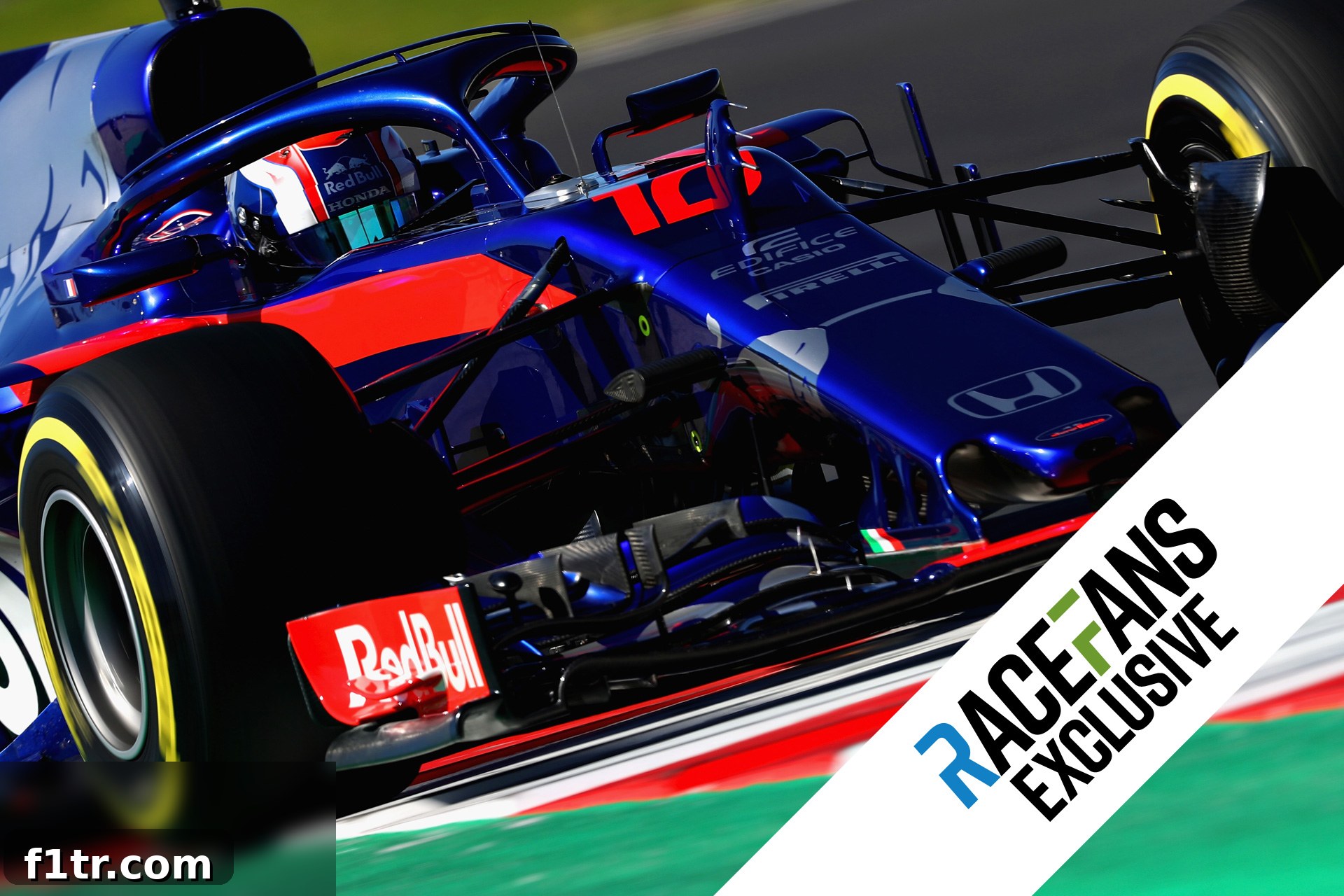
Is this the team which will produce the biggest surprise of 2018?
Toro Rosso’s Bold Bet: Can Honda Power Deliver the 2018 F1 Surprise?
The murmurs were widespread, bordering on outright dismissal. When Scuderia Toro Rosso announced its decision to partner with Honda for the 2018 Formula 1 season, many within the paddock and among fans alike were quick to write off the team’s prospects. For the third consecutive year, the Faenza-based squad was embarking on a new engine partnership, a significant challenge in itself. However, it wasn’t merely the act of changing suppliers that raised eyebrows, but rather the choice of partner: Honda. The Japanese manufacturer had endured three notoriously difficult years with McLaren, a partnership that ended acrimoniously. Furthermore, Sauber had also swiftly terminated its planned Honda engine supply deal shortly after Frédéric Vasseur took the helm as team principal, painting a stark picture of Honda’s perceived struggles and leading many to question Toro Rosso’s strategic judgment.
Franz Tost’s Unwavering Confidence: A Long-Term Strategic Alliance
Despite the prevailing skepticism and the public narrative surrounding Honda’s F1 woes, Toro Rosso’s experienced team principal, Franz Tost, vehemently refuted any suggestion that his team was an unwilling recipient of Formula 1’s “least-wanted” engine. In an exclusive interview, Tost revealed a compelling counter-narrative: “Toro Rosso was in contact with Honda since 2014 onwards.” This disclosure repositioned the partnership from a desperate gamble to a carefully considered strategic alliance, nurtured over several years. Tost’s statement suggested a deep understanding of Honda’s underlying potential, rather than simply accepting a readily available, albeit tarnished, engine supplier.
Furthermore, Tost pointedly alluded to the team’s previous engine supplier, Renault, offering a glimpse into the tensions that had clearly mounted. “I’m not sure that we would have continued with Renault after what happened last year,” he stated. This comment underscored a mutual desire for change, suggesting that the decision to part ways was not solely on Renault’s terms but also driven by Toro Rosso’s increasing dissatisfaction with their customer relationship and perceived support.
The Renault Rift: Unraveling the Conspiracy Theories and 2017’s Bitter End
The fallout between Toro Rosso and Renault in the latter half of the 2017 season was a subject of intense speculation and provided fertile ground for conspiracy theorists. Soon after the Honda deal was officially announced, and crucially, following Carlos Sainz Jnr’s superb drive to fourth place at the Singapore Grand Prix, Toro Rosso’s strong hold on sixth position in the Constructors’ Championship began to unravel. A series of power unit problems plagued their campaign, seemingly compromising their competitive edge just when it mattered most. The timing of these issues was particularly suspicious to some, as the chief beneficiary of Toro Rosso’s apparent misfortune was none other than Renault’s own works team, which ultimately displaced them from sixth place at the final round of the championship.
This sequence of events led many to believe that Toro Rosso was intentionally being hampered due to their switch to Honda, with Renault prioritizing its own factory team and other customers. While concrete proof remained elusive, the experience undoubtedly solidified Toro Rosso’s desire for a new, more integrated partnership where their engine supplier was fully committed to their success. This bitter end to their Renault partnership made the leap to Honda not just a technical decision, but a clear statement of intent to seek a more collaborative and committed future.
Pre-Season Promise: Honda’s Unexpected Reliability and Progress
The initial signs from pre-season testing for 2018 offered a stark and surprising contrast to Honda’s previous struggles. Toro Rosso managed to cover more laps than any of the Renault-powered teams, a testament to the new power unit’s early reliability and robustness. This impressive showing, especially when juxtaposed with McLaren’s woeful reliability experience with Honda just twelve months prior, came as a significant surprise to many in the paddock. Pundits and rivals alike had anticipated a repeat of Honda’s previous woes, making Toro Rosso’s seamless testing a genuine head-turner.
However, for Franz Tost, this early success was far from unexpected. “I’m not so surprised because I was convinced that Honda is in a much better position as it was mentioned last year,” he affirmed. His confidence stemmed from a deeper understanding of Honda’s progress, which had been overshadowed by public perception. Tost further elaborated on the intensive off-season efforts by the Japanese manufacturer: “Apart from this, Honda worked during the winter months on the performance as well as on the reliability side. So far, they have done a very successful job and we are quite satisfied about that co-operation.” This quiet confidence from Tost, backed by solid on-track performance in testing, fostered genuine optimism within the team and began to shift the narrative surrounding Honda’s capabilities, suggesting a substantial step forward for their power unit.
The Unprecedented Advantages of a Works Engine Deal
This collaboration with Honda represents a paradigm shift for Toro Rosso. For the entirety of its thirteen-year existence in Formula 1, the team had always been an engine customer, receiving a ready-made power unit to integrate into its chassis. Taking on a factory-backed works deal, however, is “a completely different way of working,” as Tost explains, offering profound benefits, particularly given the intricate complexity of modern F1 power units. The depth of this partnership extends far beyond merely receiving an engine; it involves a holistic approach to car design and development, allowing for unparalleled integration and optimization.
Tost elaborated on these crucial advantages: “For example, how the engine is being designed to fit the best possible way into the chassis. That means Toro Rosso can bring a lot of input there: we want it this way, oil and water pipes being designed in a way which fits very well with the complete chassis system or the exhaust system. These are very important factors for the performance of the car because it influences the weight distribution, it influences the aerodynamic, the mechanical side.” This level of bespoke integration is simply unattainable for a customer team. In essence, Toro Rosso designers can now collaborate directly with Honda engineers from the very genesis of the power unit’s design, ensuring optimal packaging and performance integration into the STR13 chassis. This deep collaboration allows for the engine to be designed specifically for the car, and vice versa, creating a more harmonious and efficient overall package.
“From this point of view, we had a very busy and successful winter period because it was the first time Toro Rosso designers could come up with issues,” Tost explained. “In the past, we just got the power unit, some electric boxes and just find a way to fit it into the car. Now we can come up with proposals, suggestions from our side which makes life much easier. And hopefully more successful.” This newfound creative freedom and collaborative engineering signify a monumental shift, potentially unlocking significant performance gains that were previously out of reach for a team accustomed to adapting its chassis to a pre-defined engine package.
Beyond immediate integration, the partnership also enables invaluable long-term planning and development cycles. “I expect a lot from next year’s car because we are already working on this,” said Tost, highlighting a crucial strategic advantage. “Because of the experience we have already got this year, our designers and the designers from Honda can optimise the integration of the power unit into the car.” This contrasts sharply with the team’s past experiences: “In the past, we always had to fit in a last [minute] engine decision within a few weeks. Now we start already in February thinking about next year’s car.” This proactive approach to development could be a game-changer for Toro Rosso, allowing for more cohesive, optimized, and forward-thinking car designs year-on-year, rather than constantly reacting to external factors.
Nurturing New Talent: Toro Rosso’s Young Driver Line-up for 2018
The engine partnership isn’t the only fresh element for Toro Rosso; the team also boasts the least experienced driver line-up on the grid for 2018, a familiar situation for the Red Bull junior team. Brendon Hartley and Pierre Gasly collectively have just nine Formula 1 starts to their name. Brendon Hartley, however, brings a wealth of experience and a winning pedigree from the World Endurance Championship, including an LMP1 title. His proven ability in demanding endurance racing, combined with a meticulous technical understanding and a mature approach, is invaluable to the team as they embark on this new chapter with Honda.
Pierre Gasly’s journey to F1 was arguably overdue. After winning the 2016 GP2 championship (now Formula 2), many expected his immediate promotion. However, Red Bull opted to retain Daniil Kvyat for another season, citing the need for Gasly to gain more experience. When Kvyat’s form failed to improve, Gasly finally got his chance, replacing him before the end of the year. Tost, however, downplayed any frustration regarding this delay, noting, “I think Pierre learnt a lot in Japan: Super Formula is a very competitive series.” This experience, racing against seasoned professionals in a high-downforce, fast category, undoubtedly sharpened Gasly’s race craft and adaptability. Tost added, “Last year we had two very good drivers with Carlos Sainz Jnr and Daniil Kvyat. Therefore, the decision which Red Bull has taken in those cases was OK.” With no immediate successor ready in Red Bull’s junior team pipeline, both Gasly and Hartley understand the importance of making their mark in 2018. They will undoubtedly be keen to secure their seats for the second-generation Toro Rosso-Honda car in 2019. When pressed on 2019 driver plans, Tost remained pragmatic: “Let’s do this season as successful as possible, then we’ll talk about next year. Currently there are no discussions about any driver for 2019.” The focus is clearly on the immediate task at hand: demonstrating the full potential of the new Toro Rosso-Honda package.
The Red Bull Connection: Shared Ambitions, Divergent Paths (for now)
The move away from Renault has introduced an added layer of complexity for Toro Rosso regarding its relationship with the senior team, Red Bull Racing. With different engine suppliers, the two teams can no longer share as many parts and technical resources as they did when both were powered by Renault. This divergence creates a unique challenge, as Toro Rosso effectively has to develop more components independently. However, this situation also presents a tantalizing possibility: the potential for Red Bull Racing to switch to Honda power units in the future. Christian Horner, Red Bull Team Principal, has openly hinted at such a move, indicating their keen interest in Honda’s progress with Toro Rosso.
Such a switch by Red Bull Racing would undoubtedly re-align the two teams, allowing for greater synergy and shared development, similar to the close technical relationships seen between Mercedes and its customer teams (Force India/Williams) or Ferrari and Haas. In the interim, Toro Rosso operates as F1’s sole Honda-powered team, carrying the significant weight of demonstrating the Japanese manufacturer’s revitalized capabilities. Their performance in 2018 will not only define their own season but could also heavily influence Red Bull Racing’s future engine choices, making Toro Rosso’s role as a proving ground even more crucial.
Ambitious Targets: Aiming for the Front of the Midfield in 2018
So, what can Toro Rosso realistically aim for in its pivotal 2018 season? After finishing a disappointing ninth in the Constructors’ Championship the previous year, Franz Tost is adamant that the team must set its sights significantly higher. He reflected on the frustrations of 2017: “If you look last year in the middle of the season, we were two points behind Williams. Then Singapore was OK, but all the rest of the races we were really struggling with reliability issues, as we know.” He elaborated on the tangible impact of these issues on their championship standing: “We lost sixth position in the last race. There were some aspects which were not under our control. And then it’s difficult. Last year without any problems we could have easily finished in the sixth place. Even without all the problems in the second half of the year we could have fought for the fifth place.” This suggests that Toro Rosso believes its underlying car performance in 2017 was considerably stronger than its final championship standing indicated, a sentiment that now fuels their ambition for the upcoming season.
“If you were half a season there, that means it’s not totally [unlikely],” Tost asserted, referencing their competitive mid-season form. He admitted, “But once more, our development steps were OK but not as good as from our direct competitors. And we had too many reliability issues which were not coming from our side.” This year, however, presents a fresh slate and renewed optimism. “This year we have a new car, we have a new power unit. We have two new drivers, we have new tyres. We have to find out. I have to get a better picture after the first three races. But nevertheless, Toro Rosso must be in a position to fight in the front part of the midfield.” This ambitious target implies a top-eight finish, potentially challenging for sixth or seventh if their newfound reliability and the inherent advantages of a works partnership truly materialize. The early season races will be critical in establishing their true pecking order within a fiercely competitive midfield pack, where every point is hard-fought.
Conclusion: A Season of High Stakes and Potential Redemption for Toro Rosso and Honda
Toro Rosso’s 2018 season with Honda is arguably one of the most intriguing storylines of the year. It’s a high-stakes gamble for both parties: for Toro Rosso, it’s a chance to elevate its status from a perpetual customer team to a true works partner, benefiting from integrated development and long-term strategic planning. For Honda, it represents a crucial opportunity for redemption after its ill-fated McLaren tenure, to prove that its power unit technology has matured and is capable of consistent performance and reliability at the pinnacle of motorsport.
The initial signs from pre-season testing, coupled with Franz Tost’s unwavering confidence and the tangible benefits of a deep technical collaboration, suggest that this partnership could indeed be far more competitive than many initially predicted. With a new car designed with Honda in mind, a fully committed engine partner, and a pair of hungry young drivers eager to make their mark, Toro Rosso has all the ingredients to defy expectations. Will they produce the biggest surprise of 2018? Only time, and the unforgiving circuits of Formula 1, will truly tell. However, the early indications suggest they are certainly laying the groundwork for a compelling narrative of resurgence and potential success, promising an exciting season ahead for Formula 1 enthusiasts.
Further Reading: Insights from the 2018 F1 Season
- The 2018 F1 season in 20 questions
- Haas exclusive: No more ‘nasty surprises’ as Ferrari relationship matures
- Which F1 drivers will beat their team mates in 2018?
- Williams exclusive: “We’re not in a position to play fantasy F1 driver”
- Toro Rosso exclusive: “I was convinced Honda are in a better position”
Browse all 2018 F1 season preview articles