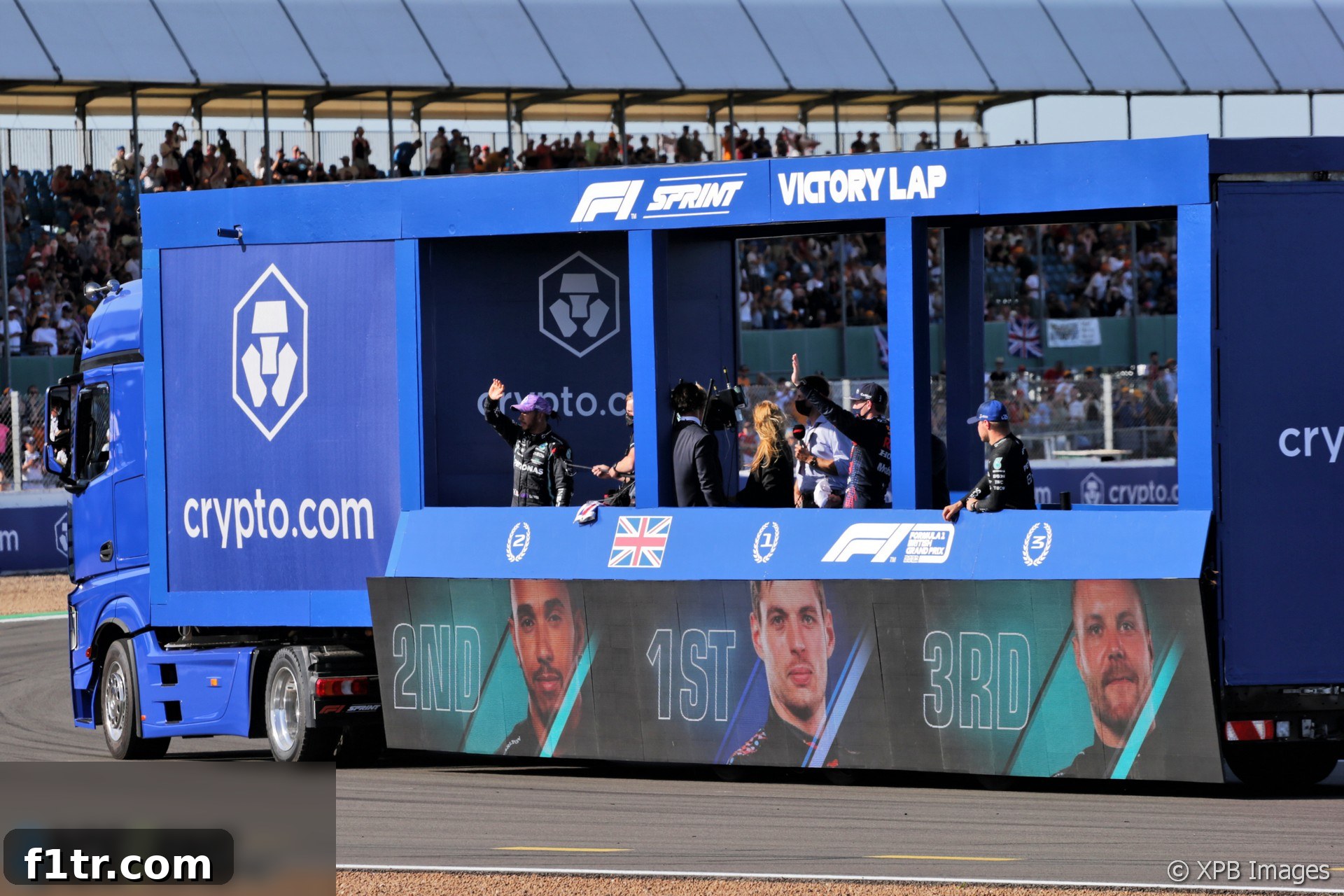
Toto Wolff’s Nuanced Take: F1 Sprint Qualifying – An Entertaining Addition, Not a Weekly Fixture
The Formula 1 calendar has seen an ongoing evolution in recent years, with one of the most significant changes being the introduction of the sprint qualifying format. Debuting at the British Grand Prix, this experimental change aimed to inject more excitement into race weekends. Mercedes team principal Toto Wolff, a highly influential voice within the sport, offered a remarkably balanced and insightful assessment of the new format. While readily acknowledging the undeniable entertainment value the sprint race brought to the Silverstone weekend, Wolff also articulated clear reservations about its potential for widespread application, advocating instead for a highly selective and strategic integration.
The inaugural sprint race at Silverstone saw Mercedes drivers Lewis Hamilton and Valtteri Bottas finish in second and third positions respectively. Their strong performance in this short-format race successfully set a promising starting grid for the main British Grand Prix later that afternoon. Despite this favorable outcome for his own squad, Wolff’s reflections extended beyond immediate team success. His focus was keenly tuned to the broader implications of the sprint format for the sport’s competitive integrity, its entertainment value, and the overall structure of a Formula 1 weekend.
Boosting Entertainment: The Sprint’s Undeniable Appeal
Wolff was unequivocal in his commendation of the sprint race’s capacity to inject a palpable sense of excitement and additional content into the race weekend. “I think it’s entertaining for the crowds on the track,” he observed, emphasizing the inherent drama that unfolds at the start of any race. The condensed, high-intensity nature of the sprint, characterized by a rapid dash for prime positions, naturally generates captivating content for the legions of Formula 1 fans, whether they are experiencing the action trackside or watching from home.
This distinct form of racing provided a unique thrill, differing significantly from the strategic depth and endurance required in a full-length Grand Prix. It offered an immediate burst of wheel-to-wheel action from the moment the lights went out, transforming what might traditionally be a more subdued Saturday into a day brimming with competitive stakes and compelling narratives. Wolff specifically highlighted the performance of Fernando Alonso, whose aggressive overtakes and tactical gains early in the sprint race were a particular source of enjoyment. Such instances powerfully demonstrate the sprint’s potential to deliver genuine sporting theatre, keeping audiences engaged and anticipatory even before Sunday’s main event, thereby enriching the overarching Formula 1 experience for global viewers.
The Randomness Dilemma: A Threat to Sporting Meritocracy?
Despite the evident entertainment, Wolff’s primary apprehension centered on the concept of ‘randomness’ and its potential to unfairly influence the starting grid for the Grand Prix. He pointed directly to the unfortunate incident involving Sergio Perez, who spun out during the sprint race and subsequently retired, forcing him to start the main British Grand Prix from the very back of the grid. This incident, Wolff contended, served as a stark illustration of the inherent risks embedded within the sprint format.
“I don’t [want to] see that every race. I think that is too much randomness,” Wolff stated with conviction. The unpredictable dynamics of a short, high-stakes sprint mean that minor errors, or even unforeseen circumstances beyond a driver’s control, can have disproportionately severe consequences. For a top-tier driver like Sergio Perez, expected to consistently challenge for podium finishes or even victories, an incident in the sprint race could unfairly compromise his entire Grand Prix weekend, irrespective of his underlying pace, skill, or the team’s car performance. This risk becomes particularly salient for drivers and teams engaged in a championship battle, where every single grid position, and every point, can prove decisive.
Wolff further elaborated on his concern, explaining, “It could really work against you if you’re one of the front-runners. There’s too much randomness.” The established Formula 1 qualifying format, traditionally held on Saturday, is meticulously designed to be a pure test of raw speed and individual driver skill, rewarding the fastest car and driver without the added variables inherent in a race scenario. The sprint, by contrast, introduces these variables – including first-lap skirmishes, potential mechanical failures in a racing context, or even strategic missteps within a very tight timeframe. Any of these can drastically alter the competitive landscape for the main event. For a sport that prides itself on meritocracy, precision engineering, and the relentless pursuit of ultimate performance, introducing elements that can arbitrarily penalize top competitors based on racing incidents, rather than outright pace, remains a significant concern for team principals like Wolff.
Wolff’s Philosophy: Differentiating Acceptable Change from ‘Fake’ Manipulation
Toto Wolff’s carefully considered support for the sprint qualifying format stands in sharp contrast to his firm and consistent opposition to more radical and, in his view, artificial alterations to the sport’s core structure. While he conceded, “I’m not a fan of live experimenting,” he notably qualified his acceptance of the sprint by stating, “but this one is not hugely controversial.” This distinction is absolutely pivotal to understanding his broader philosophy regarding Formula 1’s evolution and the boundaries of acceptable change.
He drew a clear and unequivocal line against proposals such as reverse grids, which have occasionally been discussed as a method to artificially “spice up” the racing. “I am totally against reverse grids, it’s just fake,” Wolff asserted emphatically. His fundamental objection stems from a deep-seated belief that such formats artificially manipulate the competitive order, thereby undermining the foundational principle of Formula 1: to identify and crown the fastest and most deserving driver and team. Reverse grids intentionally impose handicaps on the best performers, a concept which, for a purist like Wolff, fundamentally contradicts the spirit of true sporting competition and merit. In contrast, the sprint race, while introducing a dynamic racing element, still saw drivers starting from positions earned purely on merit during Friday’s traditional qualifying session, making it a more palatable form of experimentation in his eyes.
“I believe that qualifying was [Friday] and also qualifying should be called qualifying and not a sprint race, but this is really a detail,” he further added. This specific comment highlights his preference for maintaining the established nomenclature and the traditional understanding of the F1 weekend structure, even as new formats are integrated. It signifies a desire for clarity, consistency, and a steadfast commitment to ensuring that the essence of Formula 1’s competitive framework remains intact amidst these innovative changes.
The Impact on the Race Weekend: Practice and Sprint Dynamics
The altered weekend format, inherently necessitated by the introduction of sprint qualifying, also had discernible effects on the traditional schedule. This was particularly evident in Friday’s qualifying session, which now effectively set the sprint grid, and Saturday morning’s second practice session. The fact that FP2 was conducted under stringent parc ferme restrictions – meaning teams were largely prohibited from making significant setup changes to their cars after Friday’s qualifying – made the session feel somewhat “random,” according to Wolff. This engineering limitation on adjustments introduced another layer of unpredictability, as teams had to finalize their setups with considerably less flexibility, impacting their ability to fine-tune their cars optimally for both the sprint race and the highly anticipated main Grand Prix.
Regarding the sprint race itself, Wolff offered a candid and honest assessment. “It was a bit dull towards the end,” he agreed, reflecting a sentiment shared by some viewers and analysts. While the initial laps were frequently characterized by intense action, numerous overtaking opportunities, and heightened drama, the condensed nature of the race, coupled with differing tire strategies and varying car performance levels, sometimes led to a more processional conclusion in its latter stages. However, he was quick to balance this criticism, adding, “but until then I would say it has merit.” This acknowledgment suggests that despite the potential for a static finish, the early excitement, strategic importance of gaining positions, and the overall novelty still positioned the sprint as a valuable and engaging component of the weekend’s comprehensive entertainment package.
The ‘Grand Slam’ Concept: Strategic Limitation for Maximum Impact
Taking into account all these diverse factors – the entertainment value, the concerns about randomness, and the impact on the weekend structure – Toto Wolff articulated a clear and prescriptive vision for the future integration of sprint races into the Formula 1 calendar: a carefully limited and highly selective number of events. He strongly advocated for no more than “three or four races a year,” firmly believing this to be the “right amount” to maximize their impact and appeal without diluting the core Grand Prix experience or introducing an excessive and detrimental level of randomness into the championship.
Wolff envisioned these specific sprint weekends as a kind of “grand slam” event, drawing a parallel to the prestige and heightened stakes of major tennis tournaments. This approach would imbue these particular weekends with a profound sense of prestige and heightened excitement. “If it is a kind of ‘grand slam’ for a couple or a few races, I think that is good because you provide some real entertainment on the Saturday,” he thoughtfully explained. This judicious and selective approach would ensure that sprint races remain genuinely special occasions, eagerly anticipated by fans, media, and teams alike. By purposefully not making them a ubiquitous feature across every race, Formula 1 could effectively preserve the unique charm, rich history, and traditional structure of the vast majority of its Grand Prix weekends, while still strategically leveraging the sprint format’s proven ability to generate additional prime-time television content and significantly boost fan engagement.
Such a refined model would effectively create a dynamic weekend structure that consistently offers prime-time TV viewership on Friday night (for the crucial qualifying session), Saturday night (for the exciting sprint race), and, of course, for the main Grand Prix on Sunday. This multi-day, high-visibility format would undoubtedly significantly boost the sport’s commercial appeal and global reach, all without fundamentally altering or compromising the competitive integrity and established traditions that Wolff, and indeed many other key stakeholders within the sport, hold in such high regard. It represents a pragmatic and forward-thinking approach that intelligently seeks to harness the undeniable benefits of innovation while simultaneously respecting the profound traditions and core principles that continue to define the very essence of Formula 1.
Conclusion: Balancing Innovation with the Soul of Formula 1
Toto Wolff’s comprehensive and deeply considered commentary on F1 sprint qualifying perfectly encapsulates the ongoing, delicate balancing act faced by Formula 1: how to effectively innovate, attract new audiences, and remain commercially vibrant, all without alienating its dedicated traditional fanbase or, crucially, compromising its fundamental sporting integrity. His astute endorsement of the sprint’s entertainment value, coupled with his firm cautionary stance against its overuse and the introduction of overly “random” elements, offers a valuable and pragmatic roadmap for the sport’s future trajectory.
The inaugural British Grand Prix sprint experiment provided invaluable insights, vividly demonstrating both the significant potential and the inherent pitfalls of such radical format changes. As Formula 1 diligently continues to evaluate, refine, and potentially expand its calendar and race weekend structures, Wolff’s compelling call for a limited, “grand slam” approach to sprint races illuminates a viable path forward. This approach could successfully achieve a harmonious balance between enhanced entertainment and the championship’s core values of meritocracy, consistent performance, and high-stakes, authentic competition. The broader debate surrounding F1 sprint qualifying will undoubtedly continue to evolve and intensify, but Toto Wolff’s reasoned, influential, and balanced perspective remains a truly significant and insightful contribution to this critical ongoing conversation within the pinnacle of motorsport.
More from the 2021 British Grand Prix
- Verstappen reveals “vision problems” since 2021 Silverstone crash with Hamilton
- Who was to blame for Verstappen and Hamilton’s collision at Silverstone?
- Hamilton penalty “harsh” for move within FIA’s overtaking guidance – Allison
- Why Hamilton “wasn’t seen as wholly to blame” for the Verstappen crash
- Sainz convinced he had pace to challenge for podium without British GP setbacks
Browse all 2021 British Grand Prix articles