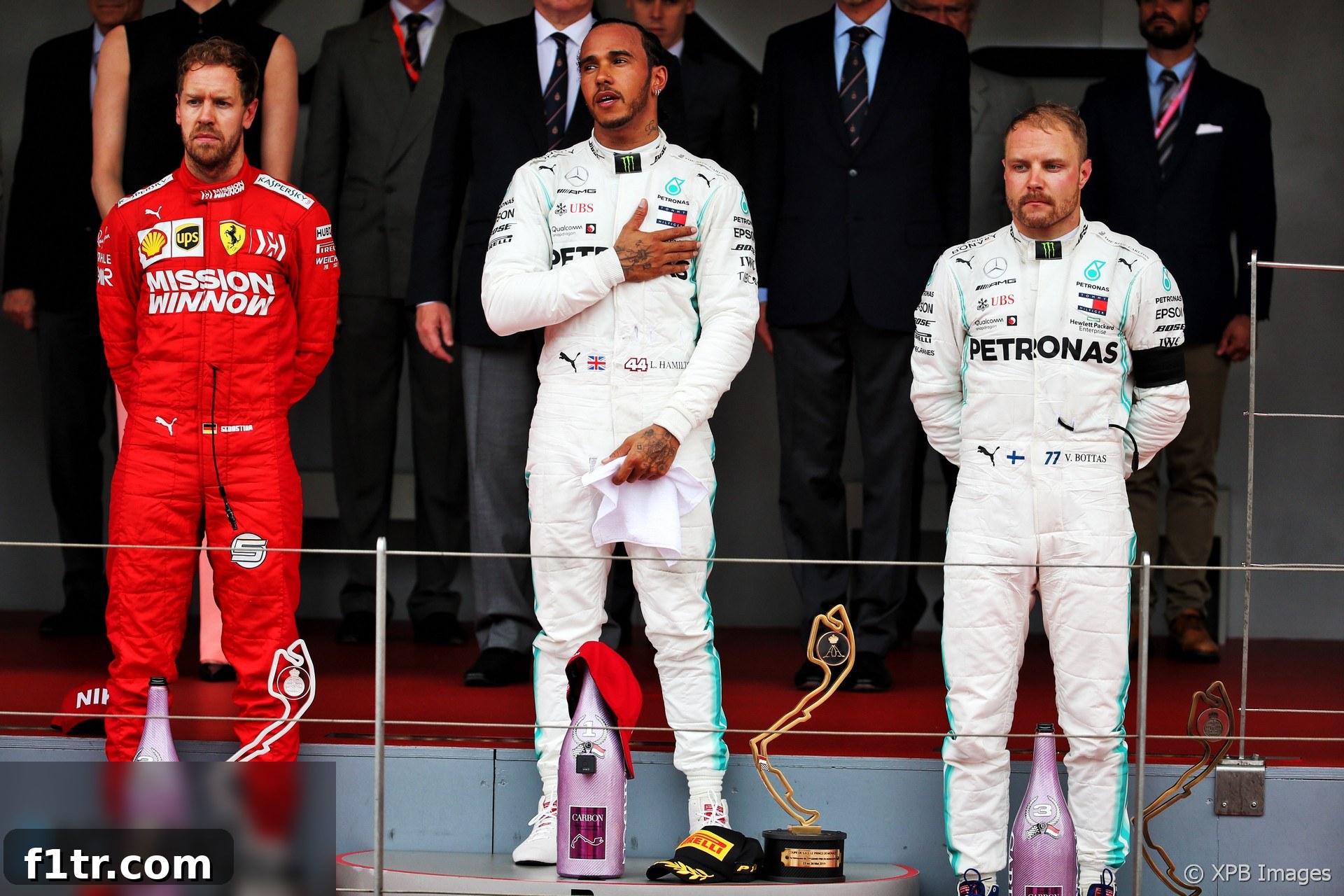
In the high-stakes, unforgiving arena of Formula 1, where fortunes can change in an instant, the aftermath of the Monaco Grand Prix often leaves indelible marks on drivers and teams alike. For Valtteri Bottas and the Mercedes-AMG Petronas F1 Team, the 2019 Monaco race was a complex tapestry of triumph and frustration. Despite securing a robust third-place finish for the team, the weekend represented a significant missed opportunity for Bottas, a sentiment echoed by Team Principal Toto Wolff. Wolff, a figure known for his measured yet insightful commentary, expressed confidence that Bottas would emerge “stronger” from the challenging experience, underscoring the team’s unwavering belief in their driver’s capabilities and mental fortitude.
The streets of Monte Carlo are legendary for testing the absolute limits of a racing driver, and the 2019 edition was no exception. Bottas had demonstrated formidable pace throughout the practice sessions, hinting at a potential pole position. The qualifying session was a nail-biting affair, culminating in a fierce battle for the top spot. Ultimately, it was his teammate, Lewis Hamilton, who snatched pole by the narrowest of margins on the very last run of Q3. While missing out on pole was undoubtedly a blow, Bottas’s performance in qualifying reaffirmed his genuine speed and strong form, a stark contrast to his challenging 2018 campaign. His ability to push Hamilton, a five-time world champion at that point, to the absolute edge highlighted the renewed competitive spirit Bottas had brought into the 2019 season, a phase often dubbed “Bottas 2.0.”
The race day itself unfolded with its own dramatic twists, particularly during the crucial pit stop phase. Bottas, running in a strong second position behind Hamilton, was unfortunately involved in an incident in the pit lane that irrevocably altered the trajectory of his race. As he pulled into his pit box, the mechanics executed their work with precision. However, a moment of confusion or misjudgment saw Max Verstappen of Red Bull Racing being unsafely released directly into Bottas’s path. The resulting contact was unavoidable, a jarring sight in the confined spaces of the Monaco pit lane. While the initial impact appeared minor, the consequences were anything but. Bottas’s front right tyre suffered a puncture, necessitating an immediate and unscheduled second pit stop.
This unfortunate incident threw Mercedes’ carefully planned strategy into disarray and had profound implications for both drivers involved. The stewards promptly investigated the pit lane collision, subsequently handing Verstappen a five-second time penalty for the unsafe release. While this penalty would affect Verstappen’s final race classification, for Bottas, the damage was more immediate and severe. The unplanned second stop forced him to rejoin the race several positions down, dropping him behind Sebastian Vettel of Ferrari. What could have been a comfortable second-place finish, solidifying Mercedes’ dominance with another one-two, dissolved into a fight for damage limitation. The incident effectively “ruined both races” in terms of their potential, as Wolff succinctly put it, highlighting the collateral impact of such split-second mishaps in motor racing.
Toto Wolff, reflecting on the weekend’s events, articulated a balanced perspective, characteristic of his leadership style. He acknowledged the team’s overall success in securing a first and third place, a testament to Mercedes’ robust performance and Hamilton’s masterful drive. However, he also empathized deeply with Bottas’s personal disappointment. “Max lost a position because of the penalty and the manoeuvre and Valtteri lost a second place, three points more that are lost, and Mercedes lost a one-two,” Wolff elaborated, meticulously detailing the cost of the incident. He recognized that for Bottas, who had demonstrated the raw speed to contend for pole position, securing P2 was “the minimum I think and that P2 was taken away from him.” This acknowledgment of Bottas’s genuine pace and the unfortunate circumstances that robbed him of a better result is crucial for maintaining driver morale and confidence within a competitive team environment.
Indeed, Bottas’s early 2019 season had been a revelation. After a winless 2018 where he often played a supportive role to Hamilton, he arrived in 2019 with a renewed vigor and a more aggressive approach, quickly earning victories and challenging Hamilton consistently for the championship lead. This resurgence, fueled by determination and a deeper understanding of his car, made the setback in Monaco particularly frustrating. It was precisely this hard-won resilience that Wolff highlighted as the key to Bottas’s future performance. “I think he has shown huge resilience and determination in these last races,” Wolff stated, pointing to the Finn’s ability to bounce back from adversity. The Team Principal’s unwavering faith in Bottas’s mental strength was palpable. “The speed was mind-boggling [in qualifying] and I have no doubt it’s going to annoy the hell out of him and he’s going to come back very strong in Montreal.” This forecast spoke volumes about Wolff’s understanding of his driver’s psychology and the competitive fire that burns within Formula 1’s elite.
From Bottas’s own perspective, the immediate aftermath of the pit lane incident was fraught with concern. The sudden impact and the realization of a puncture could have easily led to a catastrophic outcome in a circuit as challenging as Monaco. “I thought that when I got the puncture and had to stop again that I was going to be at the back of the grid,” he admitted, revealing the momentary fear of a complete race derailment. Fortunately, the damage, while significant, was not terminal, allowing him to rejoin and salvage a third-place finish. “But luckily I only lost a couple of places. So [it was] unlucky but lucky at the same time. It could have been a lot worse. Still important points, obviously disappointing going backwards from where you start from – sometimes it goes like this.” Bottas’s pragmatic assessment reflected a driver capable of processing disappointment while focusing on the bigger picture and the fortunate escape from a much worse scenario.
Regarding the stewards’ decision to impose a five-second penalty on Verstappen, Bottas adopted a similarly realistic stance. In Monaco, a circuit renowned for its near-impossible overtaking opportunities, a time penalty, while impactful, cannot truly restore lost track position in the same way it might on a more open track. “It’s a tricky one because there would be no way I could ever gain back the position so I lost,” Bottas explained. “I gained, at least, Max’s position with his penalty. But [for] example the position I lost to Sebastian, there’s no way I ever gain it back. So I think he got his penalty and it’s OK.” This viewpoint acknowledged the limitations of the penalty system in certain race contexts while accepting the stewards’ efforts to address the infringement. It underscored the inherent risks and unpredictable nature of racing in a densely packed field, especially during critical pit stop sequences.
As the Formula 1 circus prepared to move to the Canadian Grand Prix in Montreal, Wolff’s prediction for Bottas’s comeback was more than just rhetoric. The Circuit Gilles Villeneuve, with its long straights and heavy braking zones, demands a different set of skills and car characteristics than Monaco. It’s a track that often rewards raw power and precise setup, areas where Mercedes typically excels. For Bottas, it presented an immediate opportunity to translate his underlying speed into a tangible result, to prove Wolff’s faith and silence any lingering doubts from Monaco. The mental resolve to overcome setbacks is a defining trait of champions, and Wolff’s confidence in Bottas’s ability to harness his frustration and channel it into a stronger performance in Canada was a clear message of support and expectation.
The 2019 Monaco Grand Prix served as a microcosm of the intense competition and fine margins that define Formula 1. For Valtteri Bottas, it was a harsh lesson, a reminder that even when displaying blistering pace, external factors can heavily influence outcomes. Yet, the unified front presented by Toto Wolff and the Mercedes team, emphasizing resilience and determination, painted a clear picture of a unit fully committed to its drivers. Bottas’s journey through the 2019 season, punctuated by moments like Monaco, was a testament to his growth as a driver and his capacity to push through adversity, constantly striving to come back “stronger.”
2019 F1 season
- Crying in the Melbourne car park at 2019 grand prix was my career low – Ocon
- McLaren Racing reports reduced £71 million loss in 2019
- Kvyat: Hockenheim podium last year was “my biggest achievement” so far
- How the FIA’s new encrypted fuel flow meter targets Ferrari’s suspected ‘aliasing’ trick
- “He smashed my office door”: 23 must-see moments from ‘Drive to Survive’ season two
Browse all 2019 F1 season articles