Mercedes F1: Toto Wolff on Navigating the Road Back to Dominance
Mercedes team principal Toto Wolff has underscored the importance of a measured and cautious approach as the team plots its return to Formula 1 competitiveness. Following a profoundly challenging 2022 season, which saw the Silver Arrows surrender their long-held constructors’ championship title, Wolff is clear that a rapid resurgence cannot be taken for granted, despite the team’s illustrious history.
Advert | Become a Supporter & go ad-free
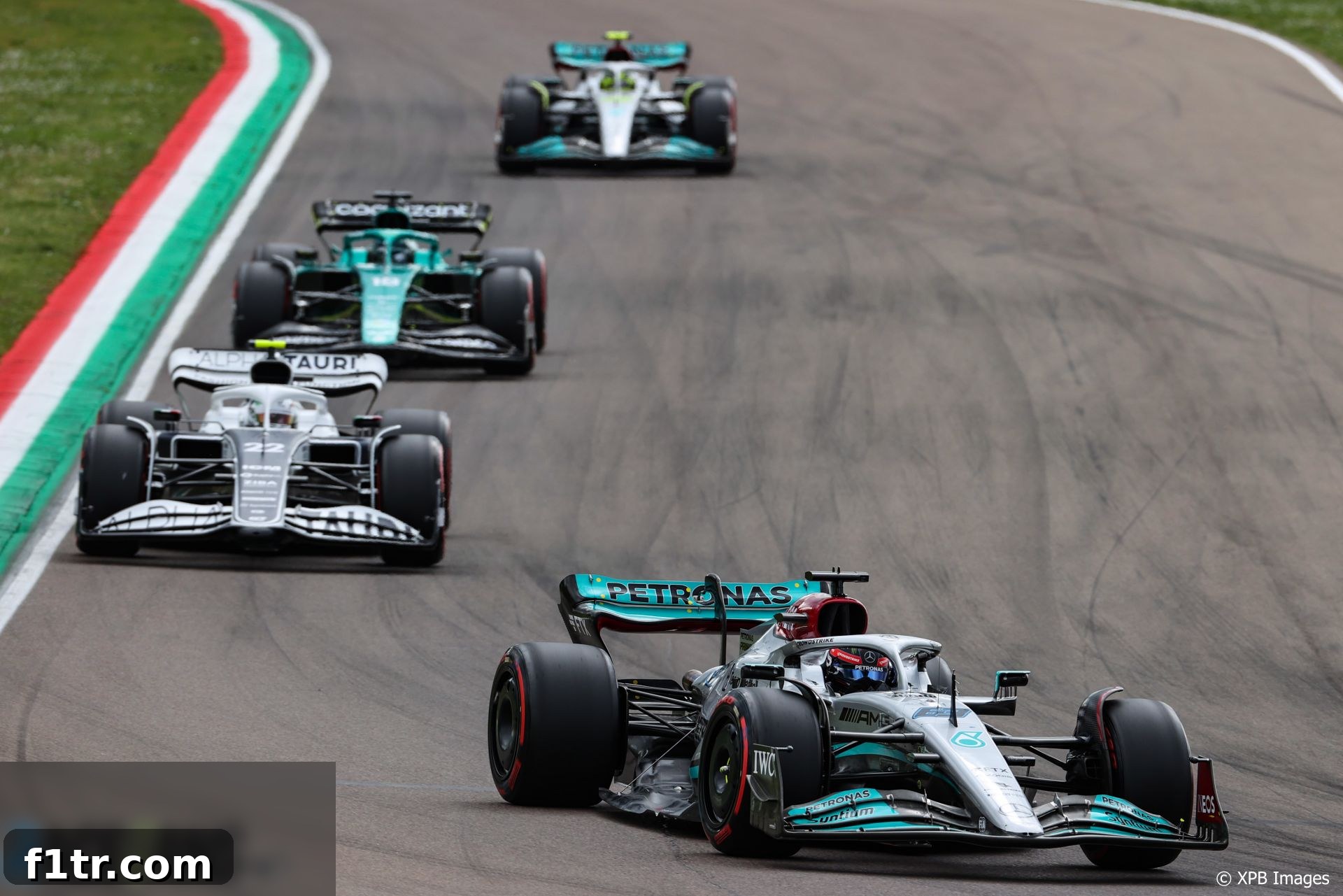
The 2022 campaign marked a significant departure from Mercedes’ unprecedented success. For the first time since 2013, the German manufacturer failed to clinch the constructors’ championship, struggling from the outset with a car that proved uncompetitive against its rivals. A single race victory, achieved only in the penultimate round of the season, highlighted the depth of their struggles and the steep learning curve they faced under the new technical regulations.
Learning from Giants: Lessons from Red Bull and Ferrari’s Dynasties
In a candid reflection, Wolff revealed that Mercedes is meticulously studying the historical precedents of Formula 1 teams whose eras of dominance eventually concluded. His aim is to glean critical insights into where things can go awry, using these lessons to safeguard Mercedes’ future and inform their recovery strategy. He specifically referenced the formidable championship runs of Red Bull from 2010 to 2013 and Ferrari’s golden age in the early 2000s with the legendary Michael Schumacher.
“With Ferrari, to point the example, they lost the whole top leadership and a key driver,” Wolff elaborated. “I think that is something where you can trace it back.” This observation highlights the profound impact that significant personnel changes, particularly at leadership and driver levels, can have on a team’s sustained performance. The departure of pivotal figures can create a vacuum, disrupting established processes, institutional knowledge, and team cohesion, leading to a noticeable drop in performance.
Shifting focus to Red Bull’s trajectory, Wolff pointed out another crucial factor: “With Red Bull it was a fundamental situation that the power unit regulation changed upside down and [they had] no works [engine] deal, basically. So it was fundamental parameters that changed.” This illustrates how a radical shift in technical regulations, especially concerning critical components like power units, can completely reset the competitive landscape. A team that excels under one set of rules may find itself disadvantaged when those parameters are fundamentally altered, particularly if they lack an integrated, manufacturer-level engine partnership.
These historical examples serve as stark reminders for Mercedes. Wolff asserted that the team is “looking at that and thinking ‘we better be careful’,” as they diligently work towards regaining the formidable competitiveness that defined their earlier years in the V6 hybrid turbo era. Their analysis is deep, probing the precise causes behind the decline of once-dominant teams.
Dissecting the Decline: Key Factors Identified
“We are analysing what were the reasons in the past that teams that dominated over an era suddenly lost performance,” Wolff confirmed. “You can trace it back pretty well: Change of regulation, people leaving, a tyre that changed fundamentally.” This methodical approach underscores Mercedes’ commitment to understanding the multi-faceted nature of sustained success and the myriad ways it can be eroded. Regulatory changes, such as the ground effect rules introduced in 2022, can render previous design philosophies obsolete, demanding a radical re-think and significant adaptation from engineering teams. The departure of key technical personnel can strip a team of vital expertise and innovative momentum. Even seemingly minor changes, like fundamental alterations to tyre characteristics, can significantly impact car performance and require extensive re-tuning and development.
Advert | Become a RaceFans supporter andgo ad-free
Re-motivation and Re-energization: A Necessary Challenge
Despite the initial struggles of 2022, Wolff views the team’s eventual performance as “respectable” and a testament to their enduring core strengths. He maintains that Mercedes still possesses the fundamental ingredients necessary for consistent victory, even if they momentarily lost their way with the new regulations. “The regulation changed, we got it wrong. But all the other pillars are still in place and we have to tune the systems and understand,” he explained. This acknowledgement of error, coupled with a belief in the underlying strength of the team’s structure and personnel, forms the bedrock of their recovery strategy.
Wolff firmly believes that the “difficult year” of 2022 was, in a paradoxical sense, “necessary for us to re-motivate and re-energise the organisation.” After securing an unprecedented eight consecutive constructors’ championships and over 100 race victories, a period of adversity can serve as a vital reset. It brings a team “back down to the ground,” fostering a renewed appreciation for success, such as their memorable victory in Brazil, and a deeper understanding of the immense effort required to recover. This wasn’t merely about recovering from a single bad race, as they might have done in previous dominant seasons, but from a succession of races where their performance simply wasn’t adequate.
Looking ahead, Wolff anticipates that in a few years, the team will reflect on 2022 as an “absolutely necessary” period of growth and learning. His perspective transcends single seasons; it’s about a long-term vision of sustained presence at the top of Formula 1. “My perspective is not one season and it’s not two years, my perspective is looking back in 10 years and saying ‘we’ve been there constantly’,” he affirmed. This long-range view emphasizes resilience and consistent top-tier performance over fleeting victories.
Despite the challenges, Mercedes’ 2022 season was not entirely devoid of positives. “We’ve been [respectable] at times this year. We won a race. We had ten or more podiums, a one-two in the race. We’ve been third on the road and that’s respectable,” Wolff highlighted. These achievements, particularly given the car’s initial struggles, demonstrate the team’s ability to maximize performance even with suboptimal machinery and underscore the raw talent and dedication within the organization.
The Path Forward: Cautious Optimism in a Highly Competitive Era
However, Wolff remains resolutely grounded, refusing to take Mercedes’ automatic return to pre-2021 levels of dominance for granted. His leadership philosophy is characterized by a perpetual vigilance and an inherent skepticism, which he believes is crucial for continuous improvement. “I’m never confident. I’m a glass-half empty guy and I never believe that the job that we are doing is good enough,” he admitted. This “glass-half-empty” mindset, rather than being pessimistic, serves as a powerful motivator, driving constant self-assessment, critical analysis, and the relentless pursuit of perfection.
He openly acknowledged the formidable challenge ahead: “I’m not sure at all whether we can bounce back to a position where we compete for championships because you need to acknowledge that the competition is strong.” The current Formula 1 grid is arguably one of the most competitive in history, with multiple teams boasting robust technical capabilities and highly skilled personnel. Yet, despite this realistic appraisal of the competitive landscape, Wolff’s commitment remains unwavering. “But we will do everything in our power, everything to set our objectives high and try to reach them,” he declared. This signifies a determined, no-holds-barred effort from Mercedes to reclaim its position at the pinnacle of motorsport, leveraging every lesson learned and every ounce of its vast experience.
Advert | Become a RaceFans supporter andgo ad-free
Further Reading: Insights from the 2022 F1 Season
Explore more discussions and analyses related to the 2022 Formula 1 season and its lasting impact on the teams and drivers.
- Mercedes told me “you’re wrong” about 2022 car’s problems – Hamilton
- FIA confirms all 10 F1 teams complied with 2022 cost cap
- Steiner “not ashamed” of panning “slow” Schumacher in Drive to Survive
- Albon believes year out of F1 improved him as a driver
- Hamilton sees diversity gains in F1 years on from his ‘traumatising’ experience of racism
Browse all 2022 F1 season articles