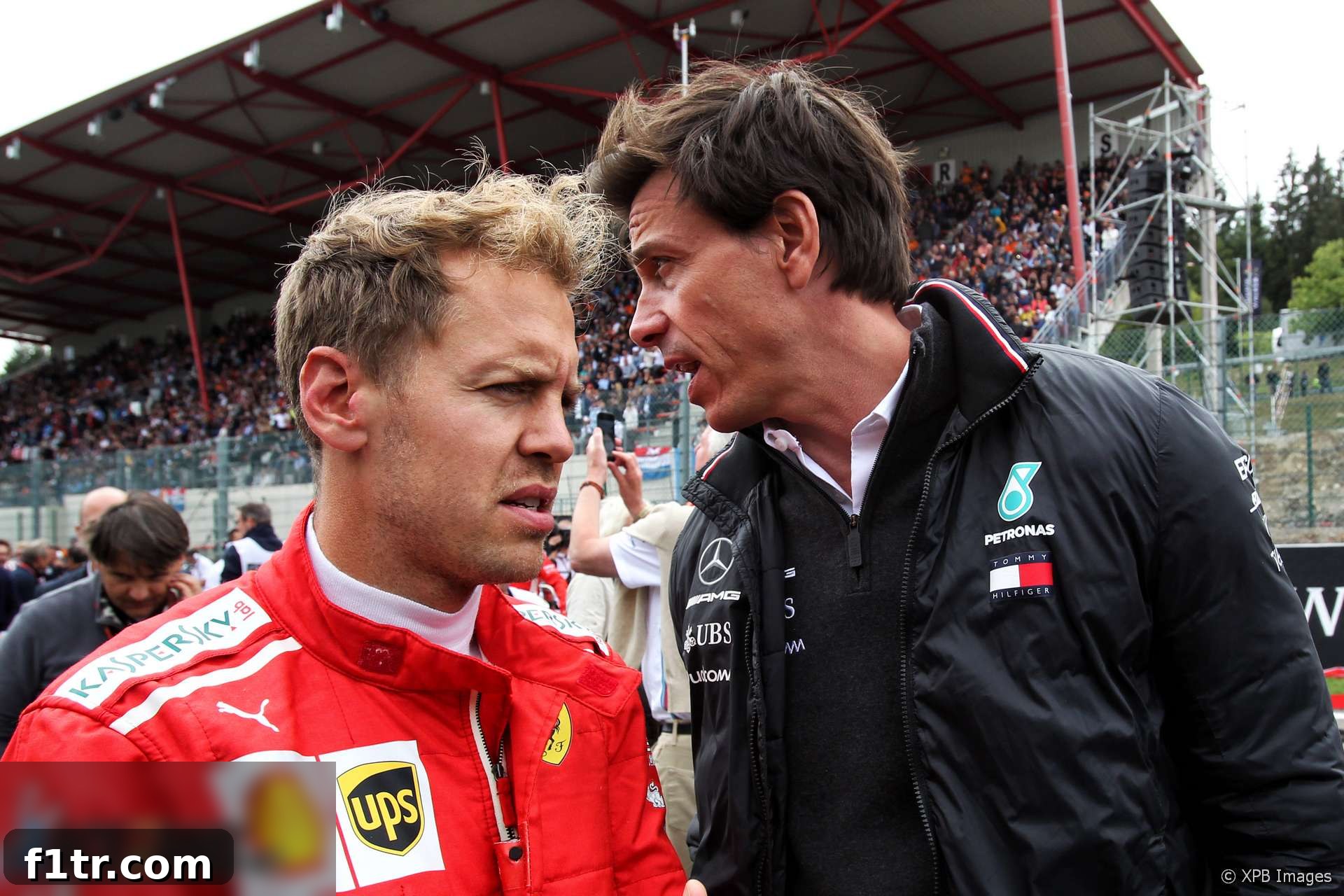
The exhilarating world of Formula 1 racing is perpetually abuzz with speculation, and few topics ignite as much passion as the annual driver market. In a revelation that sent ripples through the paddock, Toto Wolff, the esteemed team principal of Mercedes-AMG Petronas F1 Team, acknowledged that Sebastian Vettel, the four-time world champion, could indeed be a viable option for the dominant Silver Arrows. This significant statement emerged amidst uncertainties surrounding the contract statuses of Mercedes’ formidable duo, Lewis Hamilton and Valtteri Bottas, both of whom faced expiring contracts at the close of the current season.
Vettel’s surprising departure from Scuderia Ferrari, announced well before the rescheduled 2021 F1 season could even commence, thrust the German maestro into the heart of the driver market. This move sparked intense speculation across the Formula 1 community regarding where a driver of his caliber and championship pedigree might land next. For a multiple world champion accustomed to competing at the very pinnacle of the sport, finding a seat capable of challenging for race wins and titles is paramount. Mercedes, unequivocally the benchmark team of the hybrid era, naturally topped the list of potential destinations in the minds of many fans and pundits.
Wolff, known for his astute leadership and strategic foresight, adopted a measured and respectful tone when addressing the possibility of Vettel joining Mercedes. He emphasized the immense respect the team holds for a driver of Vettel’s stature, stating, “I think we owe it to a four-time world champion not to come out and say straight away ‘no’. You need to think about it.” This diplomatic stance highlights the professional courtesy extended to a driver who has significantly shaped the modern era of Formula 1. It also underscores the meticulous decision-making process within Mercedes, where every potential driver change is evaluated with extreme care and consideration for both performance and team dynamics.
While keeping the door ajar for Vettel, Wolff was also quick to reaffirm his profound satisfaction with Mercedes’ existing driver lineup. “On the other side we have a fantastic line-up and I’m very happy with both our pilots and George [Russell],” Wolff elaborated. This statement clearly indicates that Hamilton and Bottas remain the preferred choices for Mercedes, a testament to their consistent performance, teamwork, and invaluable contribution to the team’s unprecedented run of success. Hamilton, a six-time world champion at the time of these comments, has been instrumental in Mercedes’ dominance, while Bottas has proven to be a highly capable and reliable teammate, contributing crucial points and numerous victories.
However, the unpredictable nature of Formula 1, as Wolff sagely noted, dictates that all options must be kept open. He recalled the shocking and sudden retirement of Nico Rosberg at the end of the 2016 season, immediately after securing his maiden world championship title. Rosberg’s departure caught Mercedes, and indeed the entire F1 world, by surprise, leaving a highly coveted seat vacant with little warning. “But you never know. One of them may decide that he doesn’t want to go racing any more and suddenly you have a vacant spot and this is why I don’t want to come out in June and say ‘no chance, Sebastian is not racing for us’,” Wolff explained. This “black swan” event, as Wolff termed it, serves as a vivid reminder that even the most meticulously planned strategies in Formula 1 must account for unforeseen circumstances. The precedent set by Rosberg’s departure instilled a sense of cautious realism within the Mercedes management, ensuring they are prepared for any eventuality, no matter how unlikely it may seem at present.
Wolff admitted that the early flurry of activity in the driver market, particularly Ferrari’s swift announcement regarding Vettel’s impending departure even before the revised 2020 season could commence, was “quite surprising.” This early decision by Ferrari presented its own set of challenges, as Wolff highlighted. “It means you need to start the season with a driver that you know you’re going to lose. So it’s very tricky to develop a car without having the driver be part of it. Every single driver needs to be a team player as well and that becomes second priority, in my opinion, for the relevant guy.” The implication here is profound: a driver on his way out might not be fully invested in the long-term development of the team’s machinery, potentially impacting overall performance and morale. This strategic disadvantage is something Mercedes aims to avoid, underscoring their preference for stability and full commitment from their drivers.
Mercedes’ approach, in contrast, is characterized by patience and a focus on internal talent. “For us, we want to take our time. Our priority lies on the Mercedes drivers, Valtteri and Lewis and then obviously George and the Williams situation we are looking at with interest,” Wolff affirmed. This confirms the hierarchical structure of Mercedes’ driver considerations: first, securing their proven champions, Hamilton and Bottas; and second, nurturing and closely monitoring their promising junior talent, George Russell, who was gaining invaluable experience at Williams. Russell, a Mercedes junior driver, has long been touted as a future star and a potential candidate for a Mercedes seat, making his progress a significant factor in the team’s long-term planning.
The broader context of the global pandemic and its unprecedented impact on the 2020 F1 season further complicated the driver market. Wolff referenced this uncertainty, stating, “If I would have told you in January that we would not have any racing in the first half of the year nobody would have believed it so in that respect we’re just keeping our options open.” This highlights the fluid and unpredictable nature of the times, where conventional wisdom and long-term plans could be overturned in an instant. In such an environment, maintaining flexibility and adaptability becomes a paramount virtue for any top-tier racing outfit.
While the immediate future for Mercedes seemingly hinged on retaining its championship-winning lineup, the acknowledgment of Vettel as an option spoke volumes about the German’s enduring appeal and Mercedes’ pragmatic approach. Vettel, with his vast experience, technical feedback, and competitive drive, represents a compelling proposition for any team aspiring to glory. His potential presence at Mercedes would undoubtedly create one of the most formidable driver pairings in F1 history, potentially reigniting a fierce rivalry with Lewis Hamilton that defined earlier eras of their careers. Such a move would not only be a seismic shift in the driver market but also a commercial and sporting blockbuster for Formula 1 itself, drawing immense fan interest and media attention.
However, the internal dynamics of having two alpha drivers, both multi-world champions, under one roof are complex. Mercedes has meticulously cultivated an environment of competitive harmony, a delicate balance that was famously tested during the Hamilton-Rosberg years. The decision to bring in Vettel would necessitate a careful evaluation of how such a powerful pairing would integrate into the existing team culture and how the inevitable on-track rivalry would be managed. While the prospect of Hamilton and Vettel battling for supremacy in identical machinery is tantalizing, Mercedes has historically prioritized team cohesion as a cornerstone of its success.
Ultimately, Toto Wolff’s comments painted a picture of a team that is confident in its current strength yet keenly aware of the ever-shifting landscape of Formula 1. By refusing to dismiss Sebastian Vettel outright, Mercedes demonstrated its respect for the sport’s legends and its commitment to exploring all avenues that could potentially enhance its championship aspirations. The 2021 F1 season, therefore, promised to be not just a battle for constructor and driver titles on track, but also a fascinating strategic chess match off it, with driver contracts and team lineups playing a crucial role in shaping the future of the sport.
The saga of Sebastian Vettel’s next move and Mercedes’ ultimate driver choices captivated the F1 world, showcasing the intricate dance between talent, opportunity, and strategic decision-making at the highest level of motorsport. As the season unfolded, the answers to these crucial questions would undoubtedly redefine the competitive landscape for years to come, confirming once again that the driver market is an integral and thrilling component of the Formula 1 narrative.
2021 F1 season
- Masi ‘basically gifted the championship’ to Verstappen says 2021 FIA steward Sullivan
- Las Vegas race backers looking to extend F1 deal beyond 2025
- Why Mercedes put ‘a reminder of joy and pain’ on display in their factory lobby
- Verdict on error in GT race suggests Mercedes would have lost 2021 Abu Dhabi GP appeal
- Title ‘stolen’ from Mercedes made us ‘underdogs people cheer for’ – Wolff
Browse all 2021 F1 season articles