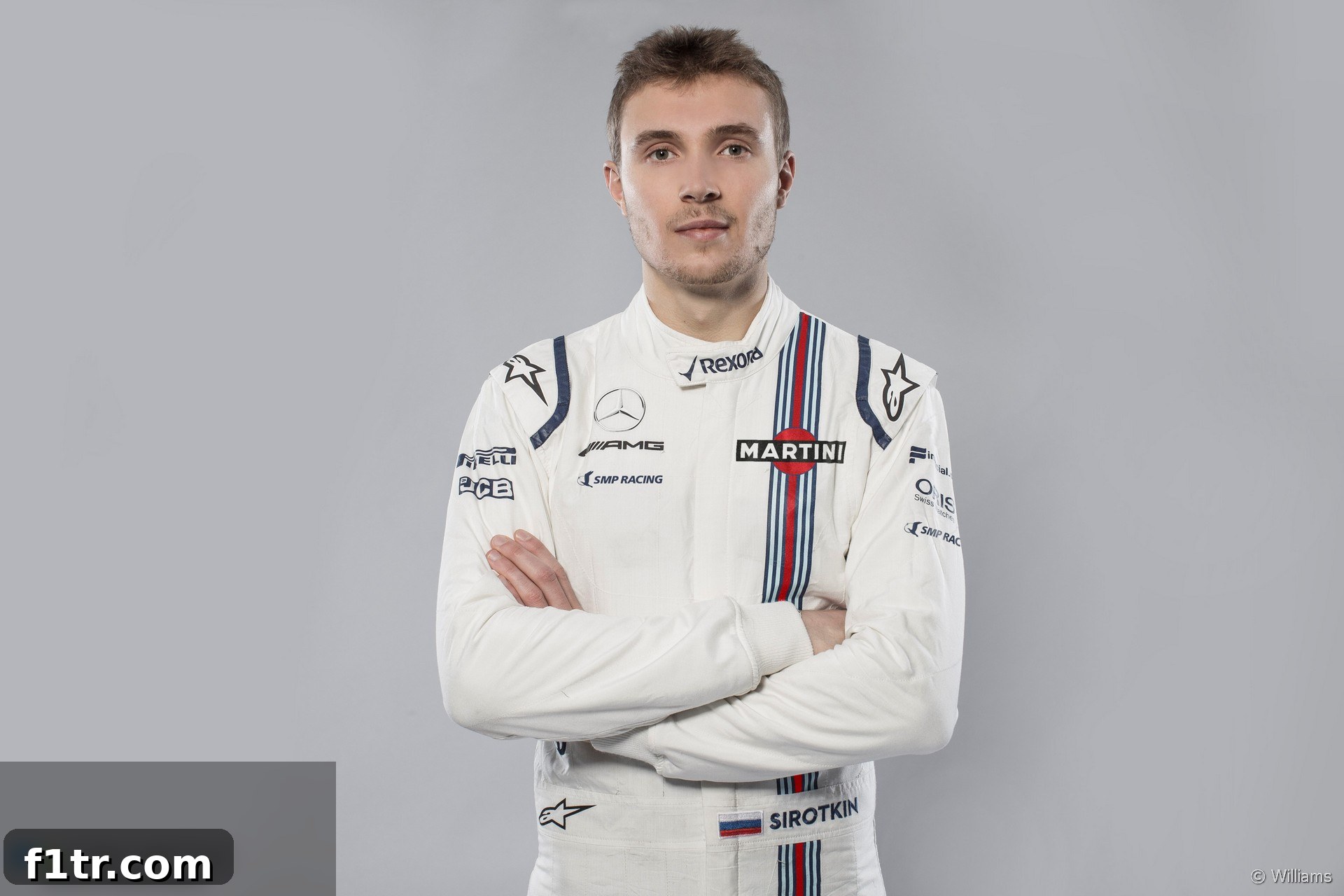
The highly anticipated decision regarding the final seat on the 2018 Formula 1 grid had been a focal point of speculation for months, and when Williams Racing officially announced Sergey Sirotkin as their chosen driver, it confirmed what many observers had come to expect. This significant development for Sirotkin, a promising young talent, inevitably brought a wave of disappointment for Robert Kubica and his extensive, passionate fanbase. For seven long years, following a harrowing rally crash that tragically curtailed his F1 career, millions of fans worldwide had harbored the fervent hope of witnessing Kubica’s miraculous return to the pinnacle of motorsport.
This marked the second instance in just four months that the deeply emotional narrative of Kubica’s fairytale comeback had failed to materialize. Towards the end of the previous year, after undergoing a series of rigorous evaluations and test sessions with the Renault F1 team, Kubica was ultimately passed over. The French outfit opted instead for the services of Carlos Sainz Jnr, a decision that, while understandable given Sainz’s established track record and proven F1 experience, nonetheless left many of Kubica’s supporters disheartened. Sainz, already a seasoned Grand Prix competitor, possessed undeniable credentials and a wealth of Formula 1 mileage, making it difficult to argue against his suitability for the role. However, the subsequent decision by Williams, favouring Sirotkin over Kubica, presented a far more complex and contentious argument for those who prioritized raw driving talent and experience.
Sergey Sirotkin, Williams’s newest driver, arrives with a background of valuable practice and test experience garnered during his development years. However, he remains fundamentally a rookie, poised to embark on his inaugural full Formula 1 season. His journey through the junior championships, including notable stints in GP2 (now Formula 2) and Formula Renault 3.5, yielded a commendable and consistent record. While his performances were solid, securing podiums and demonstrating a diligent approach to racing, they didn’t quite possess the exceptional brilliance or the dominant championship victories that would put him in the league of an undeniable generational talent like Charles Leclerc. Leclerc, for instance, stormed through junior categories with an almost unparalleled display of speed and championship-winning prowess, marking him as a future F1 superstar from an early stage. Conversely, Sirotkin’s results, while significantly stronger than those of drivers like Sean Gelael, were not marked by the same meteoric rise, indicating a capable but perhaps not extraordinary talent profile. This nuanced assessment of his racing pedigree underscores that while his driving abilities are certainly respectable, they were unlikely the sole, or even primary, factor in securing his coveted Formula 1 berth.
The decisive element in Williams’s selection, as widely understood and confirmed by sources close to the team, was the significant financial backing Sergey Sirotkin brought from the prominent Russian bank, SMP. The distinctive logos of SMP Racing, their comprehensive driver development programme, have been a constant and prominent feature on Sirotkin’s overalls and racing machinery throughout his entire motorsport career. For an independent team like Williams, operating in an increasingly financially demanding sport, such an injection of capital is not merely beneficial but often critical for survival and competitiveness. The economic realities of modern Formula 1 dictate that financial contributions from drivers or their sponsors can significantly bolster a team’s budget, allowing for enhanced research and development, improved infrastructure, and a more robust personnel structure. This crucial financial consideration proved to be the pivotal factor in Williams’s ultimate decision-making process.
Paddy Lowe, Williams’s esteemed chief technical officer, who also became a shareholder upon his return to the team in March of the previous year, was a staunch advocate for appointing Sirotkin. Lowe articulated a strategic vision where this move would not only provide immediate financial stability but also yield substantial long-term benefits for the historic British outfit. His perspective suggests a calculated approach, prioritizing the team’s sustained growth and technical evolution over a purely emotional or immediate performance-driven driver selection. In Lowe’s view, the financial security afforded by Sirotkin’s backing would empower Williams to invest more heavily in critical areas such as aerodynamic development, chassis optimization, and advanced engineering solutions for the FW41 chassis and, crucially, for its future successors. This strategic foresight aims to fortify the team’s foundations, enabling them to climb back up the competitive order over multiple seasons, rather than focusing solely on a single-year impact.
Considerable debate and analysis ensued following the post-season test at Yas Marina, with much discussion centered on comparing the lap times set by Kubica and Sirotkin. While Kubica notably completed laps approximately half a second faster than Sirotkin, it is imperative to contextualize these figures. Kubica achieved his times on Pirelli tyres that were three stages softer than those used by Sirotkin, a factor known to significantly impact lap performance. Furthermore, making a truly meaningful comparison from test data is notoriously challenging due to numerous undisclosed variables. Factors such as differing fuel loads, varying car setups, evolving track conditions throughout the day, and specific testing programmes designed for each driver (which might not prioritize outright pace) all render direct, apples-to-apples comparisons difficult, if not impossible. Despite these complexities, the overall assessment appeared to indicate that Sirotkin conceded very little, if anything, to Kubica in terms of raw lap time potential, especially when accounting for the vast differences in testing parameters. This suggests that while Kubica’s speed was impressive given his circumstances, Sirotkin’s underlying pace was not a significant deficit.
The strategic logic behind Williams’s decision becomes unequivocally clear when considering the potential impact of investing the new revenue stream from Sirotkin’s backing directly into car development. If Chief Technical Officer Paddy Lowe can effectively channel these funds into enhancing the FW41 chassis – and, more significantly, its successors – thereby unlocking crucial lap time gains, then the pragmatic choice to select Sirotkin over Kubica is entirely justifiable from a business perspective. In Formula 1, even marginal improvements in car performance can translate into significant gains on track, leading to higher championship standings, increased prize money, and greater attractiveness to sponsors. This direct correlation between financial investment and on-track competitiveness underscores the rationale behind prioritizing a funding source that can directly contribute to the engineering excellence of the racing machinery.
Williams had enjoyed the benefit of arguably F1’s most potent power unit for the preceding four seasons, thanks to their partnership with Mercedes-Benz. Yet, despite possessing this significant advantage, the team had observed a gradual and concerning decline in its overall competitiveness during that period. This paradox strongly suggested that the team’s primary impediment was not its engine, but rather the performance of its chassis, aerodynamics, and overall car design. In such a scenario, any financial resources that could be directed towards rectifying these chassis deficiencies would constitute money exceptionally well spent. The ability to invest in advanced design tools, recruit top engineering talent, accelerate the production of aerodynamic upgrades, and conduct more extensive testing becomes paramount. Therefore, securing a driver who also brings substantial financial capital directly addresses this critical need, enabling Williams to tackle its fundamental performance issues at their root, rather than merely patching over symptoms.
Crucially, the door to Robert Kubica’s Formula 1 aspirations isn’t entirely closed. Williams confirmed that he would continue to be an integral part of the team, participating in various tests and practice sessions throughout the year. The team explicitly stated that Kubica would “be available to stand in as the race driver if required,” a crucial provision that keeps his dream of a competitive return alive, albeit in a different capacity. This role as a reserve and development driver is not merely ceremonial; it allows Kubica to remain deeply embedded within the F1 environment, contribute to the car’s development, and stay physically and mentally prepared for any unexpected opportunity that might arise during the demanding season. His extensive experience and intimate understanding of Formula 1 machinery make him an invaluable asset in this capacity, offering a blend of track feedback and potential race readiness.
The question of whether such a race opportunity for Kubica will genuinely arise is complex and introduces an intriguing geopolitical dimension. Those who have closely followed the increasing prominence of Russian drivers in various motorsport categories will recall the significant challenges faced by another SMP-backed driver, Mikhail Aleshin, which severely hampered his IndyCar seat for much of the 2015 season. Following Russia’s annexation of Crimea the year prior, several prominent individuals associated with Russian President Vladimir Putin became targets of international sanctions. This list included Boris Rotenberg, a co-founder of SMP Bank, which is the primary sponsor behind both Aleshin and Sirotkin. This historical precedent highlights the potential, albeit perhaps remote, for external geopolitical events to impact the careers of drivers and the operations of teams reliant on international backing.
Given that Williams is a publicly listed company, its stringent reporting obligations would have necessitated a thorough discussion and approval at board level regarding Sirotkin’s financial links to Boris Rotenberg and any associated risks. This due diligence process is crucial for ensuring compliance with international regulations and safeguarding the company’s reputation and financial stability. It is important to note, however, that while the United States imposed sanctions on Boris Rotenberg, the European Union did not; interestingly, his brother, Arkady Rotenberg, did appear on the EU’s list. This distinction is significant, as it implies that in a similar hypothetical scenario involving EU-based entities like Williams, the direct impact on Sirotkin’s position might not be the same as Aleshin’s situation in the US-dominated IndyCar series. Nonetheless, Williams’s awareness and mitigation of such potential risks would have been a high priority during the driver selection process.
In the event of an unforeseen circumstance requiring a stand-in driver, Williams now possesses a highly experienced and ready candidate waiting in the wings with Robert Kubica. This provides a substantial advantage compared to scenarios where teams must hastily call upon a reserve driver who might lack recent Formula 1 experience or, crucially, familiarity with the current chassis. For instance, when Paul di Resta was unexpectedly drafted to replace Felipe Massa at the Hungaroring the previous year, he had limited recent F1 mileage and no prior experience with that specific car. In contrast, Kubica, by virtue of his development and reserve driver duties, would already be intimately familiar with the FW41 chassis, its handling characteristics, and the operational procedures of the team. This pre-existing knowledge significantly reduces the preparation time and risk associated with fielding a substitute driver, offering Williams a valuable layer of operational security.
Ultimately, the decision by Williams to forgo the emotionally resonant opportunity of bringing Robert Kubica back to a full-time race seat, instead opting for the strategic inclusion of a well-funded driver like Sergey Sirotkin, does not align with the romantic fairytale narrative many fans had passionately hoped for. However, Formula 1, at its core, is a fiercely competitive business, and pragmatic financial considerations frequently take precedence over sentimentality. Williams, a team with a storied history but facing contemporary financial pressures, is certainly not the first, nor will it be the last, F1 team to make a calculated investment in its car and infrastructure rather than solely on the driver’s immediate on-track performance. This move represents a clear strategic choice: to prioritize the long-term health and competitive evolution of the team by securing crucial funding that can be directly injected into the development of their racing machinery, ensuring a more stable and potentially successful future in the challenging world of Formula 1.
2018 F1 Season Insights and Related Reading
- F1 feared “death knell” for Drive to Survive after Ferrari and Mercedes snub
- McLaren staff told us we were “totally crazy” to take Honda engines in 2018 – Tost
- ‘It doesn’t matter if we start last’: How Red Bull’s junior team aided Honda’s leap forward
- Honda’s jet division helped F1 engineers solve power unit problem
- McLaren Racing losses rise after Honda split
Browse all 2018 F1 season articles