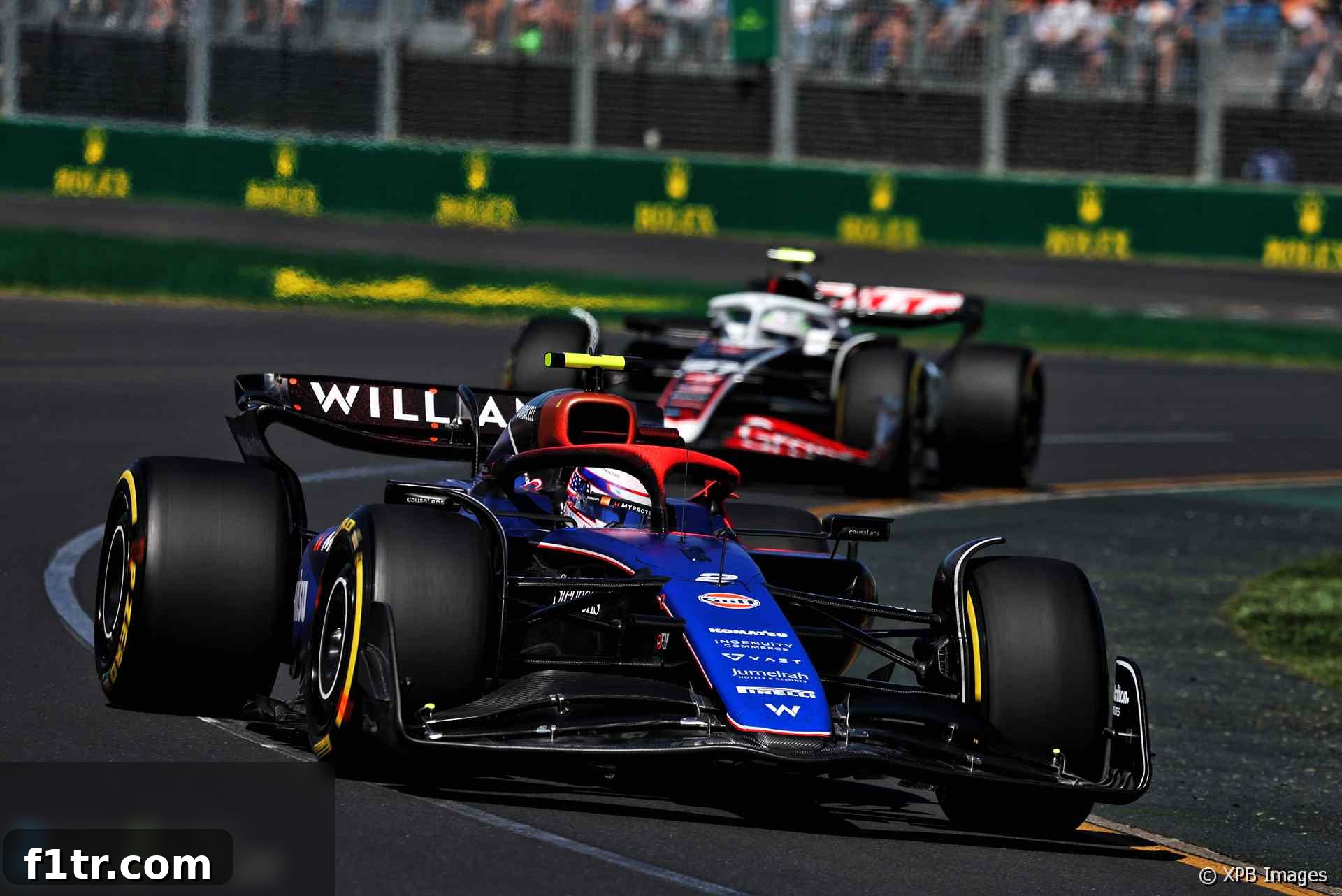
Williams Racing has made a dramatic and difficult decision ahead of the Australian Grand Prix, withdrawing young American driver Logan Sargeant from the remainder of the event. This unprecedented move comes after his teammate, Alexander Albon, suffered a heavy crash during the first free practice session, severely damaging his FW46 chassis. With no spare chassis available at the Melbourne circuit, the team’s only viable option was to transfer Albon into Sargeant’s car, effectively sidelining Sargeant for the entire race weekend and creating a ripple effect across the paddock.
This situation underscores the immense pressures and logistical challenges faced by Formula 1 teams, particularly those operating in the fiercely competitive midfield where every point is crucial. The decision, though painful, was deemed necessary by Team Principal James Vowles, who explicitly stated it was “based on our best potential to score points this weekend.” Albon’s proven track record, having single-handedly secured 27 points for Williams last year compared to Sargeant’s single point, played a significant role in this strategic call. Albon’s consistent performance was instrumental in propelling the team to a remarkable seventh place in the constructors’ championship in 2023, making him the logical choice when faced with such an agonizing dilemma.
An “Unacceptable” Scenario for a Modern F1 Team
James Vowles, who took the helm at Williams at the beginning of the previous season, did not mince words about the gravity of the situation. He candidly admitted that the team’s failure to bring a spare chassis to the third round of the championship was “unacceptable.” This stark admission highlights the ongoing challenges at Williams, a team striving to rebuild its former glory and return to consistent competitiveness in the modern era of Formula 1. The absence of a crucial spare part exposes underlying issues within the team’s operations and resource management.
“We are hugely disappointed that the damage sustained to the chassis has meant we need to withdraw it from the weekend,” Vowles explained, emphasizing the profound impact on the team’s ambitions for the Australian Grand Prix. He further elaborated on the systemic issues contributing to this predicament, stating, “It’s unacceptable in modern day Formula 1 not to have a spare chassis, but it is a reflection of how behind we were in the winter period and an illustration of why we need to go through significant change in order to get ourselves in a better position for the future.” This statement reveals a deeper organizational struggle, directly linking the current parts shortage to the team’s winter development phase and signalling a firm commitment to comprehensive reforms aimed at improving efficiency and preparedness.
The absence of a spare chassis is a critical vulnerability in Formula 1, a sport where high-speed incidents are an inherent risk. Teams typically travel with at least one fully built spare chassis, or at minimum a spare tub that can be assembled quickly, to cope with unforeseen incidents during a race weekend. For Williams to arrive in Melbourne without such a crucial contingency plan speaks volumes about their current resource constraints, production timelines, or perhaps a calculated risk that, unfortunately, backfired spectacularly. The financial implications and immense complexity of manufacturing an F1 chassis, requiring highly specialized materials and processes, can severely strain smaller teams’ budgets and operational capabilities, forcing them to make difficult compromises.
The Human Cost: Sargeant’s Heartbreak and Albon’s Conflicted Feelings
The decision had immediate and deeply personal ramifications for both drivers involved. For Logan Sargeant, a relatively new entrant to Formula 1 and the sole American on the grid, being forced to give up his seat through no fault of his own was an incredibly tough pill to swallow. He described it as “the hardest moment I can remember in my career,” a testament to the immense emotional toll such a strategic sacrifice demands from an aspiring athlete striving to prove himself at the pinnacle of motorsport. Despite the profound personal disappointment, Sargeant demonstrated remarkable professionalism and dedication to his team, stating, “It’s absolutely not easy. I am however completely here for the team and will continue to contribute in any way that I can this weekend to maximise what we can do.” His graceful acceptance, as noted by Vowles, showcased a true team player mentality, prioritizing the collective goal over individual aspirations—a quality highly valued in the high-stakes world of Formula 1.
Alexander Albon, while ultimately benefiting from the team’s difficult decision, openly admitted to feeling “conflicted” about replacing his teammate. Having just achieved the team’s best result of the season with an 11th-place finish in Jeddah two weeks prior, Albon understood the gravity of the situation and the personal impact on Sargeant. “No driver would want to give up his seat. I would never want anything like this to happen,” Albon remarked, expressing genuine empathy for Logan’s plight. He acknowledged Sargeant’s unwavering professionalism, adding, “Logan has always been a consummate professional and a team player from day one, and this won’t be an easy one for him to take.” Despite his personal feelings, Albon quickly recognized his immediate responsibility to the team: “At this point though, I cannot dwell on the situation and my only job now is to maximise our potential this weekend and work with the whole team to make sure we do the best job possible.” His focus immediately shifted to delivering results for Williams under these immensely challenging and emotionally charged circumstances.
Anatomy of the Crash: Albon’s Unexpected Loss of Control
The incident that triggered this dramatic chain of events occurred approximately 40 minutes into the first practice session of the day. Alexander Albon’s crash was significant enough to damage the chassis beyond immediate repair at the circuit. Recounting the moment of impact, Albon explained his surprise at the car’s unpredictable reaction when he ran slightly wide on a kerb between turns six and seven—a section of the Albert Park track known for catching drivers out.
“I was just exploring it a little bit and went a bit wide,” he clarified, describing a common scenario where drivers push the absolute limits to find the optimal racing line and extract maximum performance from their machines. The critical moment came with an “aggressive kerb strike” that unexpectedly lifted the front of his FW46, unsettling the car. Albon initially believed the situation was manageable: “I honestly didn’t think anything of it at the time. I thought, okay, it’s fine, I’ll just back out and let the car land.” However, the subsequent impact with the track surface was far more severe than anticipated. “But when I did land, I bottomed out pretty badly and when it bottomed out, it just kind of spat me,” he concluded, indicating a sudden, violent loss of control that sent the car careening into the wall. This vivid description paints a clear picture of the fine margins in Formula 1, where a seemingly minor misjudgment on a kerb can lead to catastrophic damage and significant repercussions for the entire team.
Looking Ahead: Immediate Repairs and Future Implications for Williams
With Albon’s original chassis deemed irreparable on-site within the tight timeframe of a Grand Prix weekend, it is now being transported back to Williams’ base in Grove, UK, for extensive and urgent repairs. The team faces an incredibly tight turnaround, as the next round of the season is scheduled for Suzuka, Japan, in just two weeks’ time. The pressure to prepare a fully functional, safe, and competitive car for both drivers for the Japanese Grand Prix will be immense, potentially impacting their development schedule, their ability to bring crucial updates to future races, and even their budget for the remainder of the season.
This incident serves as a stark reminder of the fragile balance between performance aspirations and operational realities in Formula 1. For Williams, a team that has shown promising signs of resurgence under James Vowles’ leadership, this setback is a painful but perhaps necessary lesson. It underscores the urgent need for robust infrastructure, efficient parts production, and comprehensive contingency planning to compete consistently at the highest level. While the decision to sacrifice Sargeant’s weekend was undoubtedly difficult, it reflects the cutthroat nature of the sport where every championship point can be crucial for a team’s standing, financial rewards, and long-term viability. The team’s commitment to “significant change” will be closely watched as they navigate the remainder of the 2024 season, aiming to prevent such an “unacceptable” and emotionally taxing situation from recurring.
Become a RaceFans Supporter and Go Ad-Free
RaceFans thrives thanks to the generous support of its dedicated readers. By contributing a modest amount each month or year, you play a vital role in covering the costs of creating, hosting, and continually developing RaceFans. Your support ensures the future of independent Formula 1 journalism, allowing us to deliver high-quality content directly to you.
Join our growing community of supporters today to browse the site completely ad-free and enjoy an uninterrupted reading experience. Your contribution makes a real difference. Find out more or sign up via the links below:
- Become a RaceFans Supporter
- RaceFans Supporter FAQ
More from the 2024 Australian Grand Prix
- Alonso calls Australian GP penalty a ‘one-off I’ve had too many of’
- Red Bull saw warning sign of Australian GP brake problem on Saturday – Verstappen
- Failing to punish Alonso would have “opened a can of worms” – Russell
- Leclerc sure “many team principals” are pursuing Sainz for 2025 seat
- “Don’t put me under pressure” – The best unheard team radio from Melbourne
Browse all 2024 Australian Grand Prix articles