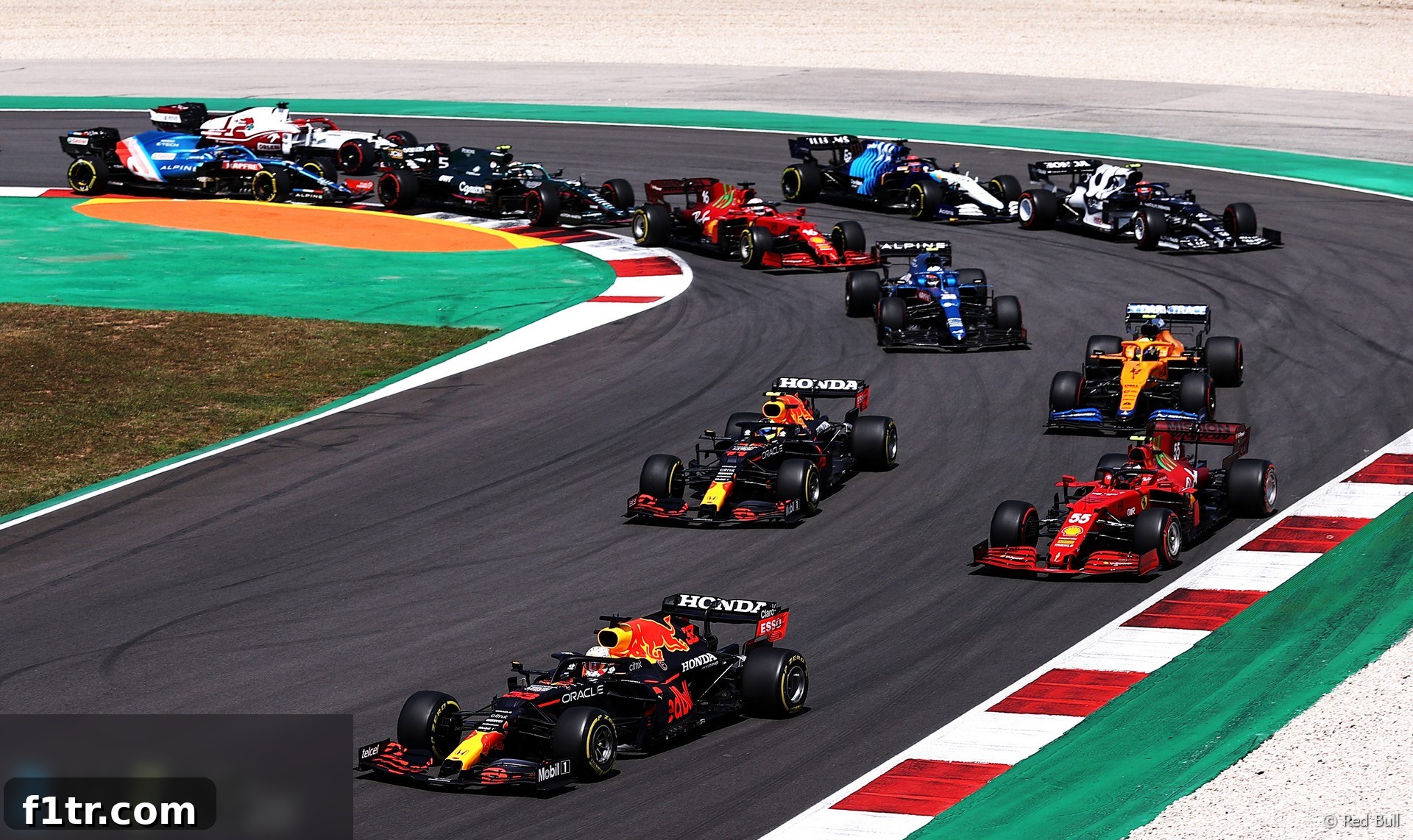
The exhilarating world of Formula 1 consistently delivers thrilling weekends, and the 2021 Portuguese Grand Prix at the stunning Autódromo Internacional do Algarve was no exception. As the dust settled on another high-stakes battle, fans and pundits alike were left pondering a crucial question: Which Formula 1 driver truly maximized their potential and extracted the absolute most from their machinery over those three intense days? This question isn’t just about who crossed the finish line first, but who demonstrated exceptional skill, strategic prowess, and a relentless drive to outperform their equipment and, crucially, their teammate.
The “Driver of the Weekend” accolade goes beyond mere race results. It’s an assessment of a driver’s holistic performance, encompassing their pace and precision in qualifying, their racecraft, tyre management, and ability to navigate challenges. It’s about how they stack up against their closest benchmark – their own teammate – who drives an identical car. The Portuguese Grand Prix provided a fascinating canvas for such an evaluation, with standout performances, unexpected struggles, and strategic masterclasses shaping the narrative of a memorable weekend in Portimão.
From the high-speed curves of the Algarve circuit to the intricate tactical decisions made in the pit lane, every aspect of the Grand Prix contributed to the ultimate outcome. Drivers faced varying grip levels, unpredictable winds, and intense pressure, all of which served to highlight those who could adapt best and deliver under duress. The capacity to extract every ounce of performance, both in a single qualifying lap and over a grueling race distance, is what separates the good from the truly great.
Let’s delve into a comprehensive review of each driver’s performance, analyzing their qualifying efforts, race execution, and how they measured against their stablemate. This detailed breakdown will shed light on who truly impressed at Portimão and made a compelling case for being crowned the “Driver of the Weekend.”
Driver Performance Summary and In-Depth Analysis
The table below provides a concise overview of how each driver performed, offering key metrics for a detailed comparison. Following this, we’ll dissect these numbers to understand the broader story of their weekend, highlighting the highs, the lows, and the defining moments for each competitor.
| Driver | Started | Gap to team mate (Q) | Laps leading team mate | Pit stops | Finished | Gap to team mate (R) |
|---|---|---|---|---|---|---|
| Lewis Hamilton | 2nd | +0.007s | 47/66 | 1 | 1st | -33.53s |
| Valtteri Bottas | 1st | -0.007s | 19/66 | 2 | 3rd | +33.53s |
| Max Verstappen | 3rd | -0.144s | 51/66 | 2 | 2nd | -10.587s |
| Sergio Perez | 4th | +0.144s | 15/66 | 1 | 4th | +10.587s |
| Lando Norris | 7th | -1.045s | 47/66 | 1 | 5th | -24s |
| Daniel Ricciardo | 16th | +1.045s | 19/66 | 1 | 9th | +24s |
| Lance Stroll | 17th | +0.51s | 23/65 | 1 | 14th | +0.706s |
| Sebastian Vettel | 10th | -0.51s | 42/65 | 1 | 13th | -0.706s |
| Esteban Ocon | 6th | -0.87s | 48/66 | 1 | 7th | -1.059s |
| Fernando Alonso | 13th | +0.87s | 18/66 | 1 | 8th | +1.059s |
| Charles Leclerc | 8th | +0.267s | 35/66 | 1 | 6th | -23.174s |
| Carlos Sainz Jnr | 5th | -0.267s | 31/66 | 1 | 11th | +23.174s |
| Pierre Gasly | 9th | -0.411s | 65/65 | 1 | 10th | Not on same lap |
| Yuki Tsunoda | 14th | +0.411s | 0/65 | 1 | 15th | Not on same lap |
| Kimi Raikkonen | 15th | +0.596s | 0/1 | 0 | DNF | |
| Antonio Giovinazzi | 12th | -0.596s | 1/1 | 1 | 12th | N/A |
| Mick Schumacher | 19th | -0.46s | 63/64 | 1 | 17th | -62.503s |
| Nikita Mazepin | 20th | +0.46s | 1/64 | 2 | 19th | +62.503s |
| George Russell | 11th | -0.488s | 58/64 | 1 | 16th | Not on same lap |
| Nicholas Latifi | 18th | +0.488s | 6/64 | 1 | 18th | Not on same lap |
Mercedes: Hamilton’s Dominance vs. Bottas’s Struggles
The Mercedes duo presented a stark contrast in their weekend performances at Portimão. Valtteri Bottas initially seemed to hold the upper hand, securing a phenomenal pole position by a razor-thin margin of just 0.007 seconds over his teammate, Lewis Hamilton. This qualifying triumph suggested a potential challenge for the race win. However, the Grand Prix itself painted a very different picture. Hamilton, starting second, quickly established his authority after an early safety car period. He demonstrated superior race pace and tyre management, leading for an astounding 47 out of 66 laps. His strategic one-stop race culminated in a dominant victory, crossing the finish line with a commanding 33.53-second lead over Bottas, who finished third after a two-stop strategy. Hamilton’s ability to overcome a slight qualifying deficit and then master the race conditions showcased his exceptional skill and strategic acumen, solidifying his position at the top. Bottas, despite his pole, seemed to struggle more with tyre degradation and consistent race pace, eventually falling behind both Hamilton and Max Verstappen. This indicated a weekend where he couldn’t fully translate his raw qualifying speed into sustained race success, highlighting a growing performance gap between the two Mercedes drivers on Sundays.
Red Bull: Verstappen’s Consistency, Perez’s Supportive Role
Max Verstappen, starting third, delivered another characteristically strong performance, ensuring Red Bull remained firmly in the championship hunt. He consistently challenged the Mercedes drivers, ultimately securing a well-deserved second place. Despite opting for a two-stop strategy, Verstappen maintained strong pace throughout the race, leading his teammate, Sergio Perez, for 51 out of 66 laps. This metric underscores Verstappen’s unwavering speed and his ability to operate at the sharp end of the grid with relentless consistency. Sergio Perez, starting fourth, played a crucial supportive role for the team. While he couldn’t quite match Verstappen’s outright pace, he drove a solid race, finishing in the same position he started, albeit 10.587 seconds behind his teammate. Perez’s single pit stop strategy allowed him to effectively manage his race and stay ahead of the midfield battle, securing valuable points for Red Bull. His performance demonstrated his growing understanding of the car and his ability to contribute significantly to the team’s constructors’ championship efforts, even if he couldn’t challenge for a podium position on this occasion.
McLaren: Norris Shines, Ricciardo Recovers
Lando Norris continued his impressive trajectory in the 2021 season, delivering another outstanding weekend for McLaren. Starting seventh on the grid, he executed a superb race to finish fifth, showcasing exceptional racecraft, intelligent tyre management, and remarkable consistency. Crucially, Norris firmly established his dominance over his teammate, Daniel Ricciardo, leading him for 47 out of 66 laps and finishing a significant 24 seconds ahead. Ricciardo, on the other hand, endured a challenging qualifying session, finding himself starting way down in 16th position, a substantial 1.045 seconds slower than Norris. This qualifying struggle put him immediately on the back foot. However, the experienced Australian driver mounted an admirable recovery drive in the race, making up seven positions to finish ninth and salvage some points for McLaren. While Ricciardo’s ability to fight through the field was commendable and showed flashes of his characteristic aggression, Norris’s overall performance from Friday to Sunday clearly marked him as the stronger McLaren driver at Portimão, consistently maximizing the potential of the MCL35M.
Ferrari: Leclerc’s Race Pace Overcomes Sainz’s Qualifying Edge
The Ferrari garage presented a fascinating internal battle between Charles Leclerc and Carlos Sainz. Sainz showed impressive initial pace, qualifying fifth on the grid and a notable 0.267 seconds ahead of Leclerc, who started eighth. This early advantage in qualifying suggested a potentially strong weekend for Sainz in only his third race with the Scuderia. However, the race itself unfolded differently. Leclerc, executing a well-managed single-stop strategy, demonstrated superior race pace and tyre longevity. He gradually reeled in and then pulled away from his teammate, leading Sainz for 35 out of 66 laps and ultimately finishing a strong sixth, securing valuable points for Ferrari. Sainz, after his promising start, appeared to struggle more with tyre degradation and maintaining consistent performance over the full race distance. He dropped down the order as the race progressed, finishing 11th and a considerable 23.174 seconds behind his teammate. This highlights Leclerc’s impressive ability to optimize his race performance, even when starting further back, and underscores the challenges Sainz faced in adapting to the unique tyre demands of the Portuguese circuit.
Alpine: Ocon’s Solid Performance, Alonso’s Masterful Comeback
Alpine presented an intriguing case study with Esteban Ocon and Fernando Alonso, showcasing both consistent performance and spectacular recovery. Ocon enjoyed a very solid and consistent weekend, qualifying an impressive sixth and maintaining strong form throughout the race to finish seventh. He comfortably led Alonso for 48 out of 66 laps and crossed the finish line just over a second ahead of his vastly experienced teammate. Ocon’s steady performance from qualifying through to the race finish demonstrated a growing confidence and command of the A521. Fernando Alonso, despite starting 13th and being 0.87 seconds slower than Ocon in qualifying, pulled off a truly masterful comeback drive. The two-time world champion put on a clinic in racecraft, climbing five positions to finish eighth. His aggressive overtakes, astute strategic decisions, and excellent tyre management skills were on full display, reminding everyone of his enduring class and fighting spirit. While Ocon had the more straightforward strong weekend, Alonso’s climb through the field was arguably one of the drives of the day, proving his incredible resilience and talent.
AlphaTauri: Gasly’s Reliability, Tsunoda’s Learning Curve
Pierre Gasly continued to be the reliable points-scorer and team leader for AlphaTauri. Starting ninth on the grid, he executed a flawless and controlled race to finish tenth, securing another valuable point for the team. Gasly emphatically led his rookie teammate, Yuki Tsunoda, for all 65 laps they completed in the race. His consistent speed and disciplined approach to bring the car home in the points highlight his crucial role and maturity within the team. Tsunoda, starting 14th and 0.411 seconds behind Gasly in qualifying, had a quieter race. He finished 15th, several positions behind his teammate and not on the same lap. This weekend further underscored Tsunoda’s ongoing adaptation to the demanding world of Formula 1. While he shows flashes of speed, consistency remains a challenge, and he is very much still on a steep learning curve compared to his more experienced and established teammate.
Aston Martin: Vettel Edges Stroll
The Aston Martin team saw a more positive weekend for Sebastian Vettel compared to the early races of the season. Vettel qualified tenth, a significant 0.51 seconds faster than his teammate Lance Stroll, who started further back in 17th. This qualifying performance was a strong indicator of Vettel finding more comfort with the AMR21. In the race, Vettel maintained his edge over Stroll, leading him for 42 out of 65 laps. He eventually finished 13th, just 0.706 seconds ahead of Stroll, who placed 14th. This weekend marked a relative improvement for Vettel, demonstrating a growing understanding and ability to extract more performance from the car, consistently outperforming his teammate in both qualifying and the race.
Alfa Romeo: Giovinazzi Ahead, Raikkonen’s Early Exit
Antonio Giovinazzi delivered a commendable performance in qualifying, placing his Alfa Romeo in 12th position, a notable 0.596 seconds ahead of veteran Kimi Räikkönen, who started 15th. Unfortunately, Räikkönen’s race ended prematurely and dramatically on the very first lap after a collision with his teammate, leading to an immediate retirement. Giovinazzi, meanwhile, converted his strong qualifying into a solid 12th place finish, showcasing good race management. Due to Räikkönen’s early exit, a direct comparison of their full race performance isn’t possible, but Giovinazzi’s strong qualifying effort and subsequent clean race certainly highlighted his capabilities at Portimão.
Williams: Russell’s Impressive Qualifying, Latifi’s Struggle
George Russell once again highlighted his exceptional talent, particularly in qualifying, by placing his Williams an impressive 11th on the grid. This was almost half a second ahead of his teammate Nicholas Latifi, who started further back in 18th. Russell consistently extracted maximum performance from the FW43B, solidifying his reputation as a future star and demonstrating his ability to punch above the car’s weight. In the race, Russell led Latifi for 58 out of 64 laps, eventually finishing 16th. While the Williams car lacked the outright pace for points, Russell’s consistent over-performance was evident. Latifi finished 18th, not on the same lap as Russell, indicating a clear performance gap between the two Williams drivers over the entire weekend.
Haas: Schumacher’s Dominance Over Mazepin
At Haas, Mick Schumacher continued to establish his clear dominance over his rookie teammate Nikita Mazepin. Schumacher qualified 19th, a significant 0.46 seconds faster than Mazepin, who started 20th and last. In the race, Schumacher unequivocally led Mazepin for a staggering 63 out of 64 laps, demonstrating superior pace, consistency, and racecraft in the challenging Haas machinery. He finished 17th, over a minute ahead of his teammate. Mazepin, who required two pit stops, finished 19th. This data clearly illustrates Schumacher’s greater maturity and speed, further cementing his position as the stronger driver within the American team and underscoring the considerable difference in their current performance levels.
The 2021 Portuguese Grand Prix was a race rich in individual performances, strategic battles, and compelling narratives. From Lewis Hamilton’s masterful drive to Lando Norris’s consistent brilliance and Fernando Alonso’s spectacular comeback, many drivers left their indelible mark on the Autódromo Internacional do Algarve.
For those who wish to dive deeper into the technical aspects and granular data of the race weekend, an interactive data analysis of lap charts, times, and tyre strategies is available:
- 2021 Portuguese Grand Prix interactive data: lap charts, times and tyres
Who Was the Best Driver of the 2021 Portuguese Grand Prix Weekend? Fan Verdict Revealed
After reviewing the intricate details of each driver’s performance throughout the Portuguese Grand Prix weekend, the collective voice of the fans has spoken. A poll was conducted, asking F1 enthusiasts to choose the driver who truly excelled, considering factors like their car’s potential, their raw speed, and their ability to outperform their teammate. The results offer a fascinating insight into public perception of performance.
The “Driver of the Weekend” poll for the 2021 Portuguese Grand Prix saw Lewis Hamilton emerge as the clear top choice, garnering a significant 41% of the total votes. This reflects widespread public recognition of his commanding victory and strategic execution, converting a second-place start into a dominant win. Closely behind, Lando Norris secured an impressive 28% of the votes, acknowledging his consistently strong performance, mature racecraft, and the decisive manner in which he outshone his experienced teammate.
Other notable mentions from the poll highlight performances that resonated with fans, often valuing comeback drives or significant over-performance in less competitive machinery. Fernando Alonso, who mounted a remarkable comeback drive through the field, captivated 7% of voters. Esteban Ocon, for his solid and consistent weekend performance, received 5%. Interestingly, Mick Schumacher, despite being in the slowest car on the grid, gathered a commendable 8% of the votes, highlighting public appreciation for his strong relative performance against his teammate and the perceived effort he put in.
The full breakdown of the poll results, based on a total of 215 voters, is as follows:
- Lewis Hamilton: 41%
- Lando Norris: 28%
- Mick Schumacher: 8%
- Fernando Alonso: 7%
- Esteban Ocon: 5%
- Daniel Ricciardo: 3%
- Nikita Mazepin: 2%
- Max Verstappen: 2%
- Sergio Perez: 2%
- No opinion: 1%
- Nicholas Latifi: 0%
- George Russell: 0%
- Antonio Giovinazzi: 0%
- Kimi Raikkonen: 0%
- Yuki Tsunoda: 0%
- Pierre Gasly: 0%
- Carlos Sainz Jnr: 0%
- Charles Leclerc: 0%
- Sebastian Vettel: 0%
- Lance Stroll: 0%
- Valtteri Bottas: 0%
These results offer a fascinating insight into fan perceptions, often valuing not just outright victory but also the demonstration of exceptional skill, strategic intelligence, and the ability to extract maximum performance, particularly when overcoming challenges or delivering outstanding results in less competitive machinery.
More on the 2021 Portuguese Grand Prix
- Pirelli’s tyre choice for Portuguese GP wasn’t “too hard”, Hamilton concedes
- Who are the top F1 juniors bidding for a grand prix debut in 2022?
- 2021 Portuguese Grand Prix Star Performers
- Race gains encourage Ricciardo after ‘unacceptable’ qualifying performance
- Sainz says top-five finish was possible after first no-score for Ferrari
Browse all 2021 Portuguese Grand Prix articles
Explore More F1 Debates and Polls
- What must Formula 1 fix with its new rules – and what should it leave unchanged?
- ADUO: Do F1 teams who fall behind deserve to get help to catch up?
- F1 is considering doubling its sprint races. Do you want more or fewer?
- Will this be a fight or a rout? 20 questions for the 2026 Formula 1 season
- Which Formula 1 team has the best-looking car – and the worst – for the 2026 season?
Browse all debates and polls