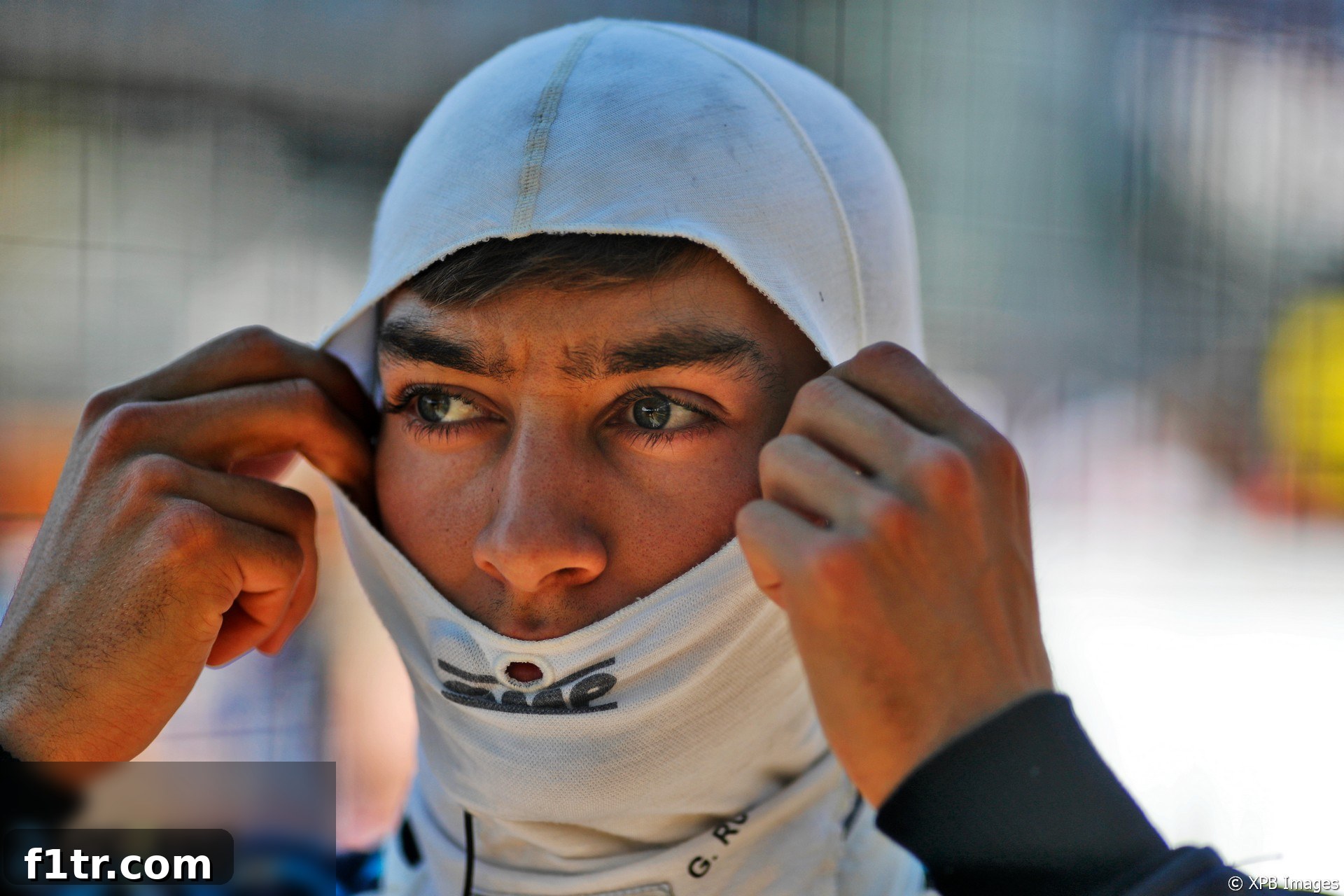
George Russell: The Inevitable Ascent to Mercedes F1 Stardom
The long-anticipated promotion of George Russell to the Mercedes-AMG Petronas Formula 1 Team for the 2022 season was, for many ardent followers of the sport, less of a surprise and more of a widely expected inevitability. For years, the young British driver had been consistently identified as a prodigious talent, a future world champion in the making. His truly remarkable track record throughout a dominant junior racing career, coupled with astonishing displays of raw potential during three challenging seasons with the Williams Racing team in Formula 1 – often battling valiantly with machinery that was notoriously uncompetitive – unequivocally marked him out as a serious contender deserving of a top-tier car. The official confirmation earlier today, placing him alongside the sport’s most successful driver, seven-time world champion Lewis Hamilton, serves as a fitting reward for his unwavering dedication, relentless hard work, and exceptional skill behind the wheel.
Mercedes Team Principal Toto Wolff, a long-time admirer and pivotal figure in Russell’s developmental journey, articulated the team’s profound confidence in their newest recruit. “He has been a winner in every single racing category he’s competed in, demonstrating a consistent hunger for success,” Wolff stated. “His exceptional performances over the past three seasons with Williams have given us a clear and compelling taste of what the future could hold for him in F1. We are absolutely thrilled to finally welcome him to the team and are eager to see what he can achieve with the best equipment at his disposal.” Wolff’s statement not only highlights Russell’s impressive competitive record but also underscores the meticulous planning and strategic foresight that has characterized Mercedes’ approach to nurturing and developing young talent, with George Russell consistently at the very forefront of their long-term vision.
A Meteoric Rise Through the Junior Ranks
Toto Wolff famously brought Russell under Mercedes’ formidable wing, integrating him into their highly esteemed junior driver programme back in 2017. What immediately struck Wolff, even then, was the 18-year-old’s extraordinary and unwavering professionalism, a trait vividly exemplified by a meticulously prepared presentation in Microsoft PowerPoint, outlining his ambitious career aspirations and a detailed developmental plan. This wasn’t merely youthful ambition; it was a profound reflection of a racing career already rich with success, demonstrating a level of maturity and strategic foresight far beyond his chronological age.
Early Dominance in Karting and BRDC Formula 4
Russell’s journey to the pinnacle of motorsport began, as it does for many, in the cutthroat world of karting, where he quickly established a formidable reputation as a fierce and uncompromising competitor. Victories in categories such as Cadets and Rotax Mini Maxes laid a robust foundation for his career, culminating in the prestigious CIK-FIA European KF3 championship trophy. These early triumphs were not just wins; they vividly showcased his innate talent, remarkable consistency, and an excellent pedigree from a remarkably young age. His seamless transition to racing cars was equally impressive. In his rookie year, 2014, he clinched the challenging BRDC Formula 4 title, an outstanding achievement that also earned him the club’s highly coveted and respected young driver award. This immediate and resounding success in single-seaters unequivocally confirmed that his karting prowess was no mere coincidence, but a clear and undeniable indicator of a future star destined for greatness.
The subsequent two seasons presented a significant and arduous challenge, as Russell competed in the fiercely competitive European Formula 3 championship. Here, he found himself locked in intense battles against the formidable resources and established might of the Prema operation, a team globally renowned for its immense funding and dominant presence across various junior formulae. Despite the incredibly tough competition and the learning curve, Russell continued to meticulously hone his craft, steadily building the skills and resilience that would prove crucial for the next pivotal steps in his burgeoning career. His perseverance in such a demanding environment speaks volumes about his character and commitment.
GP3 and Formula 2 Triumph
His highly anticipated arrival in GP3 the following year, now with the official backing of Mercedes, saw him join the top-tier ART Grand Prix squad. The pressure was, by all accounts, immense; for an 18-year-old talent operating under the exacting and watchful eye of Mercedes, nothing less than the championship title would be considered sufficient. Russell not only delivered on these expectations but did so with undeniable flair and authoritative style. Sharing the team with three capable teammates, including experienced second-year drivers Jack Aitken and Nirei Fukuzumi, he secured four dominant victories and clinched the prestigious title with a round still remaining in the season. Crucially, all of these victories were achieved in the highly coveted feature races, most often from pole position, a resounding testament to the raw, explosive one-lap speed that would very soon become his distinctive and celebrated trademark in Formula 1.
The ascent continued seamlessly into Formula 2 the subsequent year, where Russell once again demonstrated his exceptional ability by winning the championship in his maiden season. This remarkable achievement mirrored the impressive feat of Charles Leclerc in the two seasons prior, instantly placing Russell among an elite and exclusive group of drivers who mastered the challenging F2 series on their very first attempt. While his ART F2 predecessor, Alexander Albon, initially set the pace, Russell swiftly emerged as the undisputed driver to beat in qualifying as the season progressed, consistently demonstrating his prodigious single-lap pace, which was a clear indicator of his immense talent.
While Formula 1 often sees a strong qualifying performance in a sub-par Williams car followed by an inevitable ‘regression to the mean’ slide out of the points positions on race day, in F2, Russell had far greater scope to fully exhibit his comprehensive racecraft. This was vividly reflected in his impressive tally of five pole positions and a remarkable seven victories – the latter equalling the single-season F2/GP2 record, a challenging benchmark previously set by other luminaries such as Leclerc and Stoffel Vandoorne. These statistics highlight not just his blistering speed, but his strategic intelligence, superior tire management, and an uncanny ability to execute flawlessly under immense pressure, attributes essential for a top-tier F1 driver.
Even on days when luck decisively turned against Russell, these moments often offered different opportunities for him to showcase his latent potential and incredible resilience. At Baku, for instance, he started a disappointing 12th in the sprint race due to an unfortunately timed Safety Car period during the preceding feature race. Undeterred, he executed a superb, assertive start, leaving many rivals bewildered in his wake, and systematically passed the few remaining cars ahead to secure his first victory – a truly dazzling display of opportunistic brilliance and strategic thinking. Similarly, starting from the very back of the grid at the notoriously tight Hungaroring, he carved his way through the congested field with surgical precision, climbing an astounding 12 places to salvage a valuable point, thereby proving his indomitable fighting spirit and an extraordinary ability to extract every ounce of performance from challenging situations.
The Williams Years: Mr. Saturday and Strategic Intelligence
Upon his arrival at Williams, a team then regrettably languishing at the very back of the Formula 1 grid, Russell’s immediate and most apparent task seemed to be little more than demonstrating his raw, unadulterated speed by utterly dominating his teammates in qualifying. Whether it was the highly experienced Robert Kubica (whom he comprehensively out-qualified 19-0 in 2019) or the consistent Nicholas Latifi (a staggering 28-0 and counting at the mid-point of 2021), Russell consistently annihilated the opposition. These extraordinary Saturday performances rightfully earned him the highly fitting moniker ‘Mr. Saturday.’ If Lewis Hamilton, who will be 37 next year, has indeed lost even a fraction of his legendary qualifying speed, Russell is undoubtedly the driver uniquely poised to expose it.
Beyond his phenomenal one-lap pace, Russell has showcased a plethora of other crucial qualities during his tenure at Williams. Not least among these is his remarkable presence of mind and insightful communication over the team radio during the heat of races. While many drivers merely absorb a constant stream of instructions from their race engineers, Russell actively reads the race situation for himself, anticipating developments and proactively guiding his team. This extraordinary level of engagement and strategic awareness is strikingly reminiscent of past champions like Fernando Alonso, who has, tellingly, heaped effusive praise on Mercedes’ newest signing. This unique ability to not just drive with blistering speed but to think several steps ahead marks him as a truly intelligent and multidimensional racer, a rare combination in modern F1.
In a sport governed by a rulebook as intricate and labyrinthine as Formula 1’s, Russell’s razor-sharp intellect is a distinct and undeniable advantage. A prime example of this occurred at Monza last year, during the dramatic Italian Grand Prix, when Russell was the only driver to independently identify that the pit lane entrance had been closed during a crucial Safety Car period. Many other drivers, including his future teammate Lewis Hamilton – who, admittedly, had very little time to react – were unfortunately caught out, incurring severe race-losing penalties as a result of their oversight. This pivotal incident vividly demonstrated Russell’s comprehensive understanding of the complex regulations and his unparalleled situational awareness, traits that are absolutely invaluable in the high-pressure, split-second decision-making environment of Grand Prix racing.
The Mercedes Opportunity: A Glimpse of Future Glory
Ironically, this very acute awareness, a defining characteristic of Russell’s racing intelligence, played a complex role in the dramatic and unforgettable events of his one-off appearance for Mercedes at the 2020 Sakhir Grand Prix. Having stunned the entire paddock by qualifying within mere hundredths of a second of the established Mercedes driver Valtteri Bottas, Russell then executed a flawless start, seizing the lead of the race and putting him on a commanding course for what would have been an incredible and historic debut victory. However, fate intervened with a cruel twist when the Safety Car was suddenly deployed, triggering a chain of events that would ultimately deny him glory.
Spotting an immediate and highly advantageous opportunity for a low-cost pit stop under Safety Car conditions, Russell prudently slowed his pace as he approached the pit lane entrance, affording Mercedes crucial extra seconds to prepare for his unexpected stop. He had, in fact, exhibited the very same foresight in a similar scenario during his time with Williams at Monaco. Unfortunately, a monumental and utterly unprecedented team error then unfolded in the Mercedes pit box: the mechanics mistakenly fitted Valtteri Bottas’s tyres onto Russell’s car, leading to a sequence of catastrophic events – including an additional pit stop to correct the error and a slow puncture – that ultimately robbed him of a deserved victory and relegated him to a heartbreaking ninth place. Despite the cruel twist of fate, this appearance provided Mercedes with invaluable, real-world data, allowing them to directly compare Russell’s immense potential in their championship-winning car against Bottas’s performance.
Speaking candidly to RaceFans earlier this year, Russell revealed that he felt he was “not even close to the limits” of the all-conquering Mercedes W11. He explained, with remarkable self-awareness, “I didn’t know the car, the set-up wasn’t designed specifically for me, I was uncomfortable, I was actually in pain while driving due to the cramped cockpit. I simply made the absolute most of a difficult and unexpected situation.” He continued, reflecting profoundly on the Sakhir experience: “I thought that was the absolute maximum potential given the limited experience I had with the car, but nowhere near the true potential of what could have been, had that been a full season.” This candid and insightful assessment further solidified Mercedes’ conviction in his capabilities, demonstrating Russell’s immense untapped potential even under less-than-ideal and highly constrained circumstances.
The Team Player: A Crucial Asset for Mercedes’ Future
Beyond his raw, breathtaking speed, exceptional racecraft, keen intellect, and unwavering professionalism, Russell has consistently demonstrated another quality that is absolutely paramount for sustained success within a top Formula 1 team: his unwavering willingness to be a selfless team player. He has shown remarkable dedication to the arduous cause of pulling Williams from their grim low of 2019 back towards competitive relevance, embodying the very essence of a true leader even in a profoundly challenging and resource-limited environment.
While there is no doubt he missed unfortunate opportunities to score points for Williams – most notably in both chaotic races at Imola over the past 12 months – and it must have been particularly painful when luck unexpectedly fell for the team at the Hungaroring, with his unfancied teammate Nicholas Latifi claiming the majority of the points, Russell’s reaction was nothing short of exemplary. Not only did he refrain from complaining or indulging in media chest-beating about his obviously superior speed, but he actively and vocally urged his team during the race to sacrifice his own position if necessary to aid Latifi ahead. This selfless act highlighted his profound understanding of the bigger picture and his unwavering commitment to overall team objectives, a trait Mercedes values immensely and considers indispensable for championship success.
As vividly illustrated by last weekend’s strategic race at Zandvoort, where intricate team strategy and seamless cooperation were critical to securing points, Mercedes unequivocally expects its drivers to be not only blindingly fast but also, crucially, dedicated team players. Russell has unequivocally shown that he is much more than just a one-lap specialist; he possesses the full suite of qualities required for long-term, sustained success at the very pinnacle of motorsport. This comprehensive and rare skill set is precisely why, during the intense summer break between the Hungarian and Belgian Grands Prix, Mercedes finally extended to him the career-defining opportunity he had tirelessly awaited for years – an opportunity to prove himself on the biggest stage, equipped with the best possible machinery. His arrival heralds a new, thrilling chapter for both Russell and the Mercedes-AMG Petronas F1 Team, promising an exciting future for Formula 1 fans globally.