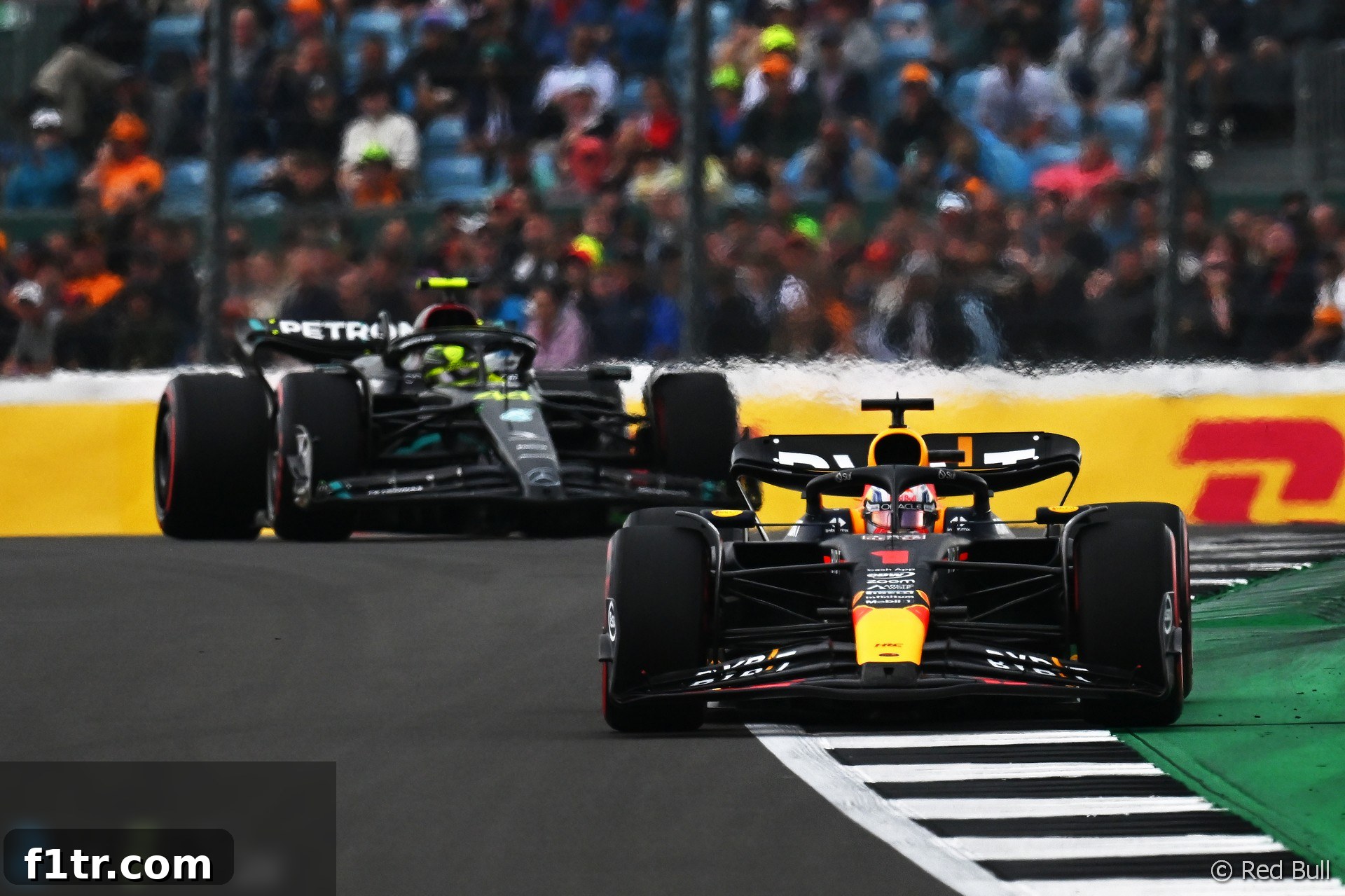
The iconic Silverstone circuit, steeped in Formula 1 history, set the stage for a thrilling qualifying session for the British Grand Prix. Amidst the unpredictable British weather and the ever-present pressure of vying for pole position, Max Verstappen, the reigning world champion, navigated a tumultuous path to secure the top spot. His journey was far from serene, marked by a peculiar incident in the pit lane and another tense encounter on track with his fierce rival, Lewis Hamilton, adding fresh layers to their storied rivalry.
Verstappen’s qualifying session kicked off with an unexpected moment of drama during Q1. As he exited his garage, a minor yet significant error led him to collide with the pit wall, resulting in a damaged front wing. This “inchident,” as he later playfully dubbed it, referencing Charles Leclerc’s memorable description of a karting collision, forced his Red Bull Racing team to swiftly push his car back into the garage for a rapid replacement. The precision and speed required for such a repair underscored the immense pressure and rapid-fire decisions made by F1 teams under qualifying conditions, highlighting the fine margins between success and setback in elite motorsport.
Describing the initial moments of the session, Verstappen candidly admitted to a “scruffy start” exacerbated by the challenging track conditions. “In Q1 I arrived to Turn 15 the first time and I just went straight off,” he recounted, highlighting the elusive nature of grip on a track affected by rain. “So, it was very weird because Turn 15 and 16, they were a bit damp and it was very difficult to see where exactly. You could only really feel it.” This observation sheds light on the nuanced art of driving in mixed conditions, where visual cues are unreliable, and drivers must rely heavily on their intuition and the subtle feedback from the car’s behavior to find the fastest line.
The collision with the pit wall was attributed to “a bit of understeer out of the box” combined with “too much rear grip,” an interesting paradox that sent the car veering off course. The term ‘understeer’ refers to the car’s tendency to turn less sharply than the driver intends, often felt as a ‘pushing’ sensation through the steering wheel. Coupled with excessive rear grip, which can unbalance the car’s overall handling dynamics and make the front end less responsive, it created a scenario where Verstappen briefly lost control. The necessity for a new front wing meant a loss of precious track time and forced him to start his final Q1 run from the back of the queue, making his subsequent lap even more critical for progression.
“I had to have a new front wing but that meant of course that I was in the back to start that final run, and that was quite exciting, that out-lap, passing a few cars here and there, to get the lap in. But luckily it was all good enough,” Verstappen reflected. This frantic dash on an out-lap, weaving through slower cars while simultaneously trying to warm up tires and brakes to optimal operating temperatures, is a testament to the high-stakes environment of Formula 1 qualifying. His exceptional ability to recover from a mechanical setback and still secure passage into Q2 after such a dramatic delay speaks volumes about his composure, raw pace, and the inherent strength of the Red Bull RB19.
The incident, though minor in its ultimate consequence thanks to Verstappen’s swift recovery, served as a potent reminder of the razor-thin margins in Formula 1. “It shows that it can also very quickly fall the other way and you’re out,” Verstappen acknowledged, emphasizing the ever-present threat of elimination, even for the most dominant drivers. He even quipped about a previous, non-F1 pit lane mishap, underscoring his familiarity with such rare missteps in a lighthearted manner. This candid self-assessment humanizes the otherwise seemingly flawless champion, reminding fans that even the best can make momentary errors under intense pressure.
Beyond the self-inflicted pit lane drama, the Silverstone qualifying also rekindled another familiar narrative: the on-track sparring between Max Verstappen and Lewis Hamilton. This marked the second consecutive qualifying session where the two titans found themselves in close proximity, a mere week after their contentious encounter during sprint race qualifying in Austria. There, Mercedes team principal Toto Wolff had controversially accused Verstappen of a “revenge foul” against Hamilton by spoiling his lap, sparking widespread debate and intensifying their already legendary rivalry even further.
At Silverstone, the incident unfolded on an out-lap during a crucial segment of qualifying. As Verstappen was pushing to gain track position and prepare his tires for his flying lap, he encountered Hamilton, who was reportedly weaving aggressively to warm his tyres – a standard practice among drivers aiming to get heat into their rubber. The close proximity, with Verstappen attempting to navigate past into the challenging Luffield corner, created a tense moment where the two cars came perilously close to contact. While no contact was made, the visual spectacle immediately drew attention, echoing their storied past battles for supremacy.
Verstappen explained the situation from his perspective: “On the out lap. I had very cold tyres, most of the people in front of me had new tyres, but I stayed on my used set. So I just tried to get by. But of course he was trying to warm the tyres. So it took a bit of time to find a bit of space to go through.” This explanation highlights the complex dynamics of an F1 out-lap, where drivers are juggling tire temperature, brake temperature, and optimal track position, often leading to conflicting objectives and potentially close calls. The incident, while not meriting any official action from the stewards, certainly added another compelling chapter to the ongoing Verstappen-Hamilton saga, keeping fans on the edge of their seats.
Adding to the narrative of on-track close calls and aggressive driving, footage also circulated on social media of Verstappen overtaking George Russell’s Mercedes as they approached a yellow flag zone at Brooklands. Yellow flags are deployed to warn drivers of a hazard ahead, requiring them to slow down, be prepared to stop, and, crucially, not to overtake. Overtaking under yellow flags is strictly prohibited and usually results in severe penalties. However, in this instance, stewards, after reviewing the footage, did not indicate that any offence had been committed by Verstappen, suggesting that his maneuver was deemed permissible within the complex regulatory framework, perhaps due to the specific timing or nature of the flag display. This demonstrated Verstappen’s aggressive yet often rule-abiding approach to racing, consistently pushing the limits without necessarily crossing them.
Despite these myriad challenges – the pit wall “inchident,” the high-pressure recovery, and the intense on-track encounters with rival Mercedes drivers – Max Verstappen ultimately delivered a masterclass in qualifying. His extraordinary ability to maintain focus under pressure, extract maximum performance from his car, and adapt to rapidly changing conditions and unexpected setbacks underscores why he is widely considered one of the sport’s greatest talents. Securing pole position at a circuit as demanding and iconic as Silverstone, especially after such a dramatic and eventful session, is a profound testament to his sheer pace, resilience, and unwavering determination to dominate the pinnacle of motorsport.
The pole position sets the stage for what promises to be an enthralling British Grand Prix. With Verstappen starting from the front, the focus will now shift to his race day performance, and how he manages the fierce competition that Silverstone is renowned for. His challenging journey to pole has only amplified the anticipation for the main event, leaving fans eager to witness if he can convert his Saturday dominance into a Sunday victory, further cementing his command over the 2023 Formula 1 season and continuing his pursuit of another World Championship title.
Exclusive Insights from the World of F1
At RaceFans, we are dedicated to bringing our readers unparalleled news and analysis directly from the heart of Formula 1. Our commitment to original journalism is made possible, in part, by the invaluable support of our RaceFans Supporters.
By contributing just £1 per month, or £12 annually (or the equivalent in your local currency), you directly enable us to cover the extensive costs associated with producing high-quality, independent content. This includes everything from travel to events, in-depth writing and analysis, creative content generation, platform hosting, essential industry contacts, and continuous website development.
For over a decade, we have proudly relied on the generosity of our readers. If you appreciate our independent coverage and want to ensure its continuation, please consider becoming a RaceFans Supporter today. As an added benefit, all our esteemed Supporters enjoy an ad-free browsing experience on our site. Discover more and join our community via the links below:
- Become a RaceFans Supporter
- RaceFans Supporter FAQ
2023 British Grand Prix Related Articles
Delve deeper into the latest news and insights from the 2023 British Grand Prix. Explore more articles covering every aspect of this thrilling race weekend:
- Norris is “growing” closer to the champion who inspired him to race
- Second supplier part failure ‘a frustrating issue we must solve’ – Alpine
- Albon ‘surprised’ to be quicker than Alonso at end of British GP
- Bottas admits Alfa Romeo ‘were expecting to be better than this’ in 2023
- McLaren now “finding performance quicker” after emulating Red Bull’s design
Browse all 2023 British Grand Prix articles