Williams F1 Team Grapples with Unprecedented Crash Spate in Challenging 2024 Season
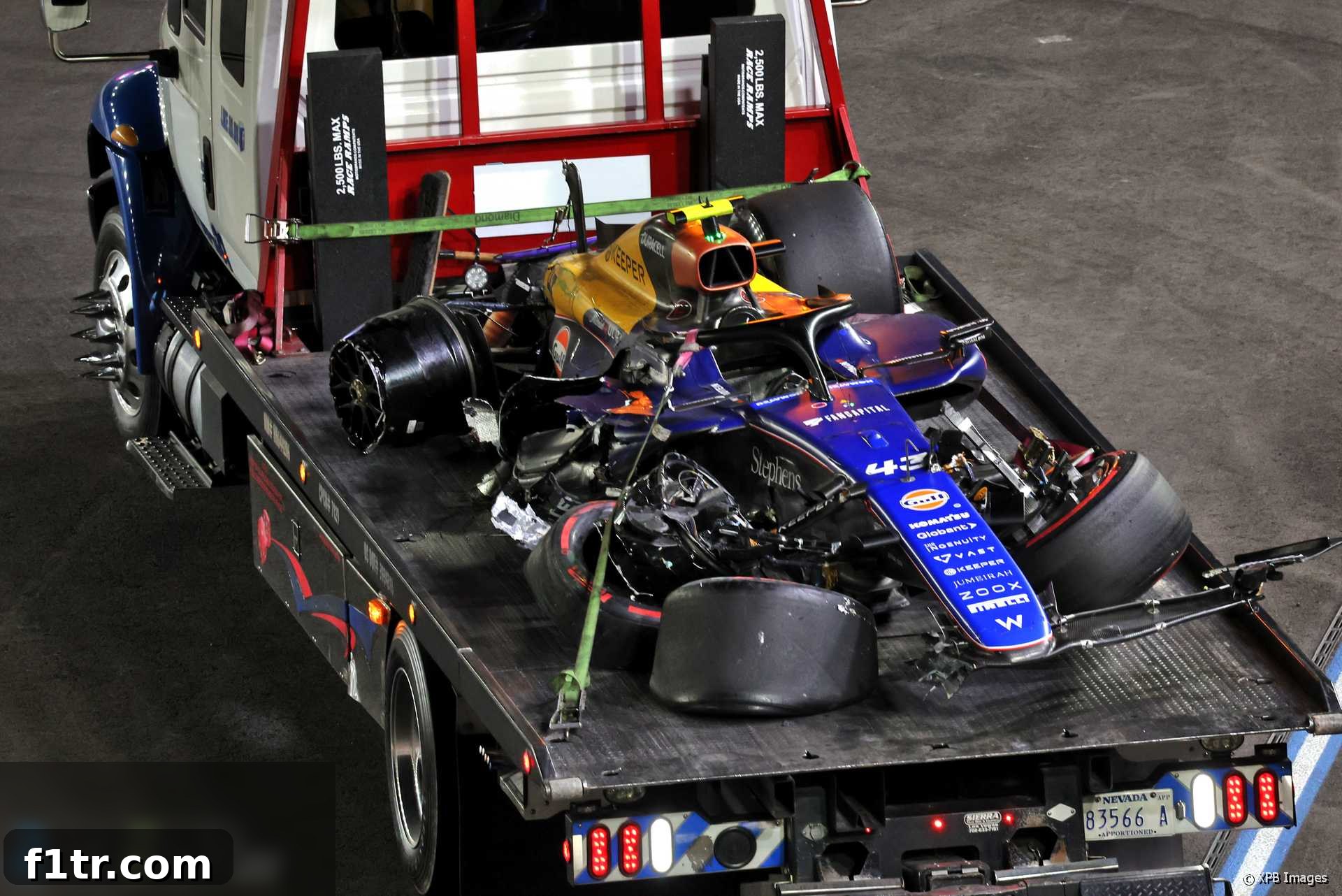
Williams Racing Team Principal James Vowles has revealed the profound impact of what he describes as an unprecedented and relentless spate of accidents that has plagued the Grove-based Formula 1 outfit throughout the 2024 season. In a candid assessment, Vowles admitted that in his 25 years within the pinnacle of motorsport, he has never witnessed a team endure such a concentrated run of misfortune, highlighting the significant challenges faced by Williams as they strive for a competitive resurgence.
The 2024 F1 season has proven to be particularly punishing for Williams, with the team experiencing more incidents resulting in substantial damage to their cars than any other competitor on the grid. This alarming trend has not only tested the limits of the team’s engineering and logistics but has also placed immense pressure on their financial and strategic planning.
The Mounting Toll: Spare Parts and Performance Compromise
The cumulative effect of these high-impact incidents became evident early in the season when Williams found themselves dangerously low on spare parts. An F1 car is a marvel of complex engineering, with each component meticulously designed and often custom-made. A continuous cycle of damage and repair places an immense strain on manufacturing capabilities, supply chains, and, crucially, the team’s budget.
The situation escalated further in the latter stages of the calendar, with the team enduring five major accidents across just three recent rounds: Mexico, Brazil, and Las Vegas. Such a rapid succession of significant chassis damage, aerodynamic component destruction, and mechanical failures means the team is constantly playing catch-up, diverting resources from performance enhancement to mere operational recovery.
A tangible consequence of this ongoing struggle was observed at the recent Qatar Grand Prix, where driver Franco Colapinto was forced to compete using an older specification of suspension on his FW46. In the cut-throat world of Formula 1, even minor technical compromises can have a cascading effect on a car’s handling, tire degradation, and overall pace, putting the driver at a distinct disadvantage and hindering the team’s ability to extract maximum performance from their package. It underscores the severity of the spare parts crunch and the compromises Williams has been forced to make.
Vowles’ Candid Admission: An Unfamiliar Territory
James Vowles, who transitioned to Williams from Mercedes at the start of 2023, is a highly respected figure in the paddock, with a career spanning over two decades, including a pivotal role in Mercedes’ championship-winning era. His admission that he has “never experienced anything anywhere near as bad” in his 25 years in F1 speaks volumes about the extraordinary nature of Williams’ current predicament. The frequency of accidents, now officially tallied at 15 major incidents for the season, is not just a statistical anomaly; it’s a significant impediment to the team’s progress and performance.
“We’re trying to contain it as much as possible to this year so that we’re not hurting next year’s programme,” Vowles explained to Sky, highlighting the delicate balancing act involved. “But when you’re at those sorts of numbers – 15 officially – what it means is you’re not focusing on adding performance and focusing on the future, you’re just redeveloping status quo. And that’s frustrating.” This statement encapsulates the core challenge: resources that should be channeled into innovation and competitive advantage are instead being consumed by repairs, effectively keeping the team treading water rather than moving forward.
The Financial Implications: A Drain on the F1 Cost Cap
One of the most significant yet often unseen impacts of this crash spree is its effect on Williams’ financial planning, particularly concerning the sport’s strict cost cap regulations. Introduced to level the playing field, the cost cap limits how much F1 teams can spend in a calendar year. Every repair, every replacement component, and every hour of engineering time dedicated to fixing damage instead of designing new upgrades counts against this cap.
Vowles explicitly acknowledged this drain: “What it has done is, there’s an amount of cost cap we’ve had to allocate to this year, which is frustrating – I wish it was into the future.” This means funds that could have been invested in research and development for the 2025 or even 2026 car, or in critical infrastructure improvements, are being diverted to mend current generation machinery. This direct financial impact can hinder a team’s ability to introduce performance-enhancing updates throughout the season, or even to build sufficient contingency plans for future development cycles. The opportunity cost is substantial, potentially affecting the team’s competitive standing for years to come.
Protecting the Future: Williams’ Transformation Under Pressure
Despite these considerable setbacks, Vowles insists that the larger strategic transformation he is leading at Williams will not be derailed. Upon his arrival in 2023, Vowles embarked on a major restructuring of the team’s racing operations, aimed at modernizing processes, improving efficiency, and fostering a culture of high performance. This long-term vision is critical for a team like Williams, which is striving to return to its former glory.
“Most of [the accidents] have been towards the back end of the season,” he clarified, noting the timing. “So at that point you’re trying to more focus on the following year. It hasn’t slowed down the transformation we’re doing internally. We’ve already carved out enough resource to make sure we’ll focus on ’26 development. That’s within error, that doesn’t have an impact.” Vowles’ confidence in protecting the 2026 development program, which will see new power unit regulations come into effect, suggests a strategic allocation of resources that ring-fences future projects from current operational difficulties. Similarly, efforts to redevelop “process and structure within all of our operations” for 2025 are being segmented to allow for continued transformation.
However, the diversion of attention, even if transformation remains on track, is an undeniable consequence. As Vowles admitted, “there’s an amount of diversion away from just focusing on getting things better, which for sure we’ve taken attention away from.” This highlights the mental and human resource cost – engineers and strategists are forced to focus on mitigation and repair rather than pure performance innovation, potentially slowing down the pace of continuous improvement.
A Season of Setbacks: Williams’ 15 Incidents in 2024
The raw data of incidents paints a stark picture of Williams’ challenging season. While crashes are an inherent part of motor racing, the sheer volume and the impact on a team trying to rebuild are particularly taxing. The following table provides a detailed breakdown of the 15 major incidents officially recorded for Williams in the 2024 Formula 1 season, showcasing the diverse circumstances and drivers involved:
| Round | Driver | Incident |
|---|---|---|
| Australian Grand Prix | Alexander Albon | Crashed heavily at turn seven in practice, leading to a controversial car swap with Logan Sargeant for the race. |
| Japanese Grand Prix | Logan Sargeant | Crashed in practice at Dunlop curve, causing significant front-end damage. |
| Japanese Grand Prix | Alexander Albon | Involved in a first-lap accident with Daniel Ricciardo, forcing retirement from the race. |
| Miami Grand Prix | Logan Sargeant | Hit out of the grand prix by Kevin Magnussen, resulting in substantial damage and retirement. |
| Canadian Grand Prix | Logan Sargeant | Spun out of the wet grand prix and hit the wall, a race-ending incident in challenging conditions. |
| Canadian Grand Prix | Alexander Albon | An innocent victim of Carlos Sainz spinning in front during the race, leading to unavoidable contact and damage. |
| Dutch Grand Prix | Logan Sargeant | Crashed heavily in a wet practice session, highlighting the challenging conditions at Zandvoort. |
| Azerbaijan Grand Prix | Franco Colapinto | Crashed into the wall in first practice, a high-speed incident that brought out red flags. |
| United States Grand Prix | Alexander Albon | Involved in a first-corner clash with Esteban Ocon, damaging the car and impacting his race. |
| Mexican Grand Prix | Alexander Albon | Crashed into Oliver Bearman in practice, an unusual incident leading to car damage for both. |
| Mexican Grand Prix | Alexander Albon | Retired after contact with Yuki Tsunoda at the start of the race, another first-lap incident. |
| Brazilian Grand Prix | Franco Colapinto | Crashed out of Q2 at turn three, preventing further progress in qualifying. |
| Brazilian Grand Prix | Alexander Albon | Crashed out of Q3 and was subsequently unable to start the grand prix, a significant blow to the team’s weekend. |
| Brazilian Grand Prix | Franco Colapinto | Crashed out of the grand prix under Safety Car conditions, an unfortunate end to his race. |
| Las Vegas Grand Prix | Franco Colapinto | Crashed out of Q2 at turn 16, a single-car incident during the qualifying session. |
The sheer number and varied nature of these incidents, from practice mishaps to race-ending collisions, underscore the challenging environment for the drivers and the immense task for the engineers and mechanics who must constantly rebuild and repair. While some incidents were purely racing incidents, others highlight the fine margins and high risks involved at every session.
The Road Ahead for Williams
As the 2024 Formula 1 season draws to a close, Williams faces a critical period. Navigating the remainder of the schedule while minimizing further damage is paramount, not just for championship points but to conserve resources for the crucial development of the 2025 challenger. The team’s ability to recover from this unprecedented run of accidents will be a testament to James Vowles’ leadership and the resilience of the entire Williams Racing organization.
Their focus will undoubtedly shift towards a comprehensive review of the season’s incidents, seeking to understand underlying patterns, if any, and implement strategies to mitigate future risks. Despite the frustrations and diversions, the commitment to their long-term transformation remains strong, positioning these challenges as a stern test on their journey back to sustained competitiveness in Formula 1.
Related Articles: 2024 Qatar Grand Prix
- Horner ‘believes 100%’ Verstappen did not threaten to crash into Russell
- Russell and Verstappen cast new light on clash which triggered explosive row
- Hamilton’s puncture not caused by mirror debris – Mercedes
- Another start-to-finish win shows Qatar GP could be F1’s most processional race
- “Am I dead last now?” Unheard radio from Hamilton’s disastrous Qatar GP
Browse all 2024 Qatar Grand Prix articles