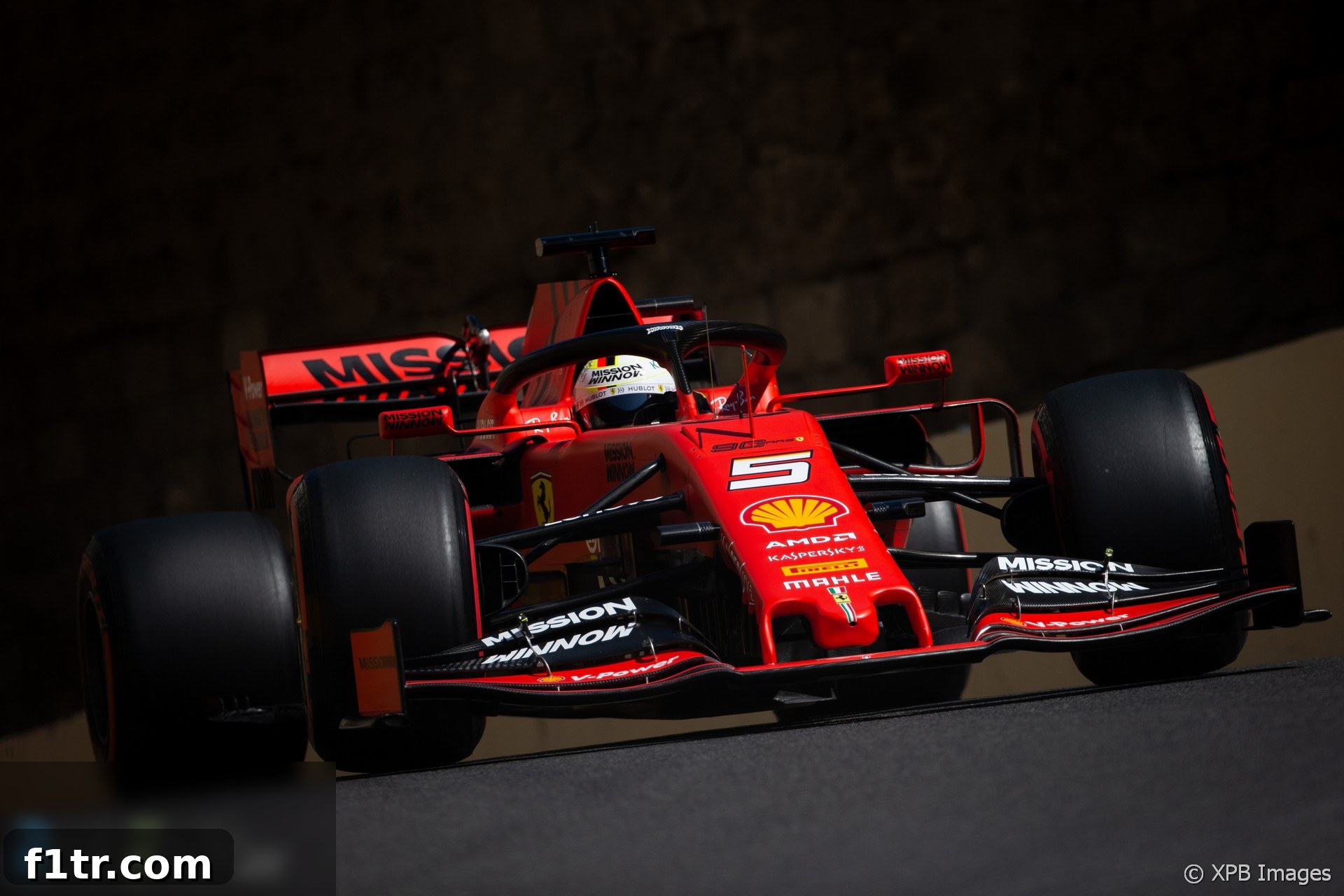
Sebastian Vettel, the esteemed four-time Formula 1 world champion, openly admitted to the profound challenges Ferrari faced in understanding the latest generation of Formula 1 tyres supplied by Pirelli. His candid remarks underscored a growing frustration within the Scuderia during the early phases of the 2019 season, where the team’s much-hyped SF90 struggled to match the competitive pace demonstrated in pre-season testing. Vettel’s perspective offered a crucial insight into the intricate world of F1 performance, highlighting how even the slightest nuance in tyre behaviour can dramatically alter a car’s potential on track.
The German driver articulated the difficulties with stark clarity, stating that the Pirelli compounds were “extremely difficult to understand” and conceded that Ferrari’s primary rivals appeared to have deciphered their characteristics more effectively. This admission pointed towards a critical disadvantage for the Italian outfit, especially given the tight margins that define success and failure in modern Formula 1. The tyres, a singular variable for all teams on the grid, often emerge as the ultimate differentiator, and Ferrari’s struggle to unlock their full potential was proving costly.
Following a pre-season that had seen the SF90 lauded for its promising pace and strong development, the reality of the opening races brought a sobering assessment. Ferrari found themselves grappling with unexpected performance deficits, initiating an urgent quest for answers. Vettel’s observations painted a vivid picture of this technical quandary: “The tyres are different this year,” he noted, implying a shift in characteristics that Ferrari had yet to master. He further elaborated on their inherent complexities, describing them as “very, very sensitive” and reiterating their “extremely difficult to understand” nature. This sensitivity refers to the narrow operating window within which F1 tyres deliver optimal grip and performance. Outside this precise temperature and pressure range, tyres can either overheat and degrade rapidly or fail to reach their ideal temperature, offering insufficient adhesion. Striking this delicate balance is a relentless engineering challenge, one that Ferrari was visibly struggling with.
However, Vettel was quick to clarify that the tyres, while a significant factor, were not the sole determinant of Ferrari’s performance woes. He acknowledged a broader set of issues, encapsulating them as “a combination of things.” This nuanced view suggests that the SF90’s overall package, including its aerodynamic characteristics, mechanical setup, and possibly even power unit deployment, was not in perfect harmony with the demands of the 2019 Pirelli tyres. “One, our car is not quick enough, which is something that I think we learned now more than once,” Vettel confessed, pointing to a fundamental speed deficit independent of tyre management. He then connected this to the tyre performance, explaining, “But also this might trigger that we might not find yourself in the right place for the tyres. The window is unfortunately so small, extremely small, to hit.” This highlights a vicious cycle: a car that isn’t inherently fast enough might need to be pushed harder, placing greater stress on the tyres and making it even more challenging to keep them within their optimal operating window.
The quest to comprehend the seemingly “random” results observed with the tyres became a central focus for Ferrari’s engineering efforts. Vettel described moments of stark inconsistency, where “big differences in lap time across the same driver or inside the same team” would emerge, baffling the team and drivers alike. The subjective feedback from inside the cockpit – where sometimes the tyres “feel better, sometimes it feels worse” – underscored the elusive nature of their performance. This inconsistency meant that strategies painstakingly developed in simulations and Friday practice sessions could unravel on race day, leading to unpredictable outcomes and missed opportunities. The sheer unpredictability added layers of complexity to race strategy, making it difficult to plan optimal pit stops and manage tyre degradation effectively throughout a Grand Prix weekend. Teams often invest immense resources into understanding tyre behaviour, using sophisticated sensors, thermal cameras, and advanced data analysis to predict and react to changes in track conditions and tyre wear. Ferrari’s challenge was to decode this seemingly chaotic variable and bring a scientific approach to mastering it.
Vettel emphasized the monumental effort being expended by the entire Ferrari team to overcome these hurdles. “Obviously there’s a lot of engineering power and science behind to try and overcome all these random scenarios,” he stated, acknowledging the tireless work of hundreds of engineers and technicians back at Maranello and trackside. This battle is not merely about raw speed but about precision engineering, data interpretation, and the ability to adapt. In Formula 1, the continuous search for marginal gains is paramount, and tyre optimization is a cornerstone of this philosophy. The ability to extract even a fraction of a second per lap from the tyres can be the difference between victory and defeat. Vettel’s words also hinted at the competitive landscape: “So we’re doing our best but also maybe people understand a little bit more than we do currently.” This subtle acknowledgment underscored the superior understanding demonstrated by rival teams, particularly Mercedes, who often seemed to unlock a more consistent and potent performance from the same Pirelli compounds.
The pressure on Ferrari to close this knowledge gap was immense, not just for immediate results but also for the long-term trajectory of their championship aspirations. Vettel expressed a collective longing for success, noting, “I think we deserve a good result just for everybody’s sake, the hard work we’re putting in.” This statement served as a testament to the dedication and resilience within the team, which, despite the setbacks, continued to push boundaries and seek innovative solutions. It was a clear rejection of complacency, as Vettel asserted, “It’s not like we can lean back and taking the sun the last couple of months and therefore slipping away in terms of results.” Instead, he galvanized the team, recognizing that the onus was on them to respond: “It looks like very clearly other people have made a better job than us so it’s up to us to come up with solutions and find a way to make our package faster so we can be more competitive. Every chance we get we’ll try to use and optimise.” This forward-looking perspective, coupled with an unwavering commitment to improvement, highlighted Ferrari’s determination to reclaim their competitive edge and fight for top honours. Understanding and mastering the Pirelli tyres would be crucial not just for the remainder of the 2019 season but also for informing future car designs and development strategies.
The complexities surrounding the Pirelli tyres in 2019 provided a fascinating subplot to the Formula 1 season, demonstrating how a seemingly mundane component could dictate the fortunes of entire teams. Ferrari’s struggle, articulated by Sebastian Vettel, underscored the relentless technical challenge inherent in the sport and the constant pursuit of perfection. For teams striving for championship glory, the ability to consistently hit that “extremely small” operating window of the tyres remains as vital as outright engine power or aerodynamic efficiency. Ferrari’s journey through this challenging period was a stark reminder that in Formula 1, success is often found in the intricate details and the relentless scientific endeavour to understand every variable.
2019 F1 season
Delve deeper into the events and storylines from a memorable year in Formula 1 with these related articles:
- Crying in the Melbourne car park at 2019 grand prix was my career low – Ocon
- McLaren Racing reports reduced £71 million loss in 2019
- Kvyat: Hockenheim podium last year was “my biggest achievement” so far
- How the FIA’s new encrypted fuel flow meter targets Ferrari’s suspected ‘aliasing’ trick
- “He smashed my office door”: 23 must-see moments from ‘Drive to Survive’ season two
Browse all 2019 F1 season articles