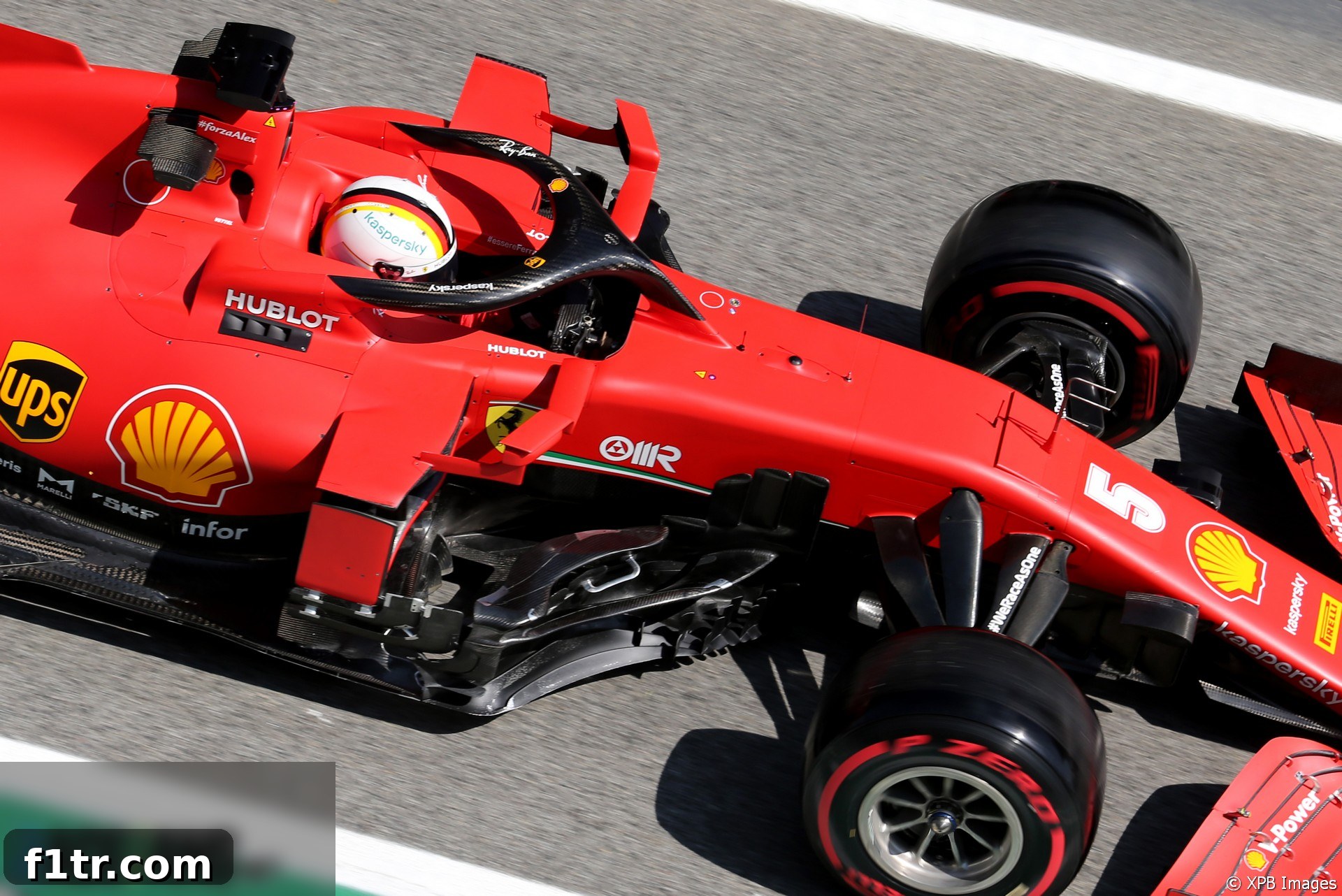
In a season fraught with challenges, four-time world champion Sebastian Vettel found himself once again grappling with the elusive pace of his Ferrari SF1000 during qualifying for the Spanish Grand Prix at the Circuit de Catalunya. Despite classifying the session as “one of his better” performances of the weekend, the German driver narrowly missed out on a coveted Q3 slot, dropping out in Q2 for the third time this year. This latest setback underscores a recurring theme in what has become a remarkably difficult campaign for Vettel and Scuderia Ferrari.
A Season of Struggle: Vettel’s Qualifying Woes at Circuit de Catalunya
The margins in Formula 1 are often razor-thin, and for Sebastian Vettel, the Spanish Grand Prix qualifying session was a stark reminder of this brutal reality. He missed the cut for the top 10 by an agonizing two-thousandths of a second—a blink-and-you-miss-it difference that translated into a starting position of P11. While such a narrow gap might suggest a near-miss, for a driver of Vettel’s caliber, failing to reach Q3 is increasingly becoming an unwelcome norm rather than an exception this season.
The Enigmatic SF1000: “Jumpy” Performance Limits Consistency
Vettel’s frustration stemmed from what he described as the car’s “very jumpy” performance throughout the weekend. This inconsistency presents a formidable challenge for any driver, particularly when trying to extract the absolute maximum from the machinery in the high-stakes environment of qualifying. “Some sessions are good, some are not,” Vettel observed, highlighting the unpredictable nature of the SF1000. “This afternoon actually was a little bit better, but certainly not good enough yet.” This variability means that setup changes, tyre performance, and even driver confidence can fluctuate wildly, making it nearly impossible to build momentum or a consistent understanding of the car’s limits.
The Circuit de Catalunya is famously a demanding test of a car’s aerodynamic balance and overall handling capabilities. Its mix of high-speed corners, technical chicanes, and a long main straight requires a well-rounded package. A car that is “jumpy” or unpredictable through these varied sections leaves a driver guessing, making it difficult to commit fully and shave off those crucial tenths of a second. This inherent instability has seemingly plagued Vettel more significantly than his teammate, a point of growing concern within the Ferrari garage.
Navigating the Labyrinth: Vettel’s Corner-Specific Challenges
Digging deeper into his specific difficulties, Vettel pinpointed particular sections of the Barcelona track that proved problematic. “I struggled in particular in turn seven, losing the rear halfway, so it was difficult to judge how much speed to carry in,” Vettel explained. Turn 7, a fast, sweeping right-hander, demands precision and confidence, as any loss of rear grip compromises entry into the subsequent turns and the rhythm of the entire middle sector. Losing the rear mid-corner means the car is unstable, forcing the driver to lift off the throttle or apply corrective steering, both of which inevitably cost time.
Furthermore, Turn 5, another challenging corner in the middle sector, also presented significant hurdles. “Also turn five was very tricky for me this afternoon,” he added. Turn 5 is a slower, more technical left-hander that leads into a complex series of corners. Issues here suggest a struggle with the car’s low-speed balance or its ability to rotate effectively, further compounding his difficulties in finding the optimal line and carrying speed. While he noted that the last sector improved slightly towards the end of the session, the fundamental balance issues persisted, preventing him from stringing together a truly competitive lap.
The Leclerc Conundrum: A Gap in One-Lap Pace
The struggles of Sebastian Vettel are often viewed in direct comparison to his younger teammate, Charles Leclerc. In recent races, Leclerc has consistently demonstrated superior one-lap pace in the Ferrari, often extracting performance that Vettel seems unable to find. This disparity is particularly stark in qualifying, where Leclerc has frequently advanced further up the grid. Whether this difference stems from their respective driving styles, setup preferences, or a deeper understanding of the SF1000’s eccentricities remains a subject of ongoing discussion. Leclerc’s ability to adapt and push the car closer to its limit, even an imperfect one, has underscored the intense pressure on Vettel to perform.
Race Day Strategy: Hope or Heresy from P11?
Starting P11 does offer a tactical advantage: the freedom to choose tyre compounds for the race start, unlike the top 10 drivers who must begin on the tyres they used to set their fastest Q2 lap. This strategic flexibility can be a powerful tool, particularly on a track known for tyre degradation. However, Vettel’s outlook for significant progress on Sunday was notably subdued. “We are in that region for a reason,” he stated candidly. “I don’t think we have pace to really gain a lot of positions. But we’ll try everything to look forward and hopefully we’ll have a clean race.”
The Barcelona Overtaking Challenge
Vettel’s skepticism about gaining positions is well-founded, given the nature of the Circuit de Catalunya. Barcelona is notorious for being a difficult track for overtaking. Its narrow layout, combined with high-downforce demands, often leads to processions unless there are significant performance differences or strategic gambles. Without a clear pace advantage over the cars ahead, even the optimal tyre strategy might not translate into a significant climb up the order. The primary goal for Vettel will likely be to manage tyres effectively, capitalize on any opportunities, and aim for a points finish, which would be a welcome relief in this challenging season.
A Champion’s Resolve: Looking Beyond the Present
The 2020 season has been a stark departure from Vettel’s illustrious career. He is yet to finish a race in the top five, a statistic that underscores both his personal struggles and the overall competitiveness of the Ferrari package. In contrast, Charles Leclerc has managed to secure three top-four finishes, including two podiums, further highlighting the internal dynamics and the gap between the two Ferrari drivers. Despite the mounting frustrations and the knowledge of his impending departure from Ferrari at the end of the year, Vettel maintains a resilient spirit.
“I’m always managing to keep my head up, even though at the moment there’s not so much reason,” Vettel affirmed. This stoic attitude speaks volumes about the mental fortitude required to compete at the highest level of motorsport, especially when facing adversity. His determination to push forward, even when the results are not materializing, is a testament to his character as a multi-world champion. The Spanish Grand Prix represents another opportunity for Vettel to demonstrate his experience and skill, even if the car’s performance dictates a more modest target. “We’ll see what happens tomorrow,” he concluded, a sentiment echoing both hope and realism for the race ahead.
As the Formula 1 season progresses, the narrative around Sebastian Vettel continues to be one of enduring struggle and the search for answers within a difficult car. The Spanish Grand Prix offers another chapter in this compelling story, where a champion battles not just his rivals, but the inherent limitations of his machinery and the ever-present pressure of expectation.
Further Reading: The 2020 F1 Season & Beyond
- Grosjean to make F1 test return tomorrow for first time since Bahrain horror crash
- Pictures: Wrecked chassis from Grosjean’s Bahrain fireball crash to go on display
- Bottas vs Rosberg: Hamilton’s Mercedes team mates compared after 78 races each
- F1 revenues fell by $877 million in Covid-struck 2020 season
- Hamilton and Mercedes finally announce new deal for 2021 season
Browse all 2020 F1 season articles