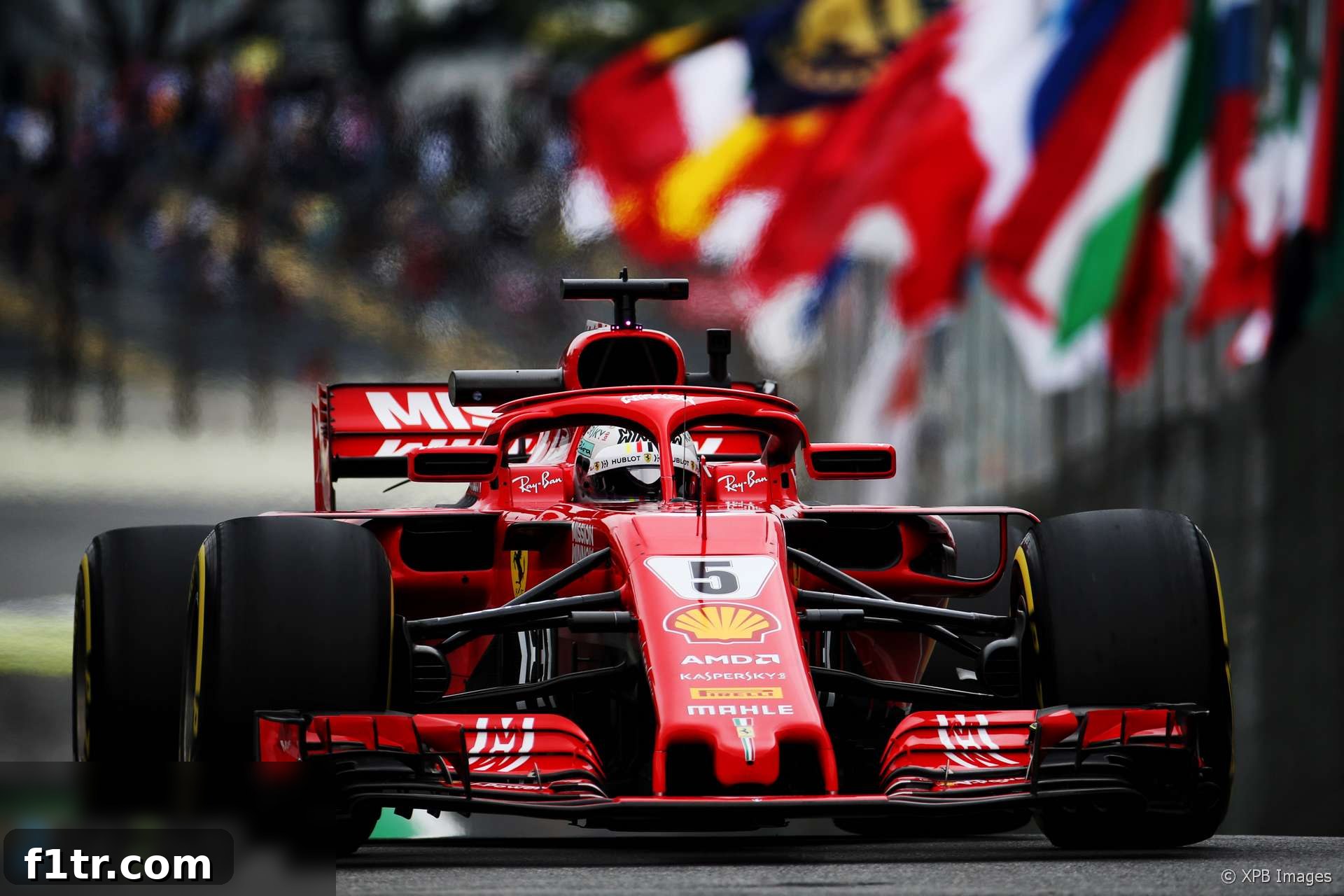
Vettel Smashes Interlagos Lap Record in Electrifying Brazilian Grand Prix Final Practice
The legendary Autódromo José Carlos Pace, better known as Interlagos, came alive with the roar of Formula 1 engines during the crucial final practice session (FP3) for the Brazilian Grand Prix. In a display of masterful driving and raw pace, Sebastian Vettel not only topped the time charts but also etched his name into the circuit’s history books by setting an unprecedented lap record. The Ferrari driver’s performance sent a clear message to his rivals, particularly championship contender Lewis Hamilton, that the Scuderia was ready to challenge for pole position.
FP3 is a pivotal session where teams fine-tune their setups, push the limits of their machinery, and gather critical data for the upcoming qualifying and race. The Brazilian Grand Prix, renowned for its unpredictable nature and passionate atmosphere, often sees dramatic shifts in performance between practice sessions, and this year’s final practice was no exception, delivering a tantalizing glimpse into the potential grid battle.
Advert | Become a Supporter & go ad-free
Ferrari’s Blistering Pace: Vettel Rewrites Interlagos History
Sebastian Vettel’s ultimate flying lap was a breathtaking 1’07.948, a time that not only secured him the top spot but also established a new benchmark for the Interlagos circuit. This incredible feat surpassed the previous record, set by Valtteri Bottas in qualifying last year, by almost four-tenths of a second. Vettel’s ability to extract such prodigious speed from his Ferrari SF71H underlines the team’s strong command of the challenging Brazilian track. The car appeared perfectly balanced, allowing Vettel to attack the corners with confidence and maintain optimal speed through the short straights.
His impressive lap was over half a second faster than his teammate, Kimi Raikkonen, who finished fourth. The significant gap between the two Ferrari drivers highlights Vettel’s exceptional form and perhaps a particular synergy with the Interlagos layout. With both Mercedes drivers separating the Ferraris on the leaderboard, the battle at the front is shaping up to be fiercely contested, but Vettel’s record lap undeniably gives Ferrari a psychological edge going into qualifying.
Hamilton’s Resilience: Overcoming Adversity for P2
While Vettel celebrated his record, Lewis Hamilton demonstrated remarkable resilience to secure the second-fastest time, just two-tenths of a second adrift of the Ferrari ace. The newly crowned five-time world champion’s session didn’t start without drama; an early setback saw him confined to the garage after smoke was observed coming from the rear of his Mercedes W09. The team quickly diagnosed the issue as a faulty fuel breather pipe, a minor component failure that nonetheless cost Hamilton valuable track time in a crucial session.
Despite the disruption and the pressure of a shortened run, Hamilton showcased why he is considered one of the greatest drivers of his generation. His swift recovery to post a highly competitive lap demonstrates both his unwavering focus and the fundamental strength of the Mercedes package. While not on pole in practice, his ability to bounce back and challenge for the top spot will undoubtedly instill confidence within the Mercedes camp. Teammate Valtteri Bottas secured third place, further emphasizing Mercedes’ consistent presence at the sharp end of the grid and their readiness to fight Ferrari for pole position.
Red Bull and the Fierce Midfield Scramble
The Red Bull Racing pair of Max Verstappen and Daniel Ricciardo predictably slotted into fifth and sixth positions, respectively. Verstappen was approximately two-tenths of a second behind Kimi Raikkonen, indicating that Red Bull might still be searching for those critical few tenths to truly challenge the front-runners. However, their consistent performance and strong race pace are well-known, making them formidable contenders for the podium on Sunday. Interlagos’s unique characteristics, including its tight sections and elevation changes, often suit the Red Bull chassis, and they will be looking to capitalize on any opportunities that arise.
The midfield battle, a constant source of excitement throughout the season, remained as intense as ever. The Haas F1 team continued their impressive form this weekend, with Kevin Magnussen and Romain Grosjean taking seventh and eighth places. Their consistent presence at the top of the midfield pack underscores their strong package on this circuit and their determination to secure valuable constructors’ points. Their performance sets the stage for a thrilling intra-midfield fight in qualifying, where every millisecond counts.
Rising Stars and Notable Performances Throughout the Field
Further down the grid, several drivers delivered standout performances or faced interesting challenges. Pierre Gasly, driving for Toro Rosso, showcased the benefits of the new spec-three Honda power unit. Having switched to the upgraded engine overnight, Gasly managed to propel his car to an impressive ninth place, a strong result for the Anglo-Japanese team. However, his session was not without incident, as he expressed considerable frustration at being held up by Esteban Ocon at the close of the session. Such impeding incidents, though common in practice, can be particularly costly on a short lap like Interlagos, affecting a driver’s rhythm and ultimate lap time.
In contrast to Gasly’s strong showing, his teammate Brendon Hartley struggled to find pace, only managing 16th, over half a second behind. This disparity often highlights the challenges of car setup and driver adaptation to specific circuit demands. Completing the top ten was Charles Leclerc for Sauber, who continued his stellar rookie season with another composed and quick performance. His consistent ability to place his Sauber in the top half of the grid reinforces his reputation as a future star of the sport.
The Renault F1 team finally showed a glimmer of competitive pace this weekend, with Nico Hulkenberg narrowly missing out on a top-ten spot by a minuscule 13 thousandths of a second. This incredibly tight margin illustrates the fierce competition in the midfield and Renault’s ongoing efforts to optimize their package. Other teams like Force India, Williams, and McLaren found themselves locked in close battles, with track evolution and tire management playing critical roles. The overall picture from FP3 indicates that the entire grid is pushing the limits, promising a spectacular and unpredictable qualifying session.
Advert | Become a RaceFans supporter andgo ad-free
Brazilian Grand Prix – Final Practice (FP3) Results
| Pos. | No. | Driver | Car | Best lap | Gap | Laps |
|---|---|---|---|---|---|---|
| 1 | 5 | Sebastian Vettel | Ferrari | 1’07.948 | 17 | |
| 2 | 44 | Lewis Hamilton | Mercedes | 1’08.165 | 0.217 | 15 |
| 3 | 77 | Valtteri Bottas | Mercedes | 1’08.465 | 0.517 | 23 |
| 4 | 7 | Kimi Raikkonen | Ferrari | 1’08.490 | 0.542 | 17 |
| 5 | 33 | Max Verstappen | Red Bull-TAG Heuer | 1’08.733 | 0.785 | 12 |
| 6 | 3 | Daniel Ricciardo | Red Bull-TAG Heuer | 1’08.788 | 0.840 | 12 |
| 7 | 20 | Kevin Magnussen | Haas-Ferrari | 1’09.146 | 1.198 | 14 |
| 8 | 8 | Romain Grosjean | Haas-Ferrari | 1’09.257 | 1.309 | 16 |
| 9 | 10 | Pierre Gasly | Toro Rosso-Honda | 1’09.402 | 1.454 | 22 |
| 10 | 16 | Charles Leclerc | Sauber-Ferrari | 1’09.448 | 1.500 | 21 |
| 11 | 27 | Nico Hulkenberg | Renault | 1’09.461 | 1.513 | 19 |
| 12 | 31 | Esteban Ocon | Force India-Mercedes | 1’09.588 | 1.640 | 18 |
| 13 | 9 | Marcus Ericsson | Sauber-Ferrari | 1’09.808 | 1.860 | 23 |
| 14 | 55 | Carlos Sainz Jnr | Renault | 1’09.864 | 1.916 | 17 |
| 15 | 35 | Sergey Sirotkin | Williams-Mercedes | 1’09.885 | 1.937 | 14 |
| 16 | 28 | Brendon Hartley | Toro Rosso-Honda | 1’09.985 | 2.037 | 18 |
| 17 | 18 | Lance Stroll | Williams-Mercedes | 1’10.001 | 2.053 | 17 |
| 18 | 14 | Fernando Alonso | McLaren-Renault | 1’10.020 | 2.072 | 15 |
| 19 | 11 | Sergio Perez | Force India-Mercedes | 1’10.116 | 2.168 | 18 |
| 20 | 2 | Stoffel Vandoorne | McLaren-Renault | 1’10.289 | 2.341 | 16 |
Third Practice Visual Gaps: Understanding the Relative Pace
Understanding the relative gaps between drivers, especially in a closely contested session like FP3 at Interlagos, provides crucial insight beyond just raw lap times. The following list illustrates these differences, with each driver’s gap measured against Sebastian Vettel’s benchmark lap. While the original visual styling for this display is omitted, the numerical difference between competitors clearly highlights the incredibly tight margins that define Formula 1, particularly on this compact circuit where every hundredth of a second can mean multiple grid positions.
Sebastian Vettel – 1’07.948
+0.217 Lewis Hamilton – 1’08.165
+0.517 Valtteri Bottas – 1’08.465
+0.542 Kimi Raikkonen – 1’08.490
+0.785 Max Verstappen – 1’08.733
+0.840 Daniel Ricciardo – 1’08.788
+1.198 Kevin Magnussen – 1’09.146
+1.309 Romain Grosjean – 1’09.257
+1.454 Pierre Gasly – 1’09.402
+1.500 Charles Leclerc – 1’09.448
+1.513 Nico Hulkenberg – 1’09.461
+1.640 Esteban Ocon – 1’09.588
+1.860 Marcus Ericsson – 1’09.808
+1.916 Carlos Sainz Jnr – 1’09.864
+1.937 Sergey Sirotkin – 1’09.885
+2.037 Brendon Hartley – 1’09.985
+2.053 Lance Stroll – 1’10.001
+2.072 Fernando Alonso – 1’10.020
+2.168 Sergio Perez – 1’10.116
+2.341 Stoffel Vandoorne – 1’10.289
Drivers more than ten seconds off the pace omitted from the above list for brevity.
Go ad-free for just £1 per month>> Find out more and sign up
Comprehensive Practice Overview: Combined Times and Weekend Progression
A holistic view of the practice sessions, encompassing FP1, FP2, and FP3, offers invaluable insights into how teams and drivers have progressed over the Brazilian Grand Prix weekend. Sebastian Vettel’s phenomenal FP3 lap significantly lowered his overall best, demonstrating Ferrari’s ability to unlock performance as the track evolved and conditions changed. Similarly, Lewis Hamilton and Valtteri Bottas consistently remained strong contenders, showing Mercedes’ robust foundation despite Hamilton’s minor mechanical scare. The ‘Fri/Sat diff’ column in the combined times table is particularly illuminating, highlighting the pace gains made from Friday’s initial runs to Saturday’s final preparations.
This comprehensive data allows teams to assess tire performance, long-run pace, and the effectiveness of setup changes. Max Verstappen and Daniel Ricciardo also showed steady improvements, cementing Red Bull’s status as a formidable force. The combined practice times are a critical tool for strategic planning, providing a clearer picture of the pecking order and potential race scenarios. As teams analyze this data, they will make their final adjustments for the all-important qualifying session, where every last detail could mean the difference between pole position and a challenging starting spot.
| Pos | Driver | Car | FP1 | FP2 | FP3 | Fri/Sat diff | Total laps |
|---|---|---|---|---|---|---|---|
| 1 | Sebastian Vettel | Ferrari | 1’09.060 | 1’08.919 | 1’07.948 | -0.971 | 79 |
| 2 | Lewis Hamilton | Mercedes | 1’09.107 | 1’08.849 | 1’08.165 | -0.684 | 86 |
| 3 | Valtteri Bottas | Mercedes | 1’09.679 | 1’08.846 | 1’08.465 | -0.381 | 94 |
| 4 | Kimi Raikkonen | Ferrari | 1’09.573 | 1’09.412 | 1’08.490 | -0.922 | 87 |
| 5 | Max Verstappen | Red Bull-TAG Heuer | 1’09.011 | 1’09.339 | 1’08.733 | -0.278 | 56 |
| 6 | Daniel Ricciardo | Red Bull-TAG Heuer | 1’09.395 | 1’09.164 | 1’08.788 | -0.376 | 79 |
| 7 | Kevin Magnussen | Haas-Ferrari | 1’10.236 | 1’10.007 | 1’09.146 | -0.861 | 68 |
| 8 | Romain Grosjean | Haas-Ferrari | 1’09.922 | 1’09.769 | 1’09.257 | -0.512 | 88 |
| 9 | Pierre Gasly | Toro Rosso-Honda | 1’10.934 | 1’10.330 | 1’09.402 | -0.928 | 96 |
| 10 | Charles Leclerc | Sauber-Ferrari | 1’10.346 | 1’09.943 | 1’09.448 | -0.495 | 93 |
| 11 | Nico Hulkenberg | Renault | 1’10.679 | 1’11.674 | 1’09.461 | -1.218 | 59 |
| 12 | Esteban Ocon | Force India-Mercedes | 1’10.361 | 1’10.159 | 1’09.588 | -0.571 | 97 |
| 13 | Marcus Ericsson | Sauber-Ferrari | 1’10.532 | 1’09.808 | -0.724 | 67 | |
| 14 | Carlos Sainz Jnr | Renault | 1’10.662 | 1’10.458 | 1’09.864 | -0.594 | 99 |
| 15 | Sergey Sirotkin | Williams-Mercedes | 1’11.037 | 1’10.569 | 1’09.885 | -0.684 | 90 |
| 16 | Brendon Hartley | Toro Rosso-Honda | 1’11.176 | 1’10.734 | 1’09.985 | -0.749 | 96 |
| 17 | Lance Stroll | Williams-Mercedes | 1’10.799 | 1’10.662 | 1’10.001 | -0.661 | 91 |
| 18 | Fernando Alonso | McLaren-Renault | 1’10.332 | 1’10.020 | -0.312 | 51 | |
| 19 | Sergio Perez | Force India-Mercedes | 1’10.320 | 1’10.116 | -0.204 | 41 | |
| 20 | Stoffel Vandoorne | McLaren-Renault | 1’11.452 | 1’10.596 | 1’10.289 | -0.307 | 65 |
| 21 | Antonio Giovinazzi | Sauber-Ferrari | 1’10.685 | 29 | |||
| 22 | Lando Norris | McLaren-Renault | 1’11.013 | 28 | |||
| 23 | Nicholas Latifi | Force India-Mercedes | 1’11.493 | 34 |
Advert | Become a RaceFans supporter andgo ad-free
Looking Ahead: The Battle for Pole at Interlagos
With final practice concluded, all eyes now turn to the qualifying session, where the battle for pole position at the Brazilian Grand Prix promises to be an enthralling spectacle. Sebastian Vettel’s record-breaking lap has firmly established Ferrari as a leading contender, giving them a significant boost in confidence. However, Lewis Hamilton’s rapid recovery from a mechanical scare, combined with Valtteri Bottas’s consistent pace, ensures that Mercedes will be pushing hard to reclaim the top spot.
The unpredictable nature of the Interlagos circuit, coupled with the ever-present threat of changing weather conditions, could throw a wildcard into the mix, making strategy and driver skill paramount. The fierce competition extends throughout the grid, with Red Bull keen to challenge the front two and the midfield teams, notably Haas, fighting tooth and nail for every grid position. Fans can anticipate a thrilling display of speed and precision as drivers vie for the best starting position on one of Formula 1’s most iconic tracks. The qualifying session is set to be a true test of nerve and engineering prowess, with the outcome potentially shaping the entire Grand Prix.
More from the 2018 Brazilian Grand Prix
- “I have this Force India behind…”: Team radio highlights from the Brazilian GP
- Hamilton takes 19th win in two years, needs 19 more to equal Schumacher
- 2018 Brazilian Grand Prix Star Performers
- Top ten pictures from the 2018 Brazilian Grand Prix
- Verstappen’s ruined masterpiece becomes Hamilton’s latest triumph
Browse all 2018 Brazilian Grand Prix articles