FIA Clarifies Stance on F1 Driver Political Statements for 2023 Season
The global stage of Formula 1 has always been more than just a battleground for engineering marvels and driving prowess; it’s a platform where athletes connect with millions worldwide. In a move that sparked considerable debate and concern across the motorsport community, the FIA (Fédération Internationale de l’Automobile), the governing body of motorsport, introduced updated regulations for the 2023 season regarding drivers’ expression of political, religious, or personal views. This decision, initially perceived as a sweeping ban on driver activism, led to widespread criticism from prominent figures within the sport. Recognizing the need for clarity and addressing the growing apprehension, the FIA has now issued a comprehensive guidance note, significantly refining its position and setting clear boundaries for what drivers can and cannot say during official events.
The Genesis of a Controversy: FIA’s Initial Ban and Driver Backlash
At the close of 2022, the FIA stirred the waters by updating its International Sporting Code (ISC), specifically Article 12.2.1.n. This amendment broadly forbade participants from making or displaying “political, religious and personal statements or comments notably in violation of the general principle of neutrality promoted by the FIA under its Statutes, unless previously approved in writing by the FIA.” The initial interpretation of this rule suggested a severe clampdown on drivers using their platform for any form of social or political commentary, a practice that has become increasingly common and accepted in modern sports.
The reaction from the Formula 1 paddock was swift and largely negative. Drivers, who have increasingly found their voices on various global issues, expressed deep concern over the perceived restriction on their freedom of expression. Seven-time world champion Lewis Hamilton, known for his vocal advocacy on human rights and diversity, was among the first to voice his opposition. Max Verstappen, the reigning champion, also weighed in, alongside Alexander Albon. George Russell, a director of the Grand Prix Drivers’ Association, publicly labeled the regulation a “silly” and unnecessary imposition. The consensus among many drivers was that these rules would stifle their ability to speak out on matters they believe in, potentially hindering positive change and limiting their impact beyond the racetrack.
FIA’s Clarification: Defining the Boundaries of Neutrality
With the 2023 F1 season opener in Bahrain rapidly approaching, the FIA moved to quell the unrest by issuing a detailed guidance note to all competitors. This crucial document clarified that the new restrictions are not an outright ban but rather apply only at specific, designated times and locations during an event. This distinction is paramount, as it delineates between a driver’s personal capacity for expression and their official role within an FIA-sanctioned competition.
According to the guidance, drivers are restricted from making unapproved political, religious, or personal statements during:
- Track Activities: This includes moments like the drivers’ parade and during the observance of national anthems.
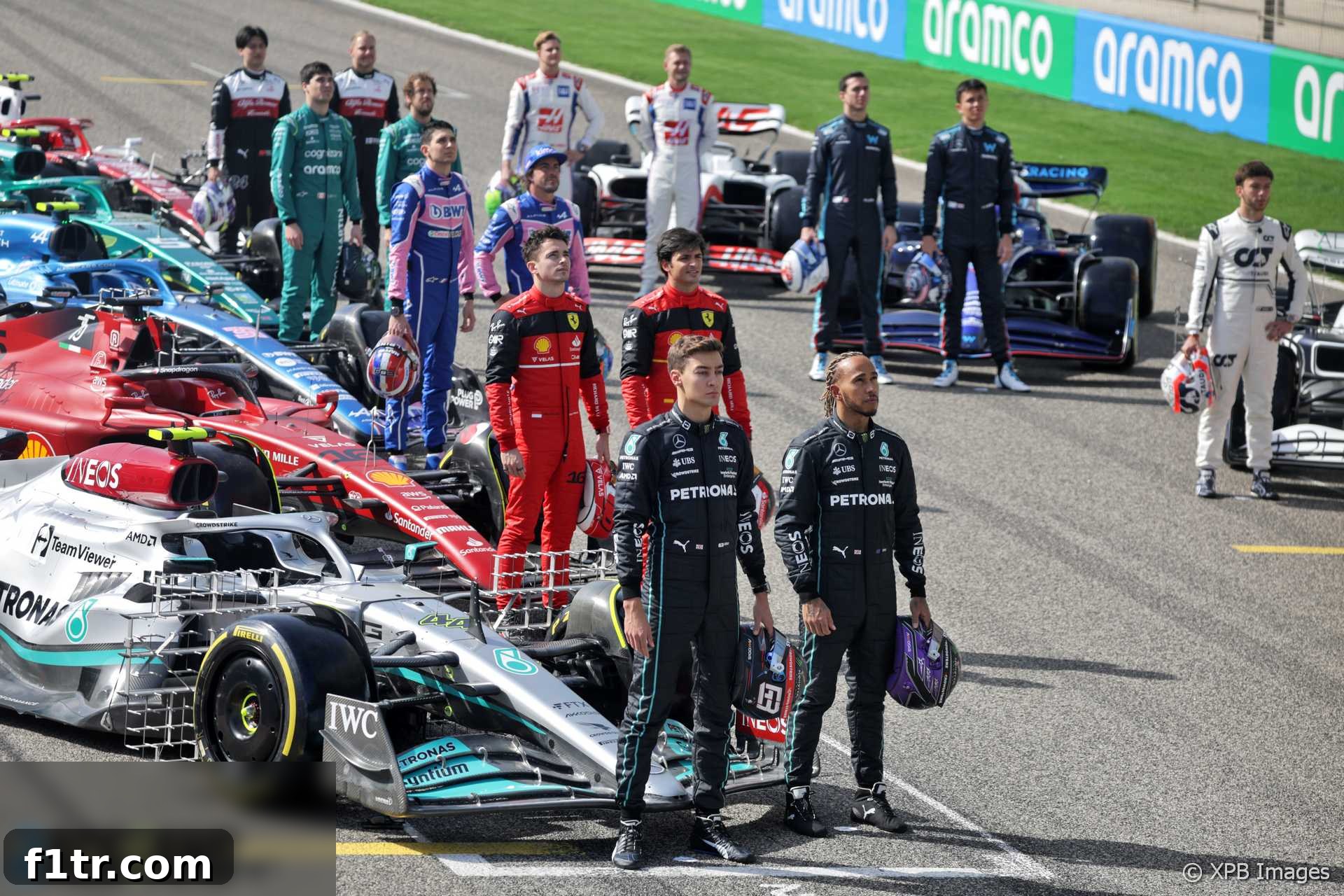
- Pre- and Post-Race Procedures: Key ceremonial moments such as on the podium, in the cool-down room after a race, and official start- and end-of-season group photos.
- Official FIA Press Conferences: However, there’s a significant caveat here: drivers are permitted to express their views when directly responding to questions from accredited journalists.
An FIA spokesperson emphasized to RaceFans that these updates are designed to solidify the FIA’s long-standing commitment to protecting motorsport’s neutrality. The goal is to ensure neutrality particularly during “key moments across all motor sport competitions” or “on the field of play,” without imposing “any additional restrictions on individuals expressing their views outside of these times.” This distinction aims to balance the FIA’s principles with drivers’ rights to personal expression.
Where Drivers Still Have a Voice: Outside the “Field of Play”
Crucially, the guidance note explicitly states that competitors “can express their views on any political, religious or personal matter” provided they do so outside of the designated restricted times and locations. This means drivers retain their freedom to speak on sensitive issues through various channels, including:
- Their personal social media platforms.
- During interviews with accredited media (TV, print, digital) that are not official FIA press conferences.
- And, as clarified, even within official FIA press conferences when directly answering questions posed by journalists.
Furthermore, the FIA has clarified that “non-proselytising religious gestures,” such as pointing to the sky or crossing oneself – a common practice observed by drivers like Pierre Gasly – are fully permitted. This nuance helps to address concerns that deeply personal expressions of faith might be inadvertently caught under the broad umbrella of the initial rule. The guidance underscores that the rule is not intended to sanction individuals for displaying religious symbols or wearing prescribed religious clothing, unless these elements inherently contain prohibited statements or comments.
Defining “Political,” “Religious,” and “Personal”: FIA’s Illustrative Examples
To assist stewards in determining potential breaches, the FIA has provided a non-exhaustive list of scenarios that could be deemed a violation of Article 12.2.1.n. This list serves as an illustrative guide for what constitutes a prohibited statement, whether expressed through an image, symbol, gesture, words, or action. It’s important to note that stewards will assess each case based on its specific circumstances.
Prohibited Political Statements Include References To:
- Any politically-associated or politically-sensitive person(s), living or deceased (unless part of an official competition name).
- Any local, regional, national, or international political party, organization, or group.
- Any level of government or its departments, offices, or functions.
- Any function or branch of government, such as statements regarding the police or military.
- Express or implied references to separatist movements (e.g., displaying an independence movement’s flag or symbol).
- Organizations whose aims or actions conflict with FIA’s values or its Diversity and Inclusion mission, or promote hostility, prejudice, or unlawful discrimination.
- Any reference to totalitarian regimes that justified mass killings (e.g., pro-Nazi chants).
- Any specific political act or event.
- Any military conflict or political dispute between nations, regions, religions, or communities.
- Any specific ethnic or indigenous communities, or perceived discrimination by one community against another.
Prohibited Religious Statements Include:
- Anything critical of or hostile to others’ religious or spiritual beliefs.
- References to a religion, spiritual practice, or significant figure, with the exception of the aforementioned non-proselytizing gestures.
Prohibited Personal Statements Include:
- Any circumstance purely personal to the participant, discouraging the use of events as a platform for personal advocacy that violates the principle of neutrality.
This detailed breakdown aims to provide a clearer framework, though the subjective nature of what constitutes a “sensitive” topic or a “violation of neutrality” still leaves room for interpretation and potential future debates.
Navigating the Bureaucracy: The Pre-Approval Process
For situations where a driver wishes to make a statement at an International Competition that would otherwise fall under the prohibited category, the FIA has outlined a specific pre-approval process. This allows for exceptional, case-by-case authorization. To seek such permission, participants must submit a written request to the FIA, detailing their reasons for the statement. A critical requirement is that this request must be received at least four weeks before the event in question, though late requests may be considered under exceptional circumstances.
It is important for participants to understand that any approval granted will only be valid for the duration of the specified race or event, after which it automatically expires. Furthermore, the FIA’s decision to approve or reject a request under Article 12.2.1.n is final, with no right of appeal. For statements intended for National Competitions, permission must be sought from the relevant National Sporting Authority (ASN).
The FIA’s Rationale: Upholding Neutrality in a Diverse Global Sport
The FIA’s commitment to the principle of neutrality is deeply rooted in its statutes, dating back to May 8, 1970. Like other major international sports organizations such as the International Olympic Committee, the FIA views neutrality as a core guiding value. Article 1.2 of the FIA Statutes explicitly prohibits discrimination on grounds of race, skin color, gender, sexual orientation, ethnic or social origin, language, religion, philosophical or political opinion, family situation, or disability. The inclusion of Article 12.2.1.n in the ISC is presented as a measure to reinforce this long-standing commitment.
The FIA’s stated goals behind this principle are multi-faceted:
- Respect for Diversity: To ensure respect for the diverse views, lifestyles, and values of participants in international competitions, keeping motorsport separate from political, religious, or personal interference.
- Focus on Motorsport: To maintain the primary focus of any International Competition on the sport itself and the performances of teams and drivers, rather than allowing it to be used as a platform for individual advocacy.
- Protecting Participants: To prevent participants from being pressured or forced into taking public positions on domestic or international issues when they would prefer not to do so, thereby safeguarding their autonomy.
These rationales highlight the complex balancing act the FIA must perform: managing the global appeal of Formula 1, which traverses numerous political and cultural landscapes, while also acknowledging the increasing desire of athletes to use their influence for social good. The delicate nature of navigating geopolitical sensitivities, especially in host nations with varying stances on human rights and freedoms, undoubtedly plays a significant role in the FIA’s emphasis on neutrality.
Consequences of Non-Compliance and Ethical Oversight
Should a participant fail to comply with Article 12.2.1.n, clear protocols are in place for reporting and addressing potential breaches. Any individual aware of a potential violation is encouraged to notify the Race Director or the Clerk of the Course, who may then report the matter to the Stewards. If a breach of Article 12.2.1.n is established, the Stewards are empowered to impose any of the penalties listed under Article 12.4.1 of the ISC, which can range from fines to sporting penalties.
Beyond sporting sanctions, the FIA also provides avenues for reporting alleged violations of its broader ethical principles. The FIA Code of Ethics, specifically Article 3.1, mandates that “the FIA Parties and Third Parties shall work to maintain harmonious relations with national authorities, in accordance with the principle of universality and of political neutrality of the FIA.” Concerns regarding ethical conduct can be reported through the FIA Ethics and Compliance Hotline. All reports are assessed, and any wrongdoing is addressed in accordance with FIA regulations.
The Ongoing Dialogue: Balancing Freedom and Fair Play in Formula 1
The FIA’s latest clarification on driver political statements marks a significant effort to bridge the gap between regulatory control and the growing demands for athlete self-expression in modern sports. While the initial reaction was one of concern, the refined guidance offers a more nuanced approach, allowing drivers to retain their voice outside of specific competitive and ceremonial contexts. This adjustment reflects an understanding of the powerful platforms F1 drivers command and the broader societal shift towards greater athlete activism.
As the 2023 F1 season unfolds, the practical application of these rules will be closely watched. The ongoing dialogue between the FIA, teams, and drivers will be crucial in ensuring that the spirit of motorsport neutrality is upheld without unduly silencing the important voices that contribute to the sport’s global relevance and impact. The balance between maintaining the integrity and impartiality of international competition and respecting individual freedoms remains a complex challenge, one that Formula 1, like many other global sports, continues to navigate.