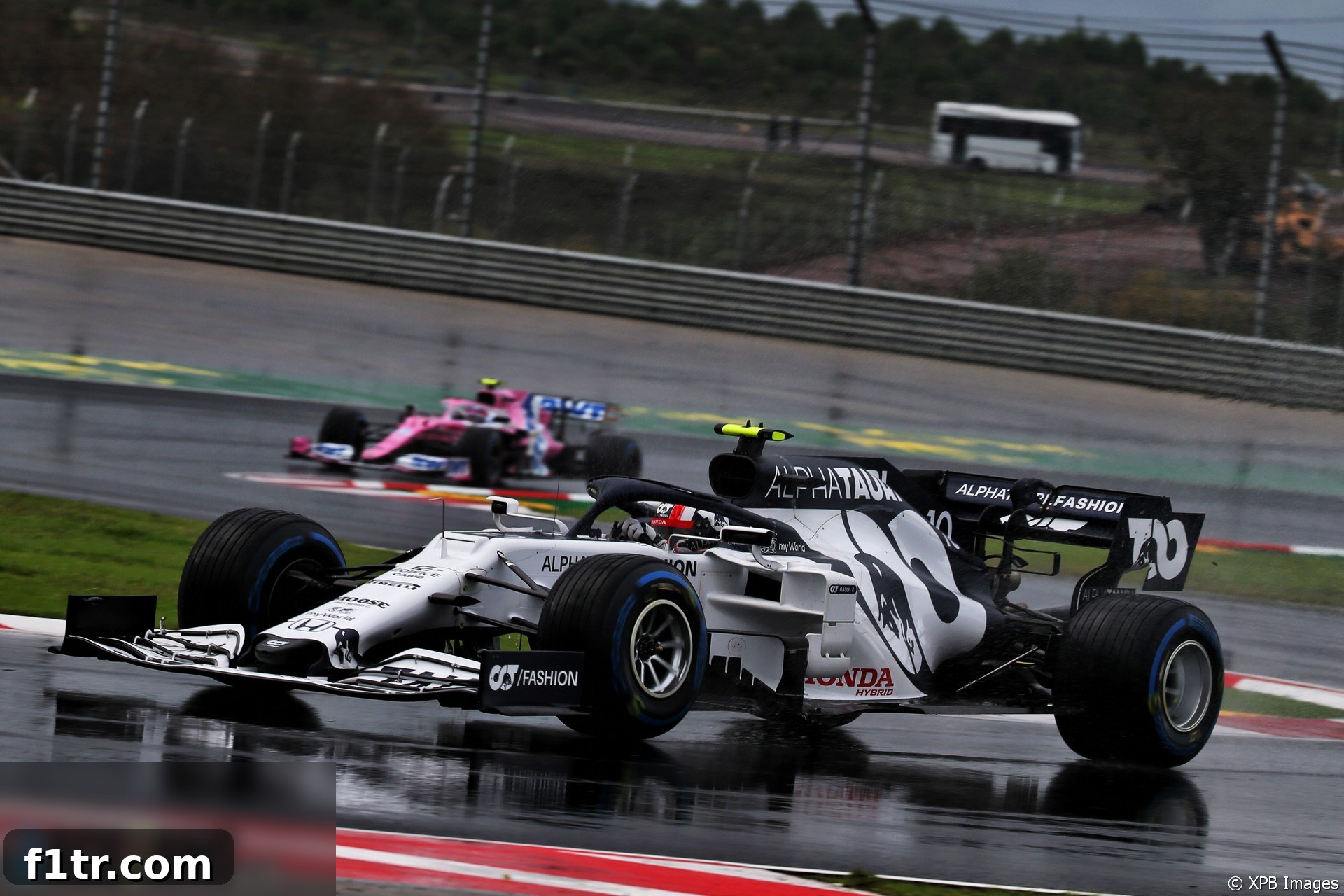
Pierre Gasly Relegated to Back of the Grid for Crucial Turkish Grand Prix
In a decision that sent ripples through the paddock ahead of the 2020 Turkish Grand Prix, Pierre Gasly was confirmed to start the race from the very back of the grid. The AlphaTauri driver incurred the penalty following a complex situation involving an intended power unit change that was ultimately not completed. This unusual scenario underscored the rigorous enforcement of Formula 1’s technical regulations and the FIA stewards’ commitment to maintaining the integrity of parc fermé conditions, regardless of a team’s final course of action.
The Power Unit Dilemma: AlphaTauri’s Request and Reversal
The controversy began to unfold in the aftermath of Saturday’s qualifying session at the challenging Istanbul Park circuit. AlphaTauri, acting on the recommendation of their engine supplier, Honda, informed the FIA technical delegate of their intention to replace all elements of the power unit in Gasly’s car, chassis number 10. This request, made under the stringent parc fermé rules, automatically triggered a mandatory penalty: a start from the back of the grid. Formula 1 regulations are designed to limit the number of power unit components (such as the Internal Combustion Engine, MGU-H, MGU-K, turbocharger, Energy Store, and Control Electronics) a team can use throughout a season. Exceeding these allowances, particularly by replacing multiple components at once, results in severe grid penalties, often culminating in a back-of-the-grid start.
Permission was duly granted for the comprehensive power unit change, a standard procedure when teams face reliability concerns or strategic decisions that necessitate fresh components. With permission secured, the AlphaTauri mechanics commenced the intricate process of disassembling Gasly’s car. Working within the confines of parc fermé, where cars are essentially “locked down” to prevent unapproved modifications between qualifying and the race, the team began the laborious task of preparing the vehicle for the engine swap. This involves extensive stripping down of bodywork, cooling systems, and electrical connections to access the deeply integrated power unit.
However, midway through this substantial mechanical intervention, AlphaTauri made an unexpected reversal. For reasons not explicitly detailed in the stewards’ report, the team decided against installing a new power unit. Instead, they reassembled the car with the original power unit components. This shift in strategy could have been influenced by a variety of factors: perhaps a deeper analysis revealed the original engine was more robust than initially thought, or strategic considerations for the upcoming race – which was expected to be highly unpredictable due to adverse weather and low-grip track conditions – played a role in avoiding an unnecessary new unit. Regardless of the precise motive, the car was put back together with its initial setup.
The FIA Stewards’ Explanation: Integrity of Parc Fermé Paramount
Despite the change of heart by AlphaTauri, the FIA stewards stood firm on the application of the penalty. Their detailed explanation clarified the critical principle at stake, emphasizing the inviolable nature of parc fermé and the strict oversight required:
“After qualifying the team, based on a request from their engine supplier, asked to change all PU elements in car 10 during pre-race parc ferme. Permission was granted by the F1 technical delegate. Such a change comes with a requirement to start the car from the back of the grid.
“The team then carried out work in disassembling the car under parc ferme conditions. During that work the team ultimately decided not to change the PU and ultimately reassembled the car with the original PU. Per the report of the technical delegate the car was disassembled to a stage where it is impossible for the scrutineers and other supervision means in place to guarantee that no modification to the car has been carried out to any component by disassembling and refitting the original items.
“This is normally not an issue because of the mandated penalty for such a change. The stewards determine that the specified penalty for the authorized work in parc ferme is in effect from the time the change was started, notwithstanding whether or not the PU change was ultimately completed.”
The core of the stewards’ ruling rested on the fact that the car had been extensively disassembled. According to the technical delegate’s report, the degree of disassembly reached a point where it became “impossible for the scrutineers and other supervision means in place to guarantee that no modification to the car has been carried out to any component by disassembling and refitting the original items.” This is a crucial distinction. While AlphaTauri ultimately didn’t install new power unit elements, the very act of stripping down the car to such an extent under parc fermé created a situation where the FIA could no longer provide an absolute guarantee against unauthorized adjustments, however minor. The integrity of the technical checks, which are fundamental to fair competition, was compromised by the depth of the intervention.
Therefore, the penalty was not simply for installing a new power unit, but for initiating a significant, penalty-triggering intervention within parc fermé conditions that inherently complicated the technical supervision process. The stewards’ decision clarified that once the authorized work, which carries a specific penalty, commences, the penalty is applied. It prevents a scenario where teams could start a major change, potentially gain insight or test a component, and then revert their decision without consequence, thus circumventing the spirit of the regulations designed for competitive fairness and cost control.
Impact on Pierre Gasly and the Challenging Turkish Grand Prix
For Pierre Gasly, starting from the back of the grid at Istanbul Park presented a monumental challenge. The 2020 Turkish Grand Prix was already anticipated to be one of the most demanding races of the season. The circuit’s newly resurfaced asphalt, combined with cold temperatures and intermittent rain throughout the weekend, resulted in exceptionally low-grip conditions. These factors made qualifying treacherous and promised a race where strategy, tire management, and sheer driving skill would be paramount. Overtaking, even on a track known for its flow, was expected to be difficult due to the lack of grip and unpredictable track conditions.
Gasly had been enjoying a career-best season with AlphaTauri, highlighted by his sensational maiden Formula 1 victory at Monza earlier in the year. This unexpected grid penalty was a significant setback for his personal championship standing and AlphaTauri’s quest for vital points in the fiercely competitive midfield battle. The team would be forced to devise an aggressive and flexible race strategy, hoping to make early gains and capitalize on any potential incidents or varying conditions that might arise further up the field. His task was clear: a relentless drive would be necessary to recover positions and secure any points from the back.
The Broader Context: F1 Power Unit Regulations and Sporting Integrity
This incident with Pierre Gasly serves as a potent reminder of the stringent and complex technical regulations that underpin modern Formula 1. The limits on power unit components were introduced primarily for two reasons: to manage escalating costs associated with constant engine development and to promote reliability and sustainability within the sport. Without such limits, wealthier teams could gain an unfair advantage by frequently introducing new, performance-optimized engines, disregarding the financial and logistical burden this would place on smaller teams.
Grid penalties, while often frustrating for drivers and fans, are an essential enforcement mechanism. They ensure that teams meticulously manage their power unit usage throughout the season, carefully monitoring mileage and component degradation. This necessitates strategic planning for when to introduce new elements, balancing the potential performance gains against the inevitable grid drops. The 2020 season, like many others, saw several drivers incur similar penalties, underscoring the tightrope teams walk in balancing peak performance with regulatory compliance.
The particular nuances of Gasly’s penalty, where the change was initiated but not completed, highlight a critical aspect of F1’s regulatory philosophy: procedural integrity is paramount. The rules are designed not just to prevent overt cheating, but to eliminate any possibility or perception of unauthorized advantages. Maintaining absolute trust in the technical scrutineering process is vital for the credibility and fairness of the sport.
Conclusion: A Firm Ruling for Fair Competition
Pierre Gasly’s back-of-the-grid penalty at the 2020 Turkish Grand Prix, stemming from a power unit change that was started but not finalized, offered a clear demonstration of Formula 1’s unwavering commitment to its strict regulatory framework. While undeniably a blow for Gasly and AlphaTauri, the FIA stewards’ decision was a forceful affirmation of parc fermé integrity and the consistent application of penalties. It underscored that once the process of a significant, penalty-triggering intervention begins, the associated consequences are locked in, irrespective of the ultimate completion of the work.
This incident, though a technicality, significantly impacted Gasly’s race weekend and served as a crucial reminder to all teams about the meticulous planning and stringent adherence required under F1’s technical rules. As Gasly prepared to navigate the challenging Istanbul Park from the very rear, his mission was clear: a heroic drive would be needed to overcome this setback and fight his way through the field, adding another compelling storyline to an already dramatic Grand Prix.
Further Reading and Resources
For a complete overview of the starting positions, please consult the Updated 2020 Turkish Grand Prix grid. To delve deeper into all the news, analysis, and reports from this event and the wider 2020 Formula 1 season, you can Browse all 2020 Turkish Grand Prix articles.