A Historic Lap at Monaco: Keke and Nico Rosberg Unleash Championship-Winning F1 Cars
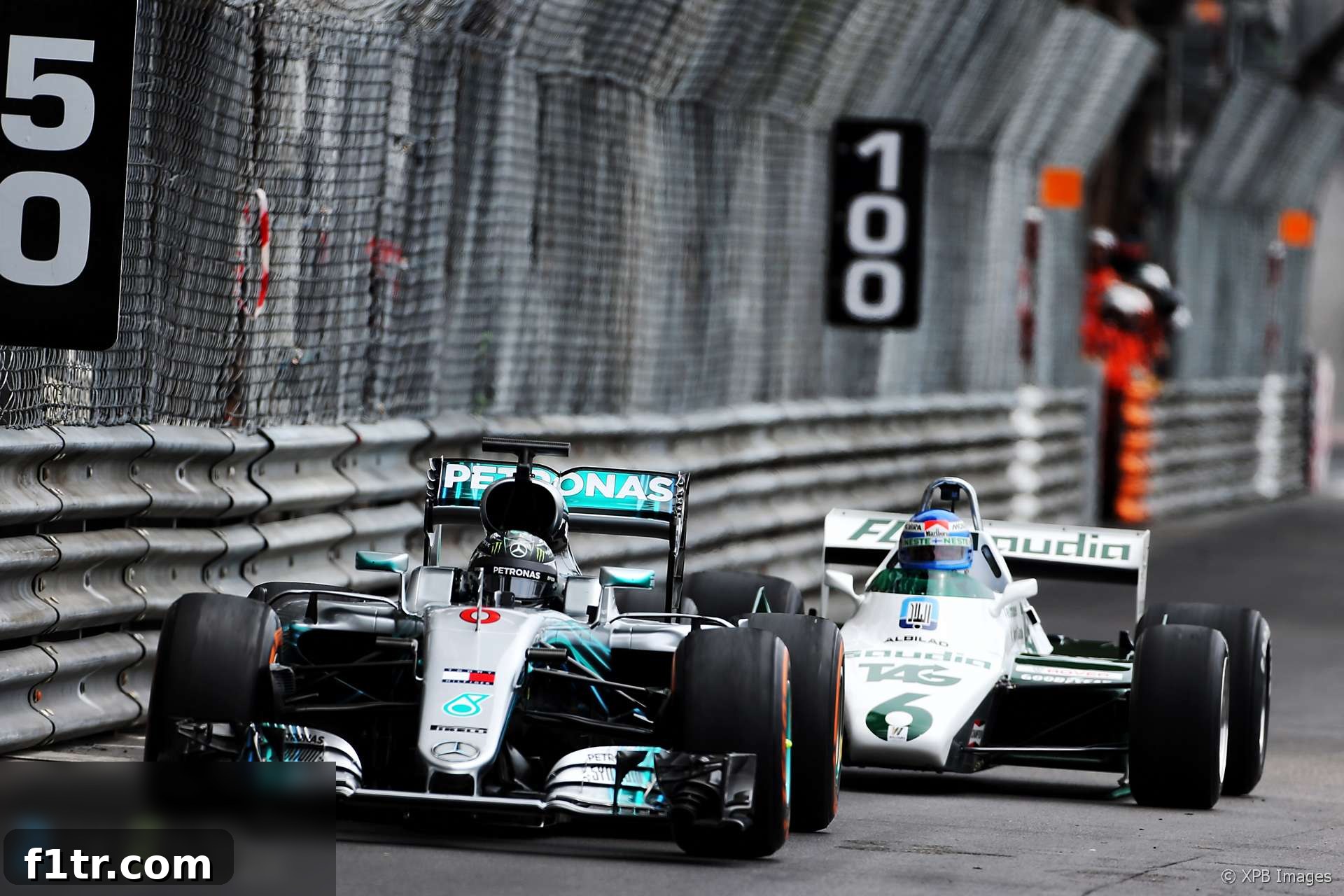
In a moment that captivated motorsport enthusiasts and celebrated a unique legacy, father and son Formula 1 World Champions Keke Rosberg and Nico Rosberg reunited with their iconic championship-winning machines to complete an unforgettable demonstration lap around the legendary Circuit de Monaco. Following today’s first practice session, the hallowed streets of the principality echoed with the distinct sounds of two different eras of Formula 1, as the Rosbergs paid homage to their remarkable achievements.
Keke Rosberg, the 1982 World Champion, climbed back into the cockpit of his raw and powerful Williams-Cosworth FW08. This car, a symbol of F1’s aggressive turbo era, propelled Keke to his maiden and only world title in a season defined by inconsistency and a remarkable seven different winners. Its Cosworth DFV engine, though naturally aspirated, was a testament to robust engineering, allowing Keke to clinch the championship with just one victory, a feat that speaks volumes about his cunning and consistency in a turbulent year. The sight of the FW08 carving through Monaco’s bends was a vivid reminder of a bygone era of pure, unadulterated racing.
His son, Nico Rosberg, returned to the familiar confines of the Mercedes W07 Hybrid, the dominant machine that carried him to the 2016 Formula 1 World Championship. The W07, a marvel of modern hybrid technology, represented the pinnacle of aerodynamic efficiency and powertrain integration, allowing Mercedes to sweep the Constructors’ Championship with overwhelming superiority. Nico’s emotional return to the car, which saw him triumph over his fierce rival and teammate Lewis Hamilton, underscored the culmination of a lifelong dream. For both Rosbergs, this demonstration wasn’t just about driving old cars; it was a profound connection to the pinnacle of their careers and the machines that etched their names into the annals of motorsport history.
Rosbergs and Monaco: A Special Connection
The choice of Monaco for this incredible reunion was no coincidence. Both Keke and Nico Rosberg are past winners of the prestigious Monaco Grand Prix, a race revered as the jewel in the F1 crown. While neither secured their world championship title in the same year they conquered Monaco, their victories on the narrow, twisting street circuit hold immense personal significance. Keke Rosberg famously won the 1983 Monaco Grand Prix, still driving a Williams FW08, the year after his world championship triumph. This victory further solidified his status as one of F1’s most tenacious competitors, showcasing his exceptional car control in challenging conditions.
For Nico Rosberg, the connection to Monaco runs even deeper. Having grown up in the principality, the Circuit de Monaco was, in essence, his backyard. His remarkable achievement of winning three consecutive Monaco Grands Prix from 2013 to 2015 cemented his legendary status at his home race. These victories were not just wins; they were masterclasses in precision driving and strategic execution, highlighting his intimate knowledge of every unforgiving corner and elevation change. The cheers from the local crowd during his demonstration lap undoubtedly held a special resonance for Nico, echoing the support he received during his active racing career.
Keke Rosberg and Nico Rosberg Lapping Monaco: A Visual Journey Through Time
The Evolution of Formula 1: A Tale of Two Cars
The stark contrast between the Williams FW08 and the Mercedes W07 offered a fascinating glimpse into the technological evolution of Formula 1. Keke’s FW08, with its naturally aspirated Cosworth DFV V8 engine, represented an era where mechanical grip, driver skill, and raw engine power were paramount. Its relatively simple aerodynamics and manual gearbox demanded immense physical effort and precise inputs from the driver, particularly on a circuit as demanding as Monaco. The distinctive high-pitched wail of the Cosworth engine was a sound that defined F1 for decades.
Nico’s W07, on the other hand, was a highly complex hybrid machine, featuring a turbocharged V6 engine augmented by sophisticated energy recovery systems (ERS). Its intricate aerodynamics, fly-by-wire controls, and semi-automatic gearbox made it incredibly efficient and devastatingly fast. Driving the W07 required a different kind of finesse, managing complex systems and maximizing energy deployment while pushing the car to its absolute limits. The muted, yet powerful, hum of the hybrid engine highlighted the modern era’s focus on efficiency and advanced engineering.
Watching these two disparate machines circulate the same legendary track offered a poignant reminder of how far Formula 1 technology has come, yet also how the core challenge of mastering Monaco remains timeless. Both cars, despite their differences, were engineered for one purpose: to win world championships, and they succeeded spectacularly under the guidance of the Rosbergs.
A Legacy Etched in Motorsport History
The Rosbergs hold a unique place in Formula 1 lore as the only father and son duo to both win the coveted World Championship. Keke’s triumph in 1982 established him as a fearless and unconventional talent, known for his aggressive driving style and charismatic personality. His championship, achieved in a season of unprecedented parity, remains a testament to his sheer willpower and tactical acumen.
Nico’s 2016 championship was the culmination of years of dedication, perseverance, and a relentless pursuit of perfection. He bravely stepped out of the shadow of his illustrious father and confronted one of the sport’s greatest drivers, Lewis Hamilton, in an epic season-long duel. His retirement immediately after securing the title underscored his commitment and the immense pressure involved, allowing him to leave the sport at its absolute apex. Their combined achievements solidify the Rosberg name as one of the most distinguished families in Formula 1 history.
Related Articles: Exploring the 2018 F1 Season and Beyond
For those interested in delving deeper into the context of the 2018 F1 season, the technological challenges of the era, and other fascinating aspects of Formula 1, here are some related articles:
- F1 feared “death knell” for Drive to Survive after Ferrari and Mercedes snub – Explore the challenges faced by Netflix’s popular F1 documentary series.
- McLaren staff told us we were “totally crazy” to take Honda engines in 2018 – Tost – A look back at the controversial engine choices and team dynamics during the 2018 season.
- ‘It doesn’t matter if we start last’: How Red Bull’s junior team aided Honda’s leap forward – Discover the strategic role of junior teams in developing competitive power units in modern F1.
- Honda’s jet division helped F1 engineers solve power unit problem – An intriguing insight into cross-industry collaboration for F1 technical challenges.
- McLaren Racing losses rise after Honda split – Understand the financial implications and business decisions within Formula 1 teams.
Browse all 2018 F1 season articles
The Enduring Appeal of F1 Demonstrations
Events like the Rosberg’s demonstration lap are vital for connecting Formula 1’s rich past with its vibrant present. They offer fans a rare opportunity to witness legendary cars in action, hear their distinctive engine notes, and relive iconic moments of the sport’s history. For younger fans, it provides a tangible link to the champions who came before, fostering a deeper appreciation for the sport’s heritage. For older aficionados, it’s a nostalgic journey back to defining eras of F1.
Such demonstrations also highlight the incredible advancements in automotive engineering and the relentless pursuit of speed and innovation that defines Formula 1. From Keke’s mechanically raw, high-revving machine to Nico’s technologically advanced hybrid marvel, each car represents a pinnacle of its respective era. These moments serve as a powerful reminder that while the technology may evolve, the spirit of competition, the skill of the drivers, and the thrill of racing remain the enduring heart of Formula 1. The Rosbergs’ lap at Monaco was more than just a drive; it was a celebration of family, legacy, and the timeless allure of Grand Prix racing.