In the dynamic world of virtual Formula 1, where every turn, overture, and strategic decision can dictate success, the driver ratings within Codemasters’ official F1 2020 game serve as a critical foundation for authentic gameplay. These meticulously crafted metrics aim to mirror the real-world prowess and evolving performance of the sport’s elite. As the thrilling 2020 Formula 1 season concluded, Codemasters delivered its highly anticipated final driver rankings update, providing a definitive reflection of each competitor’s journey on the digital grid.
This comprehensive update, which meticulously factored in driver performances across the final six races of the season since the previous iteration, sealed the definitive driver rankings for the entire championship. These crucial scores not only shape the in-game capabilities of each driver, influencing their speed, race craft, and decision-making on the virtual track, but also offer players a choice: to embrace these updated metrics for a hyper-realistic experience or to retain the original launch ratings, allowing for varied gameplay scenarios. This final evaluation offers a fascinating retrospective on a season like no other, immortalizing the fluctuating fortunes and standout moments of the Formula 1 gladiators within the digital realm.
Heading the leaderboard, as he so often does in real life, is Lewis Hamilton. The reigning world champion, despite a season of unparalleled dominance and historic achievements, saw his overall score adjusted by a single point, settling at a still commanding 93. This minor recalibration, rather than indicating a significant drop in performance, likely reflects the incredibly high benchmark set for a driver of his caliber, where even the slightest perceived fluctuation against perfection can lead to subtle adjustments. His enduring presence at the summit underscores his status as the undisputed benchmark in both the real and virtual F1 worlds.
Hot on his heels and demonstrating a season of relentless progression, Max Verstappen solidified his position as the second-highest-ranked driver. Verstappen, a consistent threat throughout the 2020 campaign, garnered an impressive two additional points over the course of the year, bringing his final score to a formidable 92. This upward trajectory is a testament to his electrifying pace, aggressive race craft, and growing maturity, making him a truly formidable opponent in the game and a fan favorite for many players seeking a challenger to Hamilton’s supremacy.
Further down the grid, Valtteri Bottas maintained a steady presence in third place with an overall score of 90, reflecting his consistent yet often challenging season as Hamilton’s teammate. The battle for fourth, however, presented a compelling tie between the ever-charismatic Daniel Ricciardo and the four-time world champion Sebastian Vettel, both finishing with an overall score of 88. Ricciardo’s impressive season with Renault, marked by strong results and his trademark opportunistic overtakes, undoubtedly contributed to his strong showing in the rankings. For Vettel, who endured a more challenging year at Ferrari, maintaining a high score suggests that his underlying talent and vast experience are still highly valued within the game’s mechanics.
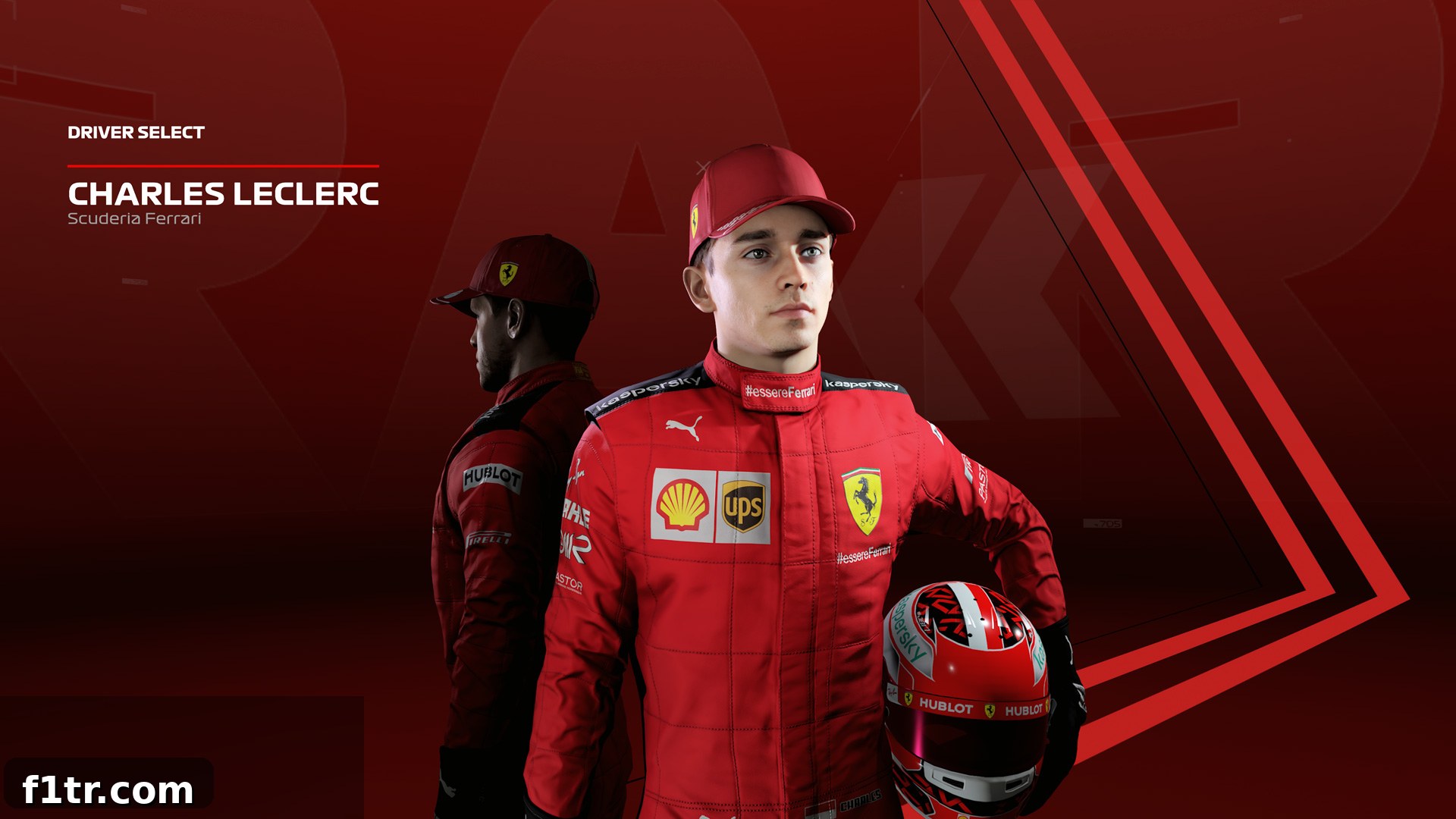
Interestingly, the final update saw a notable shift for Charles Leclerc. Having previously been ranked alongside Ricciardo and Vettel following updates in August and October, Leclerc ultimately found himself positioned below his experienced teammate, Sebastian Vettel, in the definitive rankings. This particular adjustment has sparked considerable discussion among fans and players alike, especially considering Leclerc’s real-world championship performance, where he significantly outscored Vettel by 98 to 33 points. Furthermore, Leclerc accounted for the lion’s share of Ferrari’s points total, showcasing remarkable resilience and skill in a challenging car. The discrepancy between his real-world results and his final in-game rank highlights the nuanced and often subjective nature of driver rating systems, which may weigh factors beyond pure points totals, such as raw pace, consistency across different tracks, or perceived awareness on the virtual tarmac.
Advert | Become a Supporter & go ad-free
The season also saw remarkable individual progress for several drivers. Rookie sensation Nicholas Latifi, making his debut with Williams, registered the most significant increase to his overall score, gaining an impressive six points throughout the season. This substantial improvement reflects his steady adaptation to Formula 1, his consistent development, and his ability to maximize the performance of his machinery. Similarly, Lando Norris and Pierre Gasly, both enjoying stellar individual seasons, were rewarded with five points each. Norris continued to impress with McLaren, demonstrating blistering pace and strong race craft, while Gasly’s memorable victory at Monza and consistently strong performances with AlphaTauri cemented his rise through the ranks. On the flip side, Alexander Albon experienced the largest drop, slipping four points and falling four places to 18th in the overall ranking, mirroring his real-world struggles to consistently match the pace of his Red Bull teammate.
Beyond the overarching numerical score, Codemasters’ F1 2020 meticulously evaluates drivers across four critical individual attributes: experience, race craft, awareness, and pace. Each of these attributes is scored out of a maximum of 100 points, providing a granular insight into a driver’s specific strengths and weaknesses within the game’s simulation. While no single driver achieved a perfect 100 in any category, indicating the incredibly high standards applied, several stood out for their exceptional proficiency. Max Verstappen, for example, was bestowed with an astonishing 99 for pace, acknowledging his raw, unadulterated speed and his ability to extract every ounce of performance from his car. Valtteri Bottas, known for his calm demeanor and strategic intelligence, earned a 99 for awareness, highlighting his spatial judgment, incident avoidance, and ability to manage race situations effectively. Veteran Kimi Raikkonen, often lauded for his vast knowledge of the sport and unflappable temperament, rightfully received a 99 for experience, a nod to his decades of F1 wisdom and consistent performance under pressure.
Conversely, the lowest individual scores offer a glimpse into areas where drivers are still developing or faced particular challenges during the season. Nicholas Latifi’s 51 for experience underscores his rookie status and the steep learning curve he navigated in his inaugural F1 season, indicating that while his overall score improved, his foundational experience remains a key growth area. Similarly, Latifi’s 71 for pace suggests room for improvement in extracting raw speed. George Russell’s 69 for race craft, despite his often heroic performances in the challenging Williams, hints at areas for refinement in his wheel-to-wheel battling and strategic positioning. Alexander Albon’s 66 for awareness, the lowest in this category, sadly reflects some of the positional errors and race incidents that characterized his difficult season with Red Bull. These detailed individual ratings not only add depth to the game’s simulation but also allow players to understand the subtle nuances that differentiate each driver, influencing their performance in various gameplay scenarios, from qualifying hot laps to full-length Grand Prix races.
Advert | Become a RaceFans supporter andgo ad-free
F1 2020 Final Driver Ratings: A Comprehensive Overview
The table below provides a full breakdown of the final driver rankings for F1 2020, offering a fascinating comparison between their initial scores at the game’s launch, subsequent updates in August and October, and their ultimate definitive scores. This comprehensive data allows players and fans to track the evolution of each driver’s virtual performance throughout the 2020 season, showcasing how their real-world results and perceived attributes influenced their standing in the game.
| Driver | Original score | Original rank | August score | October score | Final score | Final rank |
|---|---|---|---|---|---|---|
| Lewis Hamilton | 94 | 1 | 94 | 93 | 93 | 1 |
| Max Verstappen | 90 | =2 | 91 | 92 | 92 | 2 |
| Valtteri Bottas | 90 | =2 | 90 | 90 | 90 | 3 |
| Sebastian Vettel | 89 | 4 | 88 | 88 | 88 | =4 |
| Daniel Ricciardo | 87 | =5 | 88 | 88 | 88 | =4 |
| Charles Leclerc | 86 | 7 | 87 | 88 | 87 | 6 |
| Sergio Perez | 85 | 8 | 84 | 85 | 85 | =7 |
| Pierre Gasly | 80 | =10 | 82 | 84 | 85 | =7 |
| Kimi Raikkonen | 87 | =5 | 86 | 84 | 84 | =9 |
| Carlos Sainz | 82 | 9 | 82 | 83 | 84 | =9 |
| Lando Norris | 79 | =14 | 81 | 82 | 84 | =9 |
| Esteban Ocon | 80 | =10 | 80 | 80 | 81 | 12 |
| Romain Grosjean | 80 | =10 | 80 | 81 | 80 | 13 |
| Daniil Kvyat | 80 | =10 | 79 | 79 | 79 | =14 |
| George Russell | 75 | 18 | 76 | 78 | 79 | =14 |
| Lance Stroll | 78 | =16 | 79 | 79 | 78 | =16 |
| Kevin Magnussen | 78 | =16 | 78 | 78 | 78 | =16 |
| Alexander Albon | 79 | =14 | 77 | 75 | 75 | 18 |
| Antonio Giovinazzi | 73 | 19 | 72 | 72 | 71 | 19 |
| Nicholas Latifi | 64 | 20 | 62 | 69 | 70 | 20 |
Advert | Become a RaceFans supporter andgo ad-free
Exploring the Impact of Final Driver Ratings on F1 2020 Gameplay
The release of these final driver rankings by Codemasters is more than just a numerical update; it significantly shapes the gameplay experience for F1 2020 enthusiasts. For players engaging in the highly immersive Career Mode, these ratings directly influence the performance of AI-controlled drivers, affecting their pace during qualifying, their consistency in races, and even their ability to make strategic decisions. A driver with a high ‘Pace’ rating, like Max Verstappen, will be a formidable challenge on track, while those with strong ‘Awareness’ or ‘Race Craft’ scores will make for smarter, more defensive, or more aggressive opponents respectively. This adds layers of realism and variability to each race weekend, ensuring that the digital championship mirrors the unpredictability and competitive nature of its real-world counterpart.
Furthermore, these ratings have a profound impact on Co-op Career Mode and online multiplayer races, particularly for players who choose to use real-world drivers as their avatars. The subtle changes in overall scores and individual attributes can alter team dynamics and rivalries, offering fresh challenges and strategic considerations. For example, a player choosing to manage a team with a rising star like Lando Norris will benefit from his improved overall rating and individual stats, potentially giving them an edge in development and on-track performance compared to earlier in the season. The option to either implement or disregard these updates provides immense flexibility, allowing players to tailor their experience, whether they prefer the game as it was at launch or wish to constantly adapt to the latest real-world developments.
In conclusion, Codemasters’ final driver rankings update for F1 2020 stands as a meticulous and engaging effort to encapsulate the thrilling ebb and flow of the 2020 Formula 1 season. From Lewis Hamilton’s enduring dominance to Max Verstappen’s steady ascent, and the intriguing nuances of drivers like Charles Leclerc and Nicholas Latifi, these ratings offer a rich tapestry of performance data. They not only provide a definitive snapshot of driver capabilities within the game but also serve as a fascinating point of comparison for fans to reflect on the real-world season and its digital translation. As the F1 gaming community looks forward to future iterations, these comprehensive updates underscore the commitment to delivering an authentic and evolving Formula 1 experience, where every driver’s journey is faithfully reflected on the virtual tarmac.
Browse all Gaming articles