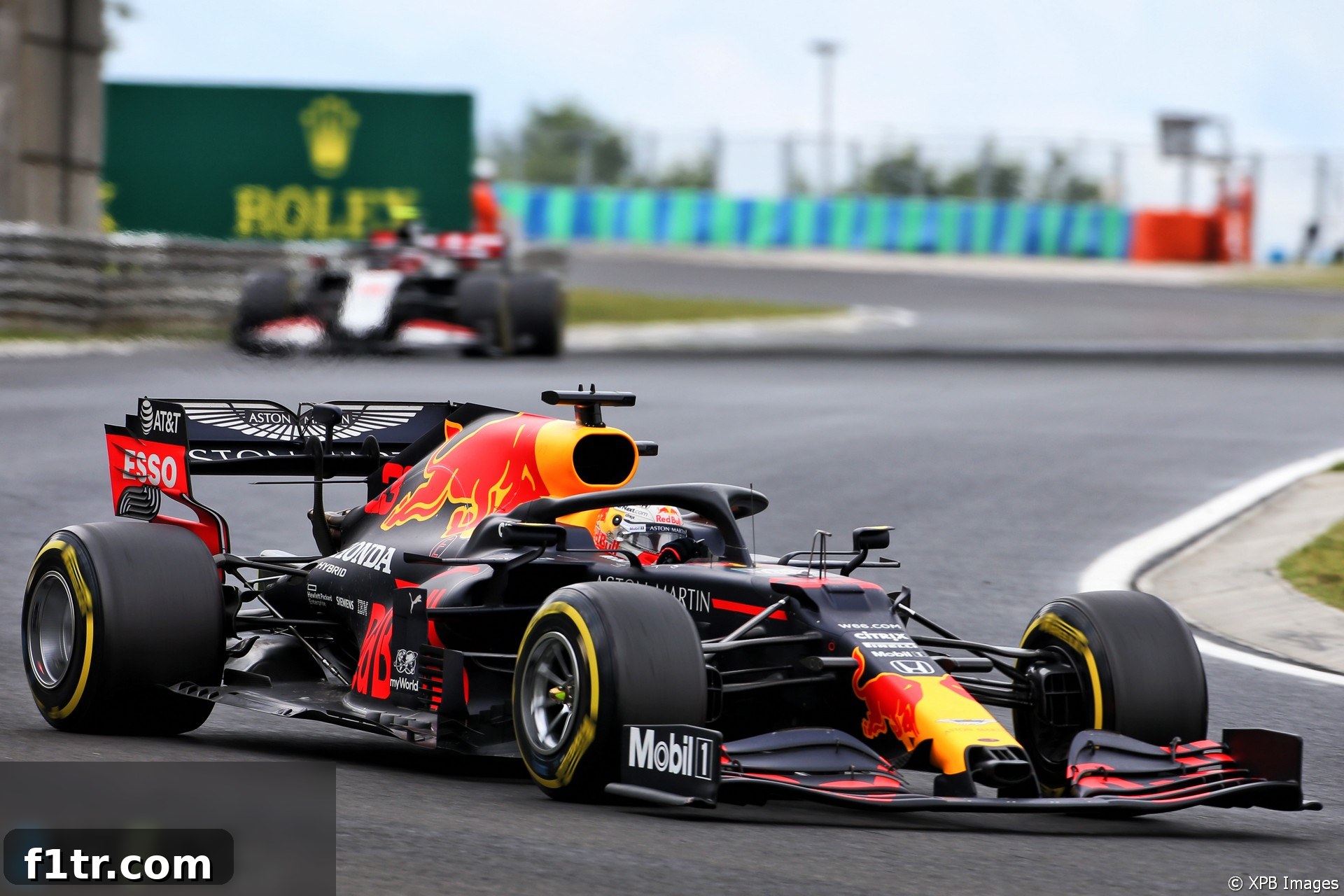
Max Verstappen’s Hungarian Grand Prix Miracle: From Grid Crash to Podium Finish
The 2020 Hungarian Grand Prix delivered an unforgettable spectacle, not least due to the sheer drama surrounding Max Verstappen even before the race officially began. What transpired on the laps to the grid threatened to end his race prematurely, yet culminated in one of the most remarkable recoveries and resilient drives of his burgeoning career. The Red Bull driver, known for his aggressive style and unwavering determination, found himself in an unenviable position after a dramatic incident on the way to the starting grid, casting a dark cloud over his prospects for the afternoon.
In a moment that sent shockwaves through the paddock and amongst fans worldwide, Verstappen’s RB16 slid off track at Turn 12, colliding with the barrier and sustaining significant damage. The sight of his car with a broken front wing and, more critically, compromised suspension, limping back to the grid, sparked widespread concern. It was a heart-stopping sight for the Red Bull team and their supporters, as the prospect of him even taking the start seemed incredibly bleak. However, what followed was a testament to the unparalleled skill and unwavering dedication of a Formula 1 pit crew, transforming despair into a glimmer of hope.
The Unsung Heroes: Red Bull Mechanics’ Race Against Time
The severity of the damage, particularly to the suspension, typically signals the end of a driver’s participation. Yet, as Verstappen nursed his wounded machine back to the grid, the Red Bull Racing crew sprang into action with astonishing speed and precision. Under immense pressure and with precious little time before the formation lap, the mechanics executed an incredible feat of engineering and teamwork. Front wings can be replaced in seconds, but a suspension repair is a complex, multi-component task that requires meticulous attention to detail and absolute accuracy. The fact that they achieved this within the stipulated timeframe, allowing Verstappen to take his P7 grid slot, was nothing short of miraculous.
Verstappen himself admitted the gravity of the situation, stating, “It was not how I wanted it in the beginning, of course, ending up in the barriers [on] the laps to the grid.” His candid reflection underscored the near-certainty of a non-start. The subsequent repair, however, profoundly impacted him. “The mechanics did an amazing job to fix the car. I don’t know how they did it but incredible. So to pay them back with second place, I’m very pleased for that,” he expressed with heartfelt gratitude. This sentiment highlights the symbiotic relationship between driver and team, where every component, every repair, and every strategic decision plays a pivotal role in the pursuit of success. The seamless integration of a new front wing and the intricate suspension components was a display of mechanical artistry under extreme duress.
Remarkably, despite the hurried repair, Verstappen reported that the suspension felt “like new” from the moment the race started. This speaks volumes about the quality of the work performed, not merely the speed. “It was just in time but everything was working like normal,” he confirmed, allaying any fears that the temporary fix might compromise his race pace or handling. This immediate confidence in his car allowed him to switch his focus entirely to the race ahead, transforming a potential disaster into an opportunity for redemption and glory.
A Blistering Start and Strategic Masterclass
With the car miraculously repaired, Max Verstappen wasted no time in making his presence felt. The opening lap of any Grand Prix is critical, but at the twisty and often processional Hungaroring, gaining positions early is paramount. Verstappen, starting from seventh on the grid, executed a phenomenal start, carving his way through the field with characteristic audacity and precision. By the end of lap one, he had surged three places, finding himself in third position, right behind the seemingly invincible Mercedes duo.
“The first lap was very crucial,” he emphasized, acknowledging the pivotal role of his early gains. From that strong foundation, he and his team were able to execute a race strategy that capitalized on his raw pace and astute decision-making. “From there on we had the right calls and we had good pace so we just kept doing our own thing,” he added. This focused approach allowed him to maintain a consistent rhythm, manage his tyres effectively, and remain within striking distance of the leaders. The ability to quickly recover from such a significant pre-race setback and immediately perform at such a high level underscores Verstappen’s mental strength and exceptional driving talent, showcasing his championship calibre.
The achievement of splitting the two Mercedes cars, driven by Lewis Hamilton and Valtteri Bottas, was particularly significant. In the 2020 season, Mercedes held a commanding advantage, often finishing races with substantial gaps to the rest of the field. For Verstappen to not only challenge but also separate the Silver Arrows on a track where Red Bull was not always dominant spoke volumes about his individual performance and the team’s strategic acumen. It was a clear statement of intent, demonstrating that even against formidable opposition, Verstappen remained a potent threat capable of disrupting the established order.
The Grueling Defense: Holding Off Bottas’s Relentless Charge
As the race progressed, Verstappen’s impressive second-place position came under intense threat from Valtteri Bottas, who, after a less-than-ideal start, was rapidly closing the gap in his faster Mercedes. Bottas, eager to recover lost ground and secure a Mercedes 1-2, pushed relentlessly in the closing stages, clocking faster lap times and reducing the deficit with every passing lap. This set up a thrilling battle for the final podium spot alongside Hamilton, testing Verstappen’s limits.
Verstappen recounted the pressure: “I was just trying to do my own pace. Of course I could see he was catching like a second a lap.” This acknowledgment of Bottas’s superior pace highlighted the immense challenge he faced. However, the Hungaroring is notorious for its tight, twisty nature, making overtakes incredibly difficult, even with a pace advantage. Verstappen skillfully used the track’s characteristics to his advantage, placing his car defensively and forcing Bottas to take less optimal lines, thereby minimizing opportunities for an attack.
“But of course following here is quite tricky so as soon as he was within one-and-a-half seconds it was a bit more difficult for him,” Verstappen explained. This demonstrated his acute understanding of the circuit’s nuances and his ability to manage the gap effectively, preventing Bottas from getting into a prime slipstream or dive-bomb position. The final laps were further complicated by backmarker traffic, which proved to be a double-edged sword. While it presented potential opportunities for Bottas, it also made life harder for Verstappen on his “old tyres,” requiring even greater focus and precision.
“Then in the last lap we had also traffic in front which didn’t make it easier for me on those old tyres but we managed to hang on and very happy with second,” he concluded. His resilience and strategic awareness under duress were exemplary, showcasing why he is considered one of the sport’s finest defensive drivers. To fend off a charging Mercedes, especially after the unprecedented pre-race chaos, was a monumental achievement that captivated audiences and solidified his reputation as a tenacious competitor.
A Second Place That Felt Like Victory
Crossing the finish line in second place, mere seconds ahead of Bottas, Max Verstappen celebrated a result that, under normal circumstances, would be seen as a strong performance. However, given the extraordinary events of the day – the pre-race crash, the miraculous repair, the electrifying start, and the tenacious defense – it was unequivocally more than just a strong performance. It was a triumph against adversity, a testament to raw talent, strategic brilliance, and the relentless spirit of his Red Bull Racing team.
His post-race reflection encapsulated the magnitude of his achievement: “I thought I was not going to race so to be second is like a victory today.” This statement profoundly illustrates the journey he undertook, from the brink of withdrawal to standing proudly on the podium. It wasn’t just about the championship points; it was about overcoming a seemingly insurmountable challenge, rewarding his mechanics for their heroic efforts, and proving that he could still deliver world-class results even when the odds were stacked heavily against him.
The Hungarian Grand Prix of 2020 will forever be etched in memory as a display of extraordinary resilience and teamwork. Verstappen’s ability to turn a near-catastrophe into a celebrated podium finish highlighted his unique qualities as a driver: his fearless approach, his mental toughness, and his profound connection with his team. It was a race that transcended the mere chase for championship points, becoming instead a powerful narrative of determination and human spirit in the high-stakes world of Formula 1, truly a modern classic.
Become a RaceFans supporter andgo ad-free
2020 F1 Season: Related Articles
- Grosjean to make F1 test return tomorrow for first time since Bahrain horror crash
- Pictures: Wrecked chassis from Grosjean’s Bahrain fireball crash to go on display
- Bottas vs Rosberg: Hamilton’s Mercedes team mates compared after 78 races each
- F1 revenues fell by $877 million in Covid-struck 2020 season
- Hamilton and Mercedes finally announce new deal for 2021 season
Browse all 2020 F1 season articles