McLaren’s Remarkable Resurgence: Zak Brown on Focus, Leadership, and the Drive for F1 Momentum
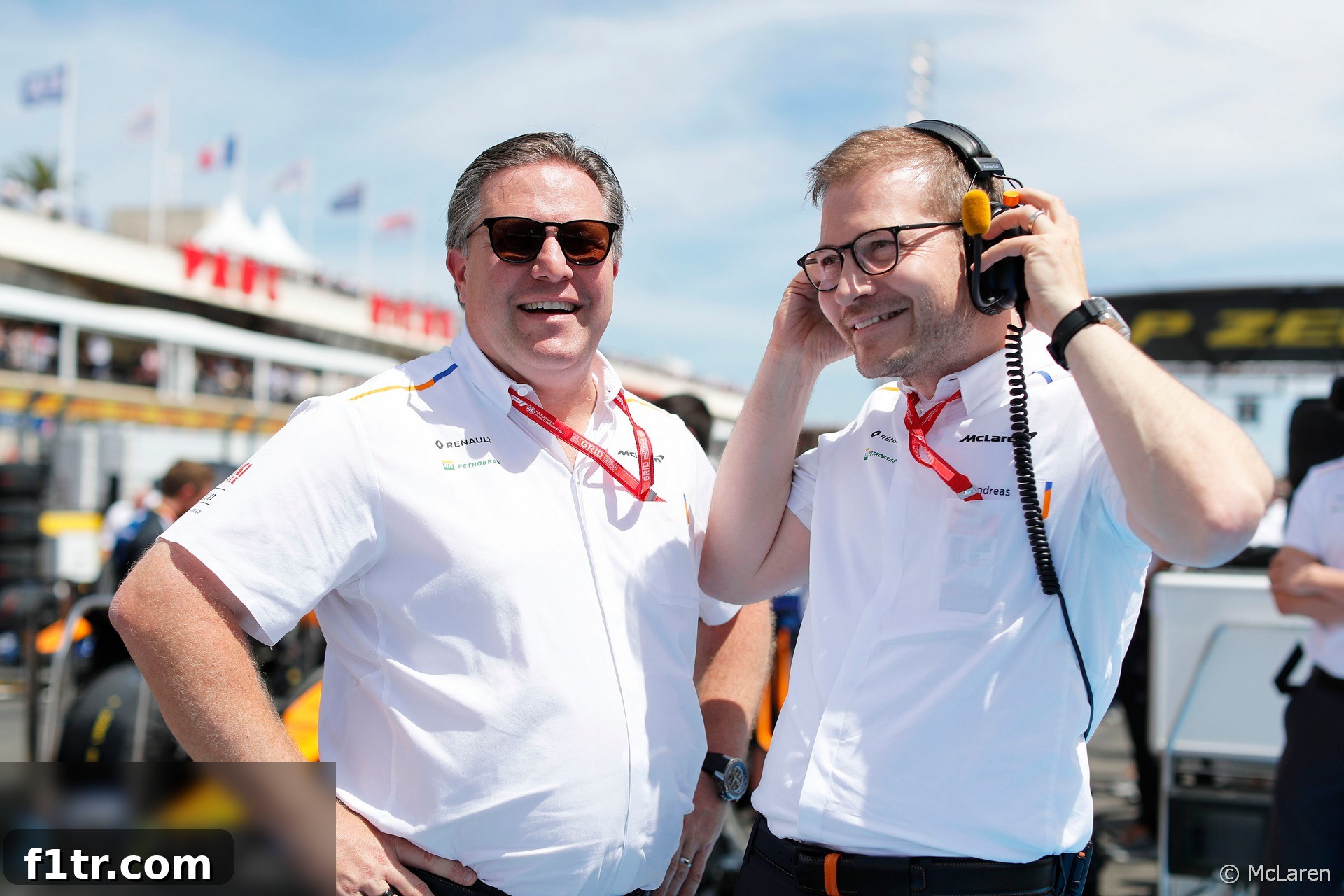
McLaren Racing CEO Zak Brown has offered profound insights into the team’s dramatic turnaround, attributing their recent success to a laser-sharp focus and the deliberate eradication of internal politics. His reflections underscore a pivotal period for the Woking-based outfit, which has seen them climb back into contention at the forefront of Formula 1.
The Anatomy of a Comeback: Zak Brown’s Vision for McLaren
When questioned about the significant progress McLaren achieved last season – culminating in their highest constructors’ championship finish in seven years – Zak Brown provided a candid assessment of the journey.
“When I started, there was a lot of chefs in the kitchen, a lot of stuff going on within the company, with shareholders, and so there just was a lack of focus and direction of the leadership. And I wouldn’t put that down to one person; it’s just that there wasn’t alignment.
If I look at the changes we’ve made, Andreas [Seidl] has done an excellent job. Obviously, he didn’t build the car – that was done last year – but his focus that he’s brought to the team, leadership, he restructured to a much simpler organisation. We got James Key onboard, Andrea Stella has stepped up. So it’s not even just about the new people that have come in; it’s been those people stepping up and being empowered, having clear mandates on what is required out of them. That’s kind of the leadership direction.
And then we took the politics out of the team. I think when you have a lack of leadership and direction, then things can become political. So I think we’ve taken that out of the organisation, and with that came a better-developed race car.
Then enter two new exciting, very fast drivers that work really well together. All those things and many more are just starting to kind of come together and create momentum. And I think this is, as all business is, it’s a momentum game. If you look at Mercedes, look at when Red Bull came in, we needed to kind of reverse this backwards momentum to forward momentum. And now we just need to build on it.”
Brown’s remarks paint a vivid picture of a team that had, for too long, grappled with internal disarray. The “lack of focus and direction” he describes is a common pitfall for large organizations, particularly those under intense public and shareholder scrutiny. The transformation began with a deliberate effort to simplify the organizational structure, ensuring clear lines of communication and accountability.
The arrival of key figures like Andreas Seidl, now Team Principal, has been instrumental. Seidl, with his extensive motorsport background, brought a renewed sense of purpose and a more streamlined approach to management. While the technical foundation of the car was already being laid, Seidl’s leadership solidified the team’s operational efficiency. Complementing this, James Key joined as Technical Director, bringing his expertise in chassis design and aerodynamics, while Andrea Stella, the Executive Director of Racing, stepped up, demonstrating the depth of talent already within the team. This emphasis on empowering existing personnel, alongside strategic new hires, created a cohesive and highly motivated unit.
Perhaps one of the most significant changes, as highlighted by Brown, was the conscious decision to “take the politics out of the team.” Internal politicking can be a corrosive force, diverting energy and resources from the primary goal of winning. By fostering an environment of transparency and shared objectives, McLaren was able to channel its collective efforts more effectively into car development, directly translating into improved on-track performance.
The final, crucial piece of the puzzle was the integration of a new driver lineup. Although not named by Brown in this specific quote, the period in question saw the arrival of Lando Norris and Carlos Sainz Jr. Their youth, raw speed, and exceptional working relationship provided a fresh impetus and a competitive edge that perfectly complemented the internal restructuring. This synergy between leadership, technical prowess, and driver talent has been the bedrock of McLaren’s renewed momentum, transforming a period of stagnation into one of ambitious growth. Brown’s analogy of F1 as a “momentum game” resonates deeply, recognizing that sustained success requires continuous building upon positive trends, much like the dominant runs of Mercedes and Red Bull in their respective eras.
Quotes: Dieter Rencken
Become a RaceFans supporter and go ad-free
Connecting with the Fans: Formula 1 on Social Media
In the fast-paced world of Formula 1, social media serves as a vital conduit between teams, drivers, and their global fanbase. It offers a unique window into the sport, from behind-the-scenes glimpses to real-time reactions and direct engagement. McLaren, like many other teams, leverages platforms such as Instagram to share their journey, celebrate successes, and connect with supporters around the world, fostering a sense of community and excitement.
- Find more official F1 accounts to follow in the F1 Twitter Directory
Beyond the Paddock: Exploring Wider Motorsport Narratives
The world of motor racing is a complex tapestry woven with stories of ambition, technological innovation, and financial realities. Here, we delve into some of the latest headlines shaping the sport’s future and its broader ecosystem.
The Cost Barrier: Securing the Next Generation of F1 Talent
Motor racing worried expense will deter ‘the next Hamilton’ from F1 (The Guardian)
A growing concern within motorsport is the escalating cost of reaching the pinnacle of racing. Derek Warwick, a respected figure in the sport, articulates this worry: “If we are not careful, we are not going to get the next Lewis Hamilton because he is not going to be able to afford it unless his father or mother is a multimillionaire.” This statement highlights a critical issue: the financial burden placed on young aspiring drivers. The journey from karting to Formula 1 is incredibly expensive, requiring significant investment in equipment, travel, and coaching at every stage. This financial barrier risks creating an elitist sport, potentially excluding raw talent from diverse socioeconomic backgrounds. Lewis Hamilton himself came from humble beginnings, relying on crucial support to fund his early career. Ensuring accessibility and identifying talent purely on merit, rather than financial backing, remains a key challenge for Formula 1 and feeder series alike, prompting discussions around funding initiatives and more affordable pathways into professional racing.
Innovation and Partnership: MindMaze Joins Haas F1 Team
MindMaze to Partner with Haas F1 Team in 2020 (Haas)
In a significant development for the Haas F1 Team, MindMaze, a global brain technology company, announced its partnership for the 2020 FIA Formula One World Championship. MindMaze, specializing in neuro-inspired computing platforms, aims to consolidate its technology to become a global standard for safety in motorsport. This collaboration showcases the increasing integration of cutting-edge technology from external industries into Formula 1. Beyond the financial backing, such partnerships bring valuable technical expertise and innovation to F1 teams. For MindMaze, aligning with an F1 team provides a high-profile platform to test and demonstrate its advanced brain technology, potentially revolutionizing driver safety and performance monitoring. The pursuit of enhanced safety is a continuous endeavor in motorsport, and MindMaze’s focus on neuro-inspired computing could offer new avenues for understanding and mitigating the risks associated with high-speed racing.
Crossing Disciplines: Scott McLaughlin’s Potential IndyCar Debut
Penske: McLaughlin could get IndyCar race debut (Autosport)
The prospect of Supercars champion Scott McLaughlin making his IndyCar race debut under the Team Penske banner generated considerable excitement. Roger Penske, the influential figure behind Team Penske, confirmed the exploration of such an opportunity: “We’ve checked Scott’s schedule to see if the COTA open test is a possibility or not, and yes, it is from that standpoint, but from the final decision standpoint, we still need to figure out that part of it.” This potential move highlights the dynamic relationship between different motorsport categories and the appeal of drivers testing their skills across various disciplines. McLaughlin, a dominant force in Australian Supercars, would bring a wealth of talent and a fresh perspective to IndyCar racing. Such crossovers not only challenge drivers but also invigorate fan interest, showcasing the versatility and skill required at the highest levels of global motorsport. Team Penske’s consideration underscores their belief in McLaughlin’s ability to adapt and perform in the highly competitive IndyCar series.
We always endeavour to credit original sources. If you have a tip for a link to feature in the next RaceFans round-up please send it in via the contact form.
Become a RaceFans supporter and go ad-free
The Plight of Smaller Teams: Williams’s Financial Challenges
The comment from @Qeki, reflecting on Roy Nissany’s hiring by Williams, acutely captures the predicament faced by many smaller Formula 1 teams in the modern era.
My first impression was ‘oh dear’. But Williams needs the financial backing from somewhere. Nissany isn’t fast enough to do proper tests but I think that’s not the main priority for Williams. They need the money and they need a lot of it. I really hope they will cope this and get their head in the game like McLaren. They ditched Honda but I don’t know what Williams should do to be back on track.
@Qeki
This sentiment perfectly encapsulates the difficult balancing act for teams like Williams. While pure driving talent is paramount for on-track success, the harsh financial realities of Formula 1 often dictate strategic decisions. The need for significant capital can sometimes override the ideal choice of a driver purely on merit, leading teams to consider those who bring substantial sponsorship. This can be a challenging path, as it risks compromising performance and further exacerbating a team’s struggles.
The comparison to McLaren’s turnaround is particularly poignant. McLaren’s ability to “get their head in the game” and reverse their fortunes serves as an inspiring, yet perhaps daunting, benchmark for other struggling teams. While McLaren strategically switched engine suppliers (from Honda to Renault, and later Mercedes), the core of their recovery, as Zak Brown outlined, lay in internal restructuring, clear leadership, and eliminating politics. For Williams, the path back to competitiveness is complex, involving not just financial stability but also a renewed technical direction and a clear vision, all while navigating the intense pressures of top-tier motorsport.
Celebrating Milestones: Happy Birthday!
Join us in sending warm wishes! Happy birthday to Dave!
If you’d like a birthday shout-out, let us know when yours is via the contact form or by adding your name to our list here.
A Look Back in Time: F1 History Unfolded
Fifteen years ago today, the Circuit de Catalunya played host to the launch of the final BAR F1 car, the BAR Honda 007. This event marked a significant moment in the life of a team that would undergo several transformations, leaving an indelible mark on Formula 1 history. The BAR Honda 007, piloted by talents like Jenson Button, was a testament to the team’s ambition before its corporate ownership shifts.
Over the subsequent five years, the team experienced a remarkable metamorphosis, changing names no fewer than three times. Honda, which had been a partner, fully acquired the team for the 2006 season, rebranding it as Honda Racing F1 Team. Despite significant investment, Honda struggled to achieve consistent success and, amidst the global financial crisis, withdrew from Formula 1 after the 2008 season. This dramatic exit led to the miraculous formation of Brawn GP, led by Ross Brawn. Against all odds, Brawn GP, using a Mercedes engine, clinched both the Constructors’ and Drivers’ Championships in 2009 with Jenson Button, a fairytale story that remains one of F1’s most improbable triumphs. Following this sensational season, Mercedes-Benz bought Brawn GP, transforming it into the Mercedes-AMG Petronas Formula One Team, which would go on to dominate the sport for an unprecedented era. This lineage from BAR to Honda, Brawn, and ultimately Mercedes illustrates the fluid nature of team ownership and identity in Formula 1, where legacies are built not just on individual seasons but on the enduring spirit of competition and innovation.