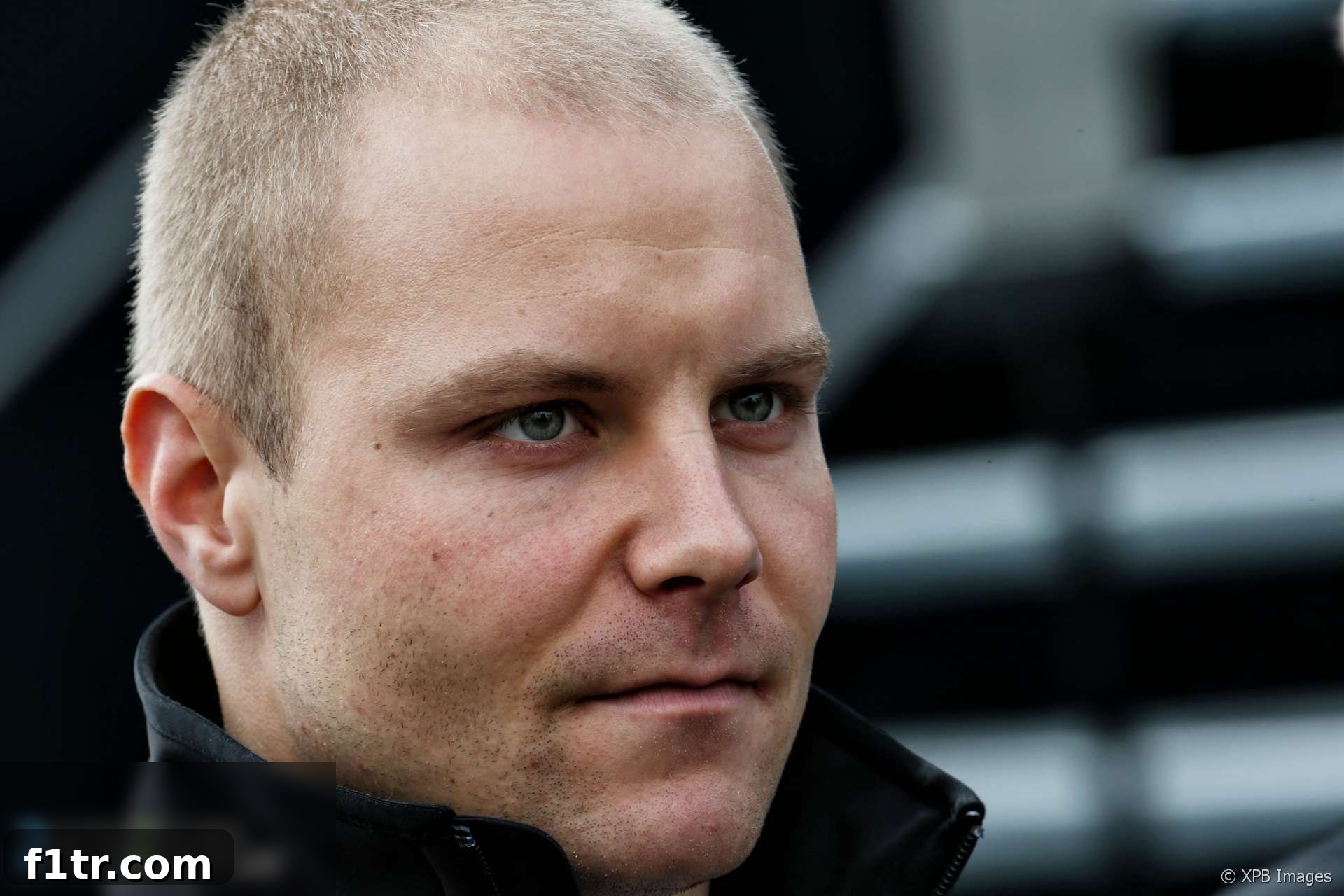
As the roar of engines echoed through pre-season testing, Valtteri Bottas offered a candid reflection on his journey within the high-stakes world of Formula 1, particularly his formative year alongside one of the sport’s all-time greats, Lewis Hamilton. Having concluded his first season with Mercedes-AMG Petronas, Bottas admitted to the immense pressure and the psychological toll it sometimes took, confessing that he often ‘beat himself up’ when his performance lagged behind his illustrious teammate. This self-critical approach, while a sign of his immense drive, was something he identified as a key area for personal growth and strategic refinement heading into the highly anticipated 2018 F1 season.
Bottas openly acknowledged the challenge of competing against a driver of Hamilton’s caliber, stating, “Lewis is a great driver and I should never get upset if he is quicker than me at times. Then I just need to accept it and learn from those.” This statement, made during a crucial testing session, underscored a significant shift in his mental approach. It wasn’t about denying his teammate’s prowess but rather embracing it as a benchmark for his own continuous improvement. This newfound perspective highlighted a maturing mindset, moving beyond mere frustration towards a proactive strategy of analysis and adaptation. The intense environment of Formula 1 demands not just raw talent but also remarkable mental fortitude, and Bottas appeared to be harnessing both with increasing clarity.
His candidness extended to reflecting on the previous year’s struggles, reiterating, “For sure I was beating myself up a lot last year when I was struggling but that’s all part of the learning process.” This sentiment encapsulates the relentless nature of elite sport, where every setback is an opportunity for profound learning. For Bottas, navigating the intricacies of a new team, a new car, and the immense expectation that comes with driving for a championship-winning outfit was a steep learning curve. The journey from being a promising talent at Williams to a front-runner at Mercedes demanded an evolution not just in driving technique but also in psychological resilience. Embracing this learning process meant understanding the nuances of the W08, refining his setup preferences, and mastering the art of maximizing performance under immense pressure. His willingness to confront his own vulnerabilities suggested a deeper self-awareness, crucial for any aspiring world champion.
Looking ahead, Bottas radiated a quiet confidence, firmly believing he possessed “all the tools” necessary to contend for the coveted world championship title in the upcoming season. This belief was not unfounded. “I’ve had five seasons in Formula One and my second year with this team,” he elaborated, emphasizing his accumulated experience and familiarity with the Mercedes environment. His journey through F1, starting with Williams and gradually ascending to the pinnacle with Mercedes, had equipped him with a wealth of knowledge across various car generations and competitive scenarios. Furthermore, his performance in 2017, where he secured multiple race victories, served as tangible proof of his capabilities. “I won some races last year so I know I can do it,” he affirmed, underscoring that these victories were not just fortunate breaks but demonstrations of his ability to outperform the best on his day. These wins instilled a deep-seated conviction that he could consistently challenge for the top spot, not merely as a supportive teammate but as a genuine title contender.
A significant source of encouragement for Bottas stemmed from the achievement of Nico Rosberg, who famously defeated Lewis Hamilton to claim the 2016 World Championship. Rosberg’s triumph provided a powerful precedent, unequivocally demonstrating that it was indeed possible to overcome Hamilton within the same highly competitive team. However, Bottas made it clear that his approach to this monumental challenge would differ fundamentally from the intense, often fraught, rivalry that characterized the Hamilton-Rosberg era. He explicitly stated that it was not his style to “go into a complete mental fight within the team.” This highlighted a deliberate strategic choice: to avoid the draining psychological warfare that had previously defined the Mercedes garage, and instead, to focus his energy on a more constructive and performance-driven path.
Instead of engaging in an emotionally charged battle off-track, Bottas articulated a clear and focused strategy: “Instead of that I’m going to focus on my own performance on the track and being quick on track in qualifying and races. I’m focusing all of the energy on that.” This measured approach speaks volumes about Bottas’s maturity and understanding of what truly matters in Formula 1. By channeling all his efforts into maximizing his car’s potential, optimizing his driving, and executing flawlessly in every session, he aimed to build a formidable challenge through sheer merit and consistency. This strategy prioritizes tangible results and personal excellence over any form of internal political maneuvering or psychological gamesmanship. For a driver seeking to establish himself as a champion, this pure focus on on-track performance is often the most sustainable and effective route.
The inspiration drawn from Rosberg’s 2016 title run was nonetheless a crucial factor in Bottas’s self-belief. Rosberg’s journey to the championship was a testament to perseverance and unwavering dedication, a fact Bottas keenly appreciated. “For sure Nico worked very hard, it took three years for him to beat Lewis but he did it and showed it’s possible by working hard,” Bottas reflected. This observation provided Bottas with a realistic timeframe and a profound understanding that success against a driver of Hamilton’s stature requires immense effort, patience, and relentless self-improvement over an extended period. Rosberg’s victory served not just as proof of concept, but also as a blueprint for the kind of commitment required. By studying Rosberg’s methodical approach and recognizing the sheer grind involved, Bottas fortified his own resolve, affirming, “That’s why I believe it’s possible.” This belief, tempered by realism and a clear strategy, positioned Valtteri Bottas as a formidable contender, ready to embark on a season where he aimed to transform potential into championship glory through consistent, unyielding performance on the asphalt.
Go ad-free for just £1 per month>> Find out more and sign up
2018 F1 season
- F1 feared “death knell” for Drive to Survive after Ferrari and Mercedes snub
- McLaren staff told us we were “totally crazy” to take Honda engines in 2018 – Tost
- ‘It doesn’t matter if we start last’: How Red Bull’s junior team aided Honda’s leap forward
- Honda’s jet division helped F1 engineers solve power unit problem
- McLaren Racing losses rise after Honda split
Browse all 2018 F1 season articles