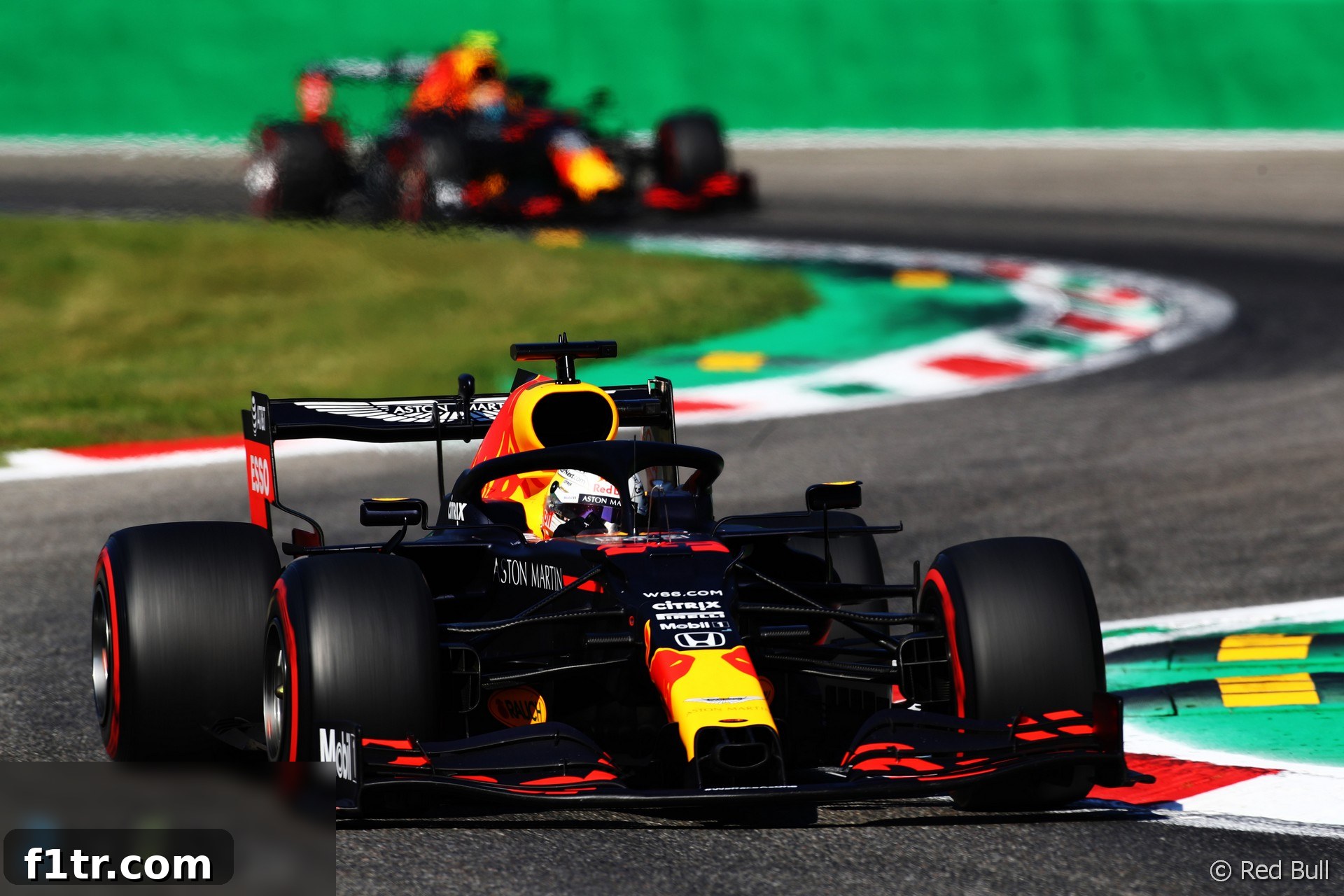
Since Daniel Ricciardo bid farewell to Red Bull at the close of the 2018 season, the team has grappled with a persistent challenge: finding a formidable teammate capable of consistently operating within striking distance of their prodigy, Max Verstappen. This quest has been central to Red Bull’s strategy, not just for individual race wins, but for mounting a serious challenge for the Constructors’ Championship.
Advert | Become a Supporter & go ad-free
The initial attempt to fill this void saw Pierre Gasly promoted. However, his tenure was short-lived and turbulent. The team’s deep concern over Gasly’s inconsistent performances throughout the first half of the 2019 season led to a swift and decisive demotion, making way for Alexander Albon. Albon, fresh from a promising debut season with Toro Rosso, was thrown into the deep end, tasked with supporting Verstappen and securing crucial points for Red Bull. While his replacement did collect points with greater regularity over the remaining races of 2019, the stark contrast in qualifying pace between Albon and Verstappen was already evident. Nonetheless, considering Albon had only sampled Formula 1 machinery for the first time earlier that year, his efforts were deemed credible, and the team opted to grant him a full season in 2020.
Expectations were high that Albon would bridge the gap, particularly in the critical one-lap qualifying pace that is so vital in modern Formula 1. Unfortunately, these hopes were largely unfulfilled. If anything, the divide between the two drivers widened. The 2020 Red Bull challenger, the RB16, proved to be a challenging beast. Its characteristics, particularly a ‘twitchy’ and unpredictable rear end, demanded a unique driving style and immense confidence from behind the wheel. While Verstappen, with his extraordinary car control and adaptability, managed to tame the RB16 and extract its maximum potential, Albon consistently struggled to find the stability and predictable handling he desperately craved. This fundamental mismatch between car characteristics and driver preference became a defining theme of Albon’s season.
Despite the evident struggles, Red Bull did not apply the same swift and decisive action they had with Gasly. The team publicly voiced their commitment to giving Albon ample time to prove his worth, a stark contrast to the rapid-fire demotion of his predecessor. This patient approach stemmed from a deeper strategic dilemma: Red Bull’s internal talent pool, primarily consisting of the AlphaTauri pair Gasly and Daniil Kvyat, had already been evaluated and, for various reasons, deemed unsuitable for the primary Red Bull seat. This left the team in a challenging position, with limited immediate alternatives, thereby extending Albon’s lifeline.
The most charitable perspective on Albon’s performance comparison against his teammate is that, much like Valtteri Bottas at Mercedes, he was pitted against one of the sport’s generational talents. The sheer brilliance of Max Verstappen is undeniable, and he consistently operates at a level few drivers can reach. However, unlike Bottas, Albon was not afforded the luxury of a car that was consistently the class of the field or one that readily suited his driving style. The RB16, particularly in the initial stages of the 2020 season, was a handful even for Verstappen, highlighting its inherent complexities and the difficulty in extracting consistent performance from it. This compounded Albon’s challenge, as he not only had to contend with a world-class teammate but also a demanding and often unpredictable car.
Even with these significant mitigating factors, the raw statistics paint a rather bleak picture for Albon’s 2020 campaign. Throughout the entire season, he failed to out-qualify Verstappen even once. On only a single occasion did he manage to get within three-tenths of a second of his teammate’s qualifying time, a benchmark often cited as the minimum acceptable gap for a competitive second driver. The race results were equally stark: in the 11 races where both drivers saw the chequered flag, Albon never finished ahead of Verstappen. This consistent underperformance had significant implications for Red Bull’s aspirations, as a two-pronged attack is essential to challenge Mercedes for the Constructors’ title.
Christian Horner, Red Bull’s team principal, frequently defended the team’s decision to stick with Albon until the very end of the season. At the penultimate round, he asserted that “Alex’s average is still closer than Pierre’s was last year”. This statement reflected Red Bull’s internal assessment and their hope for Albon’s progress. However, by the conclusion of the season, a more rigorous statistical analysis suggested otherwise. When adjusting for specific unrepresentative circumstances (such as Gasly’s Azerbaijan and Canada results in 2019, and the two wet qualifying sessions from 2020), Albon’s average qualifying deficit to Verstappen stood at 0.522 seconds. This was, unfortunately, a larger gap compared to Gasly’s 0.495s during his ill-fated stint. This nuanced statistical breakdown highlighted the ongoing struggles and the difficult decision Red Bull faced.
During his brief but promising spell in the car at the tail end of 2019, Albon demonstrated glimmers of potential. Across those races, Albon averaged a 0.433s deficit to Verstappen. Notably, at the Japanese Grand Prix in Suzuka, he remarkably matched Verstappen to within a mere thousandth of a second in qualifying. This performance offered a tantalizing glimpse of what he might be capable of. However, these moments of competitive parity proved to be isolated incidents, and such a close contest with Verstappen never truly materialised again during the demanding 2020 season. The inconsistency and inability to replicate that potential on a regular basis weighed heavily on his prospects.
Red Bull maintained their unwavering faith in Albon throughout the entire 2020 campaign, hoping he would eventually edge closer to the promising form he had displayed at the end of 2019. It wasn’t until the season’s climactic final race in Abu Dhabi that Albon delivered his strongest performance, crossing the finishing line within sight of Lewis Hamilton’s Mercedes. This result offered a glimmer of hope and demonstrated his underlying talent. However, for Red Bull, and for Albon’s immediate future in that coveted seat, this impressive showing may have arrived too little, too late. The cumulative effect of a challenging season, marked by significant performance gaps to his teammate, ultimately led the team to seek a different direction for 2021.
Advert | Become a RaceFans supporter andgo ad-free
Positive gap: Alexander Albon was ahead; Negative gap: Max Verstappen was ahead
Advert | Become a RaceFans supporter andgo ad-free
Race-by-race summary: Verstappen vs Albon
The detailed performance data, when meticulously compiled race by race, reveals the consistent challenge Albon faced in matching Max Verstappen. While this table is currently a placeholder for comprehensive circuit-specific results, an in-depth analysis of each grand prix weekend would typically underscore the qualifying deficit and the race pace differential that defined their 2020 season. Such data would visually represent the trends and isolated instances of stronger performance, or conversely, the moments where the gap became most pronounced.
| AUS | STY | HUN | GRE | 70T | SPA | BEL | ITA | TUS | RUS | GER | POR | EMI | TUR | BAH | SAK | ABU | ||
| Max Verstappen | Q | |||||||||||||||||
| R | ||||||||||||||||||
| Alexander Albon | Q | |||||||||||||||||
| R |
The Strategic Implications for Red Bull’s Future
The struggles of Albon, following those of Gasly, underscored a critical challenge for Red Bull Racing: how to build a team capable of genuinely challenging for the Constructors’ Championship when one car consistently performs at a significantly lower level than the other. While Max Verstappen’s extraordinary talent often pulled the team to impressive results, the lack of a strong, consistent second driver meant Red Bull frequently conceded valuable points to Mercedes, whose pairing of Lewis Hamilton and Valtteri Bottas, though not without its own gaps, was far more consistent at the sharp end of the grid. This imbalance impacted strategic decisions during races, limiting the team’s flexibility in managing tire wear, deploying overtakes, and defending against rivals. The quest for a truly competitive teammate for Verstappen became paramount for Red Bull to realize their championship ambitions, ultimately leading to significant changes in their driver lineup post-2020.
Join the RaceFans Supporters Drive!
If you’ve enjoyed RaceFans’ motor sport coverage during 2020, please take a moment to find out more about our Supporter Drive. Your contribution helps us deliver high-quality content.
We’re aiming to welcome 3,000 new Supporters to help fund RaceFans so we can continue to produce quality, original, independent motorsport coverage. Here’s what we’re asking for and why – and how you can sign up: by joining our community, you directly support in-depth analysis and timely news.
- Join the RaceFans Supporters Drive!
2020 F1 season review: Delve Deeper
To gain a more complete understanding of the 2020 Formula 1 season and how drivers like Alexander Albon fit into the broader narrative, explore our comprehensive driver rankings and season review articles. These pieces provide individual performance assessments, strategic insights, and a detailed look at the highs and lows of a truly unique season in motorsport history.
- 2020 F1 season driver rankings #1: Lewis Hamilton
- 2020 F1 driver rankings #2: Max Verstappen
- 2020 F1 driver rankings #3: Charles Leclerc
- 2020 F1 driver rankings #4: Carlos Sainz Jnr
- 2020 F1 driver rankings #5: Daniel Ricciardo
Browse all 2020 F1 season review articles