Max Verstappen Dismisses Lewis Hamilton’s ‘Torpedo’ Accusation Following Mexican Grand Prix Collision
The intense atmosphere of Formula 1 often brings thrilling on-track battles, but sometimes the real fireworks happen off the track, in the press conferences. Such was the case following a contentious moment at the Mexican Grand Prix, where a collision between two of the sport’s titans, Max Verstappen and Lewis Hamilton, ignited a war of words. Mercedes driver Lewis Hamilton accused Verstappen of “torpedoing” him during the opening stages of the race, a claim that the Red Bull star vehemently denied, dismissing it as a “silly comment.” This incident not only highlighted the fierce rivalry between the two drivers but also shed light on Verstappen’s unapologetically aggressive yet self-proclaimed fair racing philosophy.
Advert | Become a Supporter & go ad-free
Hamilton’s Perspective: A Race “Torpedoed” by Aggression
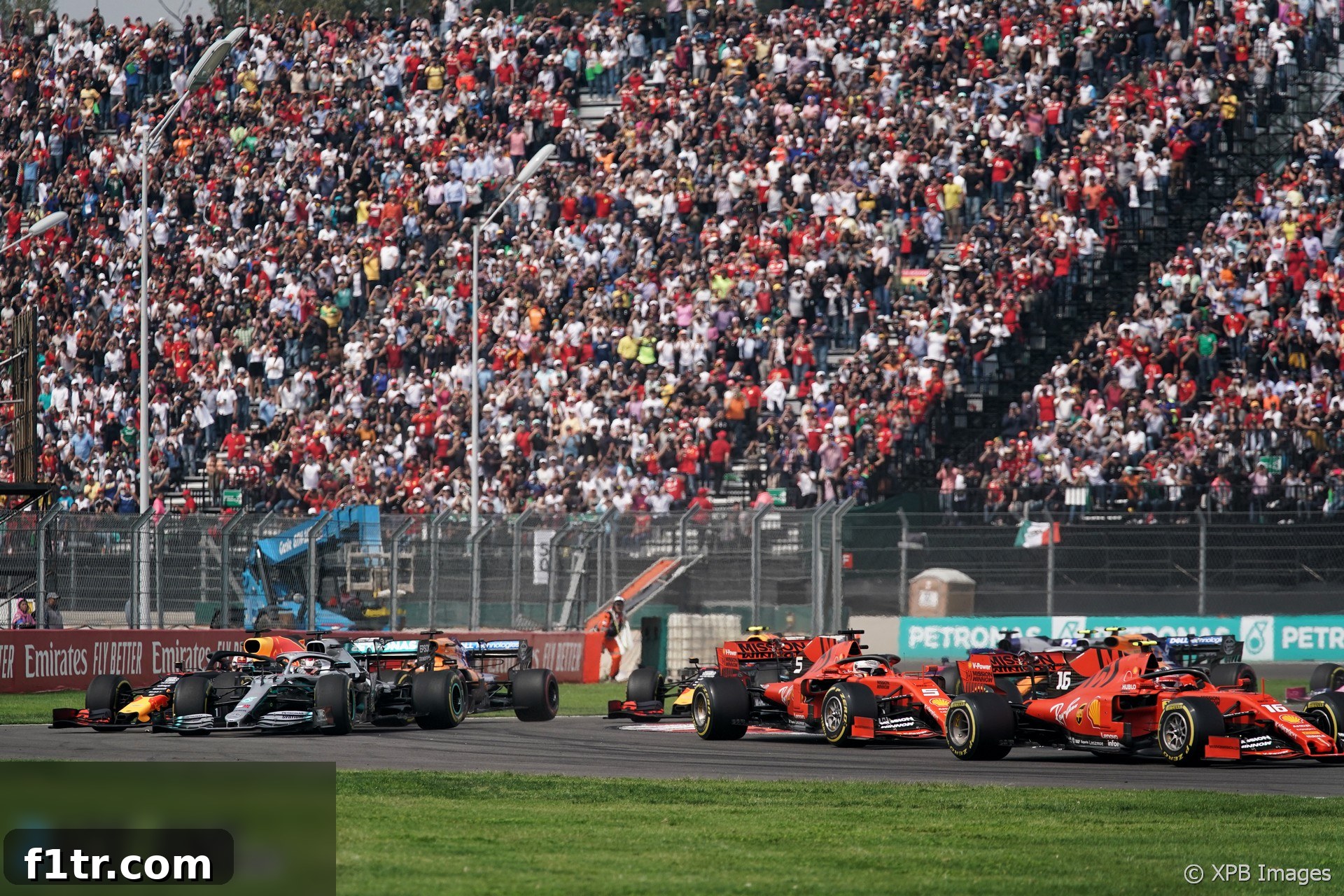
The incident in question occurred at the very start of the Mexican Grand Prix, specifically through Turns 1 and 2, a notoriously tight section of the Autodromo Hermanos Rodriguez circuit. As the pack jostled for position, Hamilton and Verstappen made contact, an event that significantly impacted Hamilton’s race and, perhaps, his overall sentiment towards his Dutch competitor. Reflecting on the opening lap chaos, Lewis Hamilton articulated his frustration, stating he “got torpedoed” by Verstappen. He further elaborated, “I thought at some stage I’d get torpedoed by Max.” This choice of words by Hamilton carried a strong implication of intentional or reckless driving on Verstappen’s part, suggesting a maneuver that was not just aggressive but potentially dangerous and uncalled for in a high-stakes Grand Prix.
Hamilton’s comments weren’t just a fleeting remark; they underscored a long-standing narrative surrounding Verstappen’s driving style. Throughout his career, Max Verstappen has cultivated a reputation as an incredibly daring and uncompromising racer, always pushing the limits and rarely backing down from a challenge. While this approach has earned him numerous victories and a legion of fans, it has also led to frequent controversies and clashes with other drivers. Hamilton, being a multiple world champion and a veteran of countless battles, understands the fine line between aggressive racing and overly dangerous maneuvers. His use of the term “torpedoed” suggested he believed Verstappen had crossed that line, making a clear statement about what he perceived as an unacceptable level of aggression in the heat of battle.
Verstappen’s Rebuttal: Hard but Fair, and “In Their Heads”
Unsurprisingly, Max Verstappen was quick to dismiss Hamilton’s accusations. With his characteristic bluntness, Verstappen directly challenged Hamilton’s description of the collision. “Looking at turn one and two in Mexico I don’t think that happened,” he declared, unequivocally rejecting the notion of having intentionally or recklessly impacted Hamilton. He then went further, labeling Hamilton’s comment as “a bit of a silly comment to make.” For Verstappen, his actions on the track are always within the bounds of what he considers fair, even when pushing the absolute limits of his machinery and the regulations.
Verstappen strongly defended his driving ethos, asserting, “I think I am always a hard racer, but fair. I think it’s just not correct.” This statement is central to understanding Verstappen’s approach to racing. He sees himself as a competitor who will exploit every available inch of track and every weakness in his rivals, but always with a fundamental respect for the sport’s rules and the safety of his fellow drivers. He believes that pushing the boundaries is inherent to Formula 1, and any criticism of this style often stems from his rivals’ inability or unwillingness to match his intensity. His dismissive tone towards Hamilton’s remark hints at a deeper psychological game that Verstappen revels in.
Indeed, Verstappen took the opportunity to turn the criticism into a sign of his own success. He perceived the focus on his driving style as a compliment, twisting the narrative to his advantage. “Of course it’s easy to have a dig at someone. But from my side it’s fine. I think it’s always positive when they talk about you because that means that you are in their heads. So from my side I just focus on my driving and that’s enough said.” This revealing statement showcases Verstappen’s formidable mental fortitude and his belief that if rivals are talking about him, it means he is successfully disrupting their focus and exerting a psychological advantage. This “in their heads” mentality is a crucial component of his competitive edge, allowing him to absorb criticism and channel it into further motivation on the track.
Sebastian Vettel Agrees: A Testament to Verstappen’s Reputation
Adding another layer to the discussion, four-time world champion Sebastian Vettel weighed in, lending credence to Hamilton’s observations. Vettel, a driver who has also experienced intense wheel-to-wheel battles throughout his illustrious career, agreed with Hamilton’s remarks about it being “very likely you’re going to come together with Max” when racing him. This sentiment from an experienced and respected driver like Vettel underscored the common perception among the F1 paddock that racing Verstappen often comes with an elevated risk of contact. It wasn’t necessarily an accusation of malicious intent, but rather an acknowledgment of Verstappen’s extremely aggressive and uncompromising style.
Verstappen, however, interpreted Vettel’s agreement through the same lens he used for Hamilton’s comments. He once again stated that this “shows that I’m in their heads.” He continued, “I guess that’s a good thing.” This consistent response from Verstappen highlights his unwavering confidence and his strategic use of perceived criticism as confirmation of his psychological dominance. For him, the collective frustration or apprehension from his competitors is not a sign to temper his approach but rather an indication that his aggressive tactics are effective in unsettling his rivals. It’s a classic display of a competitor who thrives on being the focal point, even if that focus comes in the form of apprehension from others.
The Philosophy of Racing: On the Edge, Not Disrespectful
Beyond the specific incident, Verstappen used the platform to articulate his broader philosophy on racing and professional conduct. He drew a clear distinction between hard racing and what he considers disrespectful behavior. “But from my side I don’t need to dig into other people in a press conference,” he asserted. “I think it’s a bit disrespectful as well and I prefer to fight on track, which I love to do.” This comment subtly critiqued Hamilton’s decision to air his grievances publicly in the media, suggesting that true competitors settle their scores on the asphalt, not in front of microphones.
Verstappen’s passion for head-to-head combat is palpable. “Of course I like to fight hard, but on the edge. Otherwise if they want me to stay behind, it’s better to stay at home.” This declaration encapsulates his entire approach: he is in Formula 1 to win, and winning requires pushing the absolute boundaries of what is possible, both from himself and his car, and in relation to his rivals. He firmly believes that anything less than this full-throttle commitment to victory would be a disservice to himself and to the sport.
He further elaborated on this intrinsic drive: “I really want to take the fight to them because that’s what we are here for. We are racers, we are in Formula 1, I think we are the best out there and we do fight for victories because that’s what I live for.” This powerful statement is a testament to his competitive spirit and his unwavering dedication to the pinnacle of motorsport. For Verstappen, Formula 1 is not just a job; it is a way of life, defined by the relentless pursuit of victory through audacious and uncompromising racing. This mindset, while controversial at times, is precisely what makes him one of the most exciting and formidable drivers on the grid.
Advert | Become a RaceFans supporter andgo ad-free
Conclusion: The Enduring Debate of F1 Aggression
The exchange between Max Verstappen and Lewis Hamilton following the Mexican Grand Prix collision was more than just a momentary spat; it was a microcosm of the intense rivalries, clashing philosophies, and psychological battles that define Formula 1. Hamilton’s “torpedo” comment reflected the frustration of a champion feeling unfairly treated, while Verstappen’s swift dismissal and “in their heads” retort epitomized his defiant and ultra-competitive nature. Sebastian Vettel’s corroborating view further solidified Verstappen’s reputation as a driver who guarantees high-octane, sometimes contact-filled, racing.
Ultimately, this incident highlights the eternal debate in motorsport: where is the line between aggressive, hard racing and reckless, unfair driving? For Max Verstappen, that line is always pushed “on the edge,” believing that anything less would be a betrayal of his racer’s spirit. For many, including Lewis Hamilton, there are moments when Verstappen’s ambition seemingly oversteps the boundaries of acceptable conduct. Regardless of individual perspectives, these contentious moments, fueled by the unwavering pursuit of victory, continue to make Formula 1 an endlessly captivating and often dramatic spectacle. The narrative of Verstappen’s aggressive yet fair approach, constantly under scrutiny, remains a defining characteristic of his illustrious career.
2019 F1 season: Related Articles
- Crying in the Melbourne car park at 2019 grand prix was my career low – Ocon
- McLaren Racing reports reduced £71 million loss in 2019
- Kvyat: Hockenheim podium last year was “my biggest achievement” so far
- How the FIA’s new encrypted fuel flow meter targets Ferrari’s suspected ‘aliasing’ trick
- “He smashed my office door”: 23 must-see moments from ‘Drive to Survive’ season two
Browse all 2019 F1 season articles