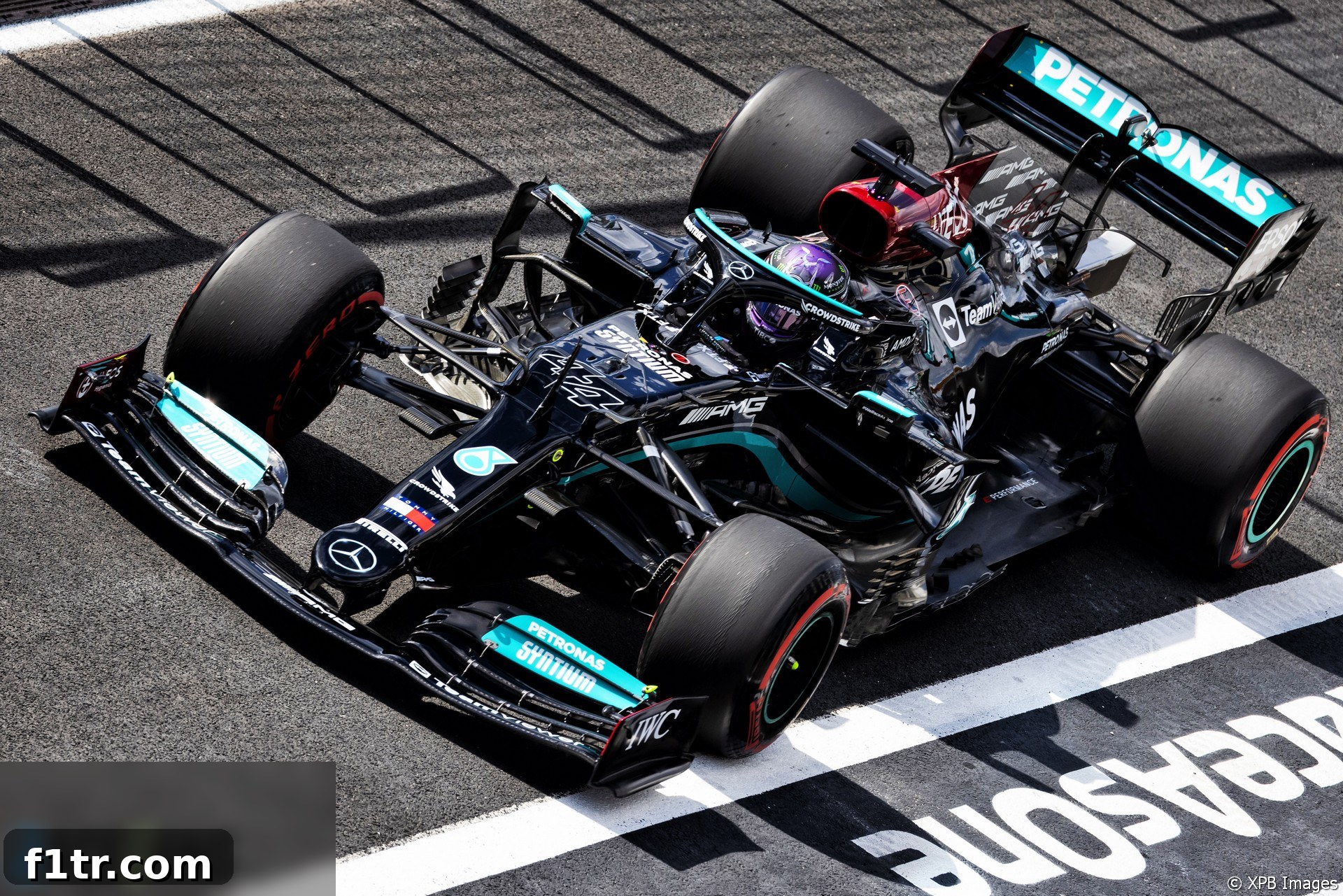
The exhilarating 2021 Formula 1 season has delivered unparalleled drama, and amidst the fierce championship battle between Mercedes and Red Bull, a critical challenge has emerged for the Silver Arrows: engine reliability. Mercedes has recently been forced to make multiple engine changes, a move that has significant implications for both their drivers and their quest for championship glory. Most notably, Lewis Hamilton received a 10-place grid penalty at a crucial race after his team fitted a fresh internal combustion engine (ICE), following similar penalties incurred by teammate Valtteri Bottas in previous rounds. These unusual circumstances stem from what Mercedes team principal Toto Wolff describes as “unusual noises” within their power units, a direct consequence of pushing the boundaries of performance in their relentless pursuit of an advantage over their rivals.
Mercedes’ Engine Woes: A Deep Dive into the “Unusual Noises”
For years, Mercedes-AMG High Performance Powertrains has been the gold standard for reliability and performance in the hybrid era of Formula 1, which began in 2014. Their engines have powered the team to an unprecedented run of constructors’ and drivers’ championships. However, the intense pressure from Red Bull Racing in the 2021 season has forced Mercedes to extract every ounce of performance, leading to unforeseen reliability concerns. Toto Wolff openly acknowledged this shift in strategy, stating, “It’s tricky, when you start to push the boundaries with power unit performance at a certain stage you will experience some obstacles.” This candid admission underscores the razor-thin margins at the pinnacle of motorsport, where even a historically dominant team can encounter unexpected hurdles.
The core of the problem lies with the internal combustion engine (ICE), where Mercedes engineers have detected “unusual noises” that are not yet fully understood. These aren’t outright engine failures in the traditional sense, but rather early warnings that necessitate precautionary changes. Wolff explained, “Because these boundaries are being pushed we have seen examples of, let’s say, unusual noises within the combustion engine that aren’t completely understood at that stage yet and therefore caused some trouble. In the past we had engines that basically failed and now it’s about containing the problem because in that phase, redesigning parts is not something you would tackle.” This proactive approach, while costly in terms of grid penalties, is essential to prevent more catastrophic and race-ending failures that could have far worse implications for the championship.
Navigating Grid Penalties: Mercedes’ Strategic Engine Management
Formula 1 regulations strictly limit the number of power unit components a driver can use in a season. Exceeding these limits results in grid penalties, which can severely impact a driver’s race weekend. For the 2021 season, drivers are allowed three Internal Combustion Engines (ICE), three Motor Generator Units-Heat (MGU-H), three Motor Generator Units-Kinetic (MGU-K), two Energy Stores (ES), two Control Electronics (CE), and three Turbochargers (TC). Lewis Hamilton’s recent penalty, a 10-place grid drop, was specifically for taking a fourth ICE. This targeted change allowed Mercedes to minimize the penalty, as replacing a full suite of components would incur an even heavier penalty, often a back-of-the-grid start.
The decision to change only the ICE reflects a calculated strategy. Wolff confirmed that other critical components of the power unit were in good health. “The other parts like the turbo or the other auxiliary elements are in wonderful shape and really happy, easily within the mileage limits,” he said. This suggests Mercedes is confident in the durability of these other elements, allowing them to isolate the problem to the combustion engine. This precise approach allows them to manage their pool of components more effectively throughout the remaining races. The challenge now lies in how to utilize the previously used, but not necessarily fully compromised, third power unit. Wolff indicated, “The question is how and when do we want to deploy power unit number three, which is still in the pool. That’s something we would need to assess in the next couple of races because you could decide want to run it only on Fridays or also run it, let’s say, on Saturday or Sunday.” Using older, potentially less reliable engines for practice sessions (Fridays) can save mileage on newer, healthier units for crucial qualifying and race sessions, a common strategic move in F1.
The Delicate Balance: Performance vs. Reliability in F1
The modern era of Formula 1, particularly with complex hybrid power units, demands an exquisite balance between raw performance and unflinching reliability. Teams are constantly pushing engineering boundaries, seeking every marginal gain, but this often comes at the risk of stressing components beyond their intended limits. Mercedes, having enjoyed a significant advantage in both areas for many years, now finds itself grappling with this classic motorsport dilemma. The current engine issues are a stark reminder that even the most advanced engineering programs are not immune to the pressures of intense competition.
The stakes are incredibly high in the 2021 championship. Every point, every grid position, every strategic decision can be the difference between victory and defeat. For Mercedes, sacrificing potential grid positions through penalties for the sake of engine longevity is a gamble they are willing to take to ensure their cars can finish races and compete for podiums. This ongoing challenge not only tests the technical prowess of their engineers but also the strategic acumen of the entire team. Their ability to quickly diagnose these “unusual noises,” understand their root cause, and implement effective containment solutions will be paramount in the remaining races. The data gathered from each session and race becomes invaluable, guiding their choices on engine deployment and maintenance.
Looking Ahead: The 2022 Engine Freeze and Mercedes’ Future
The timing of Mercedes’ reliability concerns adds another layer of complexity due to impending regulatory changes. Formula 1 is set to introduce a power unit development freeze next season, starting in 2022 and remaining in place until at least 2025. This freeze means that any fundamental design issues or performance deficits carried into the new regulatory period will be locked in for several years, making the current period critical for development and problem-solving. For Mercedes, this places immense pressure on their engineering teams to thoroughly understand and resolve the “unusual noises” and any underlying reliability vulnerabilities before the freeze comes into effect.
Toto Wolff expressed confidence in their ability to address these challenges. “I think balancing performance and reliability has always been the key metrics in the last couple of years, and it will be also going forward,” he stated. “We will not be carrying any deficits into next year because the deficits are being understood and now it’s about finding solutions that contain these.” This commitment highlights the urgency within Mercedes to not only salvage their 2021 championship hopes but also to secure their long-term competitive position. A strong, reliable power unit is not only vital for their factory team but also for their customer teams, Aston Martin, Williams, and McLaren, who rely on Mercedes power. Any persistent issues could have broader implications across the paddock.
Conclusion: Mercedes’ Battle Beyond the Track
The 2021 Formula 1 season continues to be a captivating spectacle, and Mercedes’ engine reliability issues have added an unexpected twist to the championship narrative. As Lewis Hamilton and Valtteri Bottas battle fiercely on track, their team is engaged in an equally intense fight behind the scenes to understand and rectify the “unusual noises” emanating from their power units. This ongoing saga is a testament to the relentless pursuit of performance in Formula 1 and the fine line teams must tread between maximizing speed and ensuring durability. With the engine development freeze looming, Mercedes’ ability to overcome these challenges in the coming weeks will not only dictate the outcome of the current season but also lay the groundwork for their competitive standing in the years to come. The pressure is on, and the world of motorsport watches with bated breath to see if the Silver Arrows can once again turn adversity into triumph.
2021 Turkish Grand Prix
- Fifth place was possible from back row without slow pit stop – Sainz
- Giovinazzi ignoring position swap order was “not ideal”, admit team
- Bottas becomes 35th Formula 1 driver to reach 10 race wins
- Medical Car driver van der Merwe likely to miss further races due to Covid-19 rules
- Drivers to ask Masi why Alonso and Norris went unpunished for “very clear” incidents
Browse all 2021 Turkish Grand Prix articles