The Sao Paulo Showdown: Demands for a Penalty on Max Verstappen Following Lewis Hamilton Incident
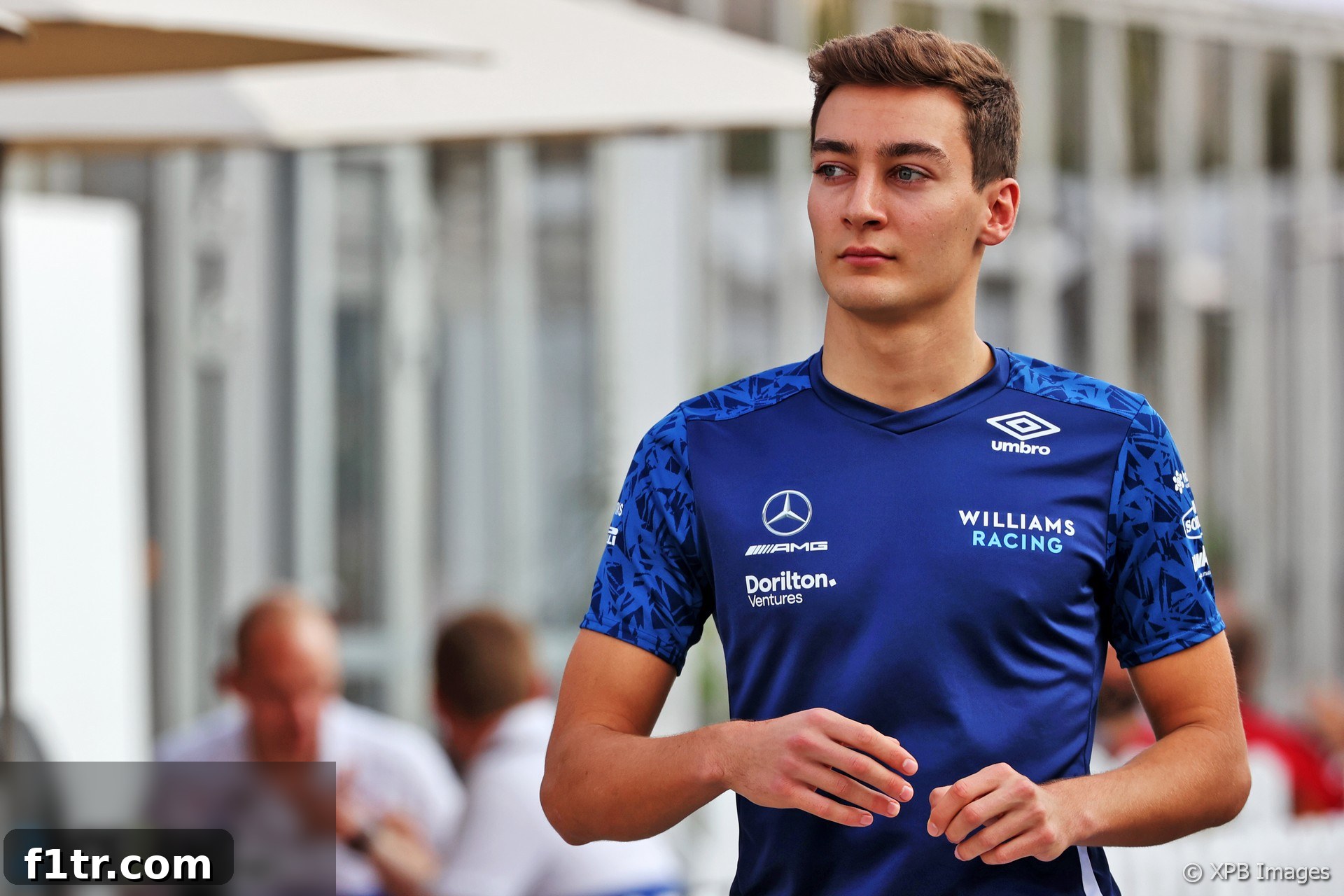
The 2021 Formula 1 season delivered unprecedented drama, culminating in a fierce championship battle between Mercedes’ Lewis Hamilton and Red Bull Racing’s Max Verstappen. Amidst this intense rivalry, the Sao Paulo Grand Prix emerged as a focal point of controversy, particularly concerning an on-track incident between the two title protagonists. The maneuver in question, where Verstappen forced Hamilton wide during an overtaking attempt, sparked immediate debate among drivers, teams, and fans alike, leading to demands for a retrospective penalty against the Dutchman. According to George Russell, who was then driving for Williams and set to join Hamilton at Mercedes the following season, Verstappen’s actions warranted a clear sanction.
The incident unfolded on lap four of the Brazilian race at the iconic Autódromo José Carlos Pace. As Lewis Hamilton, recovering from a grid penalty, attempted an audacious overtake around the outside of Verstappen at Turn 4, known as Descida do Lago, the Red Bull driver aggressively defended his position. Verstappen braked significantly later than usual, pushing both cars wide and off the track through the corner. While both drivers managed to rejoin without contact, the move left Hamilton with no option but to abandon his overtaking attempt, costing him time and track position. The race stewards initially noted the incident but deemed no further action was necessary at the time, a decision that would later be challenged vehemently by Mercedes.
Russell Calls for Sanction: “That’s Not Fair Racing”
George Russell, a rising star in Formula 1, did not mince words when discussing the contentious event. Speaking to Sky Sports following the race, Russell expressed his firm belief that a penalty should have been issued. “Whether there’ll be a penalty for it retrospectively, I don’t know. Should there have been a penalty at the time? I believe they should have been,” Russell stated, highlighting his conviction that Verstappen’s move crossed the line of acceptable racing conduct.
Russell further elaborated on his stance, pointing to Verstappen’s unusual braking point. “Because you can’t just brake 25 metres later than you do on every other lap and force the other guy off the road. That’s not fair racing. It’s harder racing but it’s not fair racing.” This distinction between ‘hard racing’ and ‘fair racing’ is crucial in Formula 1, often forming the basis of stewarding decisions. Hard racing is generally encouraged, allowing drivers to push limits within sporting regulations. However, deliberately forcing a competitor off track or creating an unavoidable collision risk typically falls into the category of unfair or dangerous driving, meriting a penalty. Russell’s comment underscored the perception that Verstappen’s aggressive defense exceeded the bounds of legitimate racing tactics, directly impeding Hamilton in a manner deemed unfair.
The implications of such a move, if left unpunished, could set a dangerous precedent for future races, especially in a championship as tight as 2021. For Russell, the move was a clear breach of racing etiquette and regulations that demand drivers race within the confines of the track and without endangering rivals or gaining unfair advantage by forcing them off. His perspective, coming from a driver who frequently battles in close quarters, added significant weight to the growing calls for a re-evaluation of the incident.
Ricciardo’s Pragmatic View: The Outcome’s Influence on Penalties
While Russell called for a penalty, McLaren driver Daniel Ricciardo offered a more pragmatic view, suggesting that the ultimate outcome of the race might lessen the likelihood of a retrospective sanction for Verstappen. “Ultimately Lewis won, he was the faster car and the better guy on the day, so I don’t think it changes anything in the championship now, which is probably best-case scenario,” Ricciardo commented. Hamilton’s incredible recovery drive, culminating in a dominant victory, arguably mitigated the immediate impact of Verstappen’s defensive maneuver on the final race result and, by extension, the championship standings at that specific point.
Ricciardo’s argument touches upon a nuanced aspect of F1 stewarding and team politics. If Verstappen had gone on to win the race after the controversial incident, the pressure from Mercedes and public opinion for a penalty would have been far more intense, as it would have directly influenced the championship points haul. “I think if Max won the race, then I think they probably would have pushed harder with the protests and everything else.” This highlights how the immediate sporting consequence—or lack thereof—can often shape the post-race scrutiny and the vigor with which teams pursue investigations. While the principle of fair racing should remain constant regardless of the outcome, in the high-stakes environment of Formula 1, the practical implications of a decision often weigh heavily on all parties involved. Ricciardo, known for his fair but assertive driving style, acknowledged the potential for a penalty but recognized the mitigating factor of Hamilton’s eventual victory.
Norris Highlights Inconsistency in Stewarding Decisions
Adding another layer to the debate, Daniel Ricciardo’s McLaren teammate, Lando Norris, drew attention to what many drivers perceive as inconsistency in the application of penalties by the FIA stewards. Norris himself had been penalized earlier in the season for a similar offense—forcing Sergio Perez wide during the Austrian Grand Prix. This personal experience lent significant credibility to his observations on the Sao Paulo incident.
“A lot of people have different views and conflicting views on it and so on, more like conflicting against what the actual outcome was, which was nothing,” Norris remarked, emphasizing the widespread confusion and disagreement over the lack of action taken against Verstappen. He went on to state, “There could have been some scenarios where people have got penalties for far less and less intentional. I might have been involved in a couple of them.” Norris’s implication was clear: the stewards’ decision in Brazil seemed to deviate from precedents set in other races, including those involving himself.
The call for consistency is a recurrent theme among Formula 1 drivers. The subjective nature of judging racing incidents often leads to varying interpretations, creating frustration and a sense of unfairness. Drivers crave clear guidelines and predictable outcomes, ensuring they know where the boundaries lie. When similar incidents receive different rulings, it erodes trust in the stewarding process and can lead to drivers pushing the limits even further, unsure of what will or won’t be penalized. Norris’s comments resonated with many in the paddock who seek greater clarity and uniformity in how racing incidents, particularly those involving track limits and forced evasions, are judged.
Mercedes’ Petition for Review and the FIA’s Scrutiny
In response to the stewards’ initial decision not to investigate the incident further, Mercedes-AMG Petronas F1 Team took a significant step by filing a ‘Right of Review’ petition with the FIA. This procedural mechanism allows a team to request that stewards re-examine a decision if “significant and relevant new elements” are discovered that were not available to the stewards at the time of their initial ruling.
Mercedes believed that new video evidence, specifically an onboard camera angle from Verstappen’s car that was not immediately accessible to the stewards during the race, provided compelling proof of his aggressive and potentially illegal maneuver. This new footage, they argued, clearly showed Verstappen steering into Hamilton, deliberately pushing him off the track and gaining an unfair advantage. The FIA’s process for such a petition involves an initial hearing to determine if the “new elements” criterion is met. If it is, a full review of the incident would then take place, potentially leading to a retrospective penalty, such as a time addition or a grid penalty for a subsequent race.
The petition itself underscored the high stakes of the 2021 championship. Every point mattered, and Mercedes was determined to ensure that sporting regulations were upheld, particularly when it involved a direct competitor in the title fight. The incident sparked a wider debate about the role of technology and available evidence in real-time stewarding versus post-race analysis. While stewards make the best decisions they can with the information available in the heat of the moment, the advent of extensive camera angles and telemetry data often reveals nuances that are missed initially. The outcome of Mercedes’ petition, and the FIA’s subsequent review, had the potential to set an important precedent for how such incidents are handled in the future, especially regarding aggressive defensive driving and track limits.
Broader Implications for the 2021 Championship and Future F1 Racing
The Sao Paulo incident and the subsequent debate surrounding Max Verstappen’s move on Lewis Hamilton had far-reaching implications, not just for the individual race, but for the trajectory of the thrilling 2021 Formula 1 championship and the broader philosophy of F1 racing. The rivalry between Hamilton and Verstappen was already at an all-time high, characterized by intense on-track battles and mind games. This particular event added another layer of controversy, further fueling the narrative of an uncompromising title fight.
For the FIA, the incident presented a significant challenge. The desire to “let them race” – a philosophy often championed by F1 management to encourage exciting, wheel-to-wheel action – must be balanced against the need to enforce sporting regulations and ensure driver safety. When the lines between aggressive racing and dangerous or unfair maneuvers become blurred, the integrity of the sport is called into question. Consistent and clear stewarding is paramount to maintain fairness and prevent drivers from exploiting ambiguities in the rules. Inconsistent decisions can lead to drivers pushing limits even further, potentially resulting in more collisions and an environment where perceived injustice can fester.
The discussion sparked by Russell, Ricciardo, and Norris highlighted fundamental questions about the interpretation of racing rules and the application of penalties. What constitutes gaining an unfair advantage by going off track? At what point does aggressive defense become an illegal block? These questions, perpetually debated in Formula 1, became especially pertinent in a season where every decision, every point, and every position could alter the course of history. The Sao Paulo incident served as a microcosm of the intense pressure and scrutiny under which drivers, teams, and stewards operate in the pinnacle of motorsport, emphasizing the ongoing quest for clarity, consistency, and fair play in the relentless pursuit of victory.
Related F1 Discussions
- Pirelli’s investigation into Qatar tyre failures indicates kerbs caused punctures
- Horner rejects talk of title fight pressure after criticism over marshal comment
- “I don’t know how much slower I can go”: Inside Ricciardo’s unnecessary economy run
- ‘No regulator in the world will be popular’ with a title fight this intense – Masi
- Why drivers backed Hamilton’s call for clarity after meeting over Verstappen incident
Browse all 2021 Grand Prix articles