Welcome to Friday’s comprehensive edition of the RaceFans round-up, your essential guide to the latest developments, insights, and conversations shaping the world of Formula 1 and wider motorsport. As the excitement builds for another thrilling Grand Prix weekend, we delve into critical discussions, significant news, and the vibrant social pulse of the racing community.
Strategic Penalties and Sporting Integrity: A Core Debate in F1
The integrity of Formula 1’s penalty system has once again been brought into sharp focus, sparked by recent comments from Red Bull team principal Christian Horner regarding a penalty issued to Max Verstappen at the previous round. The insight provided by RaceFans reader @Oweng perfectly encapsulates the growing concern, suggesting that Horner’s candor might inadvertently highlight a systemic flaw the FIA stewards must address.
“The only surprising thing about this is that he’s admitted it. I thought it was obvious what had happened and was probably discussed pre-race – if you lose the first corner at the start, cut the corner, keep the lead and we’ll take the penalty as it’s preferable to running in dirty air.”
“This should, but almost certainly won’t, be a wake up call to the rule makers. It should not be a strategic decision whether it’s better to break the rules and take the penalty. It should be totally without question that the penalty is not the better strategy.”
@Oweng
@Oweng’s comment cuts to the heart of a profound challenge for motorsport governance: when a penalty becomes a calculated strategic option rather than a deterrent, the fundamental principles of fair play and sporting integrity are undermined. The notion that a team might pre-emptively decide to “take the penalty” if it guarantees track position or avoids detrimental dirty air points to a significant imbalance in the current regulatory framework. If the cost of breaking a rule is perceived as less damaging than the sporting advantage gained, then the rules cease to effectively regulate behaviour and instead become mere tactical considerations.
This situation demands urgent attention from the rule makers. The FIA must meticulously review the severity and application of penalties, particularly those related to gaining an unfair advantage on track. Historically, penalties like five-second time additions or minor grid drops have been standard, but perhaps these are no longer sufficient in an era of ultra-competitive racing and sophisticated strategy. The objective should always be to ensure that rule infringements carry consequences that unequivocally outweigh any potential benefit. This could involve exploring options such as more substantial time penalties, mandatory drive-throughs for certain infractions, or even more severe grid penalties for repeat offenders. The goal is to eliminate any ambiguity where a team could genuinely believe that breaking a rule is the ‘better’ strategy. The sporting spectacle relies on the perception that every competitor adheres to the same strict code of conduct, and any erosion of that trust can have lasting negative impacts on the sport’s credibility.
Global Expansion and Emerging Trends: The Business and Culture of F1
Formula 1 continues its rapid global expansion, particularly in the United States, yet this growth presents its own set of fascinating dynamics and discussions, from the business of race hosting to the sport’s burgeoning influence on fashion and lifestyle.
Formula 1 doesn’t need fourth US race says Miami GP boss (City AM)
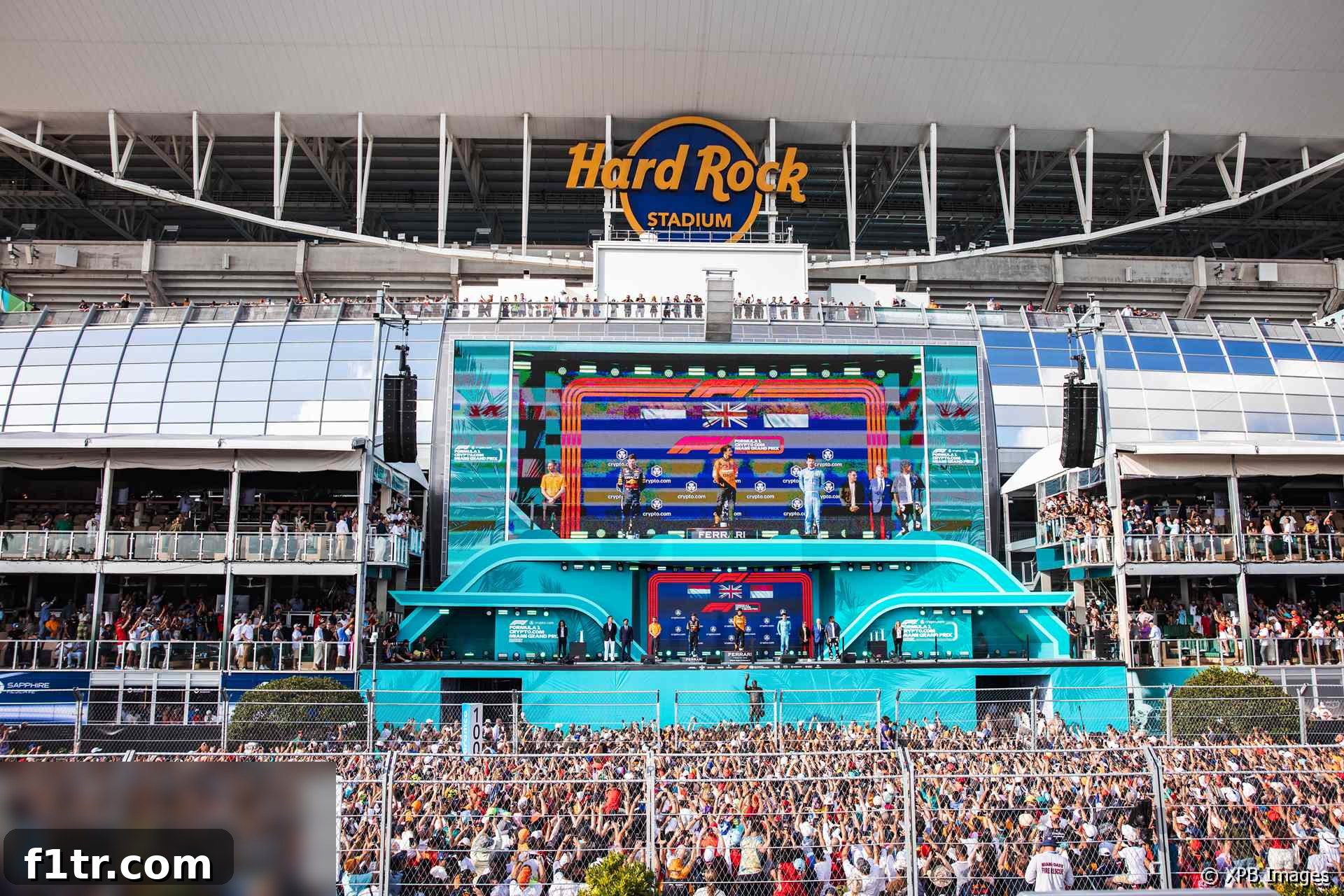
Miami Grand Prix president Tyler Epp has voiced a clear stance on the prospect of further expansion in the American market, stating: ‘We would certainly not be in favour of a fourth race. I am not worried about the detraction from our event but we need to stabilise some of these new races.’ This perspective highlights the strategic thinking behind F1’s aggressive push into the US, currently boasting three races (Austin, Miami, Las Vegas). While the appeal of the American market is undeniable, Epp’s comments underscore a critical point about market saturation and the need to nurture existing, newer events. Introducing too many races in one region too quickly could dilute the exclusivity and premium appeal of each event, potentially impacting attendance, sponsorship, and the overall fan experience. Stabilising the newer races, like Miami and Las Vegas, ensures they establish strong roots and grow into sustainable, iconic events, rather than becoming just one of many on an overpopulated calendar. It’s a delicate balance between maximizing market reach and maintaining event quality and profitability for all stakeholders.
Verstappen awaits birth of first child, misses Miami media day (Reuters)
Four-time Formula One world champion Max Verstappen was notably absent from scheduled media commitments at the Miami Grand Prix on Thursday, as the Red Bull driver awaited the birth of his first child. This heartwarming news offers a rare glimpse into the personal lives of F1 drivers, who often operate under intense scrutiny and demanding schedules. While their professional commitments are paramount, moments like these underscore the human element behind the helmets. Balancing the relentless pressure of a championship campaign with significant personal milestones is a challenge many elite athletes face. Verstappen’s absence, fully supported by his team, highlights a maturing understanding within the sport that even world champions need space for crucial family moments. It’s a reminder that beneath the competitive drive, these are individuals navigating the same life events as anyone else, albeit on a global stage. The F1 community widely extends its best wishes to Max and his family during this special time.
Welcome to Miami, where F1’s sunshine party draws a crowd every sport craves (The Guardian)
Further elaborating on the Miami Grand Prix’s impact, Tyler Epp revealed compelling insights into the event’s demographic success: ‘We’re tracking about 40% female to 60% male right now. That’s on the buyer data and I can also say that the female audience is certainly younger than the male audience. It skews younger.’ This data is incredibly significant for Formula 1, illustrating the sport’s successful efforts to broaden its appeal beyond its traditional, largely male-dominated fanbase. The “sunshine party” atmosphere, coupled with strategic marketing and the influence of media like Netflix’s ‘Drive to Survive,’ has clearly resonated with a younger, more diverse audience. Miami, with its vibrant culture and status as a global hub, provides the perfect backdrop for F1 to showcase itself not just as a motorsport event, but as a premier lifestyle and entertainment spectacle. Attracting a younger, more female audience is crucial for the long-term sustainability and growth of any global sport, ensuring a robust and enthusiastic fanbase for generations to come. This trend suggests F1 is effectively positioning itself as a dynamic, inclusive, and globally relevant entertainment product.
Rao makes surprise FIA return as Ben Sulayem adviser (BBC)
In a significant development within motorsport governance, Rao has made a surprising return to the FIA, taking on an advisory role to President Mohammed Ben Sulayem. This appointment comes as Ben Sulayem prepares for a potential second term in December’s FIA presidential election. The BBC reports that the Emirati president personally contacted Rao, indicating the high regard for his expertise and experience within the organisation. Rao’s return suggests a strategic move by Ben Sulayem to consolidate his leadership and leverage seasoned counsel as the FIA navigates complex challenges, including regulatory changes, safety standards, and the political landscape of global motorsport. Such appointments are often critical in shaping the direction and stability of governing bodies, especially in the run-up to elections, and will be closely watched for their impact on the FIA’s future policies and operations.
RLL building new Indy 500 car for Sato after test crash (Racer)
The relentless pursuit of speed and the inherent dangers of top-tier motorsport are starkly highlighted by news from the IndyCar series, where Rahal Letterman Lanigan Racing (RLL) is building a brand new Indy 500 car for Takuma Sato following a significant test crash. Racer.com reported that ‘Upon the car’s return to RLL’s nearby shop and a full post-crash teardown, the No. 75 was revealed to have suffered structural damage that requires the assembly of a new car for Sato, who posted the fastest no-tow lap of 232.565mph at the test just prior to the incident.’ This incident underscores the extreme forces at play in high-speed oval racing and the rigorous safety standards required. Despite Sato’s impressive pace, showcasing his potential for the legendary race, the need for a completely new chassis emphasizes that even minor-looking incidents at such speeds can compromise the structural integrity of a race car. For a race as demanding and unforgiving as the Indianapolis 500, absolute confidence in the machinery is paramount for both driver safety and competitive performance. RLL’s swift action to prepare a fresh car demonstrates the team’s commitment to ensuring Sato has the best possible equipment for one of motorsport’s most iconic events.
Why F1 racing is set to become the next big fashion show (CBC)
Formula 1’s cultural footprint is rapidly expanding beyond the racetrack, firmly establishing itself as a significant force in the world of high fashion. CBC’s report, ‘Why F1 racing is set to become the next big fashion show,’ perfectly captures this exciting convergence. Drivers, particularly Lewis Hamilton, have transcended their roles as athletes to become global style icons. The article notes, ‘Hamilton fans and fashion lovers alike await the first Monday in May, when the esteemed Met Gala takes place in New York. It’s an event Hamilton first attended in 2015, but this year, he will be co-chairing alongside Colman Domingo, A$AP Rocky, Pharrell Williams and Anna Wintour. LeBron James will also serve as honorary chair.’ This elevated role at one of the fashion world’s most prestigious events signifies a pivotal moment, cementing F1’s place alongside music, film, and sports in the broader entertainment and lifestyle industry. The drivers’ distinctive styles, their influence on streetwear, and the glamour associated with the sport itself are attracting fashion brands and designers, creating a vibrant crossover that appeals to a much wider audience than traditional motorsport enthusiasts. This blend of speed, celebrity, and haute couture is transforming Grand Prix weekends into essential dates on the global fashion calendar, showcasing F1’s growing impact on contemporary culture.
Social Media Spotlight: Miami Grand Prix Helmets and Driver Insights
As the F1 circus descends upon Miami, drivers are not just bringing their A-game to the track but also their unique sense of style, prominently displayed through custom helmet designs and paddock outfits. Social media has become the primary platform for sharing these vibrant expressions of personality and local culture.
special race = special helmet 🌴😎 fun day out in miami with yet another masterpiece by @RichardOrlinski 🎨 and the matching merch too!🔥 looking forward to the weekendddd pic.twitter.com/IyKc0P31Ni
— Esteban Ocon (@OconEsteban) May 1, 2025
Esteban Ocon showcased his “special helmet” for the Miami Grand Prix, a vibrant “masterpiece” created by Richard Orlinski, complete with matching merchandise. His enthusiasm for the “fun day out” and anticipation for the weekend perfectly capture the festive spirit of the Miami event.
Miami fit 🔥🌴🇺🇸 pic.twitter.com/JZ6g8VPm4S
— George Russell (@GeorgeRussell63) May 1, 2025
George Russell also joined the trend, sharing his “Miami fit” – a stylish ensemble that blends seamlessly with the city’s iconic aesthetic, further illustrating how drivers are embracing the local culture through their personal branding.
Freshly picked for the 305 🍊 My zesty design by @mdm_designs pic.twitter.com/QNd2nv41hG
— Alex Albon (@alex_albon) May 1, 2025
Alex Albon’s “zesty design” by mdm_designs, “freshly picked for the 305,” perfectly captures the vibrant and energetic essence of Miami, showcasing a helmet that is both personal and reflective of the host city.
Miami lid hits different, 305 ain’t ready 🤘#F1 #VCARB #MiamiGP pic.twitter.com/3cWmBiFs4p
— Visa Cash App Racing Bulls F1 Team (@visacashapprb) May 1, 2025
The Visa Cash App Racing Bulls F1 Team also joined the visual spectacle, teasing their “Miami lid” with the bold statement, “305 ain’t ready 🤘,” building anticipation for their presence at the Grand Prix.
I hate waiting for drivers to walk in. But it’s necessary, or you would NEVER see them during the weekend. Which is polar opposite to every other series in the world where they all just hang out , talk to each other, sit outside and hang in the garage. https://t.co/mbNZhCwIsH
— jameypricephoto (@jameypricephoto) May 1, 2025
Beyond the glamour, photographer Jamey Price offered a candid insight into driver accessibility at F1 events: “I hate waiting for drivers to walk in. But it’s necessary, or you would NEVER see them during the weekend. Which is polar opposite to every other series in the world where they all just hang out , talk to each other, sit outside and hang in the garage.” This observation highlights the unique, often highly controlled, environment of Formula 1 compared to other motorsport categories. While F1 drivers are global superstars, the stringent schedules, security protocols, and immense media obligations often limit spontaneous interactions with fans and media. This contrast raises questions about the balance between exclusivity and accessibility, and how F1 can continue to foster a connection with its growing fanbase while managing the demands on its elite athletes.
RaceFans always endeavours to credit original sources. Want to share a relevant motorsport link with us? Send it in via the contact form.
Advert | Become a RaceFans supporter andgo ad-free
- Find more official F1 accounts to follow in the RaceFans F1 social media directory
Community Celebrations: Happy Birthday!
Today, we send our warmest wishes to members of the RaceFans community celebrating their birthdays. A very Happy Birthday to Adam Kibbey and ruliemaulana! We hope you have a fantastic day filled with joy and perhaps some exciting motorsport action.
Motorsport History: On This Day
Looking back at significant moments in motorsport history, five years ago today, an intriguing event unfolded in the virtual racing world that captivated fans during a time of real-world racing hiatus.
- Five years ago today, Lando Norris, already a rising star in Formula 1, made a notable appearance in IndyCar’s virtual racing series. However, victory in the iRacing round at Indianapolis famously eluded him after he was taken out by Simon Pagenaud in controversial circumstances, almost in sight of the finish line. This incident sparked widespread discussion about virtual racing etiquette and competitive spirit, mirroring real-world racing dramas. It highlighted how even in simulated environments, the competitive drive of top drivers can lead to thrilling, yet sometimes contentious, outcomes. Norris’s participation also underscored the growing crossover appeal of virtual motorsports, especially when real-world racing faced unprecedented interruptions.
Advert | Become a RaceFans supporter andgo ad-free