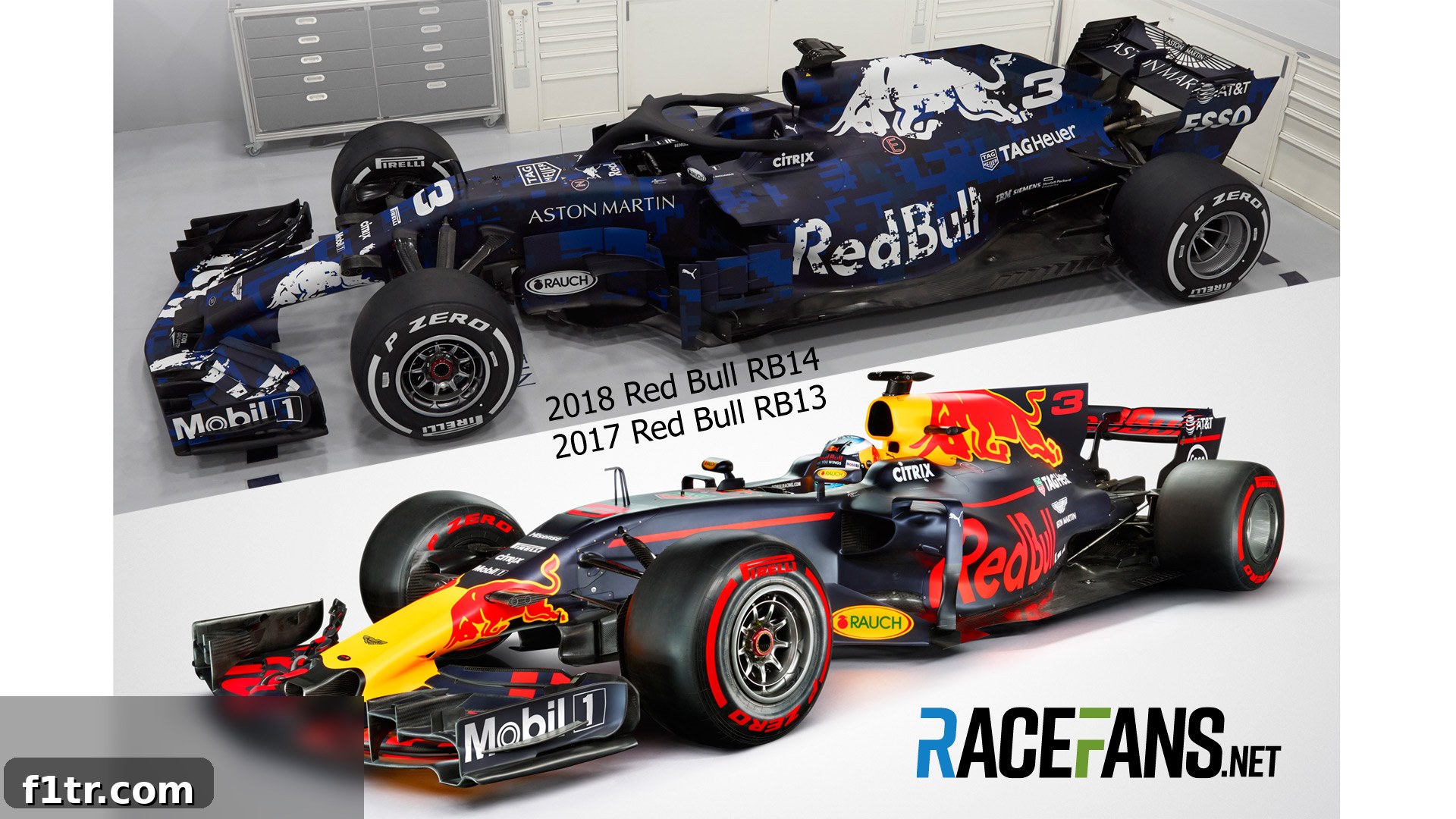
The dawn of a new Formula 1 season always brings with it an air of anticipation, especially with the unveiling of the latest challenger from top teams. In 2018, Red Bull Racing presented their highly anticipated RB14, a car designed to build upon the significant strides made during the latter half of the previous season with its predecessor, the RB13. Given the relatively stable technical regulations between the 2017 and 2018 seasons, it was logical to expect the RB14 to share a strong resemblance to the RB13 that concluded the previous year with such formidable pace and performance.
Red Bull, renowned for its meticulous approach to car launches and its strategic prowess in the aerodynamic arms race, typically releases initial images of its new machinery with great care. This often makes direct, side-by-side comparisons with the previous year’s chassis a challenging task for eager fans and technical analysts alike. However, even with these carefully curated previews, several distinctive areas of development and evolution on the RB14 were immediately apparent, signaling the team’s relentless pursuit of aerodynamic efficiency and speed. This in-depth analysis will delve into the key technical aspects of the Red Bull RB14, exploring its design philosophy, innovations, and how it aimed to challenge for championship honours in the competitive 2018 Formula 1 season.
Front Wing and Nose Cone: A Refined Aerodynamic Philosophy
One of the most visually distinctive features of the Red Bull RB13 at its launch was its innovative vented nose cone, a design element that Red Bull strategically retained for the RB14. This approach was primarily dictated by the stringent nose height requirements mandated by the technical regulations. The vented design allows air to pass through the nose, managing airflow underneath the chassis and feeding critical aerodynamic structures further downstream, such as the bargeboards and floor. This internal airflow management is a crucial aspect of modern F1 aerodynamics, contributing significantly to overall downforce generation and stability.
The front wing, while outwardly similar to the heavily evolved version seen on the RB13 towards the end of the 2017 season, featured subtle yet impactful refinements. The front wing is arguably the most important aerodynamic component on an F1 car, responsible for generating a substantial portion of total downforce and, crucially, conditioning the airflow for every other aerodynamic surface downstream. Small adjustments to the endplates, cascade elements, and flap profiles can have profound effects on the air travelling over, around, and under the car. Red Bull’s philosophy often involves a highly loaded outer section of the front wing, designed to push air around the front tyres – a phenomenon known as “tyre squirt” – minimizing disruptive turbulence and optimizing flow towards the crucial sidepod and floor areas. The RB14’s front wing was a testament to Adrian Newey’s philosophy of incremental gains through highly sophisticated detail work, constantly seeking to maximize efficiency and performance within the rulebook.
Sidepods: Evolving a Pioneering Design
The sidepod area of an F1 car is a battleground for aerodynamic innovation, critical for cooling the engine and directing airflow to the rear diffuser. It came as a surprise to many when Red Bull commenced the 2017 season with a comparatively conservative bargeboard and sidepod design. This was particularly unexpected given their reputation as an aerodynamics powerhouse, and the substantial opportunities afforded by the revised technical regulations introduced that year. These new rules allowed for significantly larger and more complex aerodynamic devices in the middle section of the car, which many expected Red Bull to exploit from the outset.
However, as the 2017 season progressed, Red Bull demonstrated its adaptability by adopting and refining the pioneering sidepod layout originally introduced by Ferrari. This design, characterized by its high-waisted sidepod inlets and deeply undercut bodywork, proved highly effective in managing turbulent airflow generated by the front wheels and directing a cleaner, faster airflow towards the rear of the car. For the RB14, Red Bull appeared to have taken this concept even further, integrating it seamlessly into their overall aerodynamic package. The sidepod geometry on the RB14 was incredibly intricate, featuring complex louvres, deflectors, and turning vanes designed to extract every ounce of aerodynamic performance. The tight packaging of the internal components allowed for a radical shaping of the exterior bodywork, creating a highly aggressive “coke bottle” effect towards the rear, which is crucial for maximizing the efficiency of the diffuser and rear wing. This evolution underscored Red Bull’s ability to not only innovate but also to expertly interpret and integrate successful design philosophies from rivals, perfecting them to suit their own chassis.
Experience RaceFans Ad-Free
>> Discover how to become a RaceFans supporter and enjoy content without interruptions
The RB14 marked a significant moment as the first Renault-powered (albeit TAG Heuer-branded) car of 2018 to be officially revealed. This unveiling offered crucial insights into how effectively the new power unit could be integrated and packaged within the chassis. For any F1 team, the size and layout of the engine, gearbox, and ancillary systems dictate the potential for aerodynamic optimization at the rear of the car. A more compact power unit allows designers to achieve tighter, more sculpted bodywork, which directly translates to reduced drag and improved airflow to the diffuser and rear wing. On the RB14, the rear bodywork appeared visibly tighter and smoother, indicating Red Bull’s continued mastery of packaging technology. This aggressive “coke bottle” shaping, where the bodywork dramatically narrows towards the rear, is a hallmark of high-performance F1 cars, and its execution on the RB14 suggested a highly efficient and aerodynamically advantageous integration of the Renault power unit. This tight packaging is a testament to the close collaboration between the chassis designers and the engine manufacturers, aiming for a seamless blend of power and aerodynamic grace.
Perhaps the most immediate and universally obvious difference across all 2018 F1 cars, including the RB14, was the mandatory addition of the Halo driver protection device. Introduced for enhanced safety, the Halo presented a considerable aerodynamic challenge for teams. Its presence significantly alters airflow over the cockpit, potentially disrupting the clean air supply to the engine’s air intake, associated cooling ducts, and crucially, the rear wing. The images of the RB14, alongside early reports and pictures from its inaugural shakedown test at Silverstone, revealed a meticulously sculpted design for Red Bull’s Halo integration. Rather than simply attaching the standard device, Red Bull, like other top teams, invested heavily in developing aerodynamic fairings around the Halo structure. These fairings were engineered to minimize the negative aerodynamic impact, attempting to guide airflow around and over the device in the most efficient manner possible. The goal was to reduce drag, prevent flow separation, and ensure that critical airflow still reached the engine and rear aero elements effectively, highlighting the delicate balance between safety innovation and pure performance in Formula 1.
In conclusion, the Red Bull RB14 was an exemplary demonstration of evolutionary design in Formula 1. Building on the strengths of its predecessor and adapting cutting-edge aerodynamic concepts, it showcased Red Bull’s unwavering commitment to innovation and meticulous detail. From the refined front wing and vented nose to the aggressively packaged sidepods inspired by rival designs, and the aerodynamically integrated Halo, every element of the RB14 was engineered for peak performance. This blend of continuity and pioneering adaptation set the stage for Red Bull to be a formidable contender in the 2018 F1 season, showcasing their continuous quest for supremacy on the grid.
2018 F1 season
- F1 feared “death knell” for Drive to Survive after Ferrari and Mercedes snub
- McLaren staff told us we were “totally crazy” to take Honda engines in 2018 – Tost
- ‘It doesn’t matter if we start last’: How Red Bull’s junior team aided Honda’s leap forward
- Honda’s jet division helped F1 engineers solve power unit problem
- McLaren Racing losses rise after Honda split
Browse all 2018 F1 season articles