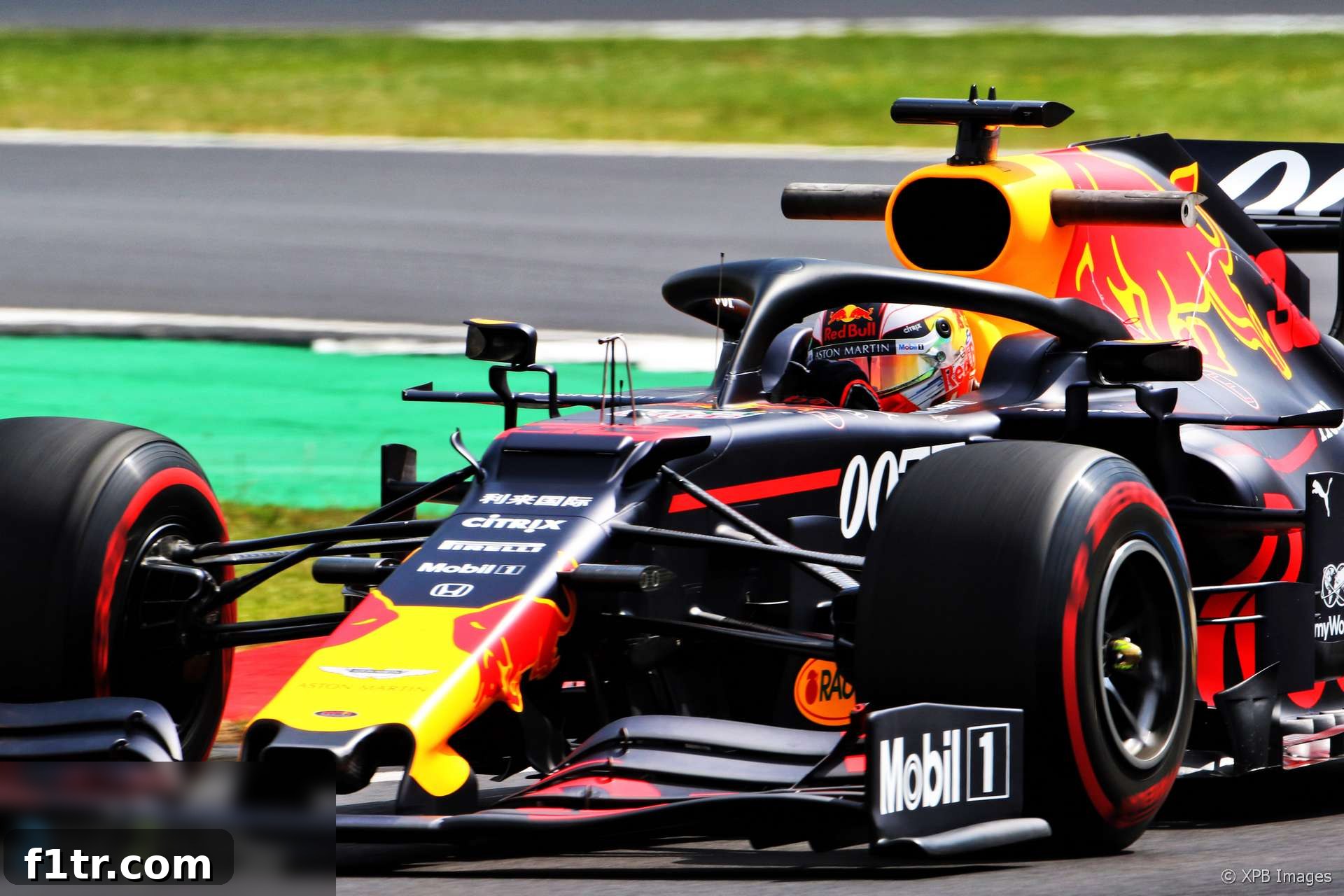
Max Verstappen, the prodigious talent spearheading Red Bull Racing, expressed immense satisfaction with his team’s performance during the qualifying session for the British Grand Prix. His impressive showing at the iconic Silverstone circuit, where he secured a highly commendable fourth position on the grid, served as a tangible testament to the significant strides the team has collectively made throughout the intensely competitive 2019 Formula 1 season. Verstappen’s blistering lap, which placed him a mere 0.183 seconds adrift of pole position, underscored the RB15’s unexpected competitiveness on a track that has historically posed considerable challenges for Red Bull’s package.
The hallowed grounds of Silverstone, renowned for its unforgiving high-speed straights and sweeping, aerodynamic-intensive corners, has traditionally been a formidable battleground for teams not equipped with an absolute advantage in raw engine power. It is a circuit where the sheer grunt and efficiency of the power units supplied by dominant forces like Mercedes and Ferrari often dictate the upper echelons of the grid. Consequently, Red Bull Racing, particularly in their nascent and evolving partnership with Honda power units, approached the British Grand Prix weekend with a degree of cautious optimism, anticipating a tougher fight compared to tracks that predominantly favor high-downforce characteristics. However, Verstappen’s stellar qualifying effort resoundingly defied these conventional expectations, eliciting a wave of positive reinforcement and renewed confidence within the Red Bull garage.
Verstappen’s Assurance: A Reflection of Red Bull’s Evolution
“To be that close to pole is good,” Verstappen articulated, his voice resonating with the quiet confidence of a driver who felt his machine was performing at its absolute zenith. This statement, delivered in the immediate aftermath of a nail-biting qualifying session, carried the weight of an athlete who genuinely believed he was in contention for a front-row start. “The car in qualifying was really strong,” he further elaborated, underscoring the RB15’s impressive balance, responsiveness, and sheer pace through Silverstone’s demanding sequences of corners. This sentiment was far more than a mere acknowledgement of a singular fast lap; it encapsulated a broader appreciation for the intricate engineering excellence and strategic adjustments meticulously executed by the entire Red Bull Racing team throughout the challenging weekend.
Indeed, the path to this robust qualifying performance was not entirely devoid of initial hurdles. Verstappen had openly voiced some dissatisfaction with the fundamental balance of his RB15 during Friday’s initial practice sessions. Such early struggles often serve as an unwelcome harbinger of a complex and demanding weekend ahead, where engineers must race against time to unlock the car’s full potential. Yet, Red Bull’s long-established and well-regarded ability to meticulously analyze vast datasets, swiftly identify underlying issues, and implement profoundly effective solutions overnight once again shone through with remarkable clarity. The significant and tangible improvements observed on Saturday morning, which culminated in his breathtaking, near-pole qualifying run, unequivocally highlighted the team’s unparalleled capacity for rapid development and precise optimization. This iterative process of relentless refinement is a defining hallmark of top-tier Formula 1 teams, and Red Bull demonstrated this mastery with exceptional proficiency at Silverstone.
Strategic Compromise: Mastering Silverstone’s Unique Demands
One of the pivotal factors underpinning Red Bull’s unexpectedly strong pace at Silverstone was their exceptionally intelligent and nuanced approach to car setup. Verstappen, with his innate understanding of the RB15, lucidly explained the team’s successful strategic compromise: “I think this weekend we found a good compromise between cornering and straight-line speed because if you look at our wing we are running a bit less than Mercedes.” The decision to run a lower-downforce wing setting is a calculated gamble; it invariably reduces aerodynamic drag, thereby yielding higher top speeds on the long, power-sensitive straights. However, this critical trade-off frequently comes at the significant expense of grip and inherent stability in the high-speed corners, where downforce is paramount. The eternal challenge for Formula 1 engineers lies in discovering that exquisitely delicate balance that maximizes overall lap time, an art Red Bull appears to have perfected at Silverstone.
Red Bull’s design philosophy, historically revered for consistently producing exceptionally aerodynamically efficient chassis, appears to have paid considerable dividends once more. By judiciously opting for a slightly trimmed wing profile when compared to their direct Mercedes rivals, the team strategically aimed to mitigate the inherent straight-line speed deficit associated with their power unit, without inadvertently sacrificing too much precious performance in the critical high-speed cornering sequences. Verstappen’s subsequent comments emphatically confirmed the resounding success of this strategic gamble: “We are not too far away on the straights and somehow our car is still working really well through the high-speed corners.” This statement strongly suggests that the RB15’s fundamental underlying aerodynamic package is extraordinarily robust and efficient, capable of generating an abundance of downforce through its intricately designed floor and other subtle aero elements. This allows the team the unique flexibility to reduce the traditional wing angle without incurring a debilitating penalty in its world-class cornering prowess, a true testament to Adrian Newey’s genius and the Red Bull design team.
The Honda Partnership: A Transformative Force for Red Bull Racing
This newfound and highly encouraging competitiveness on power-sensitive circuits is intrinsically and inextricably linked to the significant and ongoing progress meticulously made by their engine partner, Honda. The partnership, which officially commenced at the start of the 2019 season, was widely regarded as a pivotal and potentially transformative moment for Red Bull, offering the tantalizing potential to consistently challenge the established dominance of Mercedes and Ferrari. Verstappen’s candid observations further underscored the profound and positive impact of Honda’s relentless development: “Last year even when we trimmed the wing it was not giving us that straight-line performance.” This stark and illuminating comparison to the previous year, when Red Bull was powered by Renault, vividly highlights the palpable and substantial step forward achieved with Honda’s power unit. The increased power output, coupled with the refined and improved energy recovery systems from the latest Honda unit, are now empowering Red Bull to implement more aggressive and ultimately more effective aerodynamic setups, thereby yielding significantly better all-around performance across diverse track layouts.
The journey with Honda has been a narrative of continuous, incremental, yet ultimately profound improvement, and the British Grand Prix qualifying stands as another significant milestone in this evolving saga. While Mercedes and Ferrari still maintain a discernible edge in outright engine power, Honda’s persistent advancements have demonstrably narrowed that gap, fundamentally transforming Red Bull from a team that excelled almost exclusively on high-downforce circuits into a formidable and consistent contender across a far wider spectrum of tracks. This crucial development is absolutely vital for Red Bull’s championship aspirations, both for the remainder of 2019 and their long-term competitiveness within the demanding ecosystem of Formula 1. The symbiotic relationship between chassis and power unit is flourishing, paving the way for future successes.
Silverstone’s Grandeur: A Battle of Engineering Acumen and Driver Artistry
The British Grand Prix at Silverstone is rightfully revered as one of the Formula 1 calendar’s purest and most exhaustive tests of a modern Grand Prix car and its driver. Its unique blend of legendary, high-speed corners like Copse, Maggotts, Becketts, and Chapel, all taken at utterly breathtaking velocities, demands nothing short of absolute precision, unwavering courage, and a perfectly balanced, responsive machine. The elongated Wellington Straight and the Hangar Straight provide generous opportunities for strategic slipstreaming and daring overtakes, rendering tire management and shrewd strategic choices paramount during the relentless pace of the race itself. Starting from an enviable fourth position on the grid, Verstappen will be ideally positioned to capitalize on any unfolding opportunities that might arise, from early-race skirmishes to late-race tire degradation.
His proximity to the front, nestled just behind the formidable Mercedes duo and a competitive Ferrari, is not merely a moral victory but a significant strategic advantage. It allows him to remain within crucial striking distance of the leaders, potentially benefiting from any unforeseen tire degradation issues faced by those ahead, or expertly exploiting any tactical missteps from rival pit walls. The fervent British crowd, celebrated globally for its unparalleled passion and deep knowledge of motorsport, will undoubtedly generate an electrifying and unforgettable atmosphere, adding yet another layer of intensity to what promises to be a thrilling and unpredictable race. Red Bull’s race pace has frequently been a standout strength, and with a car that felt “really strong” during the cutthroat qualifying, expectations will undoubtedly soar for Verstappen to convert his prime grid position into a substantial points haul, or even ascend to a coveted podium finish.
Looking Ahead: Red Bull’s Resurgence and Championship Ambitions
This exceptionally strong qualifying performance at Silverstone, following hot on the heels of his dominant and hard-fought victory at the Austrian Grand Prix, unequivocally positions Max Verstappen and Red Bull Racing as genuine contenders, at the very least for outright race wins, and perhaps to exert meaningful pressure on the championship leaders in the pivotal latter half of the 2019 season. The team’s evident ability to extract such a high level of performance from the RB15 on a notoriously power-sensitive circuit signals a significant maturity in their ongoing development cycle and a harmonious, highly effective integration of their world-class chassis with the progressively powerful Honda unit.
The invaluable lessons learned and the profound confidence garnered from successful weekends like Silverstone are immeasurable. They send a powerful message to the entire team, and indeed to their formidable rivals, that Red Bull Racing is no longer merely a spoiler, but a legitimate front-running force demonstrably capable of adapting, evolving, and excelling across varying circuit characteristics. As the 2019 season progresses relentlessly, the unwavering focus will undoubtedly remain on maintaining this hard-won momentum, continuously developing and refining the Honda power unit, and diligently perfecting the RB15’s already formidable aerodynamic package. Max Verstappen, with his undeniable raw talent, aggressive yet controlled driving style, and insatiable hunger for victory, remains the sharp spearhead of this ambitious charge. Performances like this masterful qualifying effort at the British Grand Prix only serve to further reinforce his burgeoning status as a future world champion. The ongoing journey for Red Bull Racing in 2019 is proving to be an exhilarating narrative of resurgence, relentless pursuit of engineering excellence, and unwavering championship ambition, with Silverstone serving as a particularly powerful and resonant chapter.