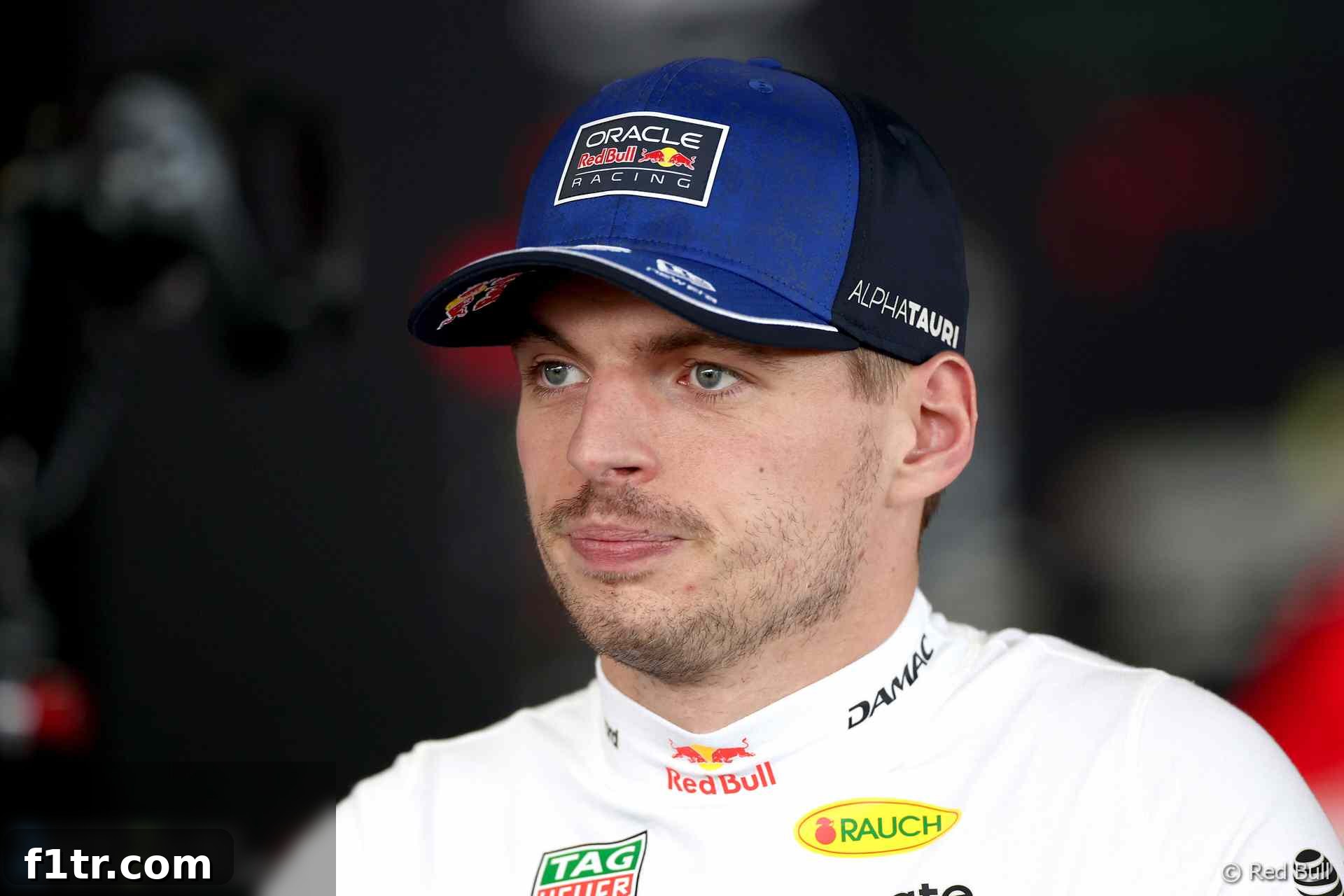
Max Verstappen’s Unprecedented Australian GP Qualifying Spin Leaves Red Bull Puzzled
In a dramatic turn of events that sent shockwaves through the Formula 1 paddock, reigning champion Max Verstappen was left utterly bewildered after a high-speed spin pitched him out of qualifying for the Australian Grand Prix. The incident, which occurred during his first flying lap in Q1, saw the Dutchman’s Red Bull RB22 suffer a sudden and inexplicable rear wheel lock-up under braking for the very first corner of the Albert Park Circuit. Verstappen described the experience as “really weird,” emphasizing that he had “never experienced that in my life.”
The unexpected nature of the incident was evident in Verstappen’s immediate post-session comments to Sky Sports. “I didn’t speak to the team yet or didn’t look into any data, but to lose a car like that on the braking, I’ve never experienced that in my life,” he stated, clearly still grappling with what had transpired. “I hit the pedal and suddenly the whole rear axle just completely locked up. So, definitely a bit weird.” This candid admission from a driver renowned for his exceptional car control and adaptability highlighted the truly anomalous nature of the malfunction.
Verstappen further elaborated on the specifics of the incident, pinpointing the precise moment the problem manifested. He indicated that the issue appeared to occur at the instant he initiated braking for the corner, even before any downshift could fully engage. “I think it already went wrong before the downshift because I hit the pedal – and as soon as you hit the pedal because you quite quickly downshift – but it already immediately locked on the peak of the brake pressure, basically,” he explained. “So something very, very weird, that’s for sure.” For a Formula 1 car, where braking zones are meticulously calculated and executed with immense precision, such an unpredictable lock-up at the maximum point of brake pressure is highly unusual and suggests a significant underlying problem, rather than a mere driver error.
The spin resulted in light contact with the barrier on the outside of the corner, effectively ending Verstappen’s qualifying session prematurely. Confined to the sidelines for the remainder of Q1, the Red Bull ace now faces the daunting task of starting the race from 20th on the grid. This position, at the very back, presents a formidable challenge at a circuit like Albert Park, known for its tight sections and limited overtaking opportunities. Such a setback is particularly rare for a driver of Verstappen’s calibre and for a front-running team like Red Bull Racing, immediately raising questions about the car’s reliability and setup.
Adding to the intrigue and narrative contrast, new team mate Isack Hadjar delivered a stellar performance, qualifying an impressive third. Hadjar’s strong showing underscores the raw pace of the RB22 chassis, making Verstappen’s issue even more perplexing. It suggests that the problem was isolated to Verstappen’s specific car or a unique set of circumstances, rather than a fundamental design flaw across the team’s machinery. For Hadjar, a new face on the F1 grid, a P3 qualification is a monumental achievement, albeit overshadowed by the mystery surrounding his teammate’s struggles.
Red Bull Scrambles for Answers: Team Principal Laurent Mekies on the Incident
The incident immediately sent Red Bull Racing into a frantic investigation mode. Team principal Laurent Mekies confirmed the team’s initial lack of understanding regarding the root cause of the problem. “What happened to Max is obviously very unfortunate and the most important thing is that he is okay,” Mekies stated, prioritizing driver safety before delving into technical specifics. “At the moment we are still trying to fully understand what happened. The loss of grip he had to deal with looked very brutal and unusual. We will need to take a deeper dive into the data and analyse everything carefully.”
The team’s extensive technical resources will now be focused on scrutinizing every byte of telemetry data from Verstappen’s car. This analysis will include brake pressure curves, wheel speed sensors, engine braking maps, ERS deployment, and suspension loads, all critical parameters that could shed light on the sudden loss of stability. The phrase “brutal and unusual” used by Mekies highlights the severity and unexpected nature of the malfunction, suggesting it was not a gradual degradation of grip but an instantaneous, catastrophic loss.
Such an unexpected technical glitch can be incredibly unsettling for a team, especially during a crucial qualifying session. F1 cars are engineered to extreme tolerances, and an issue that causes a complete rear axle lock-up without prior warning is a serious concern. It could point to a sensor malfunction, an electronic control unit (ECU) error, or even a hydraulic issue within the braking system. The pressure is now on Red Bull’s engineers to diagnose the problem quickly and ensure it does not recur, particularly with Hadjar’s promising performance setting a high benchmark.
The Challenges Ahead: From 20th on the Grid
Starting from 20th position at the Australian Grand Prix presents an immense challenge for Max Verstappen. The Albert Park Circuit, while scenic, is notoriously difficult for overtaking. Its mixture of fast, flowing sections and tight chicanes, combined with the often-turbulent air generated by modern F1 cars, means that making up positions requires a combination of raw pace, strategic brilliance, and often, a little bit of luck.
However, Verstappen has a proven track record of fighting through the field, showcasing his exceptional race craft and determination. His ability to carve through traffic and maximize every opportunity will be put to the ultimate test. The car’s inherent pace, as demonstrated by Isack Hadjar’s P3, offers some hope for a recovery drive, but the risks associated with battling in the midfield are significantly higher. Any further incidents or damage could entirely derail his race, impacting his championship aspirations early in the season.
The incident also puts a spotlight on Red Bull’s pit wall strategies. They will need to meticulously plan Verstappen’s race, considering tire compounds, pit stop windows, and potential safety car interventions to aid his progression. The contrast between Verstappen’s misfortune and Hadjar’s success will also be a fascinating dynamic to watch throughout the race weekend, potentially shaping narratives around team performance and intra-team rivalry, even if unintentional.
Looking Forward: An Unfolding Mystery
As the team delves deeper into the data, the exact cause of Max Verstappen’s unprecedented qualifying spin remains an unfolding mystery. The incident serves as a stark reminder of the delicate balance and extreme technical complexity inherent in Formula 1. Even the most seasoned drivers and advanced machinery can be brought undone by a single, inexplicable malfunction.
For Max Verstappen, a driver accustomed to fighting for pole positions and victories, this setback will undoubtedly fuel his resolve. The Australian Grand Prix now becomes a test of resilience, both for him and for Red Bull Racing. All eyes will be on his recovery drive, and the team’s ability to unravel the enigma of the RB22’s sudden braking issue before the race begins. The outcome of their investigation will not only be crucial for Verstappen’s performance but also for the team’s confidence and overall understanding of their formidable, yet occasionally enigmatic, machine.