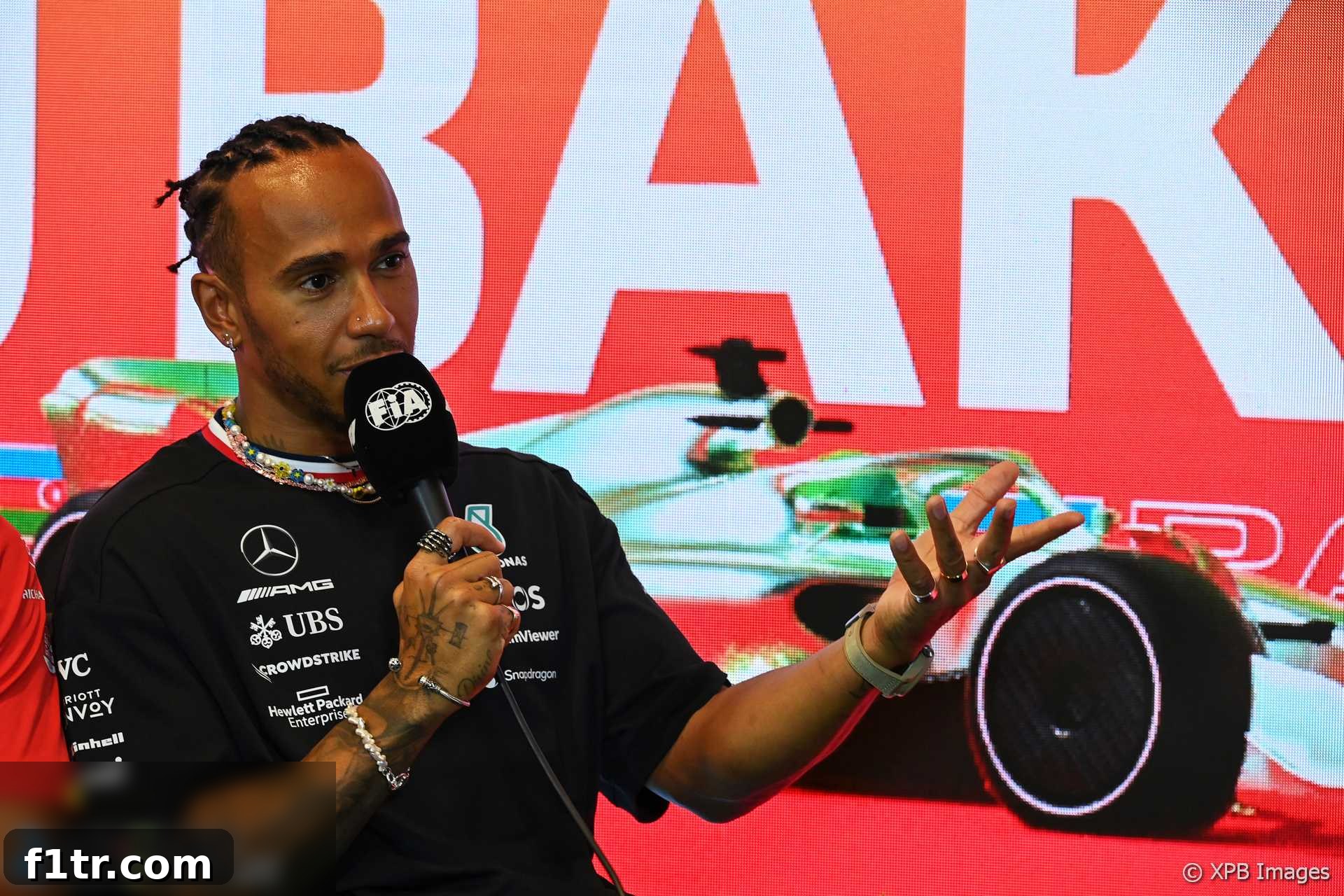
The dynamic world of Formula 1 is perpetually in pursuit of thrilling spectacle, and its latest innovation, the sprint race format, continues to evolve. With recent modifications announced for the 2023 season, the paddock is abuzz with discussions on how these changes will impact racing strategies and the overall competitive landscape. While the aim is to foster more aggressive driving and heightened excitement, leading figures such as Lewis Hamilton and Carlos Sainz Jnr offer cautious perspectives, suggesting that the fundamental approach of an F1 driver might not undergo a radical transformation.
Mercedes ace Lewis Hamilton, a seven-time world champion, has openly shared his thoughts on the Formula 1 sprint race format revisions. Although he voiced support for the latest adjustments, which seek to make the sprint events standalone spectacles that no longer determine the starting grid for Sunday’s Grand Prix, Hamilton remains skeptical about a dramatic shift in driver behavior. The core intent behind these alterations was to encourage drivers to be less conservative, knowing that a misstep in the sprint wouldn’t jeopardize their primary race position. However, Hamilton believes the intricate balance between risk and reward for competitors remains largely unchanged.
“I don’t think it makes really a lot of difference now,” Hamilton commented, reflecting on the revised rules. He elaborated, “Obviously before, where you finished in the sprint was where you qualified for the race. Now it is a practice session but there are points at the end of it. I don’t think we’ll be going more flat-out than we normally have done in the past.” This perspective highlights a crucial point: while the sprint is now detached from the main race grid, the championship points on offer, coupled with the ever-present risk of car damage, still demand a calculated approach from drivers. Pushing to the absolute limit for a few extra points in a shorter race, at the potential cost of a DNF or significant repairs for the Grand Prix, remains a delicate decision for any F1 team and driver.
Despite his reservations regarding an outright change in aggression, Hamilton expressed genuine anticipation for the restructured Formula 1 race weekend. “With the shake-up of the whole format of the weekend, it’s probably the most exciting weekend so far this year,” he stated. “I’m looking forward to seeing how it turns out.” This sentiment suggests that even if drivers maintain a somewhat measured approach, the sheer novelty and compressed nature of the new schedule – with a dedicated Sprint Shootout on Saturday morning setting the grid for the sprint race, followed by the sprint itself, and then traditional qualifying for the Grand Prix on Friday – could inherently generate more drama and unpredictable outcomes for fans.
Ferrari’s Carlos Sainz Jnr echoed Lewis Hamilton’s cautious assessment, casting doubt on whether drivers would significantly increase their risk-taking. Sainz highlighted the enduring importance of every lap and every point in the highly competitive Formula 1 championship. For drivers, the sprint race is not merely an exhibition; it represents a valuable opportunity to score points, gain crucial feedback on car performance, and prepare for the ultimate prize on Sunday.
“I still don’t think it will be like ‘win it or bin it’ for us,” said the Spanish driver. “It will be still important laps, important points for the championship. Important learning for the main race. I don’t think an F1 driver will change massively the approach to the start, to the fighting. We will still approach it as a normal race.” Sainz’s remarks underscore the high stakes involved in Formula 1. Unlike in some other racing categories, where a sprint might be a purely aggressive charge, the intricate engineering of an F1 car, coupled with the immense financial implications of damage and the pursuit of a world championship, necessitates a more considered strategy. Every racing incident comes with a cost, both in terms of budget cap spending and potential performance penalties or grid drops for subsequent events.
The revised sprint format continues to award championship points to the top eight finishers. While this provides a tangible incentive, it also raises questions about the motivation of drivers positioned outside this points-scoring bracket. However, Valtteri Bottas, known for his consistent and resilient driving, firmly believes that the innate competitive spirit of an F1 driver would prevent anyone from simply giving up, even if they found themselves outside the points in the closing stages of a sprint race.
“For example, if I would be in the last laps in ninth position, which is just outside of the points in the sprint, then definitely you go for it,” Bottas asserted, explaining the mindset. “Obviously if you break your car or something, then that could have consequences for Sunday. But in another case, there’s not a huge difference, but I think a welcome one. So at least you know that you can try if you’re just on the edge of the points.” His statement highlights the fine line drivers walk between maximizing performance and preserving the car for the main event. Yet, the thrill of the chase, the possibility of a mistake from a rival, or simply the desire to extract every ounce of performance, will always drive these athletes forward.
Bottas further emphasized this unwavering commitment: “[If] you’re like 15th or something, you still go for it, it’s the nature of us. You don’t give up and in this sport you never know what happens so you go ’til the end.” This perspective resonates deeply with the ethos of Formula 1. Every position gained, every car overtaken, regardless of whether it translates into championship points in a sprint, contributes to a driver’s reputation, confidence, and the team’s understanding of the car’s limits. The pursuit of perfection and the refusal to yield are hallmarks of elite F1 competitors, ensuring that every session, including the revitalized sprint races, will be contested fiercely until the checkered flag.
The latest iteration of the Formula 1 sprint race format is a clear signal of the sport’s ongoing commitment to innovation and enhancing the fan experience. By creating a distinct sprint day on Saturday, separated from the main Grand Prix qualifying, F1 aims to offer two high-stakes competitive sessions within a single weekend. While drivers like Hamilton and Sainz remain pragmatic about how much their individual approach will change, their cautious optimism, combined with the inherent competitiveness of the F1 grid, suggests that these new sprint races will nonetheless provide compelling action and strategic intrigue. The evolution of the sprint format is a testament to Formula 1’s willingness to experiment and fine-tune its spectacle, ensuring that the quest for speed and drama continues to captivate audiences worldwide.
Bringing the F1 news from the source
This independent journalism platform strives to bring its readers news directly from the key players in Formula 1. We are able to do this thanks in part to the generous backing of our Supporters.
By contributing a small monthly or annual sum, you can help cover the costs involved in producing original journalism: Travelling, writing, creating, hosting, contacting, and developing.
We have been proudly supported by our readers for over 10 years. If you enjoy our independent coverage, please consider becoming a Supporter today. As a bonus, all our Supporters can also browse the site ad-free. Sign up or find out more via the links below:
- Become a RaceFans Supporter
- RaceFans Supporter FAQ
2023 Azerbaijan Grand Prix Insights
Explore more in-depth coverage and analysis from the thrilling 2023 Azerbaijan Grand Prix weekend:
- Aston Martin radio messages reveal how “older brother” Alonso helps Stroll
- How slashing practice to a single hour in Baku tripped up F1 teams
- Bottas: “Rapid improvement needed” at Alfa Romeo
- Red Bull could become first team to score 1,000 points in a season
- Aston Martin hoping DRS fix works in Miami after Stroll manages fault in race
Browse all 2023 Azerbaijan Grand Prix articles