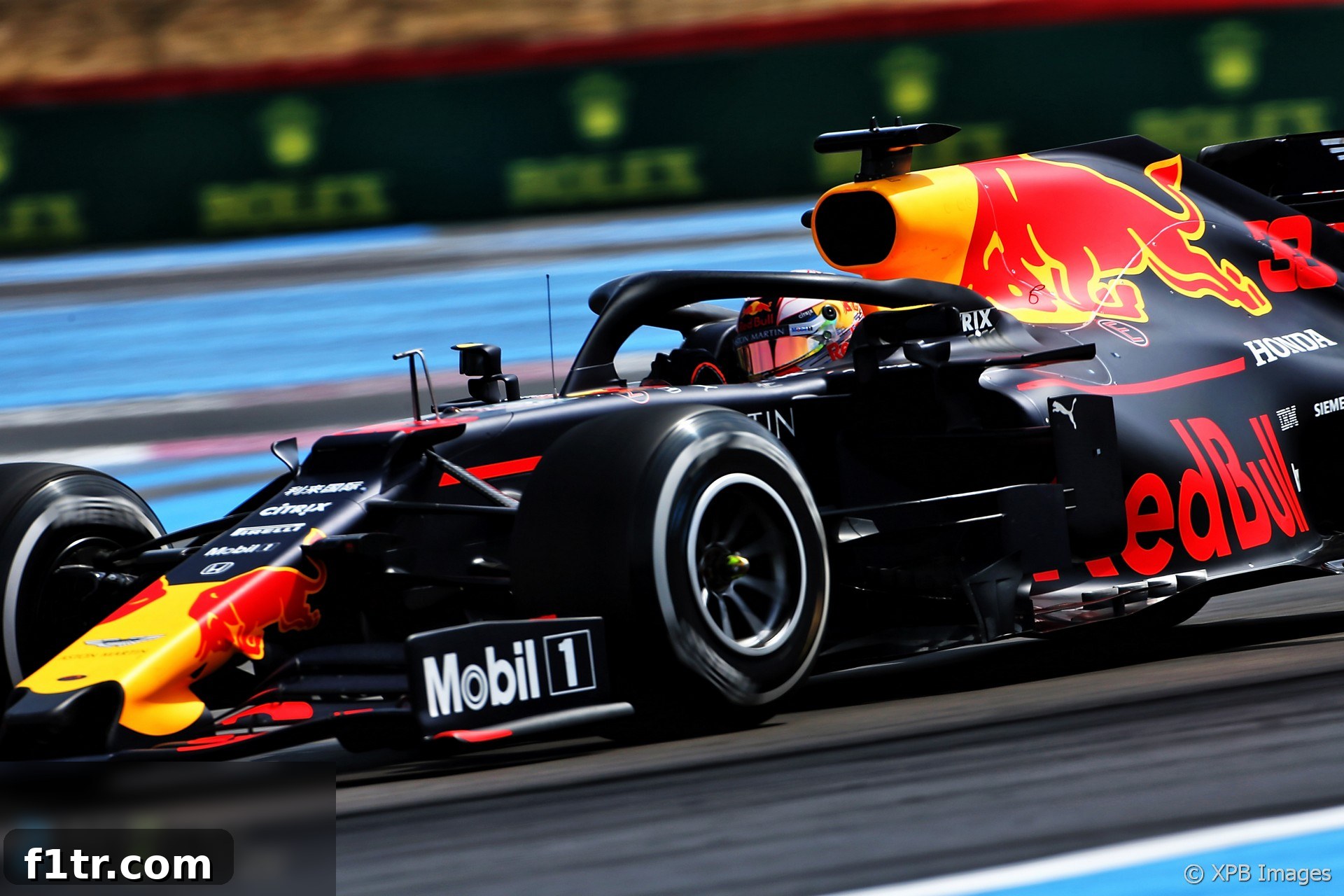
The high-stakes world of Formula 1 consistently pushes the boundaries of engineering and performance, with every race offering a fresh crucible for teams and manufacturers. In the aftermath of the 2019 French Grand Prix, a key figure in the paddock, Max Verstappen, voiced significant concerns regarding the latest iteration of Honda’s power unit. His candid assessment revealed a clear frustration, suggesting that the much-anticipated ‘spec three’ upgrade had not delivered the substantial leap forward necessary to close the gap on their primary rivals.
The 2019 French Grand Prix at Circuit Paul Ricard was expected to be a pivotal moment for Red Bull Racing and their engine supplier, Honda. Having already introduced a power unit upgrade at the Azerbaijan Grand Prix earlier in the season, Honda brought its advanced ‘spec three’ hardware to France for all its powered cars, including Verstappen’s Red Bull, his teammate Pierre Gasly, and the Toro Rosso entry of Daniil Kvyat. This upgrade was a crucial step in their development roadmap, aimed at enhancing both power output and reliability. However, Verstappen’s post-race comments highlighted a disconcerting reality: despite the new hardware, the rate of progress seemed insufficient when compared to the relentless development pace of their competitors.
Verstappen’s Candid Assessment: A Deficit in Top Speed
Speaking to the media, including RaceFans, following a challenging weekend, Verstappen didn’t mince words about the power unit’s limitations. “You could see in lap one, I think we are missing some top speed to the top guys,” he stated, pointing directly to a fundamental performance gap that became evident from the outset of the race. This observation wasn’t just about outright straight-line speed; it also spoke to the acceleration and overall grunt that dictates competitive positioning on track. The impact of this deficit was further underscored by his observation of midfield teams demonstrating superior pace where it mattered most: “The McLarens behind are very quick on the straight.” This highlighted that even teams typically seen as direct rivals for Red Bull, let alone the championship frontrunners, possessed an advantage in critical areas of engine performance.
Verstappen’s analysis extended beyond the power unit itself, encompassing the broader car performance. While acknowledging the strengths of the Red Bull chassis, he emphasized the need for comprehensive improvements. “The car balance is not too bad,” he admitted, suggesting that Red Bull’s renowned aerodynamic package was performing adequately. However, he quickly tempered this praise with a call for greater overall performance: “We do need to gain a bit of performance from the car to be really competitive. We do need to make a bigger step also with the engine.” This nuanced view indicated that while the chassis provided a solid foundation, the engine was the primary bottleneck preventing them from consistently challenging for victories and podiums against Mercedes and Ferrari.
The Evolving Power Unit Landscape and Rival Comparisons
The competitive landscape of Formula 1 is a perpetual arms race, particularly in power unit development. Verstappen’s comments offered a fascinating insight into the varying performance profiles of different engine manufacturers. He specifically singled out Renault, a direct competitor in the F1 engine market, for their ability to extract peak performance when it mattered most. “You could see the Renault over one lap they have a quite powerful ‘quali mode’ or whatever they use in lap one,” he noted. This “quali mode” refers to special engine settings that allow manufacturers to unleash maximum power for short bursts, typically during qualifying or the opening laps of a race, before managing fuel and component wear takes precedence.
However, Verstappen quickly contextualized this observation, explaining why such modes, while impressive, don’t always translate into sustained race pace. “Afterwards they have to back it out, of course, and then you can see they are not a threat any more. But over one lap we can definitely improve a bit more.” This analysis highlighted a dual challenge for Honda: not only was their peak power lacking, but they also needed to develop a similar high-performance mode to compete effectively in critical qualifying sessions and the frantic opening stages of a Grand Prix. The ability to switch between different engine modes — from maximum attack to fuel-saving — is a sophisticated area of F1 engine development, and Verstappen’s comments implied Honda still had ground to cover in this regard.
Anticipating Future Progress: A Mix of Hope and Realism
Despite his current frustrations, Verstappen maintained a degree of optimism about Honda’s long-term commitment and capability for improvement. He expressed confidence that further gains from Honda were “definitely coming,” and expected to see them materialize “in the upcoming races.” This sentiment reflects the immense pressure on Honda, a manufacturer with a rich F1 history, to deliver a championship-contending engine for Red Bull. The partnership was still relatively new in 2019, and both parties were investing heavily in closing the performance gap to Mercedes and Ferrari.
However, this hope was immediately tempered by a stark dose of realism, particularly when looking ahead to the immediate next race on the calendar – Red Bull’s home Grand Prix in Austria. The Red Bull Ring, located amidst the picturesque Styrian mountains, is a circuit known for its challenging layout, featuring a mix of high-speed straights, elevation changes, and technical corners. Verstappen’s outlook for Spielberg was cautiously pessimistic: “[It’s] not much better than this weekend, I think, to be realistic, but we will see.” This assessment was based on the track’s characteristics, which he believed would exacerbate their current engine deficit.
“A lot of straights and not many corners to really gain a lot – if you already gain something, because at the moment I don’t think we are that superior [there],” he explained. This candid analysis highlighted Red Bull’s struggle to find a significant advantage even in their traditionally strong areas. While Red Bull chassis designs often excel in high-downforce corners, a track with numerous straights and fewer opportunities for cornering prowess can expose any engine power deficit. For a team racing at its home event, with immense fan and corporate expectation, this lack of confidence was particularly telling and underlined the critical need for Honda to accelerate its development pace.
The Broader Implications for Red Bull and Honda
Verstappen’s concerns extended beyond individual race performances; they touched upon the broader strategic implications for Red Bull’s championship aspirations in 2019. For a team with Red Bull’s winning pedigree and an aggressive driver like Verstappen, anything less than contending for wins is seen as underperforming. The partnership with Honda, while showing promising signs in its infancy, was under intense scrutiny. Every upgrade, every race, was a test of their combined potential.
The French Grand Prix served as a crucial barometer, indicating that while progress was being made, it wasn’t happening at the desired rate. This puts significant pressure on Honda to deliver more substantial gains quickly, not just in peak power but also in the efficiency and deployment of that power across a race distance. The competition at the front of Formula 1 is so fierce that even a few horsepower can be the difference between a podium finish and a midfield struggle. For a driver of Verstappen’s caliber, who consistently extracts the maximum from his machinery, these engine limitations become particularly frustrating.
Red Bull has historically been known for its aggressive in-season development, often bringing significant updates to its chassis. However, even the most aerodynamically brilliant car cannot fully compensate for a power unit deficit on tracks that emphasize straight-line speed. The dynamic between chassis development and engine performance is a delicate balance, and Verstappen’s comments clearly indicated where the current imbalance lay. The team would need Honda to match their chassis development pace to truly unlock their potential.
Conclusion: A Critical Juncture for the Red Bull-Honda Partnership
The 2019 French Grand Prix proved to be a sobering moment for Max Verstappen and Red Bull Racing, highlighting persistent challenges with the Honda power unit despite recent upgrades. While the ‘spec three’ brought some improvements, it clearly failed to deliver the quantum leap required to genuinely challenge the dominant Mercedes and Ferrari engines. Verstappen’s direct feedback underscored the critical need for more top speed, a stronger qualifying mode, and a more aggressive development curve from Honda.
As the season progressed, the pressure mounted on Honda to deliver on its promises of forthcoming gains, especially with the demanding Austrian Grand Prix looming, a race that, paradoxically, was the team’s home event but also one where their engine deficit was expected to be most exposed. The partnership was at a crucial juncture; Red Bull needed Honda to accelerate its progress significantly to transform their championship ambitions from hopeful rhetoric into tangible results. The coming races would be pivotal in determining whether Honda could rise to the challenge and provide Verstappen with the machinery he needed to fight at the very front of the Formula 1 grid.
2019 F1 Season Insights & Analysis
- Behind the scenes: Driver emotions and career highs/lows in 2019 F1
- Financial landscape: McLaren Racing’s 2019 performance and strategic shifts
- Unforgettable moments: Daniil Kvyat’s Hockenheim podium and personal milestones
- Technical deep dive: FIA regulations and the evolving fuel flow meter technology
- F1 beyond the track: Key moments from ‘Drive to Survive’ season two impact
Explore More Articles from the 2019 F1 Season