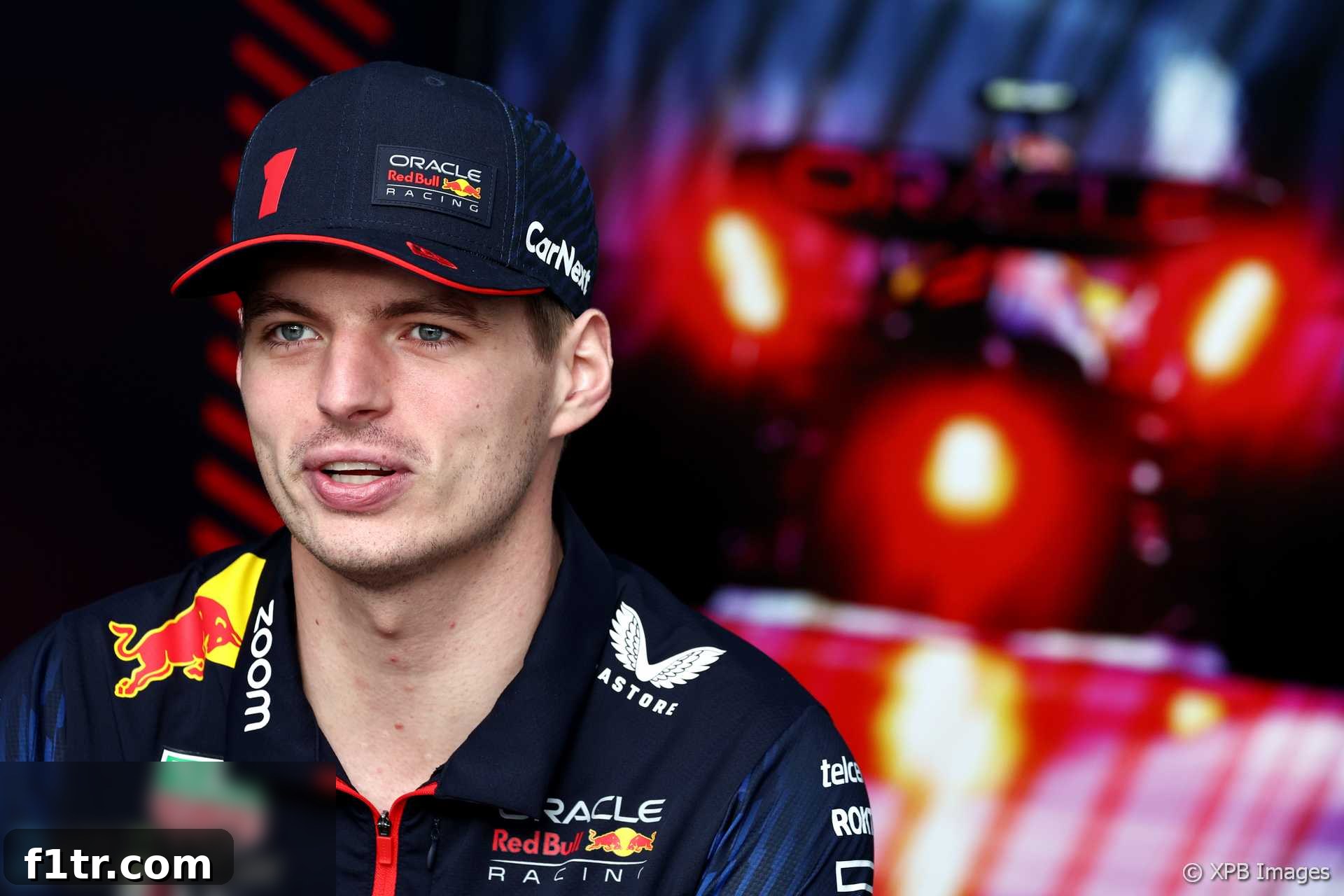
Max Verstappen, the reigning Formula 1 champion, expressed a degree of sympathy for Fernando Alonso after the Aston Martin driver was handed a contentious penalty for incorrectly lining up his car at the start of the Saudi Arabian Grand Prix. However, despite acknowledging the difficulties faced by drivers, the Red Bull star staunchly defended the necessity of the rule Alonso transgressed, a regulation that had undergone significant revision prior to the commencement of the new Formula 1 season.
The incident involving Alonso at the Jeddah Corniche Circuit quickly became a focal point of post-race discussion. Stewards noted that “the contact patch of the car’s left front tyre was outside of the starting box,” a seemingly minor infringement that triggered a five-second time penalty. This specific rule, governing starting positions, was updated during the off-season with a clear directive: drivers must position their cars precisely between the white lines on either side of their designated grid markings. It was a rule that had already caught out Esteban Ocon in Bahrain, who received an identical five-second sanction for a similar infraction, signaling a new era of strict enforcement.
Verstappen, while understanding the “painful” nature of such a penalty, underscored the critical importance of upholding the rule. He drew parallels to track limit infringements, another area where drivers often argue about perceived gains. “I haven’t seen how much he was out of his box,” Verstappen commented, “It is painful when it happens, but it’s a bit the same with the white line with track limits. Sometimes you argue did you gain anything in going wide or not, going outside of it.” His core argument revolved around preventing a slippery slope where drivers might deliberately exploit ambiguities. “I think at one point we do need a rule. It looks really silly if people start to take advantage of going really left and right,” he added, emphasizing the need for clear boundaries to maintain fair competition and the integrity of the start procedure.
Yet, Verstappen also conceded to the immense challenge drivers face in adhering to this rule, primarily due to the unique characteristics and limited visibility inherent in modern Formula 1 cockpits. “I don’t know what we can do better,” Verstappen admitted. “The visibility is just really poor in the car that is I think probably the main issue why you end up sometimes not fully correctly in your box.” This candid observation highlights a fundamental tension in Formula 1: the desire for strict, black-and-white rules versus the practical realities and human limitations of drivers operating at the pinnacle of motorsport. The confined nature of the cockpit, combined with the extreme seating position, makes precise car placement a far more intricate task than it might appear to an external observer.
Fernando Alonso’s ordeal, however, was far from over. His initial five-second penalty was compounded when stewards determined that the penalty had not been served correctly during his pit stop. This led to a further, more severe 10-second sanction. This second penalty proved decisive, ultimately costing Alonso his hard-fought third-place finish, which was then inherited by George Russell of Mercedes. The controversial nature of this subsequent penalty ignited a broader debate within the paddock and among fans about the consistency and application of Formula 1’s sporting regulations.
George Russell, who directly benefited from Alonso’s second penalty, nevertheless expressed strong reservations about the severity of the stewards’ decisions, particularly the 10-second penalty. While acknowledging the importance of rules, Russell passionately argued for the application of “common sense” in such situations. “I understand why these rules are there,” Russell stated. “At the end of the day we’ve got to stick within the guidelines. But I think a little bit of common sense needs to be shown. Ultimately I think it was a bit to the left. Was that right? He gained nothing from this, perhaps five seconds was too much.”
Russell’s critique extended to the subsequent 10-second penalty, which he found particularly egregious. “Then with regards to his pit stop, again, I don’t know what happened and why he received a further penalty exactly. But a 10 seconds is too extreme in that case, again. So I’m not too sure, it’s just making a little bit I guess frustrating for everybody,” he explained, highlighting the widespread frustration that penalties perceived as disproportionate can cause among competitors and fans alike.
Delving deeper into the practical challenges, Russell provided invaluable insight into why drivers find it “incredibly difficult” to position their cars flawlessly within the confines of their grid boxes. He vividly described the restricted visibility from the cockpit: “We’re sat so low. To put some perspective, we only see probably the top four or five inches of the tyre, so you can’t actually see the ground itself.” Furthermore, he pointed out the added difficulty presented by track markings: “We’ve got these big, long yellow lines pointing out, I can’t even see the yellow line, let alone the white lines. Determining your lateral position is really, really tough.” This detailed explanation underscores the complex sensory environment drivers operate in, where visual cues that seem obvious from an aerial view are often non-existent or highly distorted from their perspective.
The Saudi Arabian Grand Prix incident involving Fernando Alonso, therefore, serves as a poignant illustration of the ongoing delicate balance in Formula 1 between the letter of the law and the spirit of the sport. While rules are indispensable for maintaining fairness and order, their application often sparks debate, especially when driver error stems from inherent design limitations or the extreme demands of racing at such high speeds. The calls for common sense from drivers like Russell highlight a desire for a more nuanced approach to stewarding, one that considers the intent and impact of an infringement rather than adhering rigidly to a binary interpretation. As Formula 1 continues to evolve, the discussion surrounding grid penalties, visibility, and the role of human judgment versus technological precision will undoubtedly remain a significant talking point, shaping the future of sporting regulations.
2023 Saudi Arabian Grand Prix Related Articles
- “Total transparency” needed over Ben Sulayem allegations – Russell
- FIA president Ben Sulayem under investigation for interfering in F1 race – report
- Two races, no points: How 2023 compares to McLaren’s worst starts to a season
- Don’t complain about Red Bull dominating F1, they deserve it – Sainz
- Alfa Romeo identify “massive debris” which ruined Bottas’ race
Browse all 2023 Saudi Arabian Grand Prix articles