Max Verstappen’s Calculated Silence: Why F1’s Champion Avoids Discussing Penalties
In a sport renowned for its high-octane drama and passionate personalities, moments of silence from its biggest stars can often speak volumes. Such was the case recently when Max Verstappen, the reigning Formula 1 world champion, unequivocally refused to offer his perspective on a pivotal penalty that arguably cost him a potential victory. This deliberate reticence, far from being a spur-of-the-moment decision, is rooted in a complex blend of personal experiences, the relentless scrutiny of social media, and the increasingly stringent regulatory landscape imposed by the FIA.
Advert | Become a Supporter & go ad-free
The Incident: A Five-Second Infraction and Its Immediate Impact
The penalty in question stemmed from an incident on the very first lap of the race. As the cars accelerated aggressively towards the initial corner, Verstappen found himself battling for position. He was deemed to have left the track during this intense maneuver, subsequently gaining an advantage over McLaren driver Oscar Piastri, who had initially moved ahead of him. The stewards quickly reviewed the footage and issued a five-second time penalty, which the Red Bull driver served during his pit stop.
Such infringements are common during the opening chaotic moments of a Grand Prix. The standard protocol for drivers who commit similar offenses at the first corner is to immediately return the gained position to avoid sanctions. However, Verstappen did not relinquish the advantage he had gained over Piastri, leading directly to the penalty that reshaped his race strategy and outcome. This incident highlights the razor-thin margins and strict interpretations of racing rules that can define a competitor’s fate.
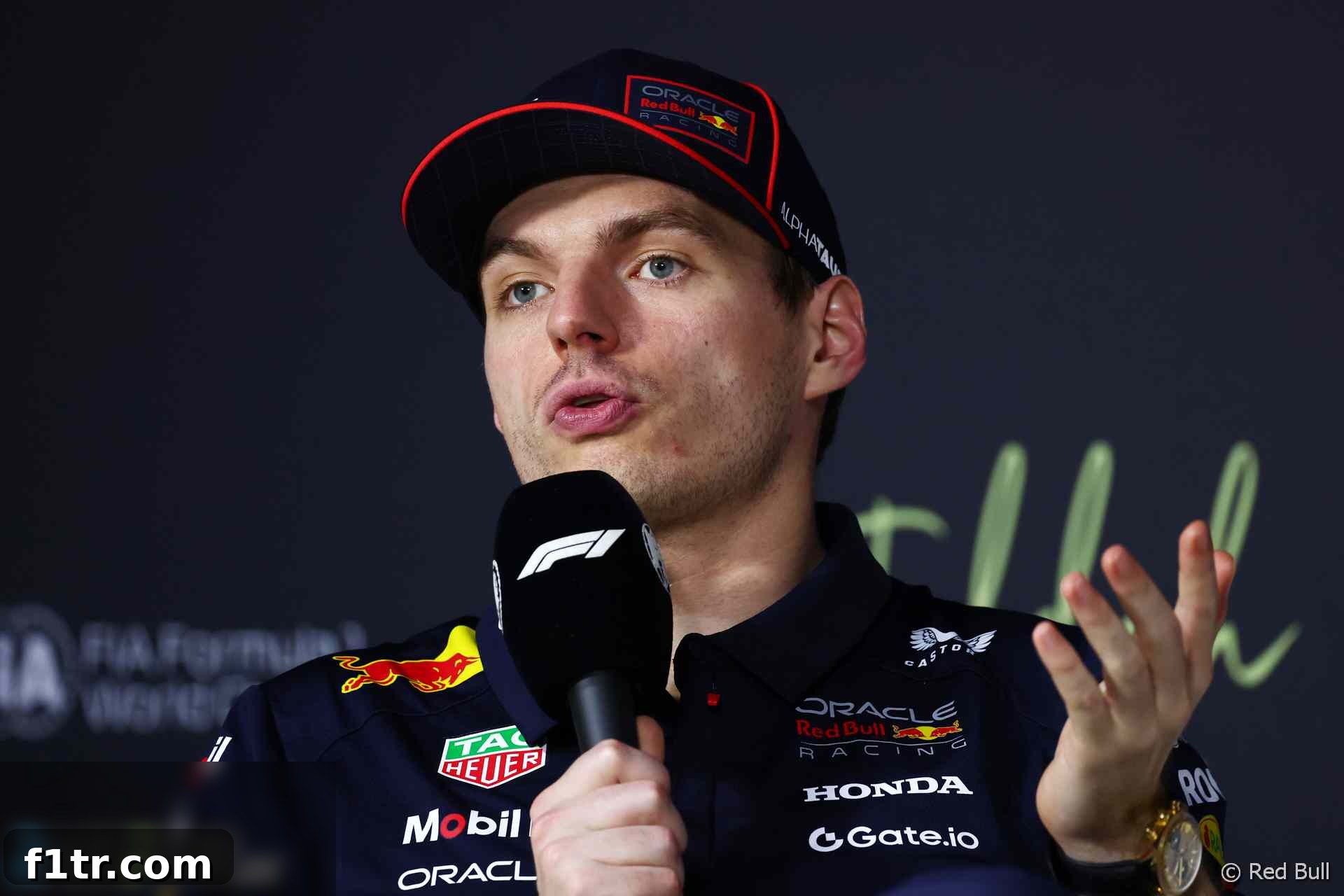
When questioned in the official FIA press conference about why he chose not to immediately return the position, Verstappen’s response was notably guarded. He stated: “I think it’s better not to talk about it. Anything I say or try to say about it might get me in trouble.” This statement, delivered with an air of practiced caution, immediately signaled that his silence was a deliberate strategy, not merely a refusal to engage, pointing to deeper, underlying reasons for his circumspection.
Verstappen’s Rationale: A Three-Pronged Approach to Self-Censorship
Max Verstappen’s decision to remain tight-lipped about the penalty is a strategic move, shaped by multiple factors that collectively contribute to his increasingly reserved public persona. His explanations offer a window into the significant pressures and evolving dynamics faced by modern Formula 1 drivers.
1. Avoiding Regulatory Trouble: Lessons from Past Encounters with the FIA
A primary driver behind Verstappen’s cautious approach to media interactions is his prior history with the sport’s governing body. The Red Bull driver faced disciplinary action and received a punishment last year for using inappropriate language during an FIA press conference. This incident evidently served as a potent reminder of the consequences of speaking too freely in official capacities, leading him to adopt a more measured tone.
Acknowledging the official setting, Verstappen remarked, “I know I cannot swear in here.” This direct reference underscores his awareness of the formal boundaries and expectations placed upon drivers, particularly during media engagements sanctioned by the FIA. The palpable concern of incurring further penalties, whether financial fines, sporting sanctions, or even reputational damage, acts as a powerful deterrent, encouraging him to self-censor and avoid any comments that could be misconstrued as disrespectful or inflammatory.
2. Battling Misinformation: The Amplifying Effect of Social Media
Beyond the direct threat of FIA sanctions, Verstappen expressed significant apprehension regarding the broader media landscape, particularly the pervasive and often unforgiving nature of social media. He conveyed a palpable frustration with how his statements can be easily taken out of context, twisted, or reinterpreted to fuel sensational narratives and generate online buzz, often at the expense of his true intentions.
“It has to do with social media in general and how the world is,” Verstappen articulated. “I prefer not to talk a lot because sometimes your words can be twisted or people interpret it in a different way. It’s honestly better not to say too much. So that’s what I’m trying to do.” This reflection highlights the modern athlete’s dilemma: every word is scrutinized by a global audience, instantly analyzed, criticized, and potentially weaponized in online discourse. For a high-profile figure like Verstappen, the risk of misinterpretation is a constant concern, leading to proactive self-restraint.
He further elaborated on the societal shift that contributes to this challenge: “It’s just the world we live in. You can’t share your opinion because it’s not appreciated, apparently, or people can’t handle the full truth. Honestly, it’s better if I don’t say too much. It also saves my time because we already have to do so much.” This candid admission reveals a weariness with the constant need to manage public perception and navigate a hypersensitive online environment. For Verstappen, silence becomes a practical tool to conserve mental energy and maintain focus on his demanding career, rather than engaging in what he perceives as a futile battle against misrepresentation.
Advert | Become a RaceFans supporter andgo ad-free
3. Navigating Stricter FIA Regulations: A Chilling Effect on Criticism
Perhaps the most compelling reason behind Verstappen’s reluctance to offer an opinion is the FIA’s recent overhaul and tightening of rules concerning driver conduct. During the preceding off-season, the governing body significantly broadened its definition of what constitutes “misconduct” by drivers. This expanded scope was accompanied by the introduction of a new, stricter penalty regime, which includes increased fines, and for multiple or severe offenses, potential suspensions and points deductions against a driver’s superlicence.
These revised regulations, while intended to uphold professionalism and the sport’s image, have inadvertently created a climate of caution among drivers. They now face the daunting task of expressing genuine opinions or criticisms, particularly regarding stewarding decisions or the application of complex rules, without inadvertently violating these broad guidelines. Verstappen explicitly highlighted these new regulations as a key factor in his decision to censor himself.
He expressed concern about the vagueness and extensive nature of these new rules: “At the same time, you also can’t be critical in any form that might ‘harm’ or ‘[en]danger’… let me get the sheet out. There’s a lot of lines, you know.” This poignant remark underscores the perceived ambiguity and the sheer volume of potential infringements drivers must now consider. The phrase “a lot of lines” suggests a complex, bureaucratic framework where a seemingly innocent comment could unexpectedly trigger a formal review or penalty, making candid feedback a high-risk endeavor.
Ultimately, the fear of inadvertently stepping over one of these “lines” leads to a pragmatic preference for silence. As Verstappen concluded, “So that’s why it’s better not to talk about it – you can put yourself in trouble, and I don’t think anyone wants that.” This powerful statement encapsulates the pragmatic desire to avoid unnecessary complications that could jeopardize his championship ambitions, incur unwarranted sanctions, or drain his mental resources.
The Broader Implications for Formula 1 and Fan Engagement
Max Verstappen’s calculated silence, while a rational personal strategy, brings forth significant questions about the broader landscape of driver expression and fan engagement within Formula 1. On one hand, the FIA’s commitment to maintaining a high standard of professionalism and safeguarding the integrity of the sport is understandable. Drivers serve as global ambassadors, and their conduct, both on and off the track, profoundly reflects on the entire F1 brand.
However, fostering an environment where drivers feel compelled to self-censor, or deliver only bland, carefully vetted statements, risks eroding the very essence of what makes Formula 1 so captivating. Fans are drawn to the sport not just for the speed and technology, but for the personalities, the raw emotion, and the unfiltered insights of its competitors. If every comment is meticulously weighed against potential penalties or the immediate backlash of social media, the authenticity and passion that define the sport could diminish.
This ongoing tension between the freedom of expression and stringent regulatory control is not unique to Formula 1, but it is acutely felt in a globally televised, high-stakes sporting arena. Striking a delicate balance that allows drivers to express their individuality and engage meaningfully with the media, while simultaneously upholding professional standards, remains a critical challenge for both the FIA and the teams. Verstappen’s silence, therefore, transcends a mere personal choice; it serves as a stark indicator of the evolving dynamics and pressures at the pinnacle of motorsport, impacting not just the drivers, but the very fabric of how fans connect with their heroes.
Miss nothing from RaceFans
Get a daily email with all our latest stories – and nothing else. No marketing, no ads. Sign up here:
Advert | Become a RaceFans supporter andgo ad-free
Related Articles: 2025 Saudi Arabian Grand Prix
- Red Bull made tactical decision not to avoid a penalty in Jeddah, Horner confirms
- Norris’s starts were far poorer than Verstappen’s but the balance is shifting
- McLaren’s rivals “just one upgrade away from being the lead car” – Brown
- Russell told race control what he thought of Verstappen’s first lap corner cut
- Doohan’s final corner pass on Bortoleto was F1’s closest fight for last place in seven years
Browse all 2025 Saudi Arabian Grand Prix articles