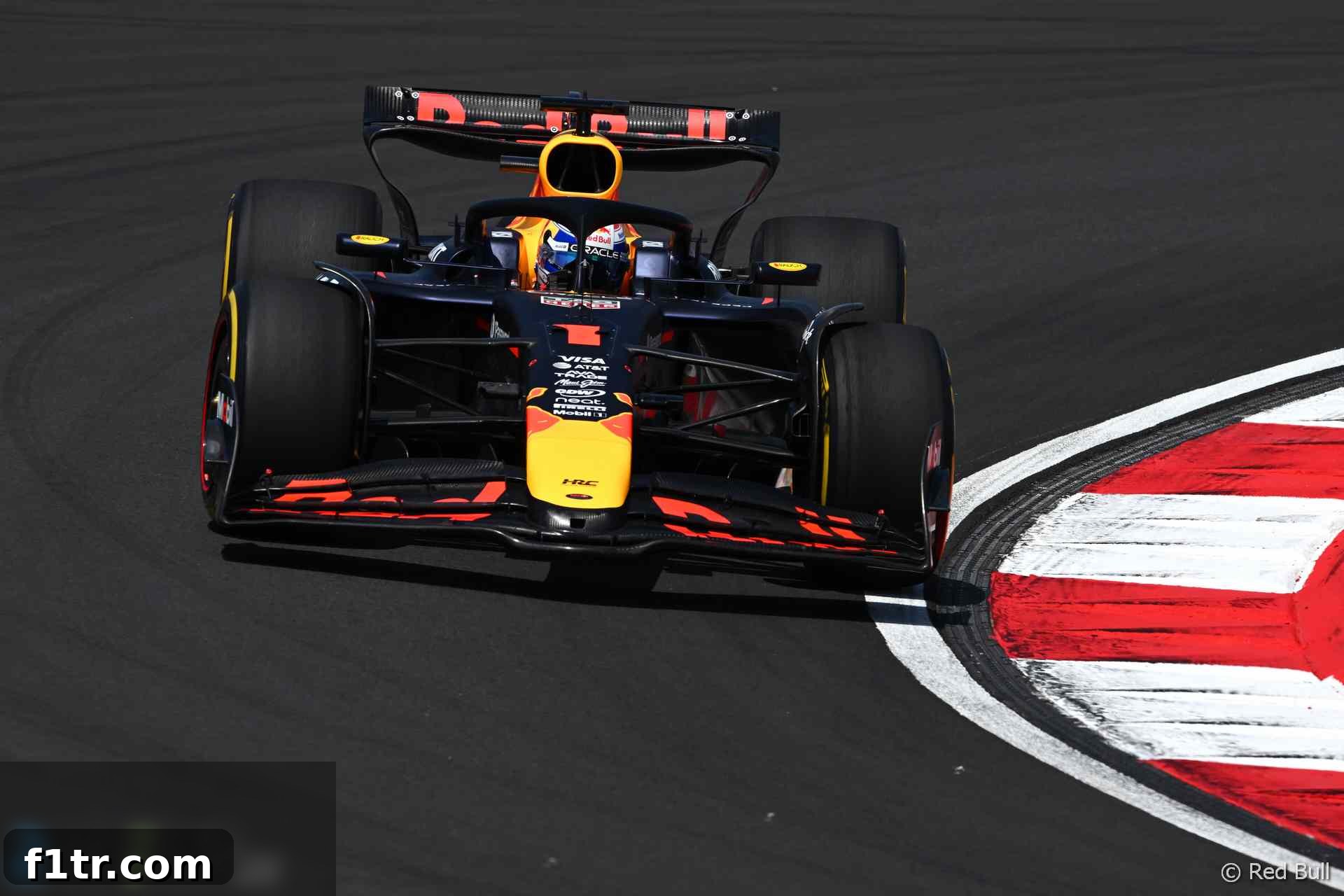
In a thrilling display of driver skill and strategic insight at the Shanghai International Circuit, Max Verstappen secured a commendable second-place start for the sprint race, despite openly admitting Red Bull’s current pace deficiencies. The reigning world champion’s performance underscores a fascinating dynamic emerging in the Formula 1 landscape, where raw talent and meticulous execution can sometimes bridge the gap where absolute car performance might be lacking. This unexpected result has set the stage for an electrifying sprint race, with Verstappen poised to defend his position against a resurgent field, including a formidable McLaren challenge.
Max Verstappen’s Masterclass in Sprint Qualifying: Overcoming Early Hurdles
The Shanghai sprint qualifying session proved to be a high-stakes affair, characterized by limited preparation and immediate pressure. Teams had just a single practice session to fine-tune their cars for the unique demands of the Chinese circuit, a challenge amplified by the unpredictable conditions often associated with sprint weekends. For Max Verstappen, this initial session was far from ideal. A disrupted soft tyre run saw him languishing in a provisional 16th place, a position virtually unheard of for the dominant Dutchman.
However, what transpired in sprint qualifying was a testament to Verstappen’s unparalleled ability to extract maximum performance under duress. Shaking off the practice session’s setbacks, he delivered a lap that brought him tantalizingly close to pole position. Missing out on the top spot by a mere 0.018 seconds to Lewis Hamilton, Verstappen expressed genuine satisfaction with his P2 grid slot. “I do think that in the first practice we were quite a bit off, so I’m very happy to be on the front row,” he remarked to the official F1 channel. His comments highlighted the significant step forward the team had made between practice and qualifying, largely attributed to his precision and adaptation.
Verstappen further elaborated on the complexities of transitioning between tyre compounds with minimal data: “The lap was very good. It’s always very tough, when you go from a medium [tyre] to a soft, to nail the lap with no references.” This candid assessment reveals the mental fortitude required to perform at the pinnacle of motorsport, where split-second decisions and instinctive adjustments define success. Despite the agonizingly close margin to pole, Verstappen maintained a pragmatic view: “Of course when you look at it, it was 18 thousandths or something off pole, but I don’t think we should have even been on the front row anyway. I’m very happy to be second.” This statement reflects a mature understanding of his car’s current capabilities, suggesting that his P2 was an overachievement rather than a missed opportunity, a perspective that speaks volumes about his relentless pursuit of maximizing every ounce of performance.
Red Bull’s Pace Conundrum: Is the RB21 Truly “Too Slow” for Shanghai?
While Verstappen’s individual brilliance shone through, his remarks also cast a spotlight on Red Bull Racing’s perceived performance deficit. Despite his P2, Verstappen’s underlying concern regarding the RB21’s pace was palpable. He unequivocally stated, “I don’t think the balance is massively off, we’re just too slow I would say.” This direct assessment from the team’s star driver raises pertinent questions about Red Bull’s current standing, especially on a circuit like Shanghai, which demands a versatile package across its demanding mixture of high-speed corners, technical sections, and a long back straight.
The sentiment of being “too slow” could be relative to Red Bull’s own incredibly high standards, where anything less than outright dominance feels like a struggle. Or it could genuinely point to specific areas where the RB21 is currently lagging behind key rivals. Factors such as aerodynamic efficiency in certain cornering profiles, tyre degradation characteristics, or even straight-line speed could contribute to this feeling. The challenge for Red Bull engineers will be to dissect the data from Shanghai and understand if this is a track-specific issue or a broader trend that needs addressing in their development cycle.
However, Verstappen also framed this challenge as a source of motivation. “But this is good for us, it’s a little motivation boost I think as well for everyone that we keep nailing the laps, we keep trying to maximise everything that we’ve got, and you need to do that as well, at the same time when you’re maybe struggling a little bit more for pace.” This perspective highlights the championship mentality ingrained within Red Bull. Even when faced with a perceived disadvantage, the focus remains on relentless optimization and extracting every possible tenth from the package. This ‘never give up’ attitude is a hallmark of successful F1 teams and drivers, serving as a powerful internal motivator to push the boundaries of performance and innovation continually. The competitive pressure from other teams, far from being a deterrent, often acts as a catalyst for greater efforts and ingenuity.
The McLaren Threat: A Formidable Challenge on the Horizon
Adding another layer of intrigue to the upcoming sprint race is the potent form of McLaren. With Lando Norris qualifying in sixth place and his teammate Oscar Piastri securing an impressive third, McLaren has positioned itself as a serious contender. Norris, who recently clinched a victory in the opening race last week (referring to a hypothetical previous event given the original text context), has demonstrated both exceptional pace and race craft, making him a significant threat.
The Shanghai International Circuit’s layout, with its unique blend of long, sweeping corners, a challenging Turn 1-4 complex, and the lengthy back straight, appears to suit the characteristics of the McLaren MCL38. The team’s strong performance in qualifying suggests they have a well-balanced car that can handle the diverse demands of the track. This puts them in a prime position to challenge the front-runners, including Verstappen, in the 19-lap sprint race.
Verstappen himself acknowledges the threat posed by the papaya cars. “I think they looked very fast up until that last run,” he admitted, referring to McLaren’s consistent performance throughout the weekend’s earlier sessions. His cautious optimism is clear: “So I think it will be very hard to keep them behind.” This indicates a strategic awareness of McLaren’s potential and the difficulty of fending off two strong cars with perhaps superior race pace. Yet, ever the racer, Verstappen expressed a desire for a competitive battle: “But hopefully it will be fun, hopefully, we are all, I wouldn’t say close, but at least that we can race a bit around, that would be nice for me.” This highlights the pure enjoyment of close-quarters racing, a spectacle that fans and drivers alike relish, further underscoring the escalating competition in Formula 1.
Implications for the Sprint Race and Beyond
The sprint race, with its condensed format and distinct points system, presents a unique set of strategic considerations. Tyre management, aggressive overtakes, and minimal room for error will define success over the 19 laps. Verstappen’s P2 start provides him with a strong initial advantage, but the pressure from Piastri directly behind him, and Norris further back but with strong pace, will be immense. The potential for a multi-team battle at the front is high, promising thrilling action for spectators.
Beyond the sprint, the results will also heavily influence the main Grand Prix on Sunday. Learnings about tyre degradation, car performance in race trim, and potential overtaking spots will be crucial for refining strategies for the longer, more demanding feature race. A strong sprint performance could build momentum and confidence, while a challenging one might necessitate a significant re-think of the car setup or race plan.
This evolving narrative in Shanghai adds another captivating chapter to the current Formula 1 season. While Red Bull and Max Verstappen have enjoyed a period of significant dominance, the competitive landscape is clearly tightening. Mercedes, with Hamilton’s pole, has shown flashes of its potential, and McLaren is consistently proving to be a formidable challenger. This increasing competition is not only beneficial for the sport but also pushes teams and drivers to new heights, making every race weekend an unmissable event where champions are truly tested and new heroes can emerge.
The Ever-Evolving Battlefield of Formula 1
Formula 1 is a sport defined by relentless innovation and perpetual challenge. No team or driver can rest on past laurels, as the competitive environment is constantly shifting. The Chinese Grand Prix weekend serves as a vivid reminder of this dynamic. The perceived “struggle” of Red Bull, even if relative, is a testament to the advancements being made by their rivals. The meticulous engineering, the strategic brilliance, and the sheer audacity of driver talent all converge to create a spectacle that captivates millions.
The battle for supremacy is not just about raw speed but also about adaptability, resilience, and the ability to perform under the most intense scrutiny. Max Verstappen’s performance in sprint qualifying, characterized by his candid assessment of his car’s pace yet his profound satisfaction with the result, exemplifies the mindset required to navigate such a demanding environment. As the F1 circus continues its global journey, each race weekend promises to be a fresh canvas upon which new stories of triumph and adversity will be painted, reinforcing why Formula 1 remains at the pinnacle of motorsport.
2025 Chinese Grand Prix
- Norris names China and Canada as biggest missed opportunities this year
- Red Bull reassure Verstappen over ‘when we’ll have a winning car again’ in meeting
- Mercedes explain impact of Antonelli’s floor damage on his Chinese GP performance
- “I gave a lot of lap time away in that first stint”: Verstappen’s full Chinese GP radio
- Stats: Chinese Grand Prix saw most disqualifications in an F1 race for 21 years
Browse all 2025 Chinese Grand Prix articles