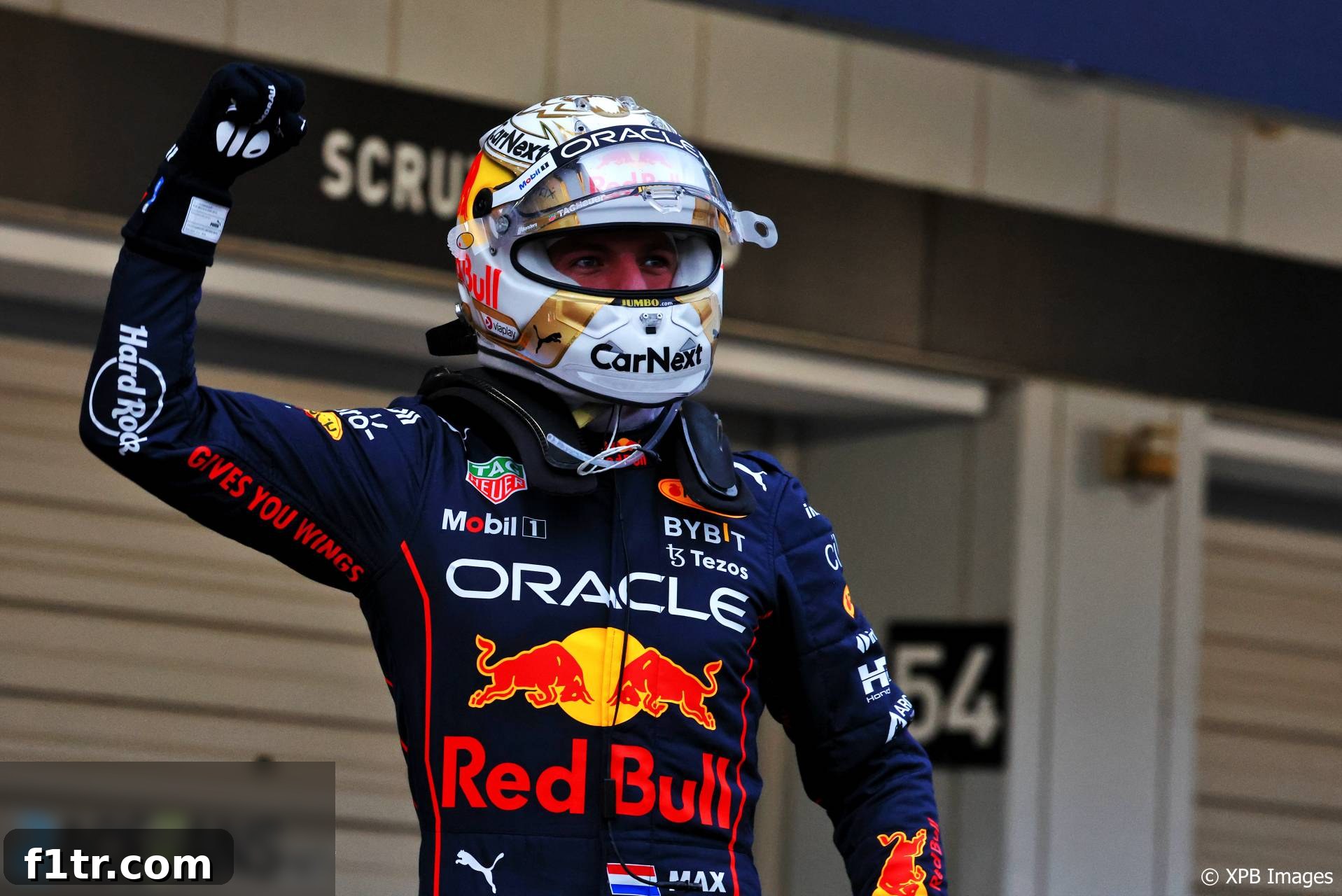
Max Verstappen Crowned 2022 F1 World Champion in Chaotic Japanese Grand Prix
The 2022 Formula 1 season reached its thrilling climax at the legendary Suzuka Circuit, where Max Verstappen was officially declared World Champion. His triumphant victory at the rain-shortened Japanese Grand Prix, a race steeped in drama, strategic gambles, and unexpected twists, secured his second consecutive drivers’ title. This momentous occasion solidified Verstappen’s position as a dominant force in modern Formula 1.
A Turbulent Start: Torrential Rain and High Stakes
The highly anticipated Japanese Grand Prix commenced under an intense downpour, immediately signaling a race that would test every driver’s skill and resilience. The grid formed up, with all teams initially opting for intermediate tyres, hoping for a quick improvement in the relentless rain. However, the track conditions proved to be far more treacherous than many had anticipated, leading to dangerously low visibility and a challenging start.
As the starting lights extinguished, signifying the beginning of the race, Charles Leclerc, starting from the front row, made an impressive getaway, momentarily pulling alongside Verstappen as they hurtled towards Turn 1. Yet, the reigning champion, known for his unyielding race craft, masterfully held his line around the outside of the challenging first corner. Verstappen’s decisive move ensured he retained the lead, preventing Leclerc from snatching the top spot in the opening stages.
The early laps were fraught with peril, especially for drivers deeper in the pack, where the colossal amounts of spray made visibility virtually non-existent. This extreme lack of sight contributed directly to a major incident. Just moments into the race, Carlos Sainz Jnr suffered a dramatic aquaplane on the fast run to Turn 12, losing complete control of his Ferrari and crashing heavily into the circuit barriers. Fortunately, the following drivers, despite the horrendous conditions, demonstrated incredible reflexes, managing to avoid collision with Sainz’s Ferrari, which lay precariously close to the racing line.
Further compounding the early chaos, Alexander Albon was forced to retire his Williams shortly after navigating past Sainz’s incident, his car succumbing to a loss of water pressure that followed earlier contact. The sheer intensity of the rain, coupled with Sainz’s significant crash, prompted the immediate deployment of the Safety Car. At this point, Verstappen led the field, followed by Leclerc, Sergio Perez, and Esteban Ocon.
The Alarming Gasly Incident and the Red Flag
With drivers vociferously expressing their concerns over the dangerously inadequate visibility, the race director made the critical decision to red-flag the event, halting proceedings and directing all cars back to the pit lane. This stoppage, however, was marred by a deeply unsettling incident involving Pierre Gasly. Having pitted on the opening lap for a new front wing after an early collision, Gasly was navigating the track under red flag conditions. To his shock and fury, as he passed the scene of Sainz’s wrecked Ferrari, he encountered a recovery vehicle already present on the circuit.
This image sent a palpable chill through the Formula 1 paddock and fan base, immediately drawing parallels to the tragic accident of Jules Bianchi at this very circuit in 2014, an incident that also involved a recovery vehicle in wet conditions. Gasly’s radio communications conveyed his intense anger and alarm at the unacceptable safety risk posed by the recovery vehicle’s presence. While the stewards later placed Gasly under investigation for allegedly driving too quickly under red flag conditions, the incident sparked widespread debate and criticism regarding race control protocols and safety standards in extreme weather, emphasizing the lessons that needed to be continually learned from past tragedies.
A Protracted Delay and The Race Resumption
The red flag period stretched for a grueling period of over two hours, during which race control meticulously monitored the evolving track conditions. They awaited a significant improvement in both the rainfall intensity and driver visibility before deeming it sufficiently safe to resume racing. The prolonged delay built immense suspense among fans and teams, with genuine uncertainty prevailing over whether the race would even manage to restart given the rapidly fading daylight and the stubbornly persistent inclement weather. Ultimately, after careful consideration, the announcement came: the race would resume with approximately 50 minutes remaining on the countdown clock. The field cautiously returned to the circuit, initially equipped with full wet tyres, before the race officially got back underway with precisely 40 minutes of the allotted time left.
Strategic Tire Gambles and Verstappen’s Unmatched Pace
Upon the restart, Max Verstappen wasted no time in re-establishing his dominance, quickly pulling away from Charles Leclerc, Sergio Perez, Esteban Ocon, and Lewis Hamilton. Almost immediately, a fascinating and decisive strategic battle unfolded in the pit lane. Sebastian Vettel and Nicholas Latifi were among the first to make a bold gamble, diving into the pits for intermediate tyres. Within a mere two laps, it became unequivocally clear that the intermediate compounds were indeed the superior and faster choice as the track began its slow process of drying out.
This critical observation triggered a frantic rush of pit stops across the grid. Verstappen, Leclerc, Perez, Hamilton, Ocon, and George Russell all swiftly followed suit, exchanging their full wet tyres for the quicker intermediates. However, a handful of drivers, including Fernando Alonso, Daniel Ricciardo, and Mick Schumacher, initially chose to stay out on their full wet tyres, hoping to capitalize on any potential further downpour or to simply extend their stint for a unique strategy. Alonso briefly inherited the race lead for a single lap, showcasing his veteran experience, before eventually making his own switch to intermediates. This handed the lead, albeit briefly, to Schumacher. Yet, Schumacher’s moment at the front was fleeting, as he was immediately and decisively overtaken by the charging Verstappen, who was then followed closely by Leclerc and Perez.
Back in the lead, Verstappen was in a league of his own. He rapidly built an unassailable advantage over Leclerc, demonstrating the formidable pace and control that had defined his season and brought him to the cusp of his second championship. While Sergio Perez began to steadily close the gap to the Ferrari driver, the intermediate tyres, pushed to their absolute limits on a gradually drying but still abrasive Suzuka track, began to show significant signs of degradation for many competitors, adding another layer of challenge to the unfolding drama.
The Climactic Finish and The World Championship Coronation
As the final minutes of the race relentlessly ticked away, with just over eight minutes remaining on the clock, Fernando Alonso made another astute strategic move. He pitted from seventh position for a fresh set of intermediates, rejoining the race in tenth. However, the majority of the field opted to bravely continue on their worn tyres, hoping to cling onto their hard-fought positions until the very end.
Max Verstappen maintained absolute composure and control at the front, serenely cruising towards what appeared to be a straightforward victory with an unassailable lead. The true spectacle and tension were unfolding behind him in the fierce battle for second place, where Sergio Perez was relentlessly pressuring Charles Leclerc. As the race clock dramatically hit zero, signifying the end of the timed event, there was initial confusion among teams, drivers, and fans alike regarding whether an additional lap would be completed. However, the chequered flag was ultimately waved as Verstappen crossed the finish line, definitively signaling the end of the race.
Almost half a minute behind the triumphant Verstappen, the intense fight for second place culminated in significant controversy. On the very final lap, Leclerc, under immense pressure from Perez, cut the chicane, clearly gaining an advantage before rejoining the track ahead of the Red Bull driver. Despite his desperate efforts to block Perez from overtaking him on the run to the finish line, the race stewards swiftly intervened. Leclerc was promptly handed a five-second time penalty for leaving the track and gaining a lasting advantage, a critical decision that elevated Sergio Perez to a well-deserved second place on the podium.
The Points Puzzle Unravels and Verstappen’s Coronation
Crucially, the post-race penalty for Charles Leclerc had a direct and immediate impact on the championship standings. Despite the race not completing the full scheduled distance, full championship points were, to the surprise of many (including initially, the Red Bull team), awarded – a detail that had been a point of contention and confusion throughout the season with revised regulations regarding shortened races. With Leclerc’s penalty dropping him to third, it mathematically became impossible for any other driver to catch Max Verstappen in the remaining races of the season. Thus, mere moments after crossing the finish line, Max Verstappen was officially crowned the 2022 Formula 1 World Champion, securing his second title in a truly dramatic and unexpectedly early fashion at Suzuka.
Beyond the Podium: Notable Performances and Heroics
Away from the intense battle for the podium positions, several drivers delivered commendable and often heroic performances in the exceptionally challenging Japanese Grand Prix. Esteban Ocon showcased exemplary defensive driving skills, masterfully holding off the relentless challenge of seven-time world champion Lewis Hamilton to secure a strong fourth-place finish for Alpine, a testament to his composure under pressure.
Sebastian Vettel, in one of his final Formula 1 races before retirement, delivered a true masterclass in tyre management and strategic race craft, narrowly holding onto a hard-fought sixth place ahead of the ever-aggressive Fernando Alonso. Alonso, who had made a late second pit stop for fresh intermediates, staged a remarkable recovery, battling his way back through the field to reclaim the position he held prior to his strategic gamble. George Russell secured eighth place for Mercedes, adding valuable points to their constructors’ campaign. Meanwhile, Nicholas Latifi delivered a standout performance, brilliantly navigating the treacherous conditions to earn his first points of the year for Williams in ninth position – a significant and well-deserved boost for the Canadian driver. Rounding out the top ten was Lando Norris for McLaren, salvaging crucial points from a chaotic and demanding race.
A Championship for the Ages and Verstappen’s Legacy
The 2022 Japanese Grand Prix will undoubtedly be etched into the annals of Formula 1 history as one of the most memorable, dramatic, and chaotic races in recent memory. It not only delivered breathtaking on-track action, high-stakes strategic drama, and compelling individual battles but also served as the unforgettable stage for Max Verstappen’s well-deserved second World Championship title. His unwavering dominance throughout the 2022 season, culminating in this rain-soaked triumph at the iconic Suzuka Circuit, firmly cemented his place among the sport’s elite. Verstappen’s back-to-back championships herald an exciting and competitive era for Formula 1, promising continued thrilling spectacles for fans around the globe.