Formula 1 Insights: Max Verstappen on Championship Readiness, Driver Development, and the Evolving World of Motorsport
In the dynamic world of Formula 1, drivers constantly push the limits, not just on the track but also in their pursuit of the ultimate prize: the World Championship. Recent discussions highlight the crucial role of seizing opportunities and the relentless drive required to reach the pinnacle of motorsport. This comprehensive round-up delves into various facets of the sport, from driver psychology and talent development to the ever-changing landscape of media and technology.
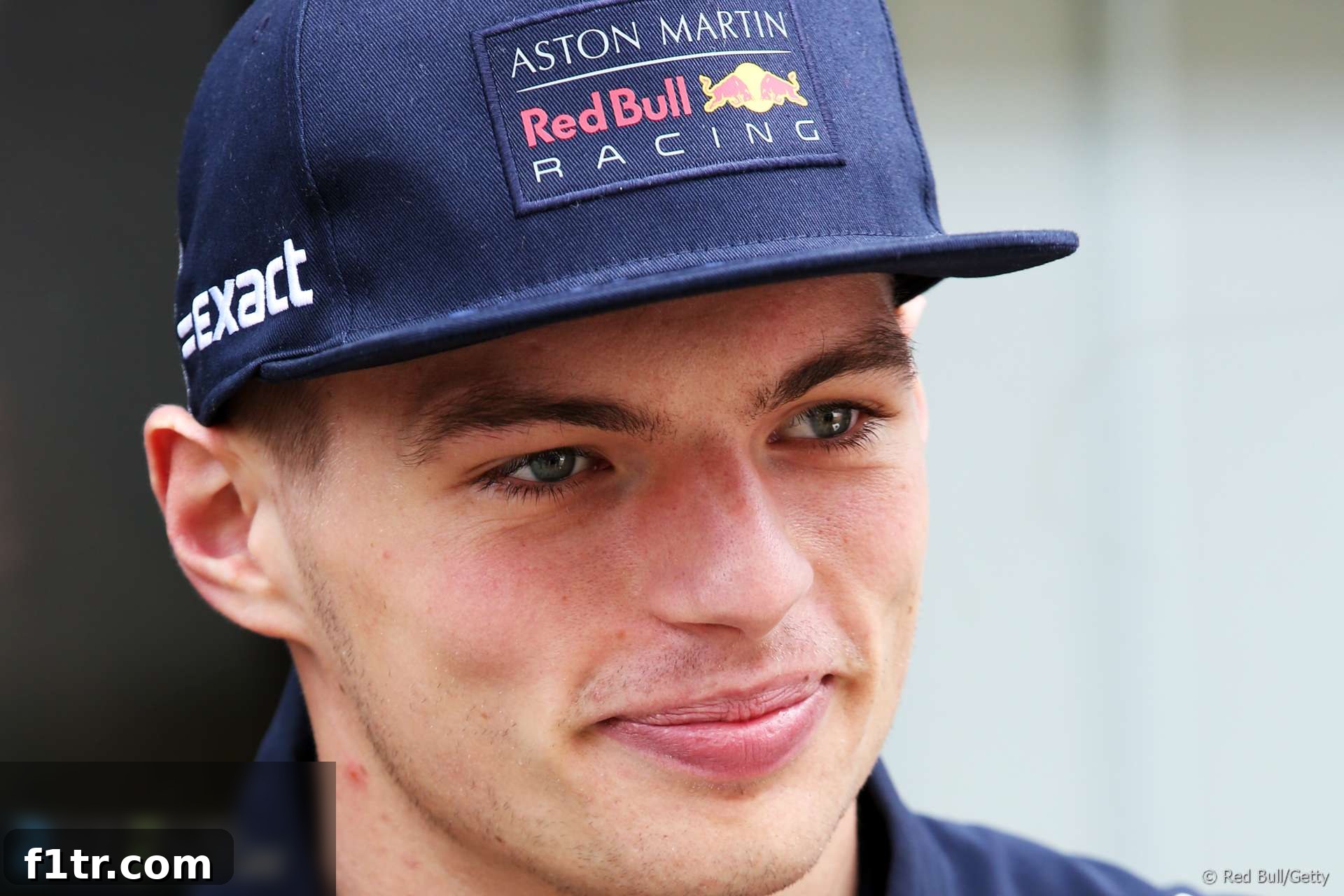
Max Verstappen on Championship Readiness: Seizing the Moment
Red Bull Racing’s star driver, Max Verstappen, offers a compelling perspective on what it takes for a Formula 1 driver to clinch a championship. He emphasizes that a driver must be prepared for that golden opportunity to arise at any stage of their career, underlining the unpredictable nature of top-tier motorsport.
I’ve done now almost four seasons. For example Lewis was fighting for a title in his first season: Are you ready for it, you’re not sure. Was he? Maybe yes, maybe not.
But once you have that car underneath you, you are definitely going for it because it’s normal, you are only fighting your team mate because there is always a bit of a dominance with the car.
I think it’s never 100% clear if somebody’s ready or not. As soon as you have that car you’ve just got to drive it as fast as you can and if it’s the fastest car in the grid you are normally winning races or you are second.
Verstappen eloquently uses the remarkable rookie season of Lewis Hamilton in 2007 as a prime example. Hamilton, in his inaugural F1 season, came astonishingly close to winning the title, finishing a mere point behind eventual champion Kimi Räikkönen. This scenario perfectly illustrates Verstappen’s point: success in Formula 1 is a potent combination of inherent talent, mental fortitude, and crucially, being in the right car at the right time.
The Dutchman’s insight resonates deeply within the sport. Many drivers possess immense skill, but only a select few ever get the chance to pilot a truly championship-contending machine. When that moment arrives, the pressure is immense, not just from competitors but often from within the team, battling a teammate in equally capable machinery. Verstappen suggests that while a driver might not feel “100% ready” beforehand, the sheer competitiveness and instinct to win take over once they are in a dominant car. This competitive drive, coupled with the ability to extract maximum performance, is what separates the champions from the rest.
This philosophy highlights a critical aspect of Formula 1: while driver skill is paramount, the technical prowess of the car and team strategy are equally vital. It also underscores the high stakes involved in junior categories, where young drivers are constantly striving to prove they possess the blend of talent and mental toughness to warrant a seat in a front-running F1 team, ultimately chasing that championship-winning opportunity.
Quotes: Dieter Rencken
Snapshot: Nurturing Tomorrow’s F1 Stars at the Ferrari Driver Academy
The future of Formula 1 hinges on the development of new talent, and driver academies play a pivotal role in this process. Pictured here is Ferrari team principal Marco Matassa (note: the original text mistakenly listed Marco Matassa twice, but the image caption correctly identifies Laurent Mekies and Antonio Fuoco as well) engaging with the team’s promising 2019 driver academy members. These young hopefuls represent the next generation of motorsport champions, meticulously chosen and groomed by one of F1’s most iconic teams.
The Ferrari Driver Academy (FDA) is a cornerstone of the Scuderia’s long-term strategy, identifying and nurturing the brightest talents from around the globe. In 2019, the academy welcomed a formidable group including Gianluca Petecof, Callum Ilott, Robert Shwarzman, Giuliano Alesi, Mick Schumacher, and Enzo Fittipaldi. These drivers embark on a rigorous program encompassing physical training, simulator work, media engagement, and most importantly, competitive racing in junior categories like Formula 2 and Formula 3.
The goal of the FDA, much like other leading driver academies in F1, is not just to produce fast drivers, but well-rounded athletes ready to handle the immense pressure and demands of Formula 1. Antonio Fuoco, who transitioned into a consultant role for the program, brings invaluable experience from his own journey through the motorsport ladder, further enriching the support system for these budding stars. Laurent Mekies, a key figure in Ferrari’s sporting operations, also plays a crucial role in overseeing the development pathways.
Among the highlighted members, Mick Schumacher’s presence often draws significant attention due to his legendary surname. His journey through the FDA and subsequent ascent to Formula 1 underscores the program’s effectiveness in preparing drivers for the highest level. The academy represents Ferrari’s investment in its future, ensuring a continuous pipeline of talent that could one day emulate the success of previous Scuderia heroes and potentially bring championship glory back to Maranello.
These young drivers face immense competition and pressure, with only a handful ultimately making it to Formula 1. However, the comprehensive support and unparalleled resources provided by programs like the FDA give them the best possible chance to succeed, shaping not just their driving skills but their entire professional persona.
Social Media Pulse: F1 Discourse and Fan Engagement
Social media platforms serve as a vital conduit for real-time Formula 1 news, fan reactions, and industry insights. Here’s a snapshot of notable discussions and updates from various platforms, reflecting the diverse conversations shaping the motorsport world:
After five years with @insideFDA, @gyzhou_33 has now joined @RenaultF1Team https://t.co/HkWjZZss2f#F1
— RaceFans (@racefansdotnet) January 22, 2019
The news of Guanyu Zhou’s departure from the Ferrari Driver Academy after five years to join the Renault F1 Team’s academy highlights the fluid nature of driver development programs. Young drivers often seek the best pathway to Formula 1, and sometimes that means moving between rival teams’ junior setups to secure better opportunities or a clearer route to a top-tier seat. This move was a significant step in Zhou’s career, eventually leading to his F1 debut.
Seems @F1 has now deleted this from Facebook and Instagram… pic.twitter.com/jbCy6ZXvoi
— Keith Collantine (@keithcollantine) January 22, 2019
This observation from Keith Collantine points to the occasional missteps or controversial content management by official F1 social media channels. The deletion of content often sparks debate among fans and media about transparency, editorial control, and the messages F1 chooses to project, underscoring the scrutiny official channels operate under.
The mention of an un-embeddable tweet (https://twitter.com/LaurenMoragn/status/1087759132214603776) indicates a broader conversation, possibly related to fan experiences or specific race weekend details, showcasing how individual voices contribute to the overall F1 narrative.
As Britain loses free-to-air F1 coverage, in a F1 press release Liberty are thrilled that the audience grew in 2018 because in reaching 490 million unique viewers it was partly down to “China, who benefitted from the return to CCTV as the main free-to-air broadcaster.” Hmm.
— bob mckenzie (@bobmckenzieuk) January 22, 2019
Bob McKenzie’s commentary highlights a significant point of contention: the shift of F1 broadcasting from free-to-air channels to pay-TV in key markets like Britain, contrasted with F1’s celebration of audience growth attributed to free-to-air broadcasts in other regions like China. This raises questions about Liberty Media’s global broadcast strategy and its impact on fan accessibility and engagement in different territories. It also reflects the complex balance between revenue generation and expanding the sport’s global viewership.
It’s truly amazing that a company like @F1 can’t make a streaming service that has a functioning full screen button. Remarkable.
— Sam🟦☁️ (@amphobius) January 22, 2019
User “amphobius” voices a common frustration among early adopters of F1’s official streaming service, F1TV: technical glitches and user experience issues. The teething problems faced by F1TV, particularly concerning basic functionalities like fullscreen mode, were a frequent complaint in its initial phases, reflecting the challenges of launching a global digital platform for a premium sport.
Hi!! Doors will open at 8.30am!! See you soon! 😄
— Circuit de Barcelona-Catalunya (@Circuitcat_eng) January 22, 2019
A simple, yet important update from the Circuit de Barcelona-Catalunya indicates the ongoing preparations for pre-season testing or other motorsport events. Such tweets are crucial for fans planning to attend or follow events, providing practical information and building anticipation for the upcoming season.
I could watch @piersmorgan’s male condescension being smacked down by @SophiaFloersch all day long:
Morgan: “We’re not going to show [the crash video] because you don’t want to see it.”
Floersch “I can watch the video. It’s normal for me to watch it now. I watch it quite often.” pic.twitter.com/vpGYL9snSM— Keith Collantine (@keithcollantine) January 22, 2019
This clip featuring Sophia Flörsch powerfully demonstrates the resilience and mental strength of racing drivers, particularly after a traumatic incident. Her calm and direct response to Piers Morgan’s assumptions about her discomfort in watching her own horrific Macau crash went viral, earning widespread admiration and highlighting the unique psychological makeup required for motorsport athletes. It also sparked a conversation about media portrayal of athletes and the importance of respecting their agency.
Fair’s fair: Received cease & desist apology from editor of @motorsport TR, and article now ‘unpublished’. Thanks also for support from the many who RTd, liked and DMd. Much appreciated. For more on the challenges facing the motorsport media: https://t.co/WnObK0shcS https://t.co/hVAL7vUgwc
— Fritz-Dieter Rencken (@RacingLines) January 22, 2019
Fritz-Dieter Rencken’s tweet sheds light on the often-unseen challenges faced by motorsport journalists, including legal pressures and the implications of intellectual property. His report of receiving a cease and desist order and a subsequent apology from another motorsport publication, leading to the unpublishing of an article, underscores the complexities and sensitivities involved in reporting within the highly competitive and legally intricate world of professional racing.
- For a comprehensive list of official F1 accounts and key personalities, consult the F1 Twitter Directory.
Motorsport Beyond F1: Key Headlines and Developments
Beyond the immediate world of Formula 1, the broader motorsport landscape continues to evolve, bringing forth interesting developments and analyses. Here’s a curated selection of other compelling motor racing links:
Ricciardo bracing for Verstappen title win in 2019 (Racer)
Daniel Ricciardo’s candid comments from this Racer article offer a glimpse into the high-stakes predictions within the F1 paddock. His acknowledgment of a potential Max Verstappen title win in 2019, particularly with the then-new Red Bull-Honda partnership, highlights the intense rivalry and mutual respect among top drivers. Ricciardo’s own decision to move to Renault was partly driven by the uncertainty surrounding the Red Bull-Honda collaboration, and his thoughts reveal the strategic dilemmas drivers face when making career choices based on future team performance projections. It emphasizes how much a driver’s career trajectory is intertwined with engine development and team dynamics.
Motorsport set to escape VNUK ruling (Motorsport Week)
The potential exemption of motorsport from the stringent VNUK ruling in Europe was a significant relief for the entire racing community. This ruling, stemming from a case in Slovenia, threatened to dramatically increase insurance requirements for all vehicles, including those used in private motorsport events, potentially crippling grassroots racing. Motorsport Week’s report on the IMCO Committee’s vote towards an exemption provided much-needed clarity and a path forward, demonstrating the collective effort to protect the sport from adverse legislation and ensure its sustainability across Europe.
Harvey, Meyer Shank Racing upping ante to 10 IndyCar races in 2019 (IndyCar)
This IndyCar news item showcases the growth and ambition within America’s premier open-wheel series. Jack Harvey and Meyer Shank Racing’s expansion to a 10-race schedule in 2019 signaled a significant step up for the team, reflecting increased sponsorship and confidence in their competitive capabilities. Such expansions are crucial for the health and competitiveness of IndyCar, allowing more teams to build momentum and challenge for podiums, thereby enriching the overall racing spectacle for fans.
Fearless esports racers blur lines between games and the real thing (The Guardian)
The Guardian’s article on esports racing underscores the rapidly evolving landscape where virtual racing is increasingly recognized as a legitimate training ground for real-world motorsport. Unlike other sports where gaming prowess rarely translates directly to professional play, sim racing uniquely develops skills highly transferable to actual race cars, such as spatial awareness, reaction times, and race craft. This convergence highlights the growing acceptance of esports as a valid pathway into professional motorsport and its potential to democratize access to an otherwise exclusive sport.
Racing Point announces new technology partnership with RNT Rausch (Racing Point)
Racing Point’s announcement of a technology partnership with RNT Rausch emphasizes the critical role of data in modern Formula 1. With hundreds of gigabytes of telemetry data generated and analyzed in real-time during every race weekend, robust data acquisition, storage, and processing systems are indispensable. Such partnerships provide teams with cutting-edge infrastructure to optimize car performance, strategize effectively, and gain a competitive edge. It illustrates how F1 is not just a test of driving skill but also a high-tech battleground where advancements in IT and data management can significantly impact success.
We always endeavour to credit original sources. If you have a tip for a link to feature in the next RaceFans round-up please send it in here:
- Contact RaceFans
Comment of the Day: Understanding F1’s Broadcast Strategy
The complexities of Formula 1’s global broadcasting rights often lead to confusion among fans, especially regarding the availability of live content on platforms like YouTube. Our ‘Comment of the Day’ sheds light on why live F1 coverage, particularly testing sessions, remains exclusive:
Even if Sky didn’t have the broadcast rights in the UK you wouldn’t get the live coverage of testing on platforms like youtube because the wider broadcast contracts don’t allow for it.
While newer contracts that have been signed under Liberty have added a clause for F1TV there is nothing beyond that.
And while this is only a test since all the teams will be there & a full world feed production will be made available it fall’s under the same broadcast deals as a race weekend would.
@Gt-racer
This insightful comment from @Gt-racer clarifies a crucial point: the absence of live F1 content on platforms like YouTube isn’t merely a preference but a contractual obligation. Formula 1’s broadcast rights are incredibly valuable and are sold to various media partners globally on an exclusive basis. These comprehensive deals, often worth hundreds of millions, dictate where and how F1 content can be shown. Even pre-season testing, despite being non-competitive, is typically covered by the same expansive broadcast agreements as official race weekends because a “world feed production” is generated for it, making it premium content.
While Liberty Media’s introduction of F1TV has added an official streaming option with certain live components, its scope is still limited by existing regional broadcast contracts. The comment highlights that F1TV often has specific clauses in newer agreements, but these do not generally extend to allowing third-party platforms like YouTube to stream live. This strategic approach ensures that F1 can maximize its revenue from broadcast partnerships while slowly expanding its direct-to-consumer offerings, all while navigating a complex web of exclusivity agreements.
F1 Community and Historical Notes
Happy Birthday!
We extend our warmest wishes to Brent Foster for his birthday!
If you’d like a birthday shout-out in our future round-ups, please share your special day with us via the contact form or by adding your details to our community list here.
On This Day in F1 History
- Two years ago today, January 23rd: A pivotal moment in Formula 1 history occurred with the ousting of Bernie Ecclestone from his long-held role at the helm of Formula One. This significant change followed Liberty Media’s complete takeover of the sport, ushering in a new era of ownership and management. Ecclestone, who had single-handedly transformed F1 into a global commercial powerhouse, departed after decades of unparalleled influence, marking a clear transition point for the sport’s future direction and commercial strategies.
This round-up provides a comprehensive look into the diverse narratives shaping Formula 1 and the wider motorsport world. From the psychological demands on drivers striving for championship glory to the intricate business of media rights and the crucial role of driver development, motorsport remains a captivating blend of human ambition, technological innovation, and strategic foresight.